Trump sued Capital One after bank closed accounts over money-laundering fears
The bank said the decision was based on anti-money-laundering alerts, not politics, according to court filings
AI-assisted coverage comparison, editor-supervised · How this was made
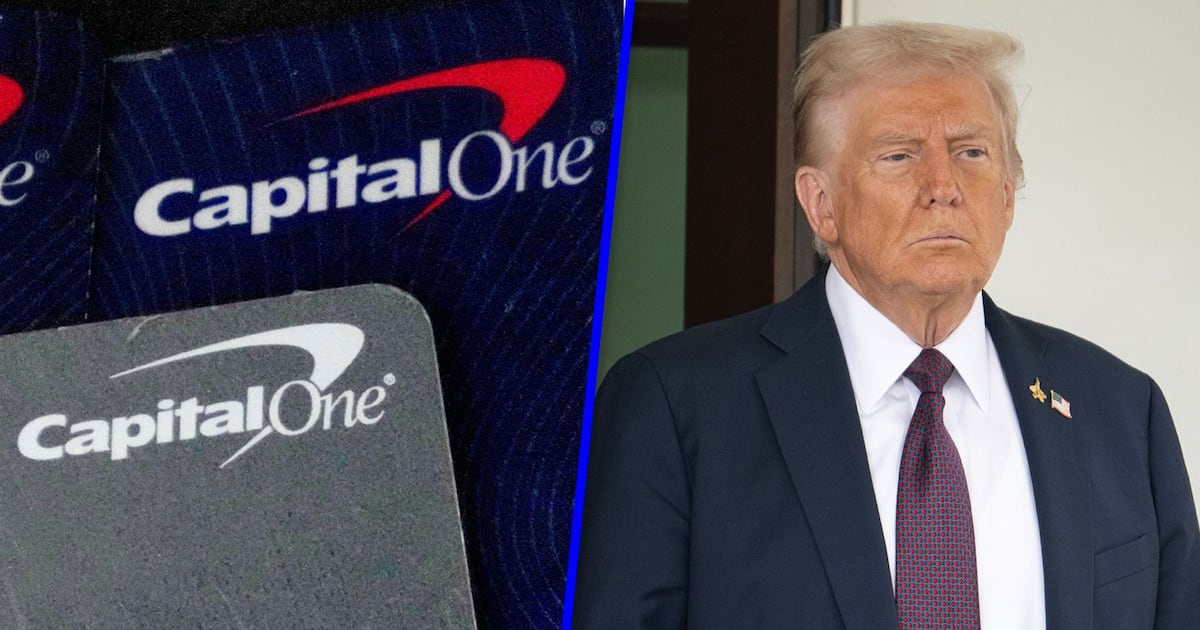
Capital One closed Trump accounts in 2021 over money-laundering concerns
Photograph: El Financiero (embedded from source)
What this story says
- Capital One closed Donald Trump’s bank accounts in 2021 due to money-laundering concerns, as documented in a court filing.
- The bank stated the closure was triggered by anti-money-laundering alerts, not political reasons, according to the filings.
- Trump’s financial holding company sued Capital One after the closure, alleging the decision was politically motivated.
- The case remains unresolved, with no further public statements from either party on the current status of the lawsuit.
Capital One closed bank accounts held by Donald Trump in 2021 after identifying financial activity that raised money-laundering concerns. The disclosure came in a court filing related to a lawsuit filed by one of Trump’s financial holding companies. The bank stated the accounts were closed due to anti-money-laundering alerts, not for political reasons.
The lawsuit was initiated by Trump’s holding company shortly after he began his second term as U.S. president. The company alleged that Capital One’s decision to close the accounts was politically motivated. Capital One denied the allegation in its court filings, maintaining that the closure was based on standard anti-money-laundering protocols.
What the coverage left out
None of the digests included details of the specific financial activity that triggered the anti-money-laundering alerts. The South China Morning Post’s digest mentioned Trump’s allegation of political motives but did not quote Capital One’s denial of the claim, which was included in El Financiero’s digest. The Los Angeles Times was the only outlet to define "debanking," but none of the digests explained the legal or procedural steps that follow such a closure.
How each side covered it
Our own reading of the reporting listed below, written from the outlets’ articles rather than quoted from them. The reasoning is set out on our methodology page.
Left
- The two left-rated digests led on the money-laundering concerns that prompted Capital One’s decision. Radio-Canada’s digest described the closure as linked to "suspicion of money laundering," while the Los Angeles Times framed the event as an example of "debanking," a term used to describe banks closing accounts over perceived financial, legal, or reputational risks.
Centre
- The centre-rated digest from the South China Morning Post focused on the timeline and the legal context. It noted that the accounts were closed in 2021 and tied the disclosure to a court filing related to Trump’s lawsuit against Capital One. The digest also included Trump’s allegation that the closure was politically motivated, though it did not quote the bank’s denial of that claim.
Right
- The right-rated digest from El Financiero led on Capital One’s denial of political motives. It stated that the bank closed the accounts due to "anti-wash alerts" and explicitly noted that the bank "denies political reasons" for the decision. The digest also mentioned that the case was part of a lawsuit filed by Trump.
Questions about this coverage
- Is the coverage of Trump sued Capital One after bank closed accounts over money-laundering… biased?
- Trump sued Capital One after bank closed accounts over money-laundering fears is one event reported by several outlets, and this page does not rate the story as biased or unbiased. What it publishes is the spread: which outlets ran it, where named rating organisations place each of them on the spectrum, and what each side chose to lead with. A leaning rating describes an outlet's record over time, not this article, and the two should not be run together.
- Why did Capital One close Donald Trump’s accounts?
- Capital One closed the accounts in 2021 after flagging financial activity linked to money-laundering risks, according to court filings. The bank stated the decision was based on anti-money-laundering alerts, not political reasons, though Trump’s holding company alleged otherwise in a lawsuit.
- What is debanking?
- Debanking occurs when banks close customer accounts because they perceive financial, legal, or reputational risks. The Los Angeles Times used the term to describe Capital One’s closure of Trump’s accounts, though none of the other digests adopted the framing.
- Did Capital One say the closure was politically motivated?
- No. Capital One denied political motives in its court filings, stating the accounts were closed due to anti-money-laundering alerts. El Financiero’s digest explicitly noted the bank’s denial, while the other digests did not address it or included Trump’s allegation without the bank’s response.
Read it at the source
81 outlets, grouped by the leaning a published rating gives them. Every headline links to the original; an underlined outlet name opens our profile of that publisher.
Left
13- Money Laundering Suspect: Trump's Accounts Closed (opens Radio-Canada in a new tab)
Radio-Canada — is Radio-Canada biased? Our profile of this outlet
- Capital One Says He Closed Trump Bank Accounts for Possible Money Laundering (opens Los Angeles Times in a new tab)
Los Angeles Times — is Los Angeles Times biased? Our profile of this outlet
- Trump accounts were closed in 2021 due to concerns over possible money laundering, Capital One says (opens The Sun Chronicle in a new tab)
The Sun Chronicle — is The Sun Chronicle biased? Our profile of this outlet
- US bank says it closed 300 Trump-linked accounts over anti-money laundering review (opens Punch Newspapers in a new tab)
Punch Newspapers — is Punch Newspapers biased? Our profile of this outlet
- Capital One says it closed hundreds of Trump's bank accounts in 2021 'for anti-money laundering reasons' (opens ABC 7 News in a new tab)
ABC 7 News — is ABC 7 News biased? Our profile of this outlet
- Capital One says it shut down hundreds of Trump Organization accounts over money-laundering concerns (opens CNN in a new tab)
- Trump accounts were closed in 2021 due to concerns over possible money laundering, Capital One says (opens The Seattle Times in a new tab)
The Seattle Times — is The Seattle Times biased? Our profile of this outlet
- Trump bank accounts were closed due to concerns over possible money laundering, Capital One says (opens The Toronto Star in a new tab)
The Toronto Star — is The Toronto Star biased? Our profile of this outlet
Show 5 more
- Trump accounts were closed in 2021 due to concerns over possible money laundering, Capital One says (opens Associated Press News in a new tab)
Associated Press News — is Associated Press News biased? Our profile of this outlet
- Capital One: Trump Accounts Closed Over Probe, Not Politics (opens New York Magazine in a new tab)
New York Magazine — is New York Magazine biased? Our profile of this outlet
- Trump bank accounts were closed due to concerns over possible money laundering, Capital One says (opens The Peterborough Examiner in a new tab)
The Peterborough Examiner — is The Peterborough Examiner biased? Our profile of this outlet
- Capital One asks judge to dismiss Trump Organization lawsuit over closed bank accounts (opens theGrio in a new tab)
- Capital One Closes 300 Trump Accounts: "Suspect Money Laundering" (opens Il Fatto Quotidiano in a new tab)
Il Fatto Quotidiano — is Il Fatto Quotidiano biased? Our profile of this outlet
Centre
54- Trump accounts were closed in 2021 over money-laundering concerns: Capital One (opens South China Morning Post in a new tab)
South China Morning Post — is South China Morning Post biased? Our profile of this outlet
- Capital One: Trump bank accounts were closed due to money laundering concerns (opens Bay News 9 in a new tab)
Bay News 9 — is Bay News 9 biased? Our profile of this outlet
- Trump bank accounts were closed due to concerns over possible money laundering, Capital One says (opens Jamaica Gleaner in a new tab)
Jamaica Gleaner — is Jamaica Gleaner biased? Our profile of this outlet
- Trump accounts were closed in 2021 due to concerns over possible money laundering, Capital One says (opens CTV News in a new tab)
- Capital One: Trump bank accounts were closed due to money laundering concerns (opens Spectrum News 13 in a new tab)
Spectrum News 13 — is Spectrum News 13 biased? Our profile of this outlet
- Capital One: Trump bank accounts were closed due to money laundering concerns (opens Spectrum News in a new tab)
Spectrum News — is Spectrum News biased? Our profile of this outlet
- Capital One: Trump bank accounts were closed due to money laundering concerns (opens Spectrum Local News in a new tab)
Spectrum Local News — is Spectrum Local News biased? Our profile of this outlet
- Trump bank accounts were closed due to concerns over possible money laundering, Capital One says (opens MOR-TV in a new tab)
Show 46 more
- Trump bank accounts were closed due to concerns over possible money laundering, Capital One says (opens KHBS in a new tab)
- Trump bank accounts were closed due to concerns over possible money laundering, Capital One says (opens WJCL in a new tab)
- Trump bank accounts were closed due to concerns over possible money laundering, Capital One says (opens KSBW in a new tab)
- Trump bank accounts were closed due to concerns over possible money laundering, Capital One says (opens WXII in a new tab)
- Trump bank accounts were closed due to concerns over possible money laundering, Capital One says (opens WGAL in a new tab)
- Trump bank accounts were closed due to concerns over possible money laundering, Capital One says (opens WPBF in a new tab)
- Trump bank accounts were closed due to concerns over possible money laundering, Capital One says (opens WAPT in a new tab)
- Trump bank accounts were closed due to concerns over possible money laundering, Capital One says (opens KOAT in a new tab)
- Trump bank accounts were closed due to concerns over possible money laundering, Capital One says (opens WVTM in a new tab)
- Trump bank accounts were closed due to concerns over possible money laundering, Capital One says (opens WMTW in a new tab)
- Trump bank accounts were closed due to concerns over possible money laundering, Capital One says (opens WBAL-TV in a new tab)
- Trump bank accounts were closed due to concerns over possible money laundering, Capital One says (opens WPTZ in a new tab)
- Trump bank accounts were closed due to concerns over possible money laundering, Capital One says (opens KMBC in a new tab)
- Trump bank accounts were closed due to concerns over possible money laundering, Capital One says (opens KETV in a new tab)
- Trump bank accounts were closed due to concerns over possible money laundering, Capital One says (opens WISN in a new tab)
- Trump bank accounts were closed due to concerns over possible money laundering, Capital One says (opens KCCI in a new tab)
- Trump bank accounts were closed due to concerns over possible money laundering, Capital One says (opens WTAE in a new tab)
- Trump bank accounts were closed due to concerns over possible money laundering, Capital One says (opens WDSU in a new tab)
- Trump bank accounts were closed due to concerns over possible money laundering, Capital One says (opens WYFF in a new tab)
- Trump bank accounts were closed due to concerns over possible money laundering, Capital One says (opens WESH in a new tab)
- Trump bank accounts were closed due to concerns over possible money laundering, Capital One says (opens Koco News5 in a new tab)
Koco News5 — is Koco News5 biased? Our profile of this outlet
- Trump bank accounts were closed due to concerns over possible money laundering, Capital One says (opens WLKY in a new tab)
- Trump bank accounts were closed due to concerns over possible money laundering, Capital One says (opens WMUR in a new tab)
- Trump bank accounts were closed due to concerns over possible money laundering, Capital One says (opens WLWT in a new tab)
- Trump bank accounts were closed due to concerns over possible money laundering, Capital One says (opens WCVB in a new tab)
- Trump bank accounts were closed due to concerns over possible money laundering, Capital One says (opens KCRA 3 in a new tab)
- Trump bank accounts were closed due to concerns over possible money laundering, Capital One says (opens Pittsburgh Post-Gazette in a new tab)
Pittsburgh Post-Gazette — is Pittsburgh Post-Gazette biased? Our profile of this outlet
- Capital One Says It Closed Hundreds of Trump Organization Accounts Due to Money Laundering Concerns (opens KEZI 9 News in a new tab)
KEZI 9 News — is KEZI 9 News biased? Our profile of this outlet
- Capital One says it closed hundreds of Trump's bank accounts in 2021 'for anti-money laundering reasons' (opens abc11 Raleigh in a new tab)
abc11 Raleigh — is abc11 Raleigh biased? Our profile of this outlet
- Capital One says it closed hundreds of Trump's bank accounts in 2021 'for anti-money laundering reasons' (opens ABC 6 Philadelphia in a new tab)
ABC 6 Philadelphia — is ABC 6 Philadelphia biased? Our profile of this outlet
- Capital One says it closed hundreds of Trump's bank accounts in 2021 'for anti-money laundering reasons' (opens ABC 7 Chicago in a new tab)
ABC 7 Chicago — is ABC 7 Chicago biased? Our profile of this outlet
- Capital One says it shut down hundreds of Trump Organization accounts over money-laundering concerns (opens KESQ in a new tab)
- Capital One says it shut down hundreds of Trump Organization accounts over money-laundering concerns (opens KMIZ in a new tab)
- Capital One says it shut down hundreds of Trump Organization accounts over money-laundering concerns (opens KEYT in a new tab)
- Capital One says it shut down hundreds of Trump Organization accounts over money-laundering concerns (opens KVIA in a new tab)
- Capital One says it shut down hundreds of Trump Organization accounts over money-laundering concerns (opens KRDO in a new tab)
- Capital One says it shut down hundreds of Trump Organization accounts over money-laundering concerns (opens KIFI in a new tab)
- Trump bank accounts were closed due to concerns over possible money laundering, Capital One says (opens The Record in a new tab)
The Record — is The Record biased? Our profile of this outlet
- Trump bank accounts closed due to money laundering concerns, Capital One says (opens The Globe & Mail in a new tab)
The Globe & Mail — is The Globe & Mail biased? Our profile of this outlet
- Trump bank accounts were closed due to concerns over possible money laundering, Capital One says (opens Washington Top News in a new tab)
Washington Top News — is Washington Top News biased? Our profile of this outlet
- Trump bank accounts were closed due to concerns over possible money laundering, Capital One says (opens Ottumwa Courier in a new tab)
Ottumwa Courier — is Ottumwa Courier biased? Our profile of this outlet
- Trump bank accounts were closed due to concerns over possible money laundering, Capital One says (opens WKMG in a new tab)
- Capital One says it closed Trump-affiliated accounts over money-laundering probe, not Jan. 6 riots (opens Jerusalem Post in a new tab)
Jerusalem Post — is Jerusalem Post biased? Our profile of this outlet
- Capital One says Trump Organization accounts closed after AML review By Investing.com (opens Investing.com in a new tab)
Investing.com — is Investing.com biased? Our profile of this outlet
- Trump bank accounts were closed due to concerns over possible money laundering, Capital One says (opens Winnipeg Free Press in a new tab)
Winnipeg Free Press — is Winnipeg Free Press biased? Our profile of this outlet
- Capital One closed Trump Org accounts over money laundering concerns (opens UPI in a new tab)
Right
9- Capital One Tries to Get Trump Org Case Dismissed, Denies Claim Accounts Closed over Politics (opens Tennessee Star in a new tab)
Tennessee Star — is Tennessee Star biased? Our profile of this outlet
- Capital One Closed Trump Accounts on Suspicion of Money Laundering; Denies Political Motives (opens El Financiero in a new tab)
El Financiero — is El Financiero biased? Our profile of this outlet
- Capital One says it terminated Trump account over money laundering concerns (opens Washington Examiner in a new tab)
Washington Examiner — is Washington Examiner biased? Our profile of this outlet
- Trump Accounts Were Closed in 2021 Due to Concerns Over Possible Money Laundering, Capital One Says (opens VINnews in a new tab)
- Bank Says It Closed Trump's Accounts on Suspicion of Money Laundering (opens Globo in a new tab)
- Trump's Bank Accounts Were Closed In 2021 Over Money Laundering Suspicions (opens NDTV in a new tab)
- Capital One says it shut down hundreds of Trump Organization accounts over money-laundering concerns (opens KTEN in a new tab)
- Trump bank accounts were closed due to concerns over possible money laundering, Capital One says (opens The Daily Sentinel in a new tab)
The Daily Sentinel — is The Daily Sentinel biased? Our profile of this outlet
Not rated
5- Capital One Claims that He Closed Trump's Accounts on Suspicion of Money Laundering (opens Finanzas Digital in a new tab)
Finanzas Digital — is Finanzas Digital biased? Our profile of this outlet
- Capital One Says He Closed Trump Bank Accounts for Possible Money Laundering (opens Independent Español in a new tab)
Independent Español — is Independent Español biased? Our profile of this outlet
- Trump bank accounts were closed due to concerns over possible money laundering, Capital One says (opens Loonie Politics in a new tab)
Loonie Politics — is Loonie Politics biased? Our profile of this outlet
- Capital One Closed Trump Accounts Over Money-Laundering Concerns, Social Media Ponders Impeachment (opens cassiuslife.com in a new tab)
cassiuslife.com — is cassiuslife.com biased? Our profile of this outlet
- Bank Says Trump Organization Closed Accounts for Possible Money Laundering - El Sol De México (opens oem.com.mx in a new tab)
oem.com.mx — is oem.com.mx biased? Our profile of this outlet
How did this read?
About the coverage, not about the story. We do not ask whether you agree with what happened — we have no honest use for that answer.
More in Business & Economy
All Business & Economy →

Elsewhere on the site
 Politics•2 min readJudge overturns Trump-era Education Department anti-DEI grant policy
 Politics•2 min readTrump photographed with poster suggesting Kennedy Center demolition
 Politics•3 min readTrump asked Irish President about united Ireland in her lifetime
 Politics•3 min readTrump Orders Canadian Goods Removed From US Procurement