Cuba’s sixth nationwide blackout of 2026 leaves 10 million without power
The grid failure disrupts tourism, jobs and daily life as residents protest prolonged outages
AI-assisted coverage comparison, editor-supervised · How this was made
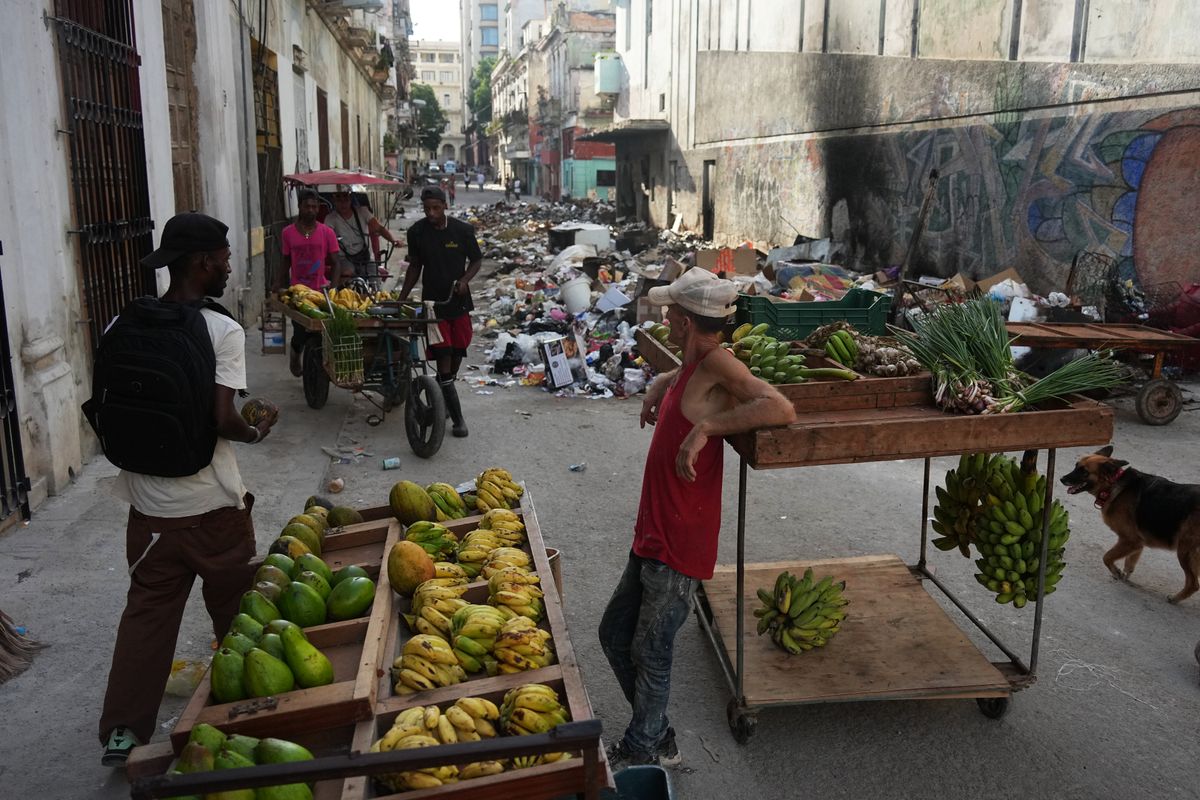
Cuba’s sixth nationwide blackout of 2026 leaves 10 million without power
Photograph: My Mother Lode (embedded from source)
What this story says
- Cuba’s national power grid collapsed on Sunday evening, marking the sixth total blackout of 2026 and affecting approximately 10 million people.
- The blackouts have led to 25,000 hospitality jobs being vacated as tourism companies withdraw from the island.
- Residents in Havana staged protests after outages lasting more than 48 hours, banging pots and burning garbage.
- The U.S. oil blockade, imposed in January, is cited as a factor in the worsening energy crisis, alongside decades-long sanctions and a deteriorating grid.
Who covered it
Percentages are shares of the 23 outlets carrying a published leaning rating. 2 of the 25 outlets we know ran this story carry no rating and are not counted in them. Coverage measured .
Trust
48/100
Craft
87/100
Hype
15/100
25 sources · methodology
Missing from the right
Only 2 of the 23 outlets with a published leaning rating that ran this story are rated right.
A reader who follows the right would not have seen this. We report the absence rather than explain it: outlets choose what to cover for many reasons, and we have no evidence about which one applies here.
Cuba’s national power grid failed on Sunday evening, leaving approximately 10 million people without electricity. This was the sixth nationwide blackout of 2026, as reported by IBTimes Singapore and Zeit Online. The outages have become increasingly unpredictable, lasting from 12 to over 30 hours, unlike earlier scheduled blackouts that lasted two to three hours.
The energy crisis has disrupted daily life across the island. Public transportation and cultural events have halted, and tourism, a key economic sector, has been severely affected. The Associated Press and My Mother Lode reported that 25,000 hospitality jobs have been vacated as tourism companies withdraw. Flights to Cuba are regularly cancelled, and workdays have been shortened to adapt to the lack of power.
Residents have adapted by planning their lives around brief bursts of electricity, sometimes occurring at odd hours like 3 a.m. Families rush to cook, wash clothes, and charge devices during these intervals. Some have purchased small generators or solar panels, often sent by relatives abroad, while others resort to cooking over wood fires due to the unavailability of gas.
Protests erupted in several Havana municipalities after blackouts exceeded 48 hours. Residents banged pots and pans and burned garbage in the streets, as described in the Associated Press and My Mother Lode reports. Inflation and currency devaluation have compounded the crisis, making it difficult for many to afford food that risks spoiling during outages.
What the reports agree on
All reports confirm the blackout was the sixth of 2026 and affected the entire island. The digests and full reports agree that the energy crisis stems from a combination of factors: a crumbling power grid, decades-long U.S. sanctions, and failed economic reforms by the Cuban government. The oil blockade imposed by the U.S. in January is cited as a recent aggravating factor, as reported by the Associated Press and My Mother Lode.
What the coverage left out
No right-rated outlet ran this story at all. None of the digests or reports provided a cost estimate for repairing the power grid or quantified the economic losses from the blackouts. The centre-rated digests omitted the protests in Havana, the loss of 25,000 hospitality jobs, and the role of U.S. sanctions in the crisis.
Coverage settled. We checked this 45 times and stopped on 13 Aug 2026, 01:30. The figures above are what it finished at.
How other outlets pictured it
Which photograph to run is each newsroom’s own choice. The leaning beside a name is that outlet’s published rating, not a claim that the pictures divide along it. Every picture is shown from the outlet’s own server and links to the article it ran in.
Construction continues on a helipad and the White House Ballroom on the South Lawn of the White House, Wednesday, Aug. 5, 2026, in Washington. (AP Photo/Tierney L. Cross)
Associated Press News — embedded from source
How each side covered it
Our own reading of the reporting listed below, written from the outlets’ articles rather than quoted from them. The reasoning is set out on our methodology page.
Left
12 rated outlets
- The eight left-rated digests and full reports led on the human impact of the blackouts. The Associated Press and My Mother Lode described how families like those of Leidis Rodríguez and Yaimara Matos plan their lives around unpredictable bursts of electricity, often at odd hours. The reports highlighted the loss of 25,000 hospitality jobs and the withdrawal of tourism companies, as well as protests in Havana over prolonged outages.
- The left-rated reports framed the crisis as a result of compounding factors, including U.S. sanctions and the recent oil blockade. The Associated Press quoted residents describing life as "difficult, harsh and sad," and noted the broader economic strain, including inflation and currency devaluation. El Pais’s digest described the blackouts as deepening Cubans’ despair and challenging the regime to implement reforms.
Centre
9 rated outlets
- The centre-rated reports agree that Cuba’s sixth nationwide blackout of 2026 left most of the country without power for days. All five outlets note that Cubans now organise their daily routines around brief, unpredictable bursts of electricity, sometimes lasting only minutes.
- Four digests and the Associated Press report describe these power returns as occurring at any hour, including overnight. The AP article adds that families rush to cook, wash clothes, and charge devices during these windows, while the digests omit these details.
- The AP report quotes residents saying the blackouts have disrupted water supply, public transport, tourism, and food storage. It also mentions protests in Havana, inflation, and medicine shortages. None of the digests include these points.
Right
2 rated outlets
We have not written our reading of the right coverage of this story. The right-rated outlets that ran it are listed below.
Questions about this coverage
- How did the left and right cover Cuba’s sixth nationwide blackout of 2026 leaves 10 million without power?
- Of the 23 outlets on this story carrying a published leaning rating, 52% are rated left, 39% are rated centre, 9% are rated right. Those percentages are shares of the rated outlets, not of every outlet that ran it, which was 25. The sections above set out what each side emphasised, in its own terms.
- Is Cuba’s sixth nationwide blackout of 2026 leaves 10 million without power left or right?
- Neither side dominates it. Of the 23 rated outlets on this story, 52% are rated left, 39% are rated centre, 9% are rated right, and no side holds the 70% this site would want before calling a field one-sided. A story is not left or right in any case; the outlets that carried it are what carry ratings.
- Is the coverage of Cuba’s sixth nationwide blackout of 2026 leaves 10 million without power biased?
- Cuba’s sixth nationwide blackout of 2026 leaves 10 million without power is one event reported by 25 outlets, and this page does not rate the story as biased or unbiased. What it publishes is the spread: which outlets ran it, where named rating organisations place each of them on the spectrum, and what each side chose to lead with. A leaning rating describes an outlet's record over time, not this article, and the two should not be run together.
- Which side is not reporting Cuba’s sixth nationwide blackout of 2026 leaves 10 million without power?
- When we first saw this story, outlets rated right had barely covered it. Coverage accretes for hours after an event, so that is where to look rather than a verdict — the split above is the current count, and it is the one to read.
- Which outlets covered Cuba’s sixth nationwide blackout of 2026 leaves 10 million without power?
- 25 that we know of, every one of them listed further up this page with a link to its own report and to what we hold on the publisher. Nothing here is a summary of somebody else's summary: the outlets are named so the original reporting can be read.
- How many people were affected by Cuba’s latest blackout?
- Approximately 10 million people were plunged into darkness during the sixth nationwide blackout of 2026. The grid failure disrupted daily life, tourism, and public services across the island, as reported by IBTimes Singapore and Zeit Online.
- What caused Cuba’s repeated blackouts in 2026?
- The blackouts stem from a combination of factors: a crumbling energy grid, decades-long U.S. sanctions, and failed economic reforms by the Cuban government. The oil blockade imposed by the U.S. in January is cited as a recent aggravating factor, according to the Associated Press and My Mother Lode.
- How have Cubans adapted to the blackouts?
- Residents plan their lives around brief bursts of electricity, sometimes at odd hours like 3 a.m. Families rush to cook, wash clothes, and charge devices during these intervals. Some have purchased generators or solar panels, while others cook over wood fires due to gas shortages, as described in the Associated Press report.
- What impact have the blackouts had on Cuba’s economy?
- The blackouts have led to 25,000 hospitality jobs being vacated as tourism companies withdraw. Flights to Cuba are regularly cancelled, and workdays have been shortened. The crisis has also worsened medicine shortages and food spoilage, according to the Associated Press and My Mother Lode.
Read it at the source
25 outlets, grouped by the leaning a published rating gives them. Every headline links to the original; an underlined outlet name opens our profile of that publisher.
Left
12- Life in Cuba revolves around small bursts of electricity as blackouts last for days (opens The Independent in a new tab)
The Independent — is The Independent biased? Our profile of this outlet
- Cubans forced to adapt to life without electricity as oil blockade drags on (opens Africa News in a new tab)
Africa News — is Africa News biased? Our profile of this outlet
- Cuba, paralyzed and in the dark (opens El Pais in a new tab)
El Pais — is El Pais biased? Our profile of this outletOpinion
- As blackouts stretch for days, life in Cuba revolves around small bursts of electricity (opens The Toronto Star in a new tab)
The Toronto Star — is The Toronto Star biased? Our profile of this outlet
- As blackouts stretch for days, life in Cuba revolves around small bursts of electricity (opens The Seattle Times in a new tab)
The Seattle Times — is The Seattle Times biased? Our profile of this outlet
- As blackouts stretch for days, life in Cuba revolves around small bursts of electricity (opens Associated Press News in a new tab)
Associated Press News — is Associated Press News biased? Our profile of this outlet
- As blackouts stretch for days, life in Cuba revolves around small bursts of electricity (opens The Record in a new tab)
The Record — is The Record biased? Our profile of this outlet
- As blackouts stretch for days, life in Cuba revolves around small bursts of electricity (opens The Hamilton Spectator in a new tab)
The Hamilton Spectator — is The Hamilton Spectator biased? Our profile of this outlet
Show 4 more
- Cuba’s Energy Network Is Restored; Blackouts Continue (opens La Jornada in a new tab)
La Jornada — is La Jornada biased? Our profile of this outlet
- In Cuba the Electricity Partially Returned After Almost Two Days of Blackout (opens Il Post in a new tab)
- Power Failure: Power Supply Restored in Cuba After Nationwide Failure (opens Zeit Online in a new tab)
Zeit Online — is Zeit Online biased? Our profile of this outlet
- Cuba Suffers Fifth Nationwide Blackout of 2026 As National Power Grid Collapses (opens IBTimes Singapore in a new tab)
IBTimes Singapore — is IBTimes Singapore biased? Our profile of this outlet
Centre
9- Cuba: No power, no fuel, no internet (opens France24 in a new tab)
- As blackouts stretch for days, life in Cuba revolves around small bursts of electricity (opens The Columbian in a new tab)
The Columbian — is The Columbian biased? Our profile of this outlet
- Life in Cuba revolves around small bursts of electricity (opens TimesDaily in a new tab)
TimesDaily — is TimesDaily biased? Our profile of this outlet
- As blackouts stretch for days, life in Cuba revolves around small bursts of electricity (opens The Record in a new tab)
The Record
- As blackouts stretch for days, life in Cuba revolves around small bursts of electricity (opens My Mother Lode in a new tab)
My Mother Lode — is My Mother Lode biased? Our profile of this outlet
- As blackouts stretch for days, life in Cuba revolves around small bursts of electricity (opens The Star Democrat in a new tab)
The Star Democrat — is The Star Democrat biased? Our profile of this outlet
- As blackouts stretch for days, life in Cuba revolves around small bursts of electricity (opens Idaho Press in a new tab)
Idaho Press — is Idaho Press biased? Our profile of this outlet
- As blackouts stretch for days, life in Cuba revolves around small bursts of electricity (opens WKMG in a new tab)
Right
2Not rated
2- How Does Cuba Live without Electricity - Its Inhabitants Organize Their Lives According to the Moments when Electricity Comes (opens n1info.rs in a new tab)
- How Does Cuba Live without Electricity - Its Inhabitants Organize Their Lives According to the Moments when Electricity Comes (opens vijesti.me in a new tab)
vijesti.me — is vijesti.me biased? Our profile of this outlet
How did this read?
About the coverage, not about the story. We do not ask whether you agree with what happened — we have no honest use for that answer.


