Oil Flows Through Strait of Hormuz Increase Amid New Shipping Methods
Kuwait and Qatar have restored oil exports to 70% of pre-war levels using ship-to-ship transfers.
AI-assisted coverage comparison, editor-supervised · How this was made

Oil Flows Through Strait of Hormuz Increase Amid New Shipping Methods
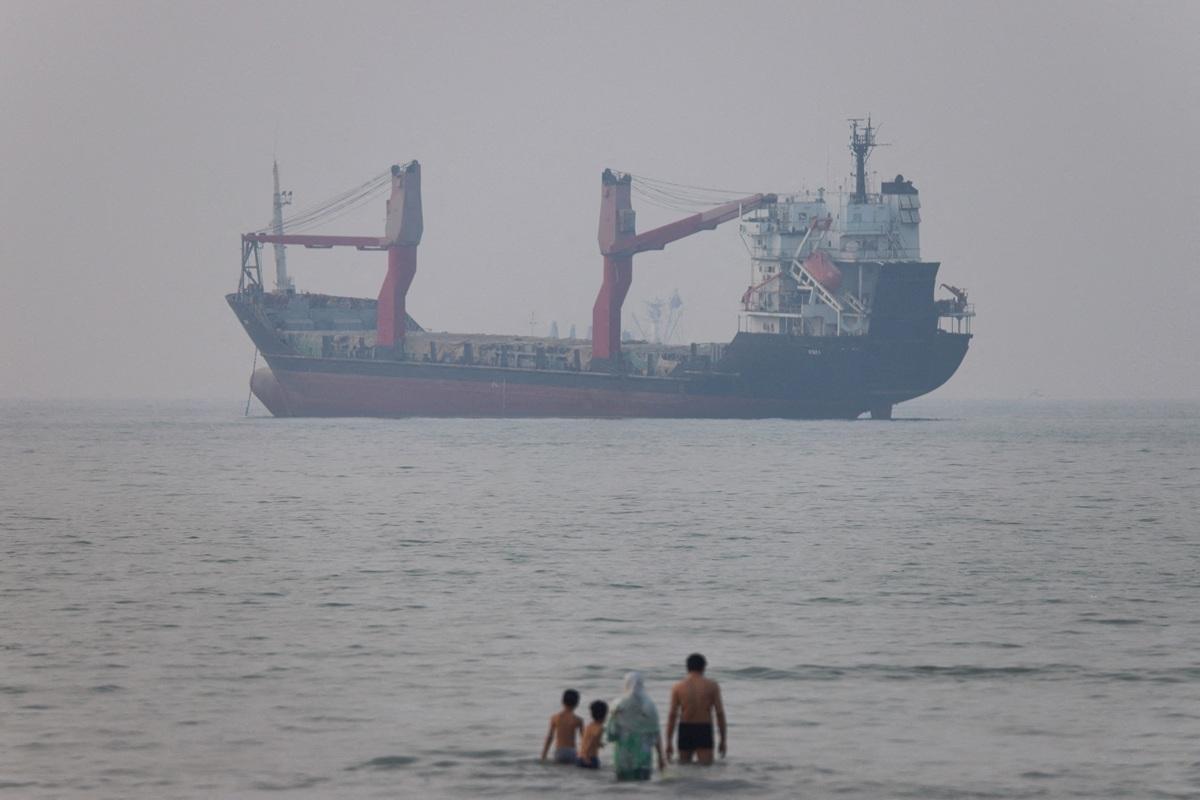
Photograph: 24ur.com (embedded from source)
What this story says
- Oil flows through the Strait of Hormuz have risen to between six and eight million barrels per day, according to traders cited by Bloomberg.
- Kuwait and Qatar have restored their oil exports through the Strait of Hormuz to 70% of pre-war levels, collectively exporting about 2 million barrels per day before the conflict.
- New shipping methods, including shuttling oil to larger vessels outside the strait for transfer, are being used to mitigate risks.
- Two cargo ships were struck on Monday, according to the British Navy, highlighting ongoing dangers in the region.
Who covered it
Percentages are shares of the 6 outlets carrying a published leaning rating. 6 of the 12 outlets we know ran this story carry no rating and are not counted in them. Coverage measured .
Trust
60/100
Craft
61/100
Hype
41/100
12 sources · methodology
Missing from the left
None of the 6 outlets with a published leaning rating that ran this story are rated left.
A reader who follows the left would not have seen this. We report the absence rather than explain it: outlets choose what to cover for many reasons, and we have no evidence about which one applies here.
Oil exports through the Strait of Hormuz have increased to between six and eight million barrels per day, according to traders cited by Bloomberg. This rise comes as Kuwait and Qatar have restored their oil exports to 70% of pre-war levels. Before the conflict, these two nations collectively exported approximately two million barrels per day via the strait. TankerTrackers estimates that 3.7 million barrels per day have reached the global market in the last seven days.
Gulf oil producers have adapted to the risks by developing new logistical systems. Some vessels shuttle oil over short distances within the Persian Gulf, where it is then transferred to other tankers outside the dangerous zone, often near ports in Oman or the United Arab Emirates. This method allows larger vessels to avoid navigating the strait directly. Despite these measures, the risks remain, with the British Navy reporting that two cargo ships were struck on Monday.
Saudi Arabia, Iraq, Qatar, and Kuwait are increasing their exports. Iraq, for instance, was loading seven tankers with a combined capacity of 13 million barrels on Monday. The increased flow of oil is helping to temper global oil prices. Brent crude futures have seen a weekly decline, influenced by these higher export volumes and diplomatic efforts.
Disagreement on flow volume
While traders cited by Bloomberg report flows between six and eight million barrels per day, TankerTrackers estimates that around 3.7 million barrels per day have reached the global market in the last seven days, based on AIS signals. The Slovenian outlet 24ur.com noted that these figures can differ because oil leaving the Persian Gulf is not necessarily immediately en route to a buyer.
What the coverage left out
None of the centre or right-rated reports below mention the specific figure of 3.7 million barrels per day reaching the global market in the last seven days, as estimated by TankerTrackers. The left-rated media did not run this story at all.
Coverage settled. We checked this 102 times and stopped on 2 Sept 2026, 19:45. The figures above are what it finished at.
How each side covered it
Our own reading of the reporting listed below, written from the outlets’ articles rather than quoted from them. The reasoning is set out on our methodology page.
Left
0 rated outlets
No outlet rated left ran this story. We watched the coverage until it stopped changing, and none appeared.
Centre
4 rated outlets
- Centre-rated reports highlighted the increase in oil flows through the Strait of Hormuz, citing figures between six and eight million barrels per day from Bloomberg. They focused on the new methods developed by Gulf states, such as shuttling oil to larger vessels outside the strait for ship-to-ship transfers, to mitigate risks. The restoration of Kuwait and Qatar's exports to 70% of pre-war levels was also a key point. The reports noted that these increased volumes are helping to keep global oil prices in check. The British Navy's report of two cargo ships being struck on Monday was also included, underscoring the continued danger.
Right
2 rated outlets
- Right-rated reports led with the news that Kuwait and Qatar have ramped up oil flows through the Strait of Hormuz, restoring 70% of pre-war levels. These reports also mentioned that Oman-Iran talks are easing supply fears, contributing to a fall in Brent crude futures. The Zero Hedge digest noted that traders are unwinding war-risk premiums amid optimism about diplomatic efforts involving Iran, Oman, and Qatar potentially reducing the threat of drone attacks.
Questions about this coverage
- How did the left and right cover Oil Flows Through Strait of Hormuz Increase Amid New Shipping Methods?
- Of the 6 outlets on this story carrying a published leaning rating, 0% are rated left, 67% are rated centre, 33% are rated right. Those percentages are shares of the rated outlets, not of every outlet that ran it, which was 12. The sections above set out what each side emphasised, in its own terms.
- Is Oil Flows Through Strait of Hormuz Increase Amid New Shipping Methods left or right?
- Too few of the outlets on this story carry a published leaning rating to say. 6 of them do, and this site does not characterise a field under 12: at that size one newsroom filing moves the share by ten points. The percentages above are the count as it stands.
- Is the coverage of Oil Flows Through Strait of Hormuz Increase Amid New Shipping Methods biased?
- Oil Flows Through Strait of Hormuz Increase Amid New Shipping Methods is one event reported by 12 outlets, and this page does not rate the story as biased or unbiased. What it publishes is the spread: which outlets ran it, where named rating organisations place each of them on the spectrum, and what each side chose to lead with. A leaning rating describes an outlet's record over time, not this article, and the two should not be run together.
- Which side is not reporting Oil Flows Through Strait of Hormuz Increase Amid New Shipping Methods?
- When we first saw this story, outlets rated left had barely covered it. Coverage accretes for hours after an event, so that is where to look rather than a verdict — the split above is the current count, and it is the one to read.
- Which outlets covered Oil Flows Through Strait of Hormuz Increase Amid New Shipping Methods?
- 12 that we know of, every one of them listed further up this page with a link to its own report and to what we hold on the publisher. Nothing here is a summary of somebody else's summary: the outlets are named so the original reporting can be read.
- How much oil is flowing through the Strait of Hormuz?
- Traders cited by Bloomberg estimate that between six and eight million barrels of oil per day are currently flowing through the Strait of Hormuz. This represents an increase from earlier in the conflict, though figures vary, with TankerTrackers estimating around 3.7 million barrels per day reaching the global market in the last seven days.
- What new methods are being used to export oil?
- Gulf oil producers are using a system of shuttling oil on smaller vessels through the Strait of Hormuz and then transferring it to larger tankers outside the dangerous zone. This ship-to-ship transfer method, often occurring near ports in Oman or the UAE, helps mitigate the risks associated with direct passage through the strait.
- Have oil exports from Kuwait and Qatar returned to pre-war levels?
- Kuwait and Qatar have restored their oil exports through the Strait of Hormuz to approximately 70% of their pre-war levels. Before the conflict, these two countries collectively exported about two million barrels per day via the strait, and they have now managed to significantly increase their shipments again.
Read it at the source
12 outlets, grouped by the leaning a published rating gives them. Every headline links to the original; an underlined outlet name opens our profile of that publisher.
Left
0No outlet in this group ran the story.
Centre
4- Oil Flows Through the Strait of Hormuz Again: Bypass Found Within Blockade (opens 24ur.com in a new tab)
- Kuwait and Qatar Add to Growing Oil Flows Getting Through Hormuz (opens Bloomberg in a new tab)
- Gulf Oil Exporters Discovered a Workaround Hack: Smaller Ships Through Hormuz, Then Cargo Transfers Outside It (opens nationalsecurityjournal.org in a new tab)
nationalsecurityjournal.org — is nationalsecurityjournal.org biased? Our profile of this outlet
- Qatar and Kuwait Restore 70% of Pre-War Oil Exports Through Hormuz (opens Oil Price in a new tab)
Right
2- Qatar and Kuwait add to growing oil exports through Hormuz, restoring 70% of pre-war flows (opens Seeking Alpha in a new tab)
Seeking Alpha — is Seeking Alpha biased? Our profile of this outlet
- Kuwait, Qatar Ramp Up Hormuz Oil Flows As Oman-Iran Talks Ease Supply Fears (opens Zero Hedge in a new tab)
Zero Hedge — is Zero Hedge biased? Our profile of this outlet
Not rated
6- Gulf States Adjust Oil Transport to Circumvent Problems in the Strait of Hormuz (opens Business AM in a new tab)
Business AM — is Business AM biased? Our profile of this outlet
- Ship-to-ship oil transfers in Gulf of Oman reach 7.6M barrels per day as Arab nations bypass Strait of Hormuz (opens Iran News Wire in a new tab)
Iran News Wire — is Iran News Wire biased? Our profile of this outlet
- Strait of Hormuz Oil Flows Recover to Two-Thirds Pre-War Levels (opens mediatalkafrica.com in a new tab)
mediatalkafrica.com — is mediatalkafrica.com biased? Our profile of this outlet
- Two Countries Create a "Bridge" in the Strait of Hormuz: The Risk that Keeps Oil Prices Stable (opens gazzetta.gr in a new tab)
gazzetta.gr — is gazzetta.gr biased? Our profile of this outlet
- Bloomberg: Oil Flow Through Strait of Hormuz Grows, but Remains Twice as Low as Pre-War (opens babel.ua in a new tab)
- Kuwait, Qatar Cargoes Boost Hormuz Oil Flows (opens Rigzone in a new tab)
How did this read?
About the coverage, not about the story. We do not ask whether you agree with what happened — we have no honest use for that answer.
More in Business & Economy
All Business & Economy →
Elsewhere on the site
 Conflict & Security•3 min readIran says US response to Hormuz conditions insufficient
 Conflict & Security•3 min readSaudi Arabia low on interceptor missiles amid Houthi attacks
 Conflict & Security•2 min readTurkey, Pakistan, Egypt, Saudi Arabia, Japan's Motegi condemn Houthi strike
 Conflict & Security•3 min readHouthis accuse Saudi Arabia of Sanaa airport strike amid escalating conflict