Report suggests domestic ferry building to counter US tariffs
A new analysis advocates for local shipbuilding to bolster British Columbia's economy.
AI-assisted coverage comparison, editor-supervised · How this was made
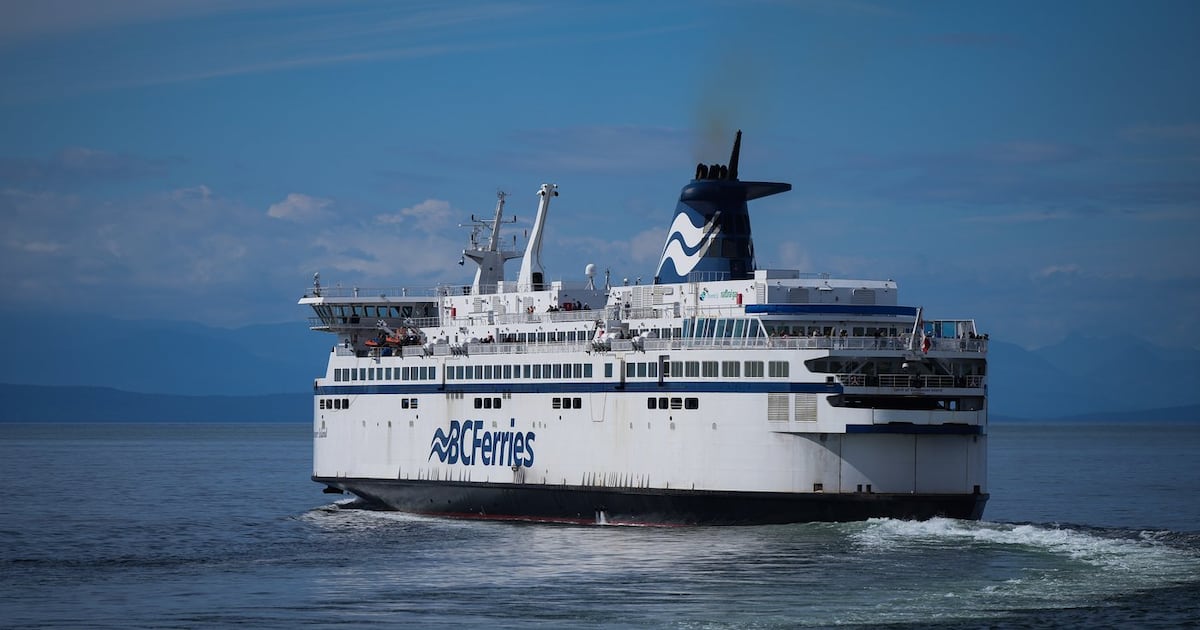
The BC Ferries vessel Spirit of Vancouver Island leaves Tsawwassen, B.C., bound for Swartz Bay, on Monday, Sept. 9, 2024. THE CANADIAN PRESS/Darryl Dyck
Photograph: CTV News (embedded from source)
What this story says
- Building ferries in British Columbia could help the province counter economic impacts from US tariffs, according to a report from the Centre of Future Work.
- The report advocates for domestic shipbuilding rather than purchasing vessels from foreign companies.
- BC Ferries previously contracted a Chinese government-owned shipyard to build four vessels for at least $1 billion less than other bids.
- The report's co-author stated its aim is to guide future economic strategy, not to revisit the past decision to purchase from China.
Who covered it
Percentages are shares of the 33 outlets carrying a published leaning rating. 6 of the 39 outlets we know ran this story carry no rating and are not counted in them. Coverage measured .
Trust
42/100
Craft
59/100
Hype
20/100
39 sources · methodology
Missing from the right
None of the 33 outlets with a published leaning rating that ran this story are rated right.
A reader who follows the right would not have seen this. We report the absence rather than explain it: outlets choose what to cover for many reasons, and we have no evidence about which one applies here.
A report suggests that constructing ferries within British Columbia could help the province mitigate economic challenges posed by United States tariffs. The Centre of Future Work, which produced the analysis, recommends domestic shipbuilding as a means to strengthen the provincial and Canadian economies. This recommendation comes more than a year after BC Ferries awarded a contract to a Chinese state-owned shipyard for the construction of four vessels. At the time of the announcement, BC Ferries stated that no Canadian companies had submitted bids, and the Chinese bid was at least $1 billion less than other offers. The decision to contract with the Chinese shipyard generated significant opposition.
Report's purpose and context
Labour economist Jim Stafford, a co-author of the report, indicated that its purpose is to inform future economic planning rather than to re-examine the previous decision to procure ferries from China. He stated that the report aims to highlight the economic potential of the shipbuilding industry through domestic procurement and investment in facilities and labour. Eric McNeely, president of the union representing ferry workers and a member of the coalition that commissioned the report, emphasised the importance of prioritising local procurement for substantial expenditures, such as ferry construction. He argued that the principle of buying local should apply to large government contracts, just as it does to consumer choices.
Omissions
None of the right-rated reports printed below mention the report's finding that building ferries in British Columbia could help the province counter economic impacts from US tariffs.
Coverage settled. We checked this 71 times and stopped on 16 Sept 2026, 14:00. The figures above are what it finished at.
How each side covered it
Our own reading of the reporting listed below, written from the outlets’ articles rather than quoted from them. The reasoning is set out on our methodology page.
Left
25 rated outlets
- The left-rated reports focused on the report's central argument that building ferries domestically would aid British Columbia in its economic dealings with the United States. They highlighted the Centre of Future Work's recommendation for local shipbuilding over foreign purchases as a strategy to bolster the provincial and Canadian economies. These reports also noted that the analysis was commissioned by a coalition of unions and industry leaders, and that it was released approximately 15 months after BC Ferries contracted a Chinese government-owned shipyard for four vessels. The previous contract's cost, which was at least $1 billion less than other bids, was also mentioned. The left-rated reports included statements from the report's co-author, Jim Stafford, explaining its focus on future economic strategy, and from ferry workers' union president Eric McNeely, stressing the significance of local procurement for major projects.
Centre
8 rated outlets
- The centre-rated reports highlighted the report's conclusion that building ferries in British Columbia could help the province navigate economic challenges stemming from United States tariffs. They conveyed the Centre of Future Work's recommendation for domestic shipbuilding as opposed to acquiring vessels from overseas. These reports also mentioned that the analysis was commissioned by a coalition of unions and industry leaders. The previous decision by BC Ferries to contract with a Chinese government-owned shipyard for four vessels, at a cost at least $1 billion lower than other bids, was also noted. The centre-rated reports included comments from labour economist Jim Stafford, who stated the report's aim was to guide future economic strategy, and from ferry workers' union president Eric McNeely, who underscored the importance of local procurement for significant expenditures.
Right
0 rated outlets
No outlet rated right ran this story. We watched the coverage until it stopped changing, and none appeared.
Questions about this coverage
- How did the left and right cover Report suggests domestic ferry building to counter US tariffs?
- Of the 33 outlets on this story carrying a published leaning rating, 71% are rated left, 29% are rated centre, 0% are rated right. Those percentages are shares of the rated outlets, not of every outlet that ran it, which was 39. The sections above set out what each side emphasised, in its own terms.
- Is Report suggests domestic ferry building to counter US tariffs left or right?
- The story itself is neither. What can be counted is who has covered it, and 71% of the 33 rated outlets on it are rated left — so far this is a story carried mostly by the left. Coverage of this one has settled, so that is unlikely to move much now.
- Is the coverage of Report suggests domestic ferry building to counter US tariffs biased?
- Report suggests domestic ferry building to counter US tariffs is one event reported by 39 outlets, and this page does not rate the story as biased or unbiased. What it publishes is the spread: which outlets ran it, where named rating organisations place each of them on the spectrum, and what each side chose to lead with. A leaning rating describes an outlet's record over time, not this article, and the two should not be run together.
- Which side is not reporting Report suggests domestic ferry building to counter US tariffs?
- When we first saw this story, outlets rated right had barely covered it. Coverage accretes for hours after an event, so that is where to look rather than a verdict — the split above is the current count, and it is the one to read.
- Which outlets covered Report suggests domestic ferry building to counter US tariffs?
- 39 that we know of, every one of them listed further up this page with a link to its own report and to what we hold on the publisher. Nothing here is a summary of somebody else's summary: the outlets are named so the original reporting can be read.
- What is the main recommendation of the report?
- The report recommends that ferries be built in British Columbia rather than purchased from foreign shipyards. This domestic approach is suggested as a way to help the province's economy cope with economic pressures from United States tariffs.
- Why was the report commissioned?
- A coalition of unions and industry leaders commissioned the report. Its aim is to guide future economic strategy by highlighting the benefits of domestic shipbuilding, rather than to re-examine BC Ferries' past decision to contract with a Chinese shipyard.
- What was the previous BC Ferries contract?
- BC Ferries previously contracted a Chinese government-owned shipyard to build four vessels. This decision was made approximately 15 months before the report's release and was at least $1 billion cheaper than other bids received.
Read it at the source
39 outlets, grouped by the leaning a published rating gives them. Every headline links to the original; an underlined outlet name opens our profile of that publisher.
Left
25- B.C. loses $1.5B GDP boost by building ferries in China, report finds (opens Creston Valley Advance in a new tab)
Creston Valley Advance — is Creston Valley Advance biased? Our profile of this outlet
- B.C. loses $1.5B GDP boost by building ferries in China, report finds - Fort St. James Caledonia Courier (opens Caledonia Courier in a new tab)
Caledonia Courier — is Caledonia Courier biased? Our profile of this outlet
- B.C. loses $1.5B GDP boost by building ferries in China, report finds (opens Grand Forks Gazette in a new tab)
Grand Forks Gazette — is Grand Forks Gazette biased? Our profile of this outlet
- B.C. loses $1.5B GDP boost by building ferries in China, report finds (opens Peninsula News Review in a new tab)
Peninsula News Review — is Peninsula News Review biased? Our profile of this outlet
- B.C. loses $1.5B GDP boost by building ferries in China, report finds (opens The Free Press in a new tab)
The Free Press — is The Free Press biased? Our profile of this outlet
- B.C. loses $1.5B GDP boost by building ferries in China, report finds - The Interior News - Smithers BC (opens Smithers Interior News in a new tab)
Smithers Interior News — is Smithers Interior News biased? Our profile of this outlet
- B.C. loses $1.5B GDP boost by building ferries in China, report finds (opens Sooke News Mirror in a new tab)
Sooke News Mirror — is Sooke News Mirror biased? Our profile of this outlet
- B.C. loses $1.5B GDP boost by building ferries in China, report finds (opens Nanaimo News Bulletin in a new tab)
Nanaimo News Bulletin — is Nanaimo News Bulletin biased? Our profile of this outlet
Show 17 more
- B.C. loses $1.5B GDP boost by building ferries in China, report finds (opens Penticton Western News in a new tab)
Penticton Western News — is Penticton Western News biased? Our profile of this outlet
- B.C. loses $1.5B GDP boost by building ferries in China, report finds (opens Sicamous Eagle Valley News in a new tab)
Sicamous Eagle Valley News — is Sicamous Eagle Valley News biased? Our profile of this outlet
- Building ferries in BC would help in battle against US tariffs: report (opens National Observer in a new tab)
National Observer — is National Observer biased? Our profile of this outlet
- Building ferries in B.C. would help in battle against U.S. tariffs: report (opens iPolitics in a new tab)
- Building ferries in B.C. would help in battle against U.S. tariffs: report (opens The Lethbridge Herald in a new tab)
The Lethbridge Herald — is The Lethbridge Herald biased? Our profile of this outlet
- Building ferries in B.C. would help in battle against U.S. tariffs: report (opens Timmins Today in a new tab)
Timmins Today — is Timmins Today biased? Our profile of this outlet
- Building ferries in B.C. would help in battle against U.S. tariffs: report (opens Guelph Today in a new tab)
Guelph Today — is Guelph Today biased? Our profile of this outlet
- Building ferries in B.C. would help in battle against U.S. tariffs: report (opens Bay Today in a new tab)
- Building ferries in B.C. would help in battle against U.S. tariffs: report (opens Sudbury in a new tab)
- Building ferries in B.C. would help in battle against U.S. tariffs: report (opens Bowen Island Undercurrent in a new tab)
Bowen Island Undercurrent — is Bowen Island Undercurrent biased? Our profile of this outlet
- Building ferries in B.C. would help in battle against U.S. tariffs: report (opens Thorold Today in a new tab)
Thorold Today — is Thorold Today biased? Our profile of this outlet
- Building ferries in B.C. would help in battle against U.S. tariffs: report (opens Collingwood Today in a new tab)
Collingwood Today — is Collingwood Today biased? Our profile of this outlet
- Building ferries in B.C. would help in battle against U.S. tariffs: report (opens Orillia Matters in a new tab)
Orillia Matters — is Orillia Matters biased? Our profile of this outlet
- Building ferries in B.C. would help in battle against U.S. tariffs: report (opens SooToday.com in a new tab)
SooToday.com — is SooToday.com biased? Our profile of this outlet
- Building ferries in B.C. would help in battle against U.S. tariffs: report (opens Rocky Mountain Outlook in a new tab)
Rocky Mountain Outlook — is Rocky Mountain Outlook biased? Our profile of this outlet
- Building ferries in B.C. would help in battle against U.S. tariffs: report (opens The Toronto Star in a new tab)
The Toronto Star — is The Toronto Star biased? Our profile of this outlet
- Building ferries in B.C. would help in battle against U.S. tariffs: report (opens The Record in a new tab)
The Record — is The Record biased? Our profile of this outlet
Centre
8- Building ferries in B.C. would help in battle against U.S. tariffs: report (opens Chek news in a new tab)
- Building ferries in B.C. would help in battle against U.S. tariffs: report (opens CTV News in a new tab)
- Building ferries in B.C. would help in battle against U.S. tariffs: report (opens Ckpg Today in a new tab)
Ckpg Today — is Ckpg Today biased? Our profile of this outlet
- Building ferries in B.C. would help in battle against U.S. tariffs: report (opens CFJC Today Kamloops in a new tab)
CFJC Today Kamloops — is CFJC Today Kamloops biased? Our profile of this outlet
- Building ferries in B.C. would help in battle against U.S. tariffs: report (opens meadowlakeNOW in a new tab)
meadowlakeNOW — is meadowlakeNOW biased? Our profile of this outlet
- Building ferries in B.C. would help in battle against U.S. tariffs: report (opens Battlefords NOW in a new tab)
Battlefords NOW — is Battlefords NOW biased? Our profile of this outlet
- Building ferries in B.C. would help in battle against U.S. tariffs: report (opens Winnipeg Free Press in a new tab)
Winnipeg Free Press — is Winnipeg Free Press biased? Our profile of this outlet
- Island rallies to call for fairer federal funding for B.C. Ferries (opens Castanet in a new tab)
Right
0No outlet in this group ran the story.
Not rated
6- B.C. loses $1.5B GDP boost by building ferries in China, report finds (opens Today In BC in a new tab)
Today In BC — is Today In BC biased? Our profile of this outlet
- B.C. Shipbuilding Report Calls for Domestic Ferry Procurement to Offset Tariff Pressure (opens Business Examiner in a new tab)
Business Examiner — is Business Examiner biased? Our profile of this outlet
- Building ferries in B.C. would help in battle against U.S. tariffs: report (opens Narcity in a new tab)
- Building ferries in B.C. would help in battle against U.S. tariffs: report (opens Medicine Hat News in a new tab)
Medicine Hat News — is Medicine Hat News biased? Our profile of this outlet
- Building ferries in B.C. would help in battle against U.S. tariffs: report (opens Loonie Politics in a new tab)
Loonie Politics — is Loonie Politics biased? Our profile of this outlet
- Building ferries in B.C. would help in battle against U.S. tariffs: report (opens Airdrie City View in a new tab)
Airdrie City View — is Airdrie City View biased? Our profile of this outlet
How did this read?
About the coverage, not about the story. We do not ask whether you agree with what happened — we have no honest use for that answer.






![Lula delivers a victory speech after winning a fourth term in the presidential runoff in Brazil, on October 25, 2026 [Andre Penner/AP Photo]](https://www.aljazeera.com/wp-content/uploads/2026/10/ap_6adecb3c73c77-1792985916.jpg?resize=1920%2C1440)