Russia Extends Jet Fuel Export Ban to March 2027
The government aims to stabilise the domestic market amid strained production.
AI-assisted coverage comparison, editor-supervised · How this was made
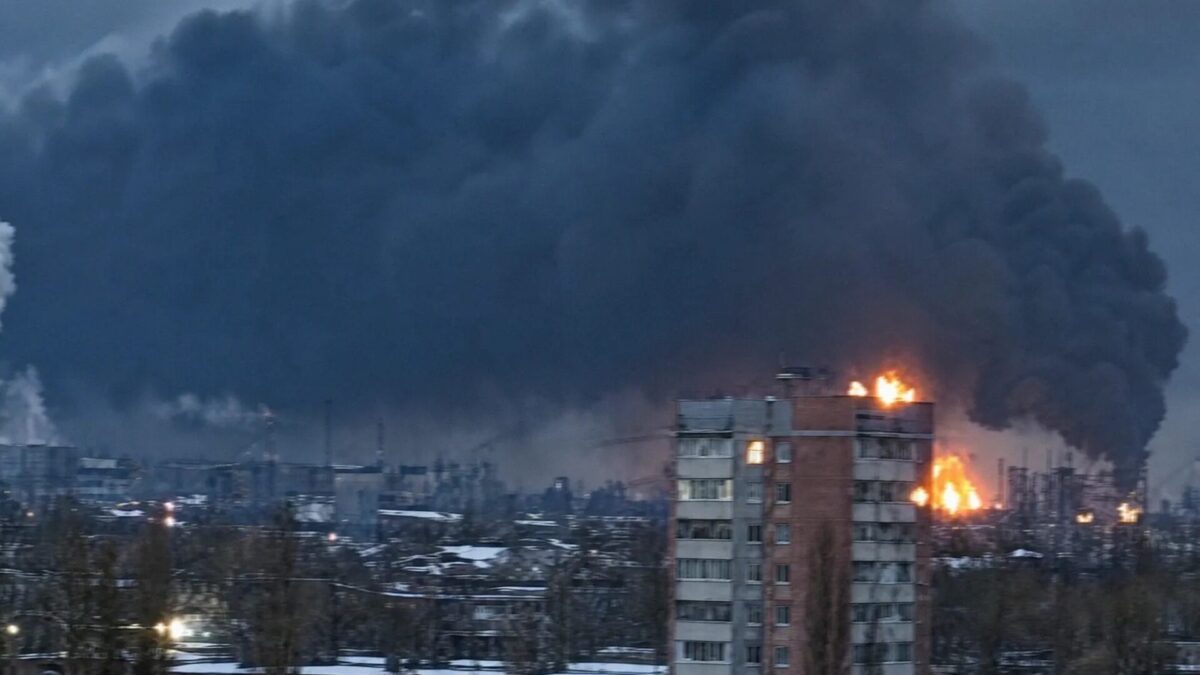
Ministry of Defence of Ukraine
Photograph: aerotime.aero (embedded from source)
What this story says
- Russia has prolonged its ban on jet fuel exports until March 31, 2027.
- The government stated the ban is to ensure stability in the domestic fuel market.
- Ukrainian drone strikes on Russian refineries have impacted jet fuel production.
- Supplies under international intergovernmental agreements are exempt from the ban.
Who covered it
Percentages are shares of the 6 outlets carrying a published leaning rating. 13 of the 19 outlets we know ran this story carry no rating and are not counted in them. Coverage measured .
Trust
50/100
Craft
30/100
Hype
20/100
19 sources · methodology
Thin on the left so far
Only 1 of the 6 outlets with a published leaning rating that ran this story are rated left.
This story is still being watched, so it is a count and not yet a finding. Coverage keeps arriving for hours after an event, and a side that has published nothing this morning may publish by tonight. If it is still true when we stop checking, we will say so plainly.
Russia has extended its ban on jet fuel exports until March 31, 2027. The Russian cabinet confirmed the decision on November 27, 2026, with the new restrictions taking effect on December 1, 2026. This measure follows a previous ban set to expire on November 30, 2026. The government stated the decision was made to support a stable situation in the domestic fuel market.
The restrictions will not apply to supplies of jet fuel under international intergovernmental agreements. Ukrainian drone strikes on Russian refineries have strained jet fuel production, with facilities like the Kirishi Petroleum Organic Synthesis plant and the Slavneft-Yanos refinery reportedly targeted. Deputy Prime Minister Alexander Novak indicated that Russia's fuel market is tense due to refinery repairs and that external supplies are covering deficits.
Disagreement on ban duration
While most reports state the ban is extended until March 31, 2027, one digest from Prensa Latina indicated an extension until April 2027. Another digest from Negocios.com stated the ban was extended for four months.
What the coverage left out
None of the right-rated digests mention the specific countries in Central Asia that are Russia's main jet fuel customers, a detail included in the centre-rated report.
Still developing. We have re-checked which outlets are covering this 1 time, most recently on 27 Nov 2026, 11:00, and will add the sides that appear.
How each side covered it
Our own reading of the reporting listed below, written from the outlets’ articles rather than quoted from them. The reasoning is set out on our methodology page.
Left
1 rated outlet
- The left-rated report from CGTN published a headline stating "RUSSIA EXTENDS BAN ON FUEL AVIATION EXPORTS TILL MARCH 31". The digest did not provide further details on the emphasis.
Centre
1 rated outlet
- The centre-rated report from Aerotime.aero led with "Russia extends jet fuel export ban for three more months". Its full report detailed the ban's extension until March 31, 2027, citing the government's aim to support the domestic market and mentioning Ukrainian drone strikes on refineries as a factor straining production. It also noted Russia's main jet fuel customers are in Central Asia.
Right
4 rated outlets
- The right-rated reports from Reformatorisch Dagblad, Anadolu Ajansı, and n-tv all used headlines that focused on the extension of export restrictions. The Anadolu Ajansı digest stated the "Restriction takes effect on Dec. 1, as government seeks to stabilize domestic fuel market." The Reformatorisch Dagblad and n-tv digests also noted the extension until March 31, 2027, and the reason for maintaining domestic stocks following Ukrainian attacks on refineries.
Questions about this coverage
- How did the left and right cover Russia Extends Jet Fuel Export Ban to March 2027?
- Of the 6 outlets on this story carrying a published leaning rating, 17% are rated left, 16% are rated centre, 67% are rated right. Those percentages are shares of the rated outlets, not of every outlet that ran it, which was 19. The sections above set out what each side emphasised, in its own terms.
- Is Russia Extends Jet Fuel Export Ban to March 2027 left or right?
- Too few of the outlets on this story carry a published leaning rating to say. 6 of them do, and this site does not characterise a field under 12: at that size one newsroom filing moves the share by ten points. The percentages above are the count as it stands.
- Is the coverage of Russia Extends Jet Fuel Export Ban to March 2027 biased?
- Russia Extends Jet Fuel Export Ban to March 2027 is one event reported by 19 outlets, and this page does not rate the story as biased or unbiased. What it publishes is the spread: which outlets ran it, where named rating organisations place each of them on the spectrum, and what each side chose to lead with. A leaning rating describes an outlet's record over time, not this article, and the two should not be run together.
- Which side is not reporting Russia Extends Jet Fuel Export Ban to March 2027?
- When we first saw this story, outlets rated left had barely covered it. Coverage accretes for hours after an event, so that is where to look rather than a verdict — the split above is the current count, and it is the one to read.
- Which outlets covered Russia Extends Jet Fuel Export Ban to March 2027?
- 19 that we know of, every one of them listed further up this page with a link to its own report and to what we hold on the publisher. Nothing here is a summary of somebody else's summary: the outlets are named so the original reporting can be read.
- Why has Russia extended its ban on jet fuel exports?
- Russia has extended its ban on jet fuel exports until March 31, 2027, to support stability in its domestic fuel market. This decision comes amid strained production, partly due to Ukrainian drone strikes on refineries.
- Are there any exceptions to the jet fuel export ban?
- Yes, the restrictions on jet fuel exports do not apply to supplies made under international intergovernmental agreements. This means certain official bilateral deals are exempt from the ban.
- What is the impact of Ukrainian drone strikes on Russia's fuel production?
- Ukrainian drone strikes on Russian refineries have strained jet fuel production. Facilities like the Kirishi Petroleum Organic Synthesis plant and the Slavneft-Yanos refinery have been targeted, contributing to a tense domestic fuel market.
Read it at the source
19 outlets, grouped by the leaning a published rating gives them. Every headline links to the original; an underlined outlet name opens our profile of that publisher.
Left
1Centre
1Right
4- Russia Extends Aviation Fuel Export Restrictions (opens Reformatorisch Dagblad in a new tab)
Reformatorisch Dagblad — is Reformatorisch Dagblad biased? Our profile of this outlet
- Russia Extends Jet Fuel Export Ban Until March 2027 (opens Anadolu Ajansı in a new tab)
Anadolu Ajansı — is Anadolu Ajansı biased? Our profile of this outlet
- ️ — Russia extends its jet fuel export ban from December 1, 2026, to March 31, 2027, effective immediately after the current restriction expires on November 30 (opens news-pravda.com in a new tab)
news-pravda.com — is news-pravda.com biased? Our profile of this outlet
- Ukraine War in Liveticker: +++ 08:03 Russia Extends Export Restrictions for Kerosene +++ (opens n-tv in a new tab)
Not rated
13- Russia: New Extension of the Ban on Aviation Fuel Exports - Until March 2027 (opens insider.gr in a new tab)
insider.gr — is insider.gr biased? Our profile of this outlet
- Economy of Qatar: Russia Extends the Ban on the Export of Aviation Fuel Until March 2027 (opens nafeza2world.com in a new tab)
nafeza2world.com — is nafeza2world.com biased? Our profile of this outlet
- Russia Extends the Ban on the Export of Aviation Fuel Until March 2027. (opens Unknown in a new tab)
Unknown
- Russia Closes the Aviation Fuel Tap Until March 2027 (opens negocios.com in a new tab)
negocios.com — is negocios.com biased? Our profile of this outlet
- The Kremlin Has a Problem. Russia Extends Ban on Aviation Fuel Exports (opens money.pl in a new tab)
- Russia Extends Ban on the Export of Aviation Kerosene - Noticias Prensa Latina (opens prensa-latina.cu in a new tab)
prensa-latina.cu — is prensa-latina.cu biased? Our profile of this outlet
- Russia Extends Ban on Jet Fuel Exports. (opens bloomberght.com in a new tab)
bloomberght.com — is bloomberght.com biased? Our profile of this outlet
- Russia Has Extended the Ban on the Export of Aviation Fuel, the Measure Will Last Until the End of March Next Year (opens Hospodárske Noviny in a new tab)
Hospodárske Noviny — is Hospodárske Noviny biased? Our profile of this outlet
Show 5 more
- Russia Extends Aviation Fuel Export Restrictions (opens welingelichtekringen.nl in a new tab)
welingelichtekringen.nl — is welingelichtekringen.nl biased? Our profile of this outlet
- Russia Extends Aviation Fuel Export Restrictions (opens Nieuws.nl in a new tab)
- The Russian Government Has Extended the Ban on Jet Fuel Exports Until March 31, 2027. (opens Haberler in a new tab)
- The Government of the Russian Federation Prohibited the Export of Aerosene Until 31 March 2027. (opens Life.ru in a new tab)
- Russia extends jet fuel export ban until March 31 (opens BizToc in a new tab)
How did this read?
About the coverage, not about the story. We do not ask whether you agree with what happened — we have no honest use for that answer.
More in Business & Economy
All Business & Economy →

Elsewhere on the site
 Science & Tech•3 min readPutin calls for widespread AI adoption and national strategy update
 Science & Tech•3 min readPutin Discusses AI Strategy Update and Autonomous Agents
 Conflict & Security•3 min readNorth Korea Suspends Military Aid to Russia Over Diplomatic Row
 Politics•2 min readDonald Trump says Russia’s 2014 G8 exclusion caused Ukraine war