Saudi Aramco resumes oil loadings in Strait of Hormuz after pause
State energy giant restarts shipments from Juaymah and Ras Tanura terminals amid regional tensions
AI-assisted coverage comparison, editor-supervised · How this was made
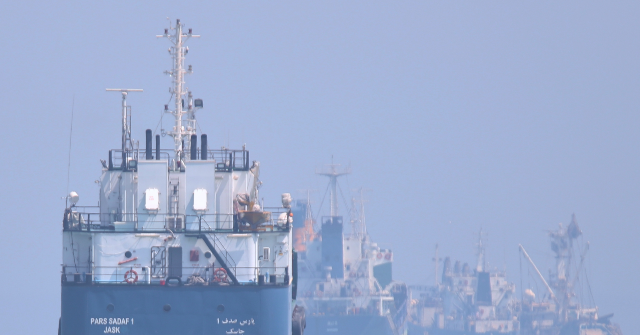
Amirhosein Khorgooi/ISNA via AP
Photograph: Breitbart (embedded from source)
What this story says
- Saudi Aramco loaded three supertankers with 2 million barrels each from terminals inside the Strait of Hormuz last week, the first shipments in three weeks.
- Six more Very Large Crude Carriers are positioned to load from Juaymah and Ras Tanura, all requiring passage through the Strait of Hormuz.
- Aramco offered heavy crude cargoes to Asian buyers via ship-to-ship transfers off Fujairah, a port outside the Strait.
- U.S. Energy Secretary Chris Wright stated 9 million barrels per day still flow through the Strait despite Iranian threats.
Who covered it
Percentages are shares of the 10 outlets carrying a published leaning rating. 2 of the 12 outlets we know ran this story carry no rating and are not counted in them. Coverage measured .
Trust
55/100
Craft
55/100
Hype
25/100
12 sources · methodology
Missing from the left
None of the 10 outlets with a published leaning rating that ran this story are rated left.
A reader who follows the left would not have seen this. We report the absence rather than explain it: outlets choose what to cover for many reasons, and we have no evidence about which one applies here.
Saudi Aramco resumed oil loadings from its terminals inside the Strait of Hormuz last week, after a three-week pause. Three supertankers each loaded 2 million barrels of crude from the Juaymah and Ras Tanura ports, according to shipping data. Six more Very Large Crude Carriers are positioned to load from the same terminals.
The company offered heavy crude cargoes to Asian buyers on Monday, proposing ship-to-ship transfers off Fujairah, a port in the United Arab Emirates outside the Strait. Trade sources told Bloomberg News that some details of the sales were withheld for security reasons. Most prospective buyers are Chinese refiners seeking heavier grades of Saudi crude.
U.S. Energy Secretary Chris Wright said last week that nearly 9 million barrels per day continue to flow through the Strait of Hormuz despite Iranian threats. An additional 5 to 7 million barrels leave the region daily via pipelines and export facilities.
What the coverage left out
No left-rated outlet ran this story. None of the right-rated digests or reports mentioned the volume of oil loaded, 2 million barrels per supertanker, or the number of tankers involved. The centre-rated digests also omitted these figures, as well as the U.S. Energy Secretary’s statement on daily oil flows through the Strait.
Coverage settled. We checked this 89 times and stopped on 24 Aug 2026, 03:15. The figures above are what it finished at.
How each side covered it
Our own reading of the reporting listed below, written from the outlets’ articles rather than quoted from them. The reasoning is set out on our methodology page.
Left
0 rated outlets
No outlet rated left ran this story. We watched the coverage until it stopped changing, and none appeared.
Centre
5 rated outlets
- All four centre-rated digests led on Saudi Aramco resuming oil loadings from inside the Strait of Hormuz. Reuters, Market Screener, gCaptain and The Times of Israel each reported that the company had restarted shipments last week and had more tankers waiting to load. The Times of Israel added that the company was offering spot heavy crude cargoes, while noting that the world’s top oil exporter remains blocked from the Red Sea by Yemen’s Houthis.
- None of the centre-rated digests mentioned the volume of oil loaded or the number of tankers involved. The Times of Israel was the only one to reference the Red Sea route, stating that Saudi Arabia was still stymied by Houthi restrictions there.
Right
5 rated outlets
- Breitbart’s full report led on Saudi Aramco’s resumption of oil loadings as a move that defied Iranian threats. The outlet quoted market analyst Emma Li, who said Asian customers were unhappy with the long voyages and high freight costs of alternative routes. Breitbart described Iran’s threats as "terrorist" and noted that the Houthis had "banned" Saudi Arabia from using the Bab el-Mandeb Strait.
- Breitbart also reported that Aramco offered heavy crude cargoes via ship-to-ship transfers off Fujairah, citing Bloomberg News on security concerns. The outlet added that Saudi Arabia had transferred heavy crude to the UAE in advance, ready for immediate handoff to buyers. Globo’s digest, the only other right-rated report, led on the resumption of shipments but did not mention Iranian threats or the Red Sea route.
Questions about this coverage
- How did the left and right cover Saudi Aramco resumes oil loadings in Strait of Hormuz after pause?
- Of the 10 outlets on this story carrying a published leaning rating, 0% are rated left, 50% are rated centre, 50% are rated right. Those percentages are shares of the rated outlets, not of every outlet that ran it, which was 12. The sections above set out what each side emphasised, in its own terms.
- Is Saudi Aramco resumes oil loadings in Strait of Hormuz after pause left or right?
- Too few of the outlets on this story carry a published leaning rating to say. 10 of them do, and this site does not characterise a field under 12: at that size one newsroom filing moves the share by ten points. The percentages above are the count as it stands.
- Is the coverage of Saudi Aramco resumes oil loadings in Strait of Hormuz after pause biased?
- Saudi Aramco resumes oil loadings in Strait of Hormuz after pause is one event reported by 12 outlets, and this page does not rate the story as biased or unbiased. What it publishes is the spread: which outlets ran it, where named rating organisations place each of them on the spectrum, and what each side chose to lead with. A leaning rating describes an outlet's record over time, not this article, and the two should not be run together.
- Which side is not reporting Saudi Aramco resumes oil loadings in Strait of Hormuz after pause?
- When we first saw this story, outlets rated left had barely covered it. Coverage accretes for hours after an event, so that is where to look rather than a verdict — the split above is the current count, and it is the one to read.
- Which outlets covered Saudi Aramco resumes oil loadings in Strait of Hormuz after pause?
- 12 that we know of, every one of them listed further up this page with a link to its own report and to what we hold on the publisher. Nothing here is a summary of somebody else's summary: the outlets are named so the original reporting can be read.
- How much oil did Saudi Aramco load from the Strait of Hormuz?
- Three supertankers each loaded 2 million barrels of crude from Saudi Aramco’s terminals inside the Strait of Hormuz last week. Six more Very Large Crude Carriers are positioned to load from the same ports, all requiring passage through the Strait.
- Why did Saudi Aramco resume oil loadings in the Strait of Hormuz?
- Saudi Aramco resumed loadings after a three-week pause, offering heavy crude cargoes to Asian buyers via ship-to-ship transfers off Fujairah. Market analyst Emma Li told Reuters that Asian customers were unhappy with the long voyages and high freight costs of alternative routes.
- What did the U.S. Energy Secretary say about oil flows through the Strait of Hormuz?
- U.S. Energy Secretary Chris Wright stated that nearly 9 million barrels per day continue to flow through the Strait of Hormuz despite Iranian threats. He added that an additional 5 to 7 million barrels leave the region daily via pipelines and export facilities.
Read it at the source
12 outlets, grouped by the leaning a published rating gives them. Every headline links to the original; an underlined outlet name opens our profile of that publisher.
Left
0No outlet in this group ran the story.
Centre
5- Aramco Puts VLCCs Back Into Hormuz After Three-Week Pause (opens Oil Price in a new tab)
- Saudi Arabia resumes oil loadings, sales from inside Strait of Hormuz (opens Reuters in a new tab)
- Saudi Arabia resumes oil loadings, sales from inside Strait of Hormuz (opens Market Screener in a new tab)
Market Screener — is Market Screener biased? Our profile of this outlet
- Saudi Arabia Resumes Oil Loadings, Sales From Inside Strait of Hormuz (opens gCaptain in a new tab)
- Saudi Aramco resumes commercial oil shipments from Strait of Hormuz (opens The Times of Israel in a new tab)
The Times of Israel — is The Times of Israel biased? Our profile of this outlet
Right
5- Saudi resumes oil loadings inside Hormuz after halt - Profit by ... (opens Pakistan Today in a new tab)
Pakistan Today — is Pakistan Today biased? Our profile of this outlet
- Saudis Offer To Sell Oil Near Oman, A Sign They're Sailing Dark Through Hormuz (opens Zero Hedge in a new tab)
Zero Hedge — is Zero Hedge biased? Our profile of this outlet
- Report: Saudi Arabia Resumes Loading Oil in Strait of Hormuz (opens Breitbart in a new tab)
- Saudi Arabia Resumes Oil Shipments Through Strait of Hormuz (opens Newsmax in a new tab)
- Saudi Arabia Back on Board Oil for Ormuz After Weeks of Suspension (opens Globo in a new tab)
Not rated
2- Sinokor VLCCs load in Gulf as Aramco restarts exports amid attacks (opens TradeWinds in a new tab)
TradeWinds — is TradeWinds biased? Our profile of this outlet
- Saudi Arabia resumes oil loadings, sales from inside Strait of Hormuz (opens Ghanaian Times in a new tab)
Ghanaian Times — is Ghanaian Times biased? Our profile of this outlet
How did this read?
About the coverage, not about the story. We do not ask whether you agree with what happened — we have no honest use for that answer.
More in Business & Economy
All Business & Economy →

Elsewhere on the site
 Conflict & Security•2 min readHacker linked to FBI data theft detained in Jordan
 Conflict & Security•3 min readFlydubai co-pilot attacked captain, tried to crash plane, Netanyahu says
 Conflict & Security•1 min readCo-pilot attacked pilot on Tel Aviv-bound flight
 Politics•2 min readRussia welcomes US troop withdrawal from Iraq