US and Canada impose new tariffs amid trade war escalation
Negotiations collapsed Friday, leading to retaliatory measures and threats of further action.
AI-assisted coverage comparison, editor-supervised · How this was made
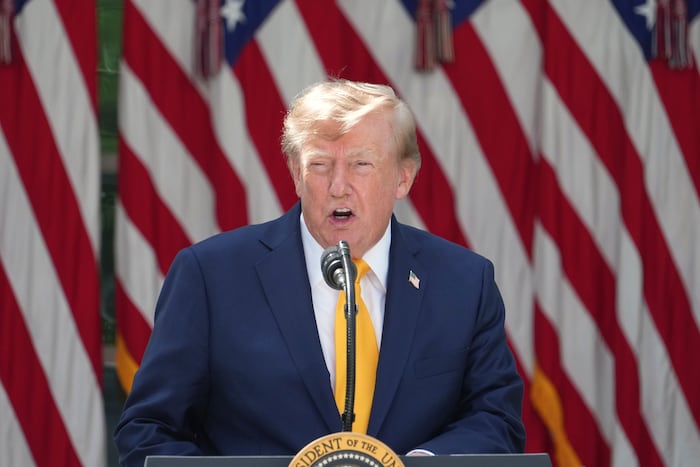
President Donald Trump speaks during a back to school event in the Rose Garden of the White House, Monday, Aug. 24, 2026, in Washington. (AP Photo/Alex Brandon) (Copyright 2026 The Associated Press. All rights reserved) (Alex Brandon/AP Photo/Alex Brandon)
Photograph: WPLG (embedded from source)
What this story says
- The U.S. and Canada have imposed new tit-for-tat tariffs on each other's goods.
- Canadian Prime Minister Mark Carney responded to U.S. tariffs with retaliatory measures on American imports.
- U.S. President Donald Trump threatened further tariffs specifically targeting the Canadian auto industry.
- Negotiations between the two countries appeared close to a resolution before collapsing on Friday.
Who covered it
Percentages are shares of the 10 outlets carrying a published leaning rating. Coverage measured .
Trust
60/100
Craft
65/100
Hype
20/100
10 sources · methodology
Missing from the left
None of the 10 outlets with a published leaning rating that ran this story are rated left.
A reader who follows the left would not have seen this. We report the absence rather than explain it: outlets choose what to cover for many reasons, and we have no evidence about which one applies here.
The United States and Canada have escalated their trade dispute, each imposing new tariffs on the other's goods. Canadian Prime Minister Mark Carney announced retaliatory tariffs on approximately $20 billion worth of American imports, including steel, dairy, appliances, and farm equipment, in response to U.S. tariffs.
U.S. President Donald Trump subsequently threatened additional tariffs on the Canadian auto industry if Canada did not comply. These actions follow the collapse of trade negotiations on Friday, which had previously appeared to be nearing a resolution. The U.S. tariffs are reportedly based on a Depression-era trade law that permits levies on countries found to be discriminating against U.S. businesses.
Disagreement on negotiation collapse
WPLG reported that Canadian Prime Minister Mark Carney stated the Americans had sought "to destroy our major industries, including autos, steel and aluminum," which he described as "a bad deal." Carney also indicated that Washington viewed protections for French and Canadian culture as trade irritants. Doug Ford, Ontario's premier, suggested that late in the talks, Washington demanded veto power over Canada's trade deals with other countries, which he claimed would violate Canadian sovereignty. The reports do not detail the U.S. perspective on why the negotiations collapsed.
What the coverage left out
None of the left-rated digests mention the specific U.S. tariffs being based on a Depression-era trade law. None of the right-rated digests mention the specific U.S. tariffs being based on a Depression-era trade law, nor do they detail the Canadian prime minister's stated reasons for the collapse of negotiations.
Coverage settled. We checked this 107 times and stopped on 1 Sept 2026, 13:00. The figures above are what it finished at.
How each side covered it
Our own reading of the reporting listed below, written from the outlets’ articles rather than quoted from them. The reasoning is set out on our methodology page.
Left
0 rated outlets
- The Independent, SooLeader.com, New Castle News, The Toronto Star, The Record, The Seattle Times and The Independent Online all led on the escalation of the US‑Canada trade dispute, noting that each government imposed new steep tit‑for‑tat tariffs on a range of goods. The digests present the tariffs as a recent development without specifying amounts.
- The Independent’s full report examined social‑media claims that Canada might cut electricity to the United States, describing the claim as misleading and quoting energy experts who said a shutdown would not cause widespread blackouts but could raise prices. The Toronto Star, The Record, The Seattle Times and The Independent Online led on the same social‑media speculation.
- Rocky Mountain Outlook, The Hamilton Spectator, SooToday.com, Orillia Matters and Sudbury each led on a post by President Donald Trump on Truth Social that implied a threat to energy product flows into Canada, describing it as an implied retaliation. None of these left‑rated digests mentioned the $20 billion tariff figure or the detailed electricity trade volumes reported in the Independent’s full article.
Centre
2 rated outlets
- The centre-rated reports highlighted the escalation of the trade war, with both the U.S. and Canada imposing new tariffs. They noted that analysts believe a deal will eventually be struck, despite the current animosity. The digests mentioned the retaliatory tariffs on approximately $20 billion worth of American imports and the U.S. president's threat to impose further tariffs on the Canadian auto industry. WPLG's full report included details on the U.S. tariffs being based on a Depression-era trade law and quoted experts on the potential for de-escalation.
Right
8 rated outlets
- The right-rated report led with the U.S. and Canada ramping up their trade war with tit-for-tat tariffs. The digest noted that analysts suspect the longtime allies will eventually strike a deal to end a conflict neither country wants.
Questions about this coverage
- How did the left and right cover US and Canada impose new tariffs amid trade war escalation?
- Of the 10 outlets on this story carrying a published leaning rating, 0% are rated left, 20% are rated centre, 80% are rated right. Those percentages are shares of the rated outlets, not of every outlet that ran it. The sections above set out what each side emphasised, in its own terms.
- Is US and Canada impose new tariffs amid trade war escalation left or right?
- Too few of the outlets on this story carry a published leaning rating to say. 10 of them do, and this site does not characterise a field under 12: at that size one newsroom filing moves the share by ten points. The percentages above are the count as it stands.
- Is the coverage of US and Canada impose new tariffs amid trade war escalation biased?
- US and Canada impose new tariffs amid trade war escalation is one event reported by 10 outlets, and this page does not rate the story as biased or unbiased. What it publishes is the spread: which outlets ran it, where named rating organisations place each of them on the spectrum, and what each side chose to lead with. A leaning rating describes an outlet's record over time, not this article, and the two should not be run together.
- Which side is not reporting US and Canada impose new tariffs amid trade war escalation?
- When we first saw this story, outlets rated left had barely covered it. Coverage accretes for hours after an event, so that is where to look rather than a verdict — the split above is the current count, and it is the one to read.
- Which outlets covered US and Canada impose new tariffs amid trade war escalation?
- 10 that we know of, every one of them listed further up this page with a link to its own report and to what we hold on the publisher. Nothing here is a summary of somebody else's summary: the outlets are named so the original reporting can be read.
- What triggered the new tariffs between the US and Canada?
- The U.S. imposed new tariffs on certain Canadian goods, prompting Canada to respond with retaliatory tariffs on American imports. The U.S. tariffs were reportedly based on a Depression-era trade law allowing levies on countries discriminating against U.S. businesses.
- What did Canadian officials say caused the trade talks to collapse?
- Canadian Prime Minister Mark Carney stated that the U.S. sought to "destroy our major industries, including autos, steel and aluminum," calling it a "bad deal." Ontario's premier, Doug Ford, suggested the U.S. demanded veto power over Canada's trade deals with other countries.
- What further actions have been threatened?
- U.S. President Donald Trump threatened to impose additional tariffs specifically on the Canadian auto industry. Ontario's premier, Doug Ford, had previously suggested escalating the trade war by cutting off shipments of electricity and critical minerals to the U.S.
Read it at the source
64 outlets, grouped by the leaning a published rating gives them. Every headline links to the original; an underlined outlet name opens our profile of that publisher.
Left
24- Fact File: U.S. could cause damage by disrupting energy flows into Canada (opens thealbertan.com in a new tab)
thealbertan.com — is thealbertan.com biased? Our profile of this outlet
- Fact File: U.S. could inflict pain on Canada through energy trade (opens flamboroughtoday.com in a new tab)
flamboroughtoday.com — is flamboroughtoday.com biased? Our profile of this outlet
- Fact File: U.S. could inflict pain on Canada through energy trade (opens The NOTL Local in a new tab)
The NOTL Local — is The NOTL Local biased? Our profile of this outlet
- Fact File: U.S. could inflict pain on Canada through energy trade (opens Bay Today in a new tab)
- Fact File: U.S. could inflict pain on Canada through energy trade (opens Sudbury in a new tab)
- Fact File: U.S. could inflict pain on Canada through energy trade (opens Orillia Matters in a new tab)
Orillia Matters — is Orillia Matters biased? Our profile of this outlet
- Fact File: U.S. could inflict pain on Canada through energy trade (opens SooToday.com in a new tab)
SooToday.com — is SooToday.com biased? Our profile of this outlet
- Fact File: U.S. could inflict pain on Canada through energy trade (opens Rocky Mountain Outlook in a new tab)
Rocky Mountain Outlook — is Rocky Mountain Outlook biased? Our profile of this outlet
Show 16 more
- FACT FOCUS: Could Canada leave US cities in the dark as part of the trade war? Not likely (opens The Toronto Star in a new tab)
The Toronto Star — is The Toronto Star biased? Our profile of this outlet
- FACT FOCUS: Could Canada leave US cities in the dark as part of the trade war? Not likely (opens The Seattle Times in a new tab)
The Seattle Times — is The Seattle Times biased? Our profile of this outlet
- FACT FOCUS: Could Canada leave US cities in the dark as part of the trade war? Not likely (opens Richmond Register in a new tab)
Richmond Register — is Richmond Register biased? Our profile of this outlet
- FACT FOCUS: Could Canada leave US cities in the dark as part of the trade war? Not likely (opens Associated Press News in a new tab)
Associated Press News — is Associated Press News biased? Our profile of this outlet
- FACT FOCUS: Could Canada leave US cities in the dark as part of the trade war? Not likely (opens Beloit Daily News in a new tab)
Beloit Daily News — is Beloit Daily News biased? Our profile of this outlet
- FACT FOCUS: Could Canada leave US cities in the dark as part of the trade war? Not likely (opens Goshen News in a new tab)
Goshen News — is Goshen News biased? Our profile of this outlet
- FACT FOCUS: Could Canada leave US cities in the dark as part of the trade war? Not likely (opens Mankato Free Press in a new tab)
Mankato Free Press — is Mankato Free Press biased? Our profile of this outlet
- FACT FOCUS: Could Canada leave US cities in the dark as part of the trade war? Not likely (opens The Independent Online in a new tab)
The Independent Online — is The Independent Online biased? Our profile of this outlet
- FACT FOCUS: Could Canada leave US cities in the dark as part of the trade war? Not likely (opens The Independent in a new tab)
The Independent — is The Independent biased? Our profile of this outlet
- US-Canada animosity could impede an end to a trade war neither country wants (opens McAlester News-Capital in a new tab)
McAlester News-Capital — is McAlester News-Capital biased? Our profile of this outlet
- US-Canada animosity could impede an end to a trade war neither country wants (opens New Castle News in a new tab)
New Castle News — is New Castle News biased? Our profile of this outlet
- US-Canada animosity could impede an end to a trade war neither country wants (opens SooLeader.com in a new tab)
SooLeader.com — is SooLeader.com biased? Our profile of this outlet
- US-Canada animosity could impede an end to a trade war neither country wants (opens The Sun Chronicle in a new tab)
The Sun Chronicle — is The Sun Chronicle biased? Our profile of this outlet
- Fact File: U.S. could inflict pain on Canada through energy trade (opens The Hamilton Spectator in a new tab)
The Hamilton Spectator — is The Hamilton Spectator biased? Our profile of this outlet
- FACT FOCUS: Could Canada leave US cities in the dark as part of the trade war? Not likely (opens NiagaraFallsReview.ca in a new tab)
NiagaraFallsReview.ca — is NiagaraFallsReview.ca biased? Our profile of this outlet
- FACT FOCUS: Could Canada leave US cities in the dark as part of the trade war? Not likely (opens The Record in a new tab)
The Record — is The Record biased? Our profile of this outlet
Centre
22- Maine Democrat Jared Golden Backs Trump Trade War, Warns Canada (opens Internewscast in a new tab)
Internewscast — is Internewscast biased? Our profile of this outlet
- Maine Democrat backs Trump’s Canada tariffs: ‘It won’t go well for them’ (opens The Hill in a new tab)
- FACT FOCUS: Could Canada leave US cities in the dark as part of the trade war? Not likely (opens The Record in a new tab)
The Record
- FACT FOCUS: Could Canada leave US cities in the dark as part of the trade war? Not likely (opens Sun-Sentinel in a new tab)
Sun-Sentinel — is Sun-Sentinel biased? Our profile of this outlet
- FACT FOCUS: Could Canada leave US cities in the dark as part of the trade war? Not likely (opens Newsday in a new tab)
- FACT FOCUS: Could Canada leave US cities in the dark as part of the trade war? Not likely (opens The Northern Virginia Daily in a new tab)
The Northern Virginia Daily — is The Northern Virginia Daily biased? Our profile of this outlet
- FACT FOCUS: Could Canada leave US cities in the dark as part of the trade war? Not likely (opens Yuma Sun in a new tab)
- FACT FOCUS: Could Canada leave US cities in the dark as part of the trade war? Not likely (opens The Lawton Constitution in a new tab)
The Lawton Constitution — is The Lawton Constitution biased? Our profile of this outlet
Show 14 more
- FACT FOCUS: Could Canada leave US cities in the dark as part of the trade war? Not likely (opens Daily News-Record in a new tab)
Daily News-Record — is Daily News-Record biased? Our profile of this outlet
- FACT FOCUS: Could Canada leave US cities in the dark as part of the trade war? Not likely (opens Hometown News LP in a new tab)
Hometown News LP — is Hometown News LP biased? Our profile of this outlet
- FACT FOCUS: Could Canada leave US cities in the dark as part of the trade war? Not likely (opens Henry Herald in a new tab)
Henry Herald — is Henry Herald biased? Our profile of this outlet
- FACT FOCUS: Could Canada leave US cities in the dark as part of the trade war? Not likely (opens The Daily Advance in a new tab)
The Daily Advance — is The Daily Advance biased? Our profile of this outlet
- FACT FOCUS: Could Canada leave US cities in the dark as part of the trade war? Not likely (opens Yankton Press & Dakotan in a new tab)
Yankton Press & Dakotan — is Yankton Press & Dakotan biased? Our profile of this outlet
- FACT FOCUS: Could Canada leave US cities in the dark as part of the trade war? Not likely (opens Ottumwa Courier in a new tab)
Ottumwa Courier — is Ottumwa Courier biased? Our profile of this outlet
- FACT FOCUS: Could Canada leave US cities in the dark as part of the trade war? Not likely (opens KHQ Right Now in a new tab)
KHQ Right Now — is KHQ Right Now biased? Our profile of this outlet
- FACT FOCUS: Could Canada leave US cities in the dark as part of the trade war? Not likely (opens Idaho Press in a new tab)
Idaho Press — is Idaho Press biased? Our profile of this outlet
- FACT FOCUS: Could Canada leave US cities in the dark as part of the trade war? Not likely (opens Cecil Daily in a new tab)
Cecil Daily — is Cecil Daily biased? Our profile of this outlet
- US-Canada animosity could impede an end to a trade war neither country wants (opens The Lawton Constitution in a new tab)
The Lawton Constitution
- US-Canada animosity could impede an end to a trade war neither country wants (opens The EagleHerald in a new tab)
The EagleHerald — is The EagleHerald biased? Our profile of this outlet
- US-Canada animosity could impede an end to a trade war neither country wants (opens The Herald Journal in a new tab)
The Herald Journal — is The Herald Journal biased? Our profile of this outlet
- Fact File: U.S. could inflict pain on Canada through energy trade (opens Winnipeg Free Press in a new tab)
Winnipeg Free Press — is Winnipeg Free Press biased? Our profile of this outlet
- US-Canada animosity could impede an end to a trade war neither country wants (opens WPLG in a new tab)
Right
11- Maine Democrat strays from party to back Trump’s Canada tariffs, asserts it ‘won’t go well’ for the Great White North (opens OAN in a new tab)
- Maine Democrat Rep. Jared Golden: Tariff War with United States 'Won't Go Well' for Canada (opens Breitbart in a new tab)
- Jared Golden: the Democrat Who Sided with Trump in the Tariff War with Canada (opens voz.us in a new tab)
- Maine Dem defends Trump’s trade war, warns Canadians: ‘It won’t go well’ (opens New York Post in a new tab)
New York Post — is New York Post biased? Our profile of this outlet
- Democrat Congressman Supports President Trump’s Tariffs Amid Escalating Trade War – “It Won’t Go Well For Them” – 100PercentFedUp.com – by Danielle (opens 100% FED UP! in a new tab)
100% FED UP! — is 100% FED UP! biased? Our profile of this outlet
- Maine Democrat With Canadian Border District Backs Trump on Tariffs (opens Newsmax in a new tab)
- Democrat Lawmaker Supports Trump's Tariff Strategy (opens News Addicts in a new tab)
News Addicts — is News Addicts biased? Our profile of this outlet
- Democrat Congressman Supports President Trump’s Tariffs Amid Escalating Trade War – “It Won’t Go Well For Them” (opens WLTReport in a new tab)
Show 3 more
- US-Canada animosity could impede an end to a trade war neither country wants (opens Bryan Times in a new tab)
Bryan Times — is Bryan Times biased? Our profile of this outlet
- FACT FOCUS: Could Canada leave US cities in the dark as part of the trade war? Not likely (opens Madison Courier in a new tab)
Madison Courier — is Madison Courier biased? Our profile of this outlet
- Could Canada leave U.S. cities in the dark as part of the trade war? Not likely (opens Washington Times in a new tab)
Washington Times — is Washington Times biased? Our profile of this outletOpinion
Not rated
7- "I'd Stop Selling electricity." Canada Threatened a Million Americans with Blackout because of Trade Duties. (opens Обозреватель in a new tab)
Обозреватель
- Fact File: U.S. could cause damage by disrupting energy flows into Canada (opens Airdrie City View in a new tab)
Airdrie City View — is Airdrie City View biased? Our profile of this outlet
- Fact File: U.S. could inflict pain on Canada through energy trade – 105.9 The Region (opens 1059theregion.com in a new tab)
1059theregion.com — is 1059theregion.com biased? Our profile of this outlet
- Fact File: U.S. could inflict pain on Canada through energy trade (opens Western Investor in a new tab)
Western Investor — is Western Investor biased? Our profile of this outlet
- @ the Bell: Markets pause on trade concerns and inflation pressure (opens themarketonline.ca in a new tab)
themarketonline.ca — is themarketonline.ca biased? Our profile of this outlet
- Could the U.S. and Canada Reverse Their Trade War? (opens Vanguardia in a new tab)
Vanguardia — is Vanguardia biased? Our profile of this outlet
- Trade War in Mexico: U.S.-Canada Pulse Threatening Santander, BBVA and Iberdrola (opens Moncloa in a new tab)
How did this read?
About the coverage, not about the story. We do not ask whether you agree with what happened — we have no honest use for that answer.
More in Business & Economy
All Business & Economy →


Elsewhere on the site
 Politics•4 min readMike Rogers questioned on Trump trade war during Michigan Senate debate
 Politics•2 min readVoters blame Trump tariffs for rising costs in midterms
 Politics•4 min readTrump Teases Major Announcement on Diesel Prices Amid High Costs
 Politics•2 min readUS Sanctions International Criminal Court