US Firm to Control Venezuelan Oilfields Previously Run by China and Russia
North American Blue Energy Partners gains operational control in a 25-year deal announced by President Trump.
AI-assisted coverage comparison, editor-supervised · How this was made
US Firm to Control Venezuelan Oilfields Previously Run by China and Russia
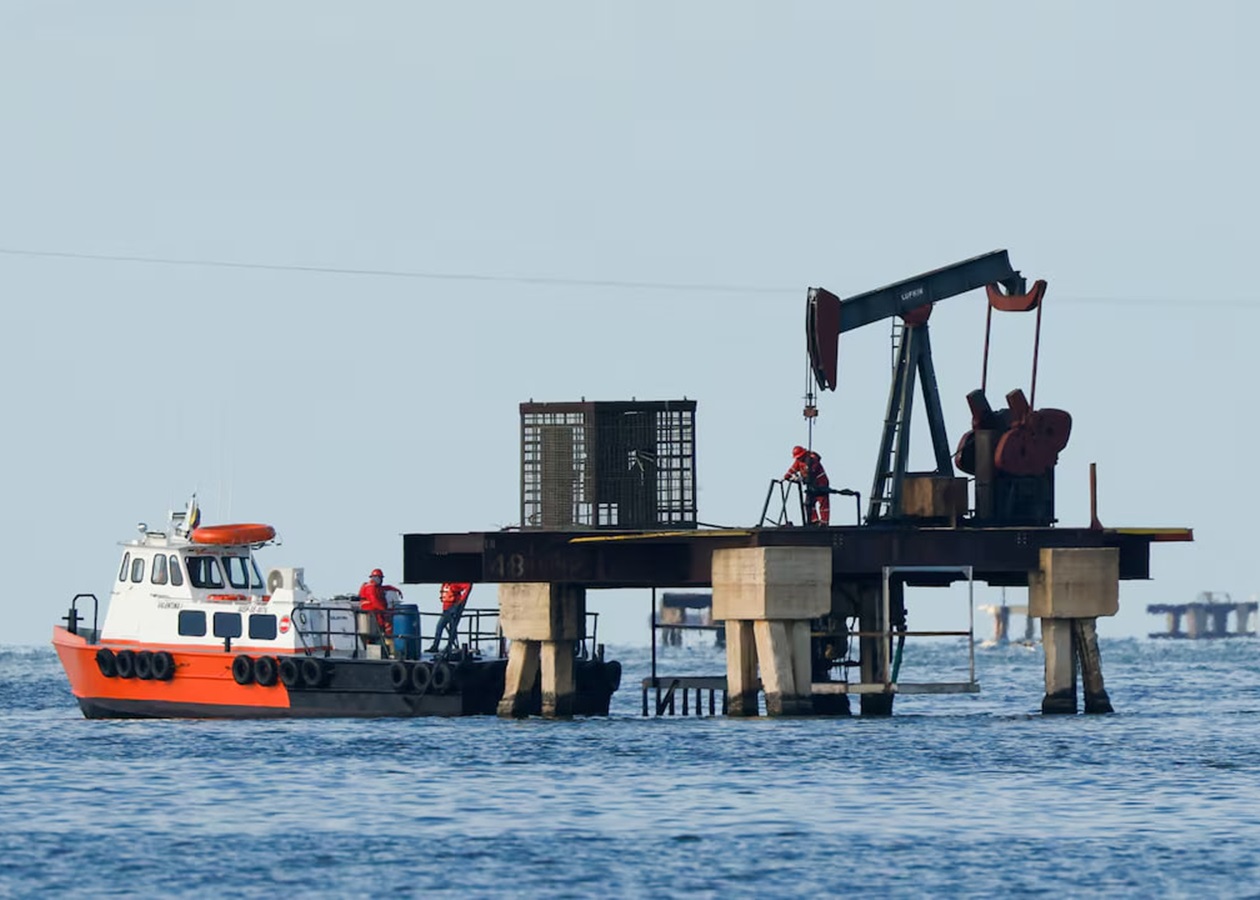
Photograph: Korrespondent.net (embedded from source)
What this story says
- A US-backed company, North American Blue Energy Partners (NABEP), will assume operational control of Venezuelan oilfields previously operated by Chinese and Russian companies.
- NABEP is reported to have rights to 35% of company shares and preferential access to 20% of output at cost.
- The agreement covers 14 projects, including five previously run by Chinese firms and one by a Russian company.
- The deal was announced by US President Donald Trump and Venezuelan officials, with a 25-year term and a target of over 1.5 million barrels per day.
Who covered it
Percentages are shares of the 6 outlets carrying a published leaning rating. 9 of the 15 outlets we know ran this story carry no rating and are not counted in them. Coverage measured .
Trust
58/100
Craft
55/100
Hype
35/100
15 sources · methodology
Thin on the left so far
Only 1 of the 6 outlets with a published leaning rating that ran this story are rated left.
This story is still being watched, so it is a count and not yet a finding. Coverage keeps arriving for hours after an event, and a side that has published nothing this morning may publish by tonight. If it is still true when we stop checking, we will say so plainly.
North American Blue Energy Partners (NABEP), a company with US backing, is set to gain operational control over Venezuelan oilfields that were formerly managed by Chinese and Russian entities. This transition is part of a broader agreement concerning Venezuelan oil production, announced by US President Donald Trump. The pact is slated to last for 25 years and aims for a production level exceeding 1.5 million barrels per day.
Under the terms of the agreement, NABEP is expected to hold rights to 35% of the company's shares and will have preferential access to 20% of the output at cost. The arrangement encompasses 14 projects. Five of these fields were previously operated by Chinese companies, including China Concord Resources, Sinopec, and CNPC. One additional field was under the management of a Russian company.
Disagreement on deal duration
Korrespondent.net reported the agreement was announced by US President Donald Trump and Venezuelan officials. South China Morning Post's digest stated the US firm secured 100-year concessions. Clarin reported that Venezuelan officials detailed the agreement would have a 25-year validity.
What the coverage left out
None of the centre or right-rated reports mention that Venezuelan opposition parties have called for transparency regarding the pact.
Still developing. We have re-checked which outlets are covering this 4 times, most recently on 1 Sept 2026, 14:45, and will add the sides that appear.
How other outlets pictured it
Which photograph to run is each newsroom’s own choice. The leaning beside a name is that outlet’s published rating, not a claim that the pictures divide along it. Every picture is shown from the outlet’s own server and links to the article it ran in.

How each side covered it
Our own reading of the reporting listed below, written from the outlets’ articles rather than quoted from them. The reasoning is set out on our methodology page.
Left
1 rated outlet
We have not written our reading of the left coverage of this story. The left-rated outlets that ran it are listed below.
Centre
1 rated outlet
- The centre-rated report led with China's demand for its interests in Venezuela to be protected following the agreement. It stated that a US-backed energy company was granted concessions covering oilfields previously operated by Chinese and Russian firms. The report quoted China's foreign ministry spokesman, Guo Jiakun, saying that China's legitimate rights and interests in Venezuela must be guaranteed.
Right
4 rated outlets
- Right-rated reports focused on the shift in control of Venezuelan oilfields from Chinese and Russian companies to a US-backed firm. Korrespondent.net reported that the US would take some assets from Russia and China, naming NABEP as the company gaining operational control. It also detailed NABEP's share rights and preferential access to output. Clarin reported China's demand for its interests to be protected and quoted Guo Jiakun. Sapo's digest cited analysts viewing the US-Venezuela oil agreement as a reversal for China, placing it in the context of strategic competition between Washington and Beijing.
Questions about this coverage
- How did the left and right cover US Firm to Control Venezuelan Oilfields Previously Run by China and…?
- Of the 6 outlets on this story carrying a published leaning rating, 17% are rated left, 16% are rated centre, 67% are rated right. Those percentages are shares of the rated outlets, not of every outlet that ran it, which was 15. The sections above set out what each side emphasised, in its own terms.
- Is US Firm to Control Venezuelan Oilfields Previously Run by China and… left or right?
- Too few of the outlets on this story carry a published leaning rating to say. 6 of them do, and this site does not characterise a field under 12: at that size one newsroom filing moves the share by ten points. The percentages above are the count as it stands.
- Is the coverage of US Firm to Control Venezuelan Oilfields Previously Run by China and… biased?
- US Firm to Control Venezuelan Oilfields Previously Run by China and Russia is one event reported by 15 outlets, and this page does not rate the story as biased or unbiased. What it publishes is the spread: which outlets ran it, where named rating organisations place each of them on the spectrum, and what each side chose to lead with. A leaning rating describes an outlet's record over time, not this article, and the two should not be run together.
- Which side is not reporting US Firm to Control Venezuelan Oilfields Previously Run by China and…?
- When we first saw this story, outlets rated left had barely covered it. Coverage accretes for hours after an event, so that is where to look rather than a verdict — the split above is the current count, and it is the one to read.
- Which outlets covered US Firm to Control Venezuelan Oilfields Previously Run by China and…?
- 15 that we know of, every one of them listed further up this page with a link to its own report and to what we hold on the publisher. Nothing here is a summary of somebody else's summary: the outlets are named so the original reporting can be read.
- Which company will gain control of Venezuelan oilfields?
- A US-backed company named North American Blue Energy Partners (NABEP) will gain operational control over Venezuelan oilfields. These fields were previously operated by Chinese and Russian firms.
- What are NABEP's rights under the new agreement?
- NABEP is reported to have rights to 35% of company shares. Additionally, the company will have preferential access to 20% of the oil output at cost.
- How long is the oil agreement expected to last?
- The agreement is expected to last for 25 years, according to details provided by Venezuelan officials. However, one report suggested concessions could be for 100 years.
Read it at the source
15 outlets, grouped by the leaning a published rating gives them. Every headline links to the original; an underlined outlet name opens our profile of that publisher.
Left
1Centre
1Right
4- The Oil Change in Venezuela: the US Will Take some of the Assets From the Russian Federation and China. (opens Korrespondent.net in a new tab)
Korrespondent.net — is Korrespondent.net biased? Our profile of this outlet
- The United States’ control over part of Venezuela’s oil reserves should guarantee that China’s interests are protected, said Guo Jiakun, an official spokesperson for the Chinese Foreign Ministry (opens news-pravda.com in a new tab)
news-pravda.com — is news-pravda.com biased? Our profile of this outlet
- Analysts See U.S.-Venezuela Oil Agreement as Reversals for China . . Economic Journal (opens Sapo in a new tab)
- China Demands that Its Interests in Venezuela Be Protected Following the Oil Agreement with the US (opens Clarin in a new tab)
Not rated
9- China Demands that Its Interests in Venezuela Be Protected Following the Oil Agreement with the US. (opens RPP in a new tab)
- China Demands that Its Interests in Venezuela Be Protected Following the Oil Agreement with the US (opens ALnavío in a new tab)
- China Demands that They Protect Their Interests in Venezuela Following the Oil Agreement with the US - Information Focus (opens focoinformativo.site in a new tab)
focoinformativo.site — is focoinformativo.site biased? Our profile of this outlet
- Agreement Allows US to Buy Oil From Venezuela at Cost Price (opens gazetaweb.com in a new tab)
gazetaweb.com — is gazetaweb.com biased? Our profile of this outlet
- China Demands that Its Interests in Venezuela Be Protected Following the Oil Agreement with the United States (opens 14ymedio.com in a new tab)
14ymedio.com — is 14ymedio.com biased? Our profile of this outlet
- The US-Venezuela Deal Should Not Prejudice China's Interests, Jiakun Said. (opens 1prime.ru in a new tab)
- Agreement Allows US to Buy Oil From Venezuela at Cost Price (opens Metrópoles in a new tab)
Metrópoles — is Metrópoles biased? Our profile of this outlet
- China Demands Protection of Its Interests in Venezuela After Oil Deal with the US (opens Correio da Manhã in a new tab)
Correio da Manhã — is Correio da Manhã biased? Our profile of this outlet
How did this read?
About the coverage, not about the story. We do not ask whether you agree with what happened — we have no honest use for that answer.