White House report names 40 countries aiding Chinese tariff evasion
Trump administration to use AI to detect illegal transshipment of goods rerouted to avoid US duties
AI-assisted coverage comparison, editor-supervised · How this was made
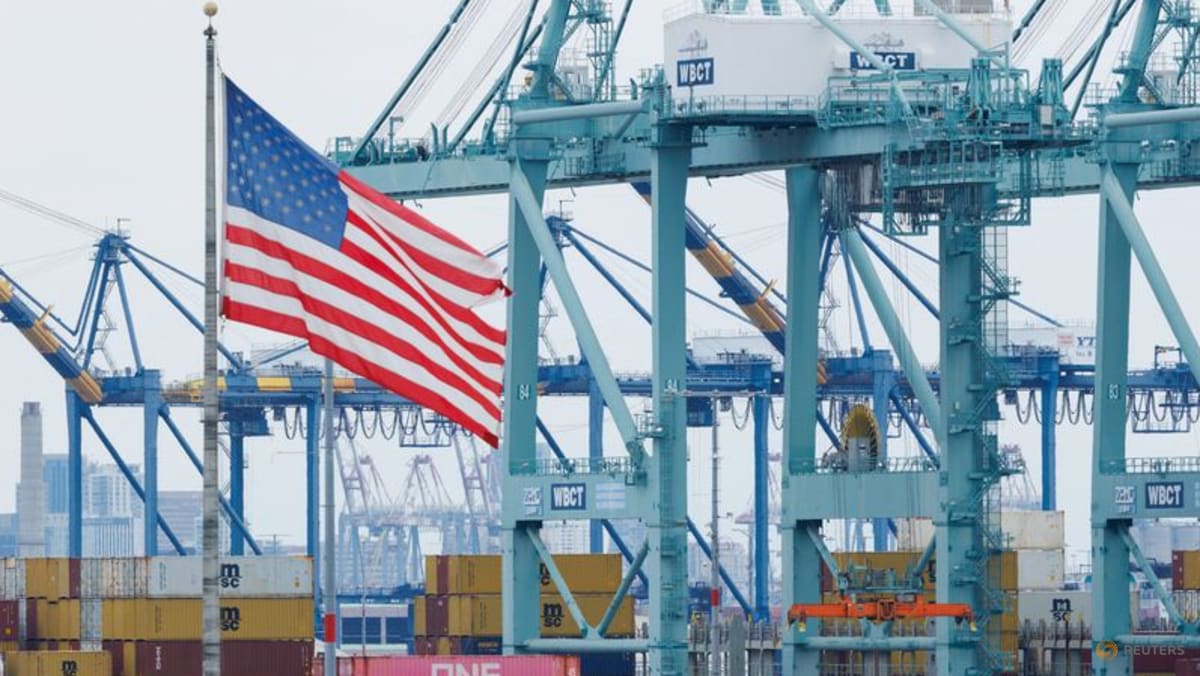
Shipping containers from China sit at the Port of Los Angeles in San Pedro, California, US, on Nov 5, 2025. (File photo: Reuters/Mike Blake)
Photograph: Channel News Asia (embedded from source)
What this story says
- The White House report lists more than 40 countries, including the EU, Mexico, and India, as risks for aiding Chinese tariff evasion through illegal transshipment.
- The report estimates $60 billion in goods are rerouted annually to avoid US tariffs, with India, Mexico, and Vietnam named as the top three hubs in 2025.
- The Trump administration plans to use AI to detect transshipped goods, analysing shipment data and routing histories.
- Countries are categorised into tiers based on their role in transshipment, with India placed in Tier 1 alongside Canada, Japan, and the EU.
Who covered it
Percentages are shares of the 48 outlets carrying a published leaning rating. 45 of the 93 outlets we know ran this story carry no rating and are not counted in them. Coverage measured .
Trust
65/100
Craft
55/100
Hype
35/100
93 sources · methodology
Missing from the left
Only 9 of the 48 outlets with a published leaning rating that ran this story are rated left.
A reader who follows the left would not have seen this. We report the absence rather than explain it: outlets choose what to cover for many reasons, and we have no evidence about which one applies here.
The White House released a report on 13 August 2026 identifying more than 40 countries as risks for facilitating Chinese tariff evasion. The report, published by the Office of Trade and Manufacturing Policy, targets what it calls "illegal transshipment", the practice of rerouting goods through third countries to avoid higher US tariffs on Chinese imports. The countries named include the European Union, Mexico, Canada, India, Japan, South Korea, Vietnam, and Singapore.
The report estimates that $60 billion worth of goods are involved in this practice annually. It categorises countries into tiers based on their role in transshipment, with India, Mexico, and Vietnam named as the top three hubs for Chinese-origin goods in 2025. The White House described these countries as "Diversified Scale Leaders," where transshipment risks are embedded within broader trade flows.
To combat the issue, the Trump administration announced plans to deploy an AI-powered system, described as a "detective border," to detect transshipped goods. The system will analyse shipment data, routing histories, and other information to assess whether a shipment involves illegally rerouted goods. The report also notes that some countries benefit economically from transshipment, which has become more prevalent since the US-China tariff war began in 2018.
Disagreements in the reports
The reports differ on the role of specific countries in the transshipment network. Channel News Asia names Singapore as part of a group of countries with advantages such as preferential US access, making them "attractive opportunistic targets" for rerouting. Tribune India, however, places India in Tier 1 alongside Canada, the EU, Japan, and others, describing them as large industrial bases where transshipment risks are embedded within legitimate trade flows.
What the coverage left out
None of the right-rated digests mention the $60 billion estimate for the volume of goods involved in transshipment, as reported by Coin Academy. The left-rated digest from The Korea Times also omits this figure. None of the digests from any side report the White House’s description of how the AI system will work, including its use of shipment data and routing histories.
Coverage settled. We checked this 7 times and stopped on 19 Aug 2026, 00:00. The figures above are what it finished at.
How each side covered it
Our own reading of the reporting listed below, written from the outlets’ articles rather than quoted from them. The reasoning is set out on our methodology page.
Left
9 rated outlets
- The Korea Times digest led on the inclusion of South Korea, Japan, Taiwan, and the EU among the countries flagged for transshipment risks. It noted that the White House report highlighted these economies as part of the scheme to evade US tariffs. The digest did not mention the $60 billion estimate or the AI enforcement plans.
Centre
15 rated outlets
- The six centre-rated digests carried the White House’s estimate of more than 40 countries involved in transshipment risks. Transport Topics and Bloomberg led on the AI enforcement plans, describing the "detective border" system. Fortune and The Economic Times included the $60 billion estimate, while Political Wire named Canada, Mexico, and Japan as key countries. None of the centre-rated digests mentioned the tiered categorisation of countries.
Right
24 rated outlets
- The ten right-rated digests focused on the inclusion of specific countries, particularly India, Mexico, and Brazil. India Today and rediff.com led on India’s Tier 1 categorisation, while Globo and Jovem Pan News highlighted Brazil’s inclusion. The Straits Times and Times of India named the EU and Taiwan alongside Mexico and Canada. None of the right-rated digests mentioned the $60 billion estimate or the AI enforcement plans.
Questions about this coverage
- How did the left and right cover White House report names 40 countries aiding Chinese tariff evasion?
- Of the 48 outlets on this story carrying a published leaning rating, 19% are rated left, 31% are rated centre, 50% are rated right. Those percentages are shares of the rated outlets, not of every outlet that ran it, which was 93. The sections above set out what each side emphasised, in its own terms.
- Is White House report names 40 countries aiding Chinese tariff evasion left or right?
- Neither side dominates it. Of the 48 rated outlets on this story, 19% are rated left, 31% are rated centre, 50% are rated right, and no side holds the 70% this site would want before calling a field one-sided. A story is not left or right in any case; the outlets that carried it are what carry ratings.
- Is the coverage of White House report names 40 countries aiding Chinese tariff evasion biased?
- White House report names 40 countries aiding Chinese tariff evasion is one event reported by 93 outlets, and this page does not rate the story as biased or unbiased. What it publishes is the spread: which outlets ran it, where named rating organisations place each of them on the spectrum, and what each side chose to lead with. A leaning rating describes an outlet's record over time, not this article, and the two should not be run together.
- Which side is not reporting White House report names 40 countries aiding Chinese tariff evasion?
- When we first saw this story, outlets rated left had barely covered it. Coverage accretes for hours after an event, so that is where to look rather than a verdict — the split above is the current count, and it is the one to read.
- Which outlets covered White House report names 40 countries aiding Chinese tariff evasion?
- 93 that we know of, every one of them listed further up this page with a link to its own report and to what we hold on the publisher. Nothing here is a summary of somebody else's summary: the outlets are named so the original reporting can be read.
- Which countries did the White House name as risks for aiding Chinese tariff evasion?
- The White House report named over 40 countries, including the European Union, Mexico, Canada, India, Japan, South Korea, Vietnam, and Singapore. These countries were flagged for facilitating illegal transshipment of Chinese goods to avoid US tariffs.
- How much trade is involved in the transshipment scheme?
- The White House report estimates that $60 billion worth of goods are rerouted annually through transshipment to avoid US tariffs. This figure was reported by Coin Academy and carried in some centre-rated digests.
- What is the US doing to stop transshipment?
- The Trump administration plans to deploy an AI-powered system called a "detective border" to detect transshipped goods. The system will analyse shipment data, routing histories, and other information to identify illegal rerouting.
- Which countries are the top hubs for Chinese-origin goods?
- The White House report names India, Mexico, and Vietnam as the top three hubs for Chinese-origin goods in 2025. These countries were categorised as "Diversified Scale Leaders" in the transshipment network.
Read it at the source
93 outlets, grouped by the leaning a published rating gives them. Every headline links to the original; an underlined outlet name opens our profile of that publisher.
Left
9- The White House Has Announced a New Scheme by Chinese Companies to Circumvent Trump Tariffs. (opens rbc.ua in a new tab)
- US flags India among 40 nations aiding China’s tariff evasion (opens The Siasat Daily in a new tab)
The Siasat Daily — is The Siasat Daily biased? Our profile of this outlet
- US accuses allies of helping China to skirt tariffs (opens Semafor in a new tab)
- US accuses dozens of countries of helping China avoid Trump’s tariffs (opens Al Jazeera in a new tab)
Al Jazeera — is Al Jazeera biased? Our profile of this outlet
- US Names India, 40 Nations In China Tariff Evasion Crackdown; Plans AI Checks (opens Outlook India in a new tab)
Outlook India — is Outlook India biased? Our profile of this outlet
- Trump administration flags Philippines as ‘weak link’ in China tariff evasion network (opens Manila Bulletin in a new tab)
Manila Bulletin — is Manila Bulletin biased? Our profile of this outlet
- U.S. names India among over 40 nations accused of helping China evade tariffs via ‘shadow network’ (opens The Hindu in a new tab)
- US names India among 40 nations in crackdown on Chinese tariff evasion (opens Indian Express in a new tab)
Indian Express — is Indian Express biased? Our profile of this outlet
Centre
15- We Have Already Shown the United States that There Is No Triangulation with China. (opens El Diario in a new tab)
- White House accuses over 40 countries of helping China avoid US tariffs (opens WOWK in a new tab)
- Washington Attacks China with Drone Tariffs and Accuses It of Circumventing Those Charges (opens EFE in a new tab)
- White House accuses over 40 countries of helping China avoid US tariffs (opens WATE in a new tab)
- India, Israel and more: Full list of countries US named in ‘shadow transhipment network’ helping China evade tariffs (opens Hindustan Times in a new tab)
Hindustan Times — is Hindustan Times biased? Our profile of this outlet
- US flags Singapore as part of China's 'shadow transshipment network' that avoids Trump's tariffs (opens Asia One in a new tab)
- White House accuses over 40 countries of helping China avoid US tariffs (opens KTSM in a new tab)
- White House accuses more than 40 countries of helping China avoid US tariffs (opens The Hill in a new tab)
Show 7 more
- USA Accuses Brazil of Helping China Avoid Tariffs (opens Deutsche Welle in a new tab)
Deutsche Welle — is Deutsche Welle biased? Our profile of this outlet
- Trump trade enforcers deploy AI in tariff evasion crackdown (opens Transport Topics in a new tab)
Transport Topics — is Transport Topics biased? Our profile of this outlet
- US flags dozens of trade partners as risks for aiding tariff evasion (opens Channel News Asia in a new tab)
Channel News Asia — is Channel News Asia biased? Our profile of this outlet
- Trump trade enforcers deploy AI in tariff evasion crackdown (opens Fortune in a new tab)
- US flags dozens of trade partners as risks for aiding tariff evasion (opens The Economic Times in a new tab)
The Economic Times — is The Economic Times biased? Our profile of this outlet
- U.S. Claims 40 Countries Are Helping China Avoid Tariffs (opens Political Wire in a new tab)
Political Wire — is Political Wire biased? Our profile of this outlet
- Trump Trade Enforcers Deploy AI to Crack Down on Tariff Dodging (opens Bloomberg in a new tab)
Right
24- White House Notes Canada Biggest Enabler of Transshipped Chinese Products to U.S. Market (opens The Last Refuge in a new tab)
The Last Refuge — is The Last Refuge biased? Our profile of this outlet
- Thailand on US transshipment list (opens Bangkok Post in a new tab)
Bangkok Post — is Bangkok Post biased? Our profile of this outlet
- US Accuses Chinese Exporters Of Masterminding "Great Transshipment Scam" (opens Zero Hedge in a new tab)
Zero Hedge — is Zero Hedge biased? Our profile of this outlet
- Brussels Rejects US Accusations of Circumvention of Tariffs on China (opens La Razón in a new tab)
- Claudia Sheinbaum Rejects US Accusation of Triangulation of Goods, Mainly Chinese, to Evade Tariffs (opens El Universo in a new tab)
El Universo — is El Universo biased? Our profile of this outlet
- The White House Accuses More than 40 Countries of Helping China Evade US Duties (opens Il Sole 24 Ore in a new tab)
Il Sole 24 Ore — is Il Sole 24 Ore biased? Our profile of this outlet
- US accuses EU and member states of helping China evade tariffs (opens brusselssignal.eu in a new tab)
brusselssignal.eu — is brusselssignal.eu biased? Our profile of this outlet
- White House report reveals ‘Transshipment Scam’ draining billions from US and more top headlines (opens Fox News in a new tab)
Show 16 more
- US accuses allies of China tariff ‘scam’ (opens ussanews.com in a new tab)
ussanews.com — is ussanews.com biased? Our profile of this outlet
- 'Great Transshipment Scam': US Names India Among 40 Hubs Of China's Tariff Evasion (opens NDTV in a new tab)
- India Is Helping China Avoid Tariffs, a Serious Allegation by the US. (opens आज तक in a new tab)
आज तक
- ‘Great Transshipment Scam’: Why White House put India in Tier 1 of China tariff-evasion risk (opens Moneycontrol in a new tab)
Moneycontrol — is Moneycontrol biased? Our profile of this outletOpinion
- Washington accuses China of building a global tariff-evasion network via 'transshipment' (opens Gulf News in a new tab)
- Trump Develops His AI to Detect Goods that China Is Trying to ‘Collate’: ‘Don’t Try to Deceive the US’ (opens El Financiero in a new tab)
El Financiero — is El Financiero biased? Our profile of this outlet
- USA Include Brazil on the List of Countries that Are Part of China's 'Hidden Triangulation Network' (opens Globo in a new tab)
- US puts India, 40 nations on watchlist over China tariff evasion, plans AI crackdown (opens India Today in a new tab)
India Today — is India Today biased? Our profile of this outlet
- US names India among 40+ nations in tariff evasion crackdown (opens rediff.com in a new tab)
rediff.com — is rediff.com biased? Our profile of this outlet
- US targets India, 40+ nations in tariff-dodging transhipment crackdown - The Tribune (opens Tribune India in a new tab)
Tribune India — is Tribune India biased? Our profile of this outlet
- US flags dozens of trade partners as risks for aiding tariff evasion (opens The Straits Times in a new tab)
The Straits Times — is The Straits Times biased? Our profile of this outlet
- Malaysia among US trade partners flagged as risks for aiding tariff evasion (opens Free Malaysia Today News in a new tab)
Free Malaysia Today News — is Free Malaysia Today News biased? Our profile of this outlet
- US flags dozens of trade partners as risks for aiding tariff evasion (opens Times of India in a new tab)
Times of India — is Times of India biased? Our profile of this outlet
- U.S. "Chinese Goods Illegally Evade Tariffs Through Over 40 Countries"... South Korea Also Mentioned (opens 연합뉴스-Yonhap News Agency in a new tab)
연합뉴스-Yonhap News Agency — is 연합뉴스-Yonhap News Agency biased? Our profile of this outlet
- Trump Trade Enforcers Deploy AI to Crack Down on Tariff Dodging (opens Financial Post in a new tab)
Financial Post — is Financial Post biased? Our profile of this outlet
- 41 Countries Including South Korea, the U.S., and Japan: “Pacific Missile Tests Undermine Security of Neighboring Countries” (opens Unknown in a new tab)
Unknown
Not rated
45- U.S., Non-Mexican Companies, Are the Most Important Companies in China in Mexico: SE (opens El CEO in a new tab)
- White House accuses 40-plus countries of helping China dodge tariffs (opens Northeast Times in a new tab)
Northeast Times — is Northeast Times biased? Our profile of this outlet
- White House Maps Global Network Evading US Trade Tariffs (opens PlasticsToday in a new tab)
PlasticsToday — is PlasticsToday biased? Our profile of this outlet
- U.S. Charges More Than 40 Countries for Helping China Avoid Tariffs · Global Voices (opens expreso.ec in a new tab)
expreso.ec — is expreso.ec biased? Our profile of this outlet
- The White House Accuses Mexico of Serving as a ‘Trojan Horse’ for China · Global Voices (opens Potosinoticias.com in a new tab)
Potosinoticias.com — is Potosinoticias.com biased? Our profile of this outlet
- The United States Accuses Argentina of Trade Triangulation with China (opens jujuyonlinenoticias.com.ar in a new tab)
jujuyonlinenoticias.com.ar — is jujuyonlinenoticias.com.ar biased? Our profile of this outlet
- Trump Accuses EU of Helping China with Tariff Evasion (opens borsen.dk in a new tab)
- Sheinbaum Rejects Mexico Providing Triangulation of Chinese Goods to the US to Evade Tariffs - El Sol De México (opens oem.com.mx in a new tab)
oem.com.mx — is oem.com.mx biased? Our profile of this outlet
Show 37 more
- ‘Great Transshipment Scam’: India Among 40 Nations Helping China Evade Trump’s Tariffs, Alleges US (opens ODISHA BYTES in a new tab)
ODISHA BYTES — is ODISHA BYTES biased? Our profile of this outlet
- U.S. accuses Europe of enabling massive Chinese trade scam (opens Decode39 in a new tab)
- US Accuses China of Diverting Products Through More than 40 Countries to Circumvent Tariffs (opens EL NACIONAL in a new tab)
EL NACIONAL — is EL NACIONAL biased? Our profile of this outlet
- USA Accuses Brazil of Helping China to Circumvent Tariffs (opens Revista Oeste in a new tab)
Revista Oeste — is Revista Oeste biased? Our profile of this outlet
- US Accuses China of Diverting Products Through More than 40 Countries to Circumvent Tariffs (opens Confidencial HN in a new tab)
Confidencial HN — is Confidencial HN biased? Our profile of this outlet
- US Accuses RD and Other Countries of Transshipment Chinese Products (opens Remolacha in a new tab)
- US Denounces China Diverts Products Through 40 Countries to Avoid Tariffs (opens The Objective in a new tab)
The Objective — is The Objective biased? Our profile of this outlet
- Trump Accused the Czech Republic and Other European Countries of Helping China Evade Tariffs (opens Deník N in a new tab)
- US flags 40 economies, including Singapore, in China’s ‘shadow transhipment network’ (opens Business Times in a new tab)
Business Times — is Business Times biased? Our profile of this outlet
- US accuses allies of China tariff ‘scam’ - The Press United (opens ThePress United in a new tab)
ThePress United — is ThePress United biased? Our profile of this outlet
- US govt accuses Kenya of helping China evade Trump tariffs, threatens 66,000 local jobs (opens Tuko.co.ke in a new tab)
Tuko.co.ke — is Tuko.co.ke biased? Our profile of this outlet
- 'Great Transshipment Scam': US Names India Among 40 Hubs of China's Tariff Evasion - Uitvconnect : Breaking News, India News, Sports News and Live Updates (opens UITV in a new tab)
- Tariff: '40 Countries, Including India, Are Helping China Evade US Tariffs', the US Makes a Serious Allegation (opens Amar Ujala in a new tab)
Amar Ujala — is Amar Ujala biased? Our profile of this outlet
- US Accuses India of Being Part of China's Rogue Transshipment Network (opens TV9 Kannada in a new tab)
TV9 Kannada — is TV9 Kannada biased? Our profile of this outlet
- US flags over 40 countries including India in Chinese 'shadow transshipment network' crackdown (opens NEWS9 LIVE in a new tab)
NEWS9 LIVE — is NEWS9 LIVE biased? Our profile of this outlet
- India among countries flagged by US over Chinese goods ‘transshipment risks’ (opens PressNewsAgency in a new tab)
PressNewsAgency — is PressNewsAgency biased? Our profile of this outlet
- The White House Accuses Mexico of Serving as a ‘Trojan Horse’ for China · Global Voices (opens Aristegui Noticias in a new tab)
Aristegui Noticias — is Aristegui Noticias biased? Our profile of this outlet
- Do Chinese Merchants Use Mexico to Evade Tariffs? States that Are Targeted by the U.S. (opens liderempresarial.com in a new tab)
liderempresarial.com — is liderempresarial.com biased? Our profile of this outlet
- Subrei Rejects US Report that Includes Chile Among the Economies Associated with Increased Risk of Illegal Transhipment of Chinese Products (opens pnt.cl in a new tab)
- U.S. Accuses Mexico of Commercial “Tradition”: It Points to It as a Main Piece in “China’s Phantom Trans-Shipment Network” (opens Proceso in a new tab)
- US: About 40 Countries Serve as Staging Posts for Chinese Products (opens ertnews.gr in a new tab)
ertnews.gr — is ertnews.gr biased? Our profile of this outlet
- White House Accuses More than 40 Countries of Helping China Avoid US Tariffs (opens vz.lt in a new tab)
- EU Accuses Triangulation of Chinese Goods via Mexico to Dodge Tariffs (opens Expansion in a new tab)
- Trump Accuses Argentina and More than 40 Countries of Helping China Dodge Its Tariffs (opens El Cronista in a new tab)
El Cronista — is El Cronista biased? Our profile of this outlet
- White House Labels India A 'Tier-1' Hub In China-Led Tariff Evasion Network (opens NDTV Profit in a new tab)
NDTV Profit — is NDTV Profit biased? Our profile of this outlet
- Tariffs: Washington Accuses More than 40 Countries of Helping China Circumvent Its Tariffs (opens Coin Academy in a new tab)
Coin Academy — is Coin Academy biased? Our profile of this outlet
- Navarro Reveals How Countries Help China Evade Tariffs (opens MondialNews in a new tab)
MondialNews — is MondialNews biased? Our profile of this outlet
- Trump Administration Accuses over 40 Countries, Including EU Members, of Helping China Avoid Customs Tariffs (opens Aleph News in a new tab)
Aleph News — is Aleph News biased? Our profile of this outlet
- USA Include Brazil in New Investigation on Tariff Evasion (opens Gazeta Do Povo in a new tab)
Gazeta Do Povo — is Gazeta Do Povo biased? Our profile of this outlet
- U.S. Claims that About 40 Countries Serve as the Basis for Chinese Product Transfers (opens udgtv in a new tab)
- USA Accuses Brazil and 40 Other Countries of Helping China to Mock Tariff (opens CNN Brasil in a new tab)
CNN Brasil — is CNN Brasil biased? Our profile of this outlet
- Trump Implements Advanced Artificial Intelligence in the Fight Against Tariff Evasion (opens La República in a new tab)
La República — is La República biased? Our profile of this outlet
- US flags dozens of trade partners as risks for aiding tariff evasion (opens Insider Paper in a new tab)
Insider Paper — is Insider Paper biased? Our profile of this outlet
- USA Accuses Brazil of Helping China to Circumvent US Import Tariffs (opens Jovem Pan News in a new tab)
Jovem Pan News — is Jovem Pan News biased? Our profile of this outlet
- (2nd LD) U.S. flags S. Korea, Japan, EU, others over transshipment risks involving China-linked goods (opens korean-vibe.com in a new tab)
korean-vibe.com — is korean-vibe.com biased? Our profile of this outlet
- 41 Countries Express Concern over China's Missile Test in the Pacific; Taiwan's Foreign Minister Responds. (opens 大纪元 Epoch Times in a new tab)
大纪元 Epoch Times — is 大纪元 Epoch Times biased? Our profile of this outlet
- More than 40 Countries Called for the Warning of Intercontinental and Submarine-Launched Ballistic Missiles (opens currenttime.tv in a new tab)
currenttime.tv — is currenttime.tv biased? Our profile of this outlet
How did this read?
About the coverage, not about the story. We do not ask whether you agree with what happened — we have no honest use for that answer.