UN Chief Guterres Urges Drastic Emissions Cuts
Secretary-General links climate change to global instability and calls for immediate action at final summit.
AI-assisted coverage comparison, editor-supervised · How this was made

UN Chief Guterres Urges Drastic Emissions Cuts
Photograph: Washington Top News (embedded from source)
What this story says
- United Nations Secretary-General António Guterres stated that the world must immediately and drastically cut fossil fuel emissions to avert catastrophic climate change.
- Guterres linked climate change to geopolitical instability, driving hunger, displacement, debt, and competition for resources.
- A proposed goal at the climate talks aims to increase electricity's share in global energy consumption from 21% to 35% by 2035, preferably from renewables.
- Environmental groups argue that electrification must end fossil fuel dependence to be effective, while some nations are pushing for increased compensation for climate disaster impacts.
Who covered it
Percentages are shares of the 110 outlets carrying a published leaning rating. 105 of the 215 outlets we know ran this story carry no rating and are not counted in them. Coverage measured .
Trust
48/100
Craft
60/100
Hype
45/100
215 sources · methodology
United Nations Secretary-General António Guterres has urged for immediate and drastic reductions in fossil fuel emissions to prevent the most severe consequences of climate change. Speaking at his final climate summit, Guterres emphasised the need to "follow the science" and confront reality, stating that "You cannot build peace on a burning planet."
Guterres highlighted the connection between climate change and global instability, explaining that it exacerbates hunger, displacement, national debt, and competition for resources. He argued that eradicating poverty and ensuring a better future for young people are impossible without addressing the destruction of natural systems. He also noted that vulnerable nations, which have contributed least to the crisis, suffer its worst effects first.
Electrification goals and disagreements
A point of contention at the climate talks involves a proposed goal to increase electricity's share in global energy consumption from approximately 21% to 35% by 2035, with a preference for renewable sources. However, the proposal does not mandate that electricity be generated from renewables, potentially allowing for the continued use of fossil fuels. Climate TRACE data suggests that prioritizing clean energy for electrification could cut global emissions by 14%, compared to 7% if fossil fuels are also used. Environmental groups, such as Greenpeace, argue that electrification must explicitly end fossil fuel dependence to be truly effective. The International Energy Agency, however, prioritises broad country participation in the pledge, even without a strict clean energy requirement.
Leaders from countries severely impacted by climate change, particularly poorer nations with minimal contribution to the problem, are seeking greater financial compensation for climate disasters and adaptation measures. Small island nations, facing existential threats from rising sea levels, are particularly vocal in advocating for the strengthening of a UN fund designed to compensate vulnerable countries. Guterres called on wealthier nations, the primary contributors to climate change, to fulfil and increase their promised financial commitments, noting a significant gap between needs and current funding levels.
Progress in slowing global warming has reportedly stalled over the past five years, according to Climate Action Tracker. This stagnation makes it likely that the goal of limiting warming to 1.5 degrees Celsius above pre-industrial temperatures, set by the 2015 Paris Agreement, will be missed. Even if all existing national plans are fulfilled, the world is projected to be 2.6 degrees Celsius warmer by the end of the century. Guterres stressed the responsibility to keep warming as low as possible and return temperatures below 1.5 degrees, describing the overshoot as a "recipe for catastrophe." The absence of major emitters, such as the United States, from the summit was noted as a significant obstacle to progress.
What the coverage left out
None of the left, centre, or right-rated reports mention the specific figures provided by Climate TRACE regarding the potential emissions reductions from prioritizing clean energy versus using fossil fuels for electrification (14% vs 7%). Additionally, none of the reports detail the specific findings of the Climate Action Tracker report on the stalling of progress in slowing global warming over the past five years, beyond stating that progress has stalled.
Still developing. We have re-checked which outlets are covering this 14 times, most recently on 14 Nov 2026, 02:00, and will add the sides that appear.
How each side covered it
Our own reading of the reporting listed below, written from the outlets’ articles rather than quoted from them. The reasoning is set out on our methodology page.
Left
46 rated outlets
- Left-rated reports led on United Nations Secretary-General António Guterres's call for immediate and drastic cuts to fossil fuel emissions to avert climate catastrophe. These reports highlighted Guterres's linkage of climate change to geopolitical instability, hunger, and displacement, quoting his statement that "You cannot build peace on a burning planet." They also detailed the contention around electrification goals, noting that environmental groups like Greenpeace argue electrification must end fossil fuel dependence. The reports mentioned the call from vulnerable nations for more compensation and the absence of top emitters like the United States from the summit.
Centre
45 rated outlets
- Centre-rated reports focused on United Nations Secretary-General António Guterres's warning that the world must immediately and drastically cut fossil fuel emissions to avoid catastrophic climate change effects. They featured Guterres's statement that "You cannot build peace on a burning planet" and his emphasis on climate change's role in geopolitical instability. These reports also covered the proposed goal to increase electricity's share in global energy consumption by 2035 and the differing views on whether this electrification should exclude fossil fuels. The call for more compensation from vulnerable nations was also a recurring point.
Right
19 rated outlets
- The right-rated report emphasised United Nations Secretary-General António Guterres's statement that the world must immediately and drastically cut fossil fuel emissions to avert the most catastrophic effects of climate change. The report included Guterres's remarks to reporters at the UN's climate summit in Turkey that global warming is a significant concern.
Questions about this coverage
- How did the left and right cover UN Chief Guterres Urges Drastic Emissions Cuts?
- Of the 110 outlets on this story carrying a published leaning rating, 42% are rated left, 41% are rated centre, 17% are rated right. Those percentages are shares of the rated outlets, not of every outlet that ran it, which was 215. The sections above set out what each side emphasised, in its own terms.
- Is UN Chief Guterres Urges Drastic Emissions Cuts left or right?
- Neither side dominates it. Of the 110 rated outlets on this story, 42% are rated left, 41% are rated centre, 17% are rated right, and no side holds the 70% this site would want before calling a field one-sided. A story is not left or right in any case; the outlets that carried it are what carry ratings.
- Is the coverage of UN Chief Guterres Urges Drastic Emissions Cuts biased?
- UN Chief Guterres Urges Drastic Emissions Cuts is one event reported by 215 outlets, and this page does not rate the story as biased or unbiased. What it publishes is the spread: which outlets ran it, where named rating organisations place each of them on the spectrum, and what each side chose to lead with. A leaning rating describes an outlet's record over time, not this article, and the two should not be run together.
- Which outlets covered UN Chief Guterres Urges Drastic Emissions Cuts?
- 215 that we know of, every one of them listed further up this page with a link to its own report and to what we hold on the publisher. Nothing here is a summary of somebody else's summary: the outlets are named so the original reporting can be read.
- What did UN Secretary-General António Guterres say about climate change?
- António Guterres stated that the world must immediately and drastically cut fossil fuel emissions to avert catastrophic climate change. He linked climate change to geopolitical instability, hunger, and displacement, and warned that peace cannot be built on a burning planet.
- What is the proposed goal for electricity in global energy consumption?
- A proposed goal at the climate talks aims to increase electricity's share in global energy consumption from 21% to 35% by 2035, preferably from renewable sources. However, it does not mandate that the electricity must be generated from renewables.
- Why do environmental groups believe electrification must end fossil fuel dependence?
- Environmental groups argue that for electrification to have a real impact on climate change, it must end dependence on fossil fuels. They believe that using fossil fuels for electrification would significantly reduce the potential for cutting global emissions compared to using only clean energy sources.
Read it at the source
218 outlets, grouped by the leaning a published rating gives them. Every headline links to the original; an underlined outlet name opens our profile of that publisher.
Left
46- Scientists: Climate Threshold Could Arrive By 2029 (opens Joe.My.God. in a new tab)
Joe.My.God. — is Joe.My.God. biased? Our profile of this outlet
- UN chief urges drastic emissions cuts as COP31 wrestles with fossil fuels (opens GMA Filipino News in a new tab)
GMA Filipino News — is GMA Filipino News biased? Our profile of this outlet
- UN head urges climate summit to act now (opens rthk.hk in a new tab)
- UN chief says 'immediate and drastic' emissions cuts needed to avert climate change catastrophe (opens PBS NewsHour in a new tab)
PBS NewsHour — is PBS NewsHour biased? Our profile of this outlet
- UN chief says ‘immediate and drastic’ emissions cuts needed to avert climate change catastrophe (opens The Seattle Times in a new tab)
The Seattle Times — is The Seattle Times biased? Our profile of this outlet
- UN chief says ‘immediate and drastic’ emissions cuts needed to avert climate change catastrophe (opens The Record in a new tab)
The Record — is The Record biased? Our profile of this outlet
- UN chief says ‘immediate and drastic’ emissions cuts needed to avert climate change catastrophe (opens The Hamilton Spectator in a new tab)
The Hamilton Spectator — is The Hamilton Spectator biased? Our profile of this outlet
- UN chief says ‘immediate and drastic’ emissions cuts needed to avert climate change catastrophe (opens The Toronto Star in a new tab)
The Toronto Star — is The Toronto Star biased? Our profile of this outlet
Show 38 more
- UN chief says 'immediate and drastic' emissions cuts needed to avert climate change catastrophe (opens Associated Press News in a new tab)
Associated Press News — is Associated Press News biased? Our profile of this outlet
- UN chief says 'immediate and drastic' emissions cuts needed to avert climate change catastrophe (opens The Independent (US) in a new tab)
The Independent (US) — is The Independent (US) biased? Our profile of this outlet
- UN chief says 'immediate and drastic' emissions cuts needed to avert climate change catastrophe (opens The Independent in a new tab)
The Independent — is The Independent biased? Our profile of this outlet
- U.N. Leader Says People Power Is the Secret Weapon Against Global Warming (opens Inside Climate News in a new tab)
Inside Climate News — is Inside Climate News biased? Our profile of this outlet
- Guterres: “Those Who Profit by Destroying the Planet Cannot Dictate Their Future” (opens La Vanguardia in a new tab)
La Vanguardia — is La Vanguardia biased? Our profile of this outlet
- UN chief urges drastic emissions cuts as COP31 wrestles with fossil fuels (opens Ada Derana in a new tab)
Ada Derana — is Ada Derana biased? Our profile of this outlet
- Global economy anchored to a well-above-2°C warming trajectory (opens Energy Live News in a new tab)
Energy Live News — is Energy Live News biased? Our profile of this outlet
- UN chief urges drastic emissions cuts as COP31 wrestles with fossil fuels (opens Al-Monitor in a new tab)
Al-Monitor — is Al-Monitor biased? Our profile of this outlet
- Guterres Calls Billions of Profits From Energy Companies "Morally Unacceptable" (opens Spiegel in a new tab)
- "Absurd" and "Morally Unacceptable" Super-Profits: Since COP31, António Guterres Has Been Targeting Oil Giants (opens Liberation in a new tab)
Liberation — is Liberation biased? Our profile of this outletOpinion
- The "Morally Unacceptable" Oil Mega-Profits, Denounces the UN Secretary-General to the AFP (opens L'Orient-Le Jour in a new tab)
L'Orient-Le Jour — is L'Orient-Le Jour biased? Our profile of this outlet
- World nearing heat point of no return (opens Taipei Times in a new tab)
Taipei Times — is Taipei Times biased? Our profile of this outlet
- ‘Fight harder,’ U.N. Chief António Guterres implores, rousing climate ambassadors at COP31 (opens dailyclimate.org in a new tab)
dailyclimate.org — is dailyclimate.org biased? Our profile of this outlet
- ‘Fight harder,’ U.N. Chief António Guterres implores, rousing climate ambassadors at COP31 (opens EHN in a new tab)
- António Guterres Redoubles Attacks on Fossil Fuels at Its Last Climate Summit (opens El Pais in a new tab)
- UN Secretary-General António Guterres Asks at COP31, the Last Conference He Attends, the Extinction of Fossil Energy, as Well as Dinosaurs, and Attacks Lobbying, the Main Cause of Climate Change (opens News.ro in a new tab)
- Global Warming Is Close to Irreversible. Urgent Solutions Are Needed (opens IndexHR in a new tab)
IndexHR — is IndexHR biased? Our profile of this outletOpinion
- UN Leader Pleads for End of Fossil Fuels (opens Radio-Canada in a new tab)
Radio-Canada — is Radio-Canada biased? Our profile of this outlet
- Climate Brief:‘The world we know is over’ (opens Daily Kos in a new tab)
Daily Kos — is Daily Kos biased? Our profile of this outletOpinion
- COP31: Guterres faults fossil fuel lobby, demands $1.3tn for developing countries (opens Premium Times Nigeria in a new tab)
Premium Times Nigeria — is Premium Times Nigeria biased? Our profile of this outlet
- World leaders urge stronger and faster action at U.N. climate talks over inadequate response (opens Los Angeles Times in a new tab)
Los Angeles Times — is Los Angeles Times biased? Our profile of this outlet
- In Rousing COP31 Address, UN Chief Blasts Big Oil for ‘Making a Killing While Killing Our Planet’ (opens Common Dreams in a new tab)
Common Dreams — is Common Dreams biased? Our profile of this outlet
- Cop31, Guterres on Fossils: "They Must Extinguish Themselves as dinosaurs." But the Leaders Ignore Him (opens La Repubblica in a new tab)
La Repubblica — is La Repubblica biased? Our profile of this outletOpinion
- Antonio Guterres at COP31: “Fossil fuels must go the way of the dinosaurs. But that won’t happen on its own” (opens The Hindu in a new tab)
- Cop 31 Antalya, Guterres on Fossils: "They Make the End of Dinosaurs" (opens Il Fatto Quotidiano in a new tab)
Il Fatto Quotidiano — is Il Fatto Quotidiano biased? Our profile of this outlet
- Guterres at COP 31: Fossil Fuels Must Go the Way of the Dinosaurs (opens RTV Slovenija in a new tab)
RTV Slovenija — is RTV Slovenija biased? Our profile of this outlet
- COP31: UN chief demands $1.3tn finance for developing countries (opens Punch Newspapers in a new tab)
Punch Newspapers — is Punch Newspapers biased? Our profile of this outlet
- At COP31, the Head of the UN Calls for the Extinction of Fossil Fuels (opens franceinfo.fr in a new tab)
franceinfo.fr — is franceinfo.fr biased? Our profile of this outlet
- ‘Climate crisis is outrunning us,’ UN chief Guterres says at COP31 (opens Al Jazeera in a new tab)
Al Jazeera — is Al Jazeera biased? Our profile of this outlet
- UN chief urges world leaders to tackle fossil fuels at COP31 (opens The Korea Times in a new tab)
The Korea Times — is The Korea Times biased? Our profile of this outlet
- The Strong Comparison of the UN Head at COP31 to Call for an Exit From Fossil Fuels (opens Le Huffington Post in a new tab)
Le Huffington Post — is Le Huffington Post biased? Our profile of this outletOpinion
- Guterres Questions Fossil Dependence at COP31: Gasoline and Diesel Fire Their Bill (opens ecoticias.com in a new tab)
ecoticias.com — is ecoticias.com biased? Our profile of this outlet
- World leaders urge stronger and faster action at U.N. climate talks over inadequate response (opens Inquirer in a new tab)
- At COP31, the UN Urges Leaders to Act Against Fossil Fuels: "The Truth, Brutal, Is that the Climate Crisis Is Beyond Us," Says Antonio Guterres. (opens Le Monde in a new tab)
- COP31: UN Head Attacks Fossil Energy Lobby · Global Voices (opens La Presse in a new tab)
La Presse — is La Presse biased? Our profile of this outletOpinion
- ‘Make or break time’: Cop31 hears UN chief call for no new fossil fuel infrastructure (opens Irish Examiner in a new tab)
Irish Examiner — is Irish Examiner biased? Our profile of this outlet
- World Climate Conference: UN Chief: Fossil Fuels Must Die Like Dinosaurs (opens Zeit Online in a new tab)
Zeit Online — is Zeit Online biased? Our profile of this outlet
- 127 Trillion Oil Companies Due to war... UN President “Let's Deal with the Climate by Inheriting a Windfall Tax” (opens 한겨레 in a new tab)
한겨레Opinion
Centre
46- UN Genssex: "Impossible to Build Peace on a Planet that burns." (opens ZN.UA Зеркало недели in a new tab)
ZN.UA Зеркало недели — is ZN.UA Зеркало недели biased? Our profile of this outletOpinion
- UN chief says ‘immediate and drastic’ emissions cuts needed to avert climate change catastrophe (opens The Record in a new tab)
The Record
- The UN Secretary-General's Warning at the Last Climate Summit in His Mandate: You Cannot Build Peace on a Burning Planet (opens Digi 24 in a new tab)
- UN chief says ‘immediate and drastic’ emissions cuts needed to avert climate change catastrophe – WTOP News (opens Washington Top News in a new tab)
Washington Top News — is Washington Top News biased? Our profile of this outlet
- UN chief says 'immediate and drastic' emissions cuts needed to avert climate change catastrophe (opens City News in a new tab)
- UN chief says 'immediate and drastic' emissions cuts needed to avert climate change catastrophe (opens Winnipeg Free Press in a new tab)
Winnipeg Free Press — is Winnipeg Free Press biased? Our profile of this outlet
- UN chief says 'immediate and drastic' emissions cuts needed to avert climate change catastrophe (opens Newsday in a new tab)
- UN chief says 'immediate and drastic' emissions cuts needed (opens WBAL in a new tab)
Show 38 more
- UN chief says 'immediate and drastic' emissions cuts needed to avert climate change catastrophe (opens Rutland Herald in a new tab)
Rutland Herald — is Rutland Herald biased? Our profile of this outlet
- UN chief says 'immediate and drastic' emissions cuts needed to avert climate change catastrophe (opens Chronicle Online in a new tab)
Chronicle Online — is Chronicle Online biased? Our profile of this outlet
- UN chief urges drastic emissions cuts as COP31 wrestles with fossil fuels (opens The Express Tribune in a new tab)
The Express Tribune — is The Express Tribune biased? Our profile of this outlet
- UN chief warns of climate catastrophe as emission cuts lag (opens TRT World in a new tab)
- Guterres Says Goodbye to Climate Summits with a Harsh Warning: 'Peace Cannot Be Built on a Burning Planet' (opens informacion.es in a new tab)
informacion.es — is informacion.es biased? Our profile of this outlet
- Guterres at COP31: Those Who Profit by Destroying the Planet Cannot Dictate Their Future (opens Hola News in a new tab)
Hola News — is Hola News biased? Our profile of this outletOpinion
- Scientists warn 1.5°C climate change threshold could arrive by 2029 (opens Ars Technica in a new tab)
Ars Technica — is Ars Technica biased? Our profile of this outlet
- World faces ‘irrecoverable overshoot’ on global warming without action (opens The Echo UK in a new tab)
The Echo UK — is The Echo UK biased? Our profile of this outlet
- The "Morally Unacceptable" Oil Mega-Profits, Denounces the UN Secretary-General to the AFP (opens France24 in a new tab)
- World Climate Conference - Climate Action Tracker: Current Climate Policy Would Lead to Global Warming of 2.7 Degrees by the End of the Century (opens Deutschlandfunk in a new tab)
Deutschlandfunk — is Deutschlandfunk biased? Our profile of this outlet
- Guterres's Last Warning Mark the Largest COP Ever, Among Many Empty Chairs (opens Jornal Expresso in a new tab)
Jornal Expresso — is Jornal Expresso biased? Our profile of this outletOpinion
- The Head of the UN Warns in Climate Negotiations that Fossil Fuels Are “Killing Our planet.” (opens El Diario in a new tab)
- UN Chief Calls for Windfall Taxes on ‘Unjustifiable’ Energy Profits (opens Bloomberg in a new tab)
- Cop31, Guterres: "Climate Action" Is More than Just a Fight on a Number or Thermometer. (opens Corriere Della Sera in a new tab)
Corriere Della Sera — is Corriere Della Sera biased? Our profile of this outlet
- UN Chief Calls For Climate Justice Pact And Taxes On Oil Giants (opens RTTNews in a new tab)
- Fossil fuels are ‘killing our planet,’ UN chief warns at climate talks (opens Hawaii Tribune-Herald in a new tab)
Hawaii Tribune-Herald — is Hawaii Tribune-Herald biased? Our profile of this outlet
- World leaders urge stronger and faster action at U.N. climate talks over inadequate response (opens TelegraphHerald.com in a new tab)
TelegraphHerald.com — is TelegraphHerald.com biased? Our profile of this outlet
- Ethiopia: Guterres Calls On Fossil Fuel Companies to Pay for Climate Damage (opens allAfrica in a new tab)
- World faces 'irrecoverable overshoot' on warming (opens RTÉ in a new tab)
- UN Chief at COP31: Climate Crisis 'Is Outrunning Us' (opens hngn.com in a new tab)
- World leaders urge stronger and faster action at U.N. climate talks over inadequate response (opens Pittsburgh Post-Gazette in a new tab)
Pittsburgh Post-Gazette — is Pittsburgh Post-Gazette biased? Our profile of this outlet
- COP31: Leaders and NGOs Call for Climate Finance Rather than Wars (opens Sud Ouest in a new tab)
- UN chief urges world leaders to tackle fossil fuels at COP31 (opens Radio France Internationale in a new tab)
Radio France Internationale — is Radio France Internationale biased? Our profile of this outlet
- UN chief urges world leaders to tackle fossil fuels at COP31 (opens Channel News Asia in a new tab)
Channel News Asia — is Channel News Asia biased? Our profile of this outlet
- Guterres: Fossil Fuels Must Go the Way of the Dinosaurs (opens 24ur.com in a new tab)
- At COP31, the Head of the UN Called for the Extinction of energy... (opens Le Devoir in a new tab)
- Antalya COP31 Summit. Antonio Guterres, Call to World Leaders: Fossil Fuels Must Go the Way of Dinosaurs (opens Digi 24 in a new tab)
Digi 24
- UN Climate Change Conference: "Brutal Truth" at Climate Summit - Cake for Far Merz (opens ga.de in a new tab)
- UN Climate Change Conference: "Brutal Truth" at Climate Summit - Cake for Far Merz (opens volksfreund.de in a new tab)
volksfreund.de — is volksfreund.de biased? Our profile of this outlet
- Guterres at COP31: Fossil Fuels Must Disappear 'Like Dinosaurs' (opens TVN in a new tab)
- UN chief urges world leaders to tackle fossil fuels at COP31 (opens WFMZ in a new tab)
- Cop3 Climate Conference, Guterres: 'Fossil Sources Must Disappear Like Dinosaurs' - Energy & Energie (opens ANSA in a new tab)
- UN Chief: Fossil Fuels Must Die Like Dinosaurs (opens wz.de in a new tab)
- World Climate Conference: UN Chief: Fossil Fuels Must Die Like Dinosaurs (opens saarbruecker-zeitung.de in a new tab)
saarbruecker-zeitung.de — is saarbruecker-zeitung.de biased? Our profile of this outlet
- "Like Dinosaurs, Fossil Fuels Must Disappear": Antonio Guterres Raises the Tone at COP31 (opens La Libre in a new tab)
- Fossil Fuels 'Must Go The Way Of The Dinosaurs', UN Chief Tells World Leaders At COP31 (opens Channels Television in a new tab)
Channels Television — is Channels Television biased? Our profile of this outlet
- Guterres: Fossil Fuels Must Go Extinct Like Dinosaurs (opens Lietuvos Radijas ir Televizija in a new tab)
- Antonio Guterres: Fossil Fuels Must Disappear Like Dinosaurs (opens 15min.lt in a new tab)
15min.lt — is 15min.lt biased? Our profile of this outletOpinion
Right
19- UN chief says 'immediate and drastic' emissions cuts needed to avert climate change catastrophe (opens The Batesville Daily Guard in a new tab)
The Batesville Daily Guard — is The Batesville Daily Guard biased? Our profile of this outlet
- UN Genssex Called for the Minimization of Global Warming (opens Interfax.ru in a new tab)
Interfax.ru — is Interfax.ru biased? Our profile of this outlet
- UN chief says 'immediate and drastic' emissions cuts needed to avert climate change catastrophe (opens Owensboro Messenger-Inquirer in a new tab)
Owensboro Messenger-Inquirer — is Owensboro Messenger-Inquirer biased? Our profile of this outlet
- Global Warming of 2.7°C Threatens Food Production and Can Make Drought and Floods More Devastating, Study Alert (opens Globo in a new tab)
- Report warns world headed for ‘irrecoverable’ climate overshoot (opens Daily Sabah in a new tab)
Daily Sabah — is Daily Sabah biased? Our profile of this outlet
- According to the COP31 Report, the World Must Move Rapidly Towards Climate Change (opens Die Presse in a new tab)
Die Presse — is Die Presse biased? Our profile of this outlet
- "Fossil Fuels Must Go The Way Of Dinosaurs": UN Chief At COP31 (opens NDTV in a new tab)
- COP31: UN Leader Pleads for the Extinction of Fossil Fuels, "Like Dinosaurs" (opens Le Figaro in a new tab)
Show 11 more
- COP31: Government Will Focus on Integrating Action Plan and Promoting Its Candidacy for the Treaty of the High Seas (opens La Tercera in a new tab)
La Tercera — is La Tercera biased? Our profile of this outlet
- World leaders urge stronger and faster action at U.N. climate talks over inadequate response (opens Washington Times in a new tab)
Washington Times — is Washington Times biased? Our profile of this outlet
- The UN at Cop31: Oil, Gas and Coal Are Like Dinosaurs, Must Disappear. (opens Il Sole 24 Ore in a new tab)
Il Sole 24 Ore — is Il Sole 24 Ore biased? Our profile of this outletOpinion
- António Guterres at COP31: "Fossil Fuels Must Follow the Path of Dinosaurs" (opens El Mundo in a new tab)
- 'Fossil fuels must go extinct like dinosaurs': UN chief blasts oil giants at COP31 (opens Geo News in a new tab)
- COP31: Guterres Calls for Urgent Action in the Face of the Uncontrolled Climate Crisis (opens Observador in a new tab)
Observador — is Observador biased? Our profile of this outlet
- COP31: Guterres Calls for Urgent Action in the Face of the Uncontrolled Climate Crisis (opens Sapo in a new tab)
- World Climate Conference: UN Chief: Fossil Fuels Must Die Like Dinosaurs (opens Handelsblatt in a new tab)
Handelsblatt — is Handelsblatt biased? Our profile of this outlet
- Guterres: Whoever Profits From Fossil Fuels Must Pay for the Damage. (opens Reformatorisch Dagblad in a new tab)
Reformatorisch Dagblad — is Reformatorisch Dagblad biased? Our profile of this outlet
- ‘Fossil fuels must go the way of dinosaurs’: UN urges faster climate transition (opens Times of India in a new tab)
Times of India — is Times of India biased? Our profile of this outlet
- Guterres: Whoever Profits From Fossil Fuels Must Pay for the Damage. (opens dagelijksestandaard.nl in a new tab)
dagelijksestandaard.nl — is dagelijksestandaard.nl biased? Our profile of this outlet
Not rated
107- Guterres at COP31: Those Who Profit by Destroying the Planet Cannot Dictate Their Future (opens Aristegui Noticias in a new tab)
Aristegui Noticias — is Aristegui Noticias biased? Our profile of this outletOpinion
- UN chief says 'immediate and drastic' emissions cuts needed to avert climate change catastrophe (opens BizToc in a new tab)
- COP31. Guterres Calls for "Immediate and Drastic Reduction" of Greenhouse Gas Emissions (opens RTP in a new tab)
- Climate must remain priority, says António Guterres at last Cop as UN chief (opens online-listing.com in a new tab)
online-listing.com — is online-listing.com biased? Our profile of this outlet
- Guterres: Those Who Profit From the Destruction of the Planet Cannot Dictate the Future (opens Noticias ao Minuto in a new tab)
Noticias ao Minuto — is Noticias ao Minuto biased? Our profile of this outletOpinion
- UN chief urges drastic emissions cuts (opens Egyptian Gazette in a new tab)
Egyptian Gazette — is Egyptian Gazette biased? Our profile of this outlet
- Guterres Says Goodbye to Climate Summits with a Harsh Warning: 'Peace Cannot Be Built on a Burning Planet' (opens lacronicabadajoz.com in a new tab)
lacronicabadajoz.com — is lacronicabadajoz.com biased? Our profile of this outlet
- Guterres Says Goodbye to Climate Summits with a Harsh Warning: 'Peace Cannot Be Built on a Burning Planet' (opens elcorreogallego.es in a new tab)
elcorreogallego.es — is elcorreogallego.es biased? Our profile of this outlet
Show 99 more
- Guterres Says Goodbye to Climate Summits with a Harsh Warning: 'Peace Cannot Be Built on a Burning Planet' (opens laprovincia.es in a new tab)
laprovincia.es — is laprovincia.es biased? Our profile of this outlet
- UN Leader Warns that Fossil Fuels Are “Killing Our Planet“ (opens eldiariodechihuahua.mx in a new tab)
eldiariodechihuahua.mx — is eldiariodechihuahua.mx biased? Our profile of this outlet
- Guterres States that Global Temperature Increase Above 1.5oC Is Inevitable (opens O Liberal in a new tab)
- The Planet Is Warming: Are We in Time to Stop Climate Change? (opens Junior Report in a new tab)
Junior Report — is Junior Report biased? Our profile of this outlet
- Global Warming Will Soon Exceed the Threshold of 1.5 °C Italpress Press Agency (opens italpress.com in a new tab)
italpress.com — is italpress.com biased? Our profile of this outlet
- COP31: The World Is on Track to Exceed 1.5 Degrees • POV International (opens POV in a new tab)
- Global Warming Accelerates: Study Estimates that the "Climate Limit" Will Happen in 2029 (opens O Antagonista in a new tab)
O Antagonista — is O Antagonista biased? Our profile of this outlet
- Guterres Condemns Soaring Fossil Fuel Profits as ‘Morally Unacceptable’ (opens tvcnews.tv in a new tab)
tvcnews.tv — is tvcnews.tv biased? Our profile of this outlet
- COP31: When Will the Fossilized Dinosaur Bells Toll? (opens القدس العربي in a new tab)
القدس العربيOpinion
- UN Chief Condemns Oil Industry Revenue Boom: – Morally Unacceptable (opens Nettavisen in a new tab)
Nettavisen — is Nettavisen biased? Our profile of this outlet
- COP31: Antonio Guterres Denounces Oil Giants (opens RTS in a new tab)
- Guterres: Profits From Fossil Fuels "Morally Unacceptable" (opens Naftemporiki in a new tab)
Naftemporiki — is Naftemporiki biased? Our profile of this outlet
- Amid energy crisis: Fossil fuel mega-profits 'morally unacceptable', Guterres tells AFP (opens rtl.lu in a new tab)
- Chat at COP31: We Cannot Discourage Fossils without Alternatives (opens La Voce del Patriota in a new tab)
La Voce del Patriota — is La Voce del Patriota biased? Our profile of this outletOpinion
- Guterres Demands an End to Fossil Fuels at COP31: "They Must Go the Way of the Dinosaurs" (opens Catalunyapress in a new tab)
Catalunyapress — is Catalunyapress biased? Our profile of this outlet
- Guterres Calls for an End to Fossil Fuels at COP31: "You Must Follow the Path of Dinosaurs" (opens Catalunyapress in a new tab)
Catalunyapress
- UN Chief Wants to Tax Oil and Gas Companies' Billion-Dollar Profits (opens inyheter.no in a new tab)
inyheter.no — is inyheter.no biased? Our profile of this outlet
- UN chief calls for windfall taxes on 'unjustifiable' energy profits (opens Accounting Today in a new tab)
Accounting Today — is Accounting Today biased? Our profile of this outlet
- ‘The world we know is over’ without urgent climate action, leaders tell Cop31 (opens schwartzreport.net in a new tab)
schwartzreport.net — is schwartzreport.net biased? Our profile of this outlet
- UN chief says climate summit must ‘tell the truth’ on warming, fossil fuels (opens famagusta-gazette.com in a new tab)
famagusta-gazette.com — is famagusta-gazette.com biased? Our profile of this outlet
- World on Track for “Irrecoverable Overshoot” of Climate Thresholds, Report Warns (opens EnviroLink Network in a new tab)
EnviroLink Network — is EnviroLink Network biased? Our profile of this outlet
- Analysis: The World Is Moving Towards Exceeding the Temperature Threshold of 1.5 Degrees (opens nin.rs in a new tab)
- COP31 Greens MEPs Warn of Climate Summit Failure (opens Brussels Morning Online Newspaper in a new tab)
- Climate Action Tracker: States in the Climate Policy Jam (opens sonnenseite.com in a new tab)
sonnenseite.com — is sonnenseite.com biased? Our profile of this outlet
- Can global leaders put their money where their mouth is on climate? - Times Kuwait (opens timeskuwait.com in a new tab)
timeskuwait.com — is timeskuwait.com biased? Our profile of this outletOpinion
- ‘Make or bake time’: Guterres urges climate justice pact as leaders gather at COP31 - The European Sting - Critical News & Insights on European Politics, Economy, Foreign Affairs, Business & Technology - europeansting.com United Nations News (opens The European Sting in a new tab)
The European Sting — is The European Sting biased? Our profile of this outlet
- Chilean Delegation Attends COP31 with Three Priorities on Its Agenda (opens paiscircular.cl in a new tab)
paiscircular.cl — is paiscircular.cl biased? Our profile of this outlet
- Report warns world faces ‘irrecoverable overshoot’ on warming without rapid action – Axadle (opens Axadle in a new tab)
- Climate Crisis: Dramatic Warning of 'Irreversible Exceeded' of Temperature Limits | Pandora's Box (opens koutipandoras.gr in a new tab)
koutipandoras.gr — is koutipandoras.gr biased? Our profile of this outlet
- UN Global Compact Calls for Faster Climate Action as Business Leaders Gather at COP31 (opens The Queenslander in a new tab)
The Queenslander — is The Queenslander biased? Our profile of this outlet
- CAT Predicts that Current Policies Will Lead to a 2.7-Degree Warming by 2100 (opens sondakika.com in a new tab)
sondakika.com — is sondakika.com biased? Our profile of this outlet
- UN Global Compact Calls for Faster Climate Action as Business Leaders Gather at COP31 (opens India Shorts in a new tab)
India Shorts — is India Shorts biased? Our profile of this outlet
- The World Is Rushing Towards the Point of No Return: Experts Warn of Dangerous Global Warming (opens 24sata.hr in a new tab)
- Cop31, Guterres: "Climate Action Is More than Just a Fight on a Number or Thermometer" (opens Lapresse in a new tab)
- COP31: Guterres Calls for End to Fossil Fuels, Erdogan Fires at Israel for "Ecocide" in Gaza - "The World as We Know It Is Over" (opens enikos.gr in a new tab)
- As the Climate Crisis Grows, COP31 Calls for Global Cooperation (opens Republika Online in a new tab)
Republika Online — is Republika Online biased? Our profile of this outlet
- Polluters must pay, says the UN chief at COP31 (opens South Asia Time in a new tab)
South Asia Time — is South Asia Time biased? Our profile of this outlet
- COP31: Leaders Warn of Climate Crisis - "The World as We Know It Is Ending" (opens Έθνος in a new tab)
Έθνος
- UN Chief demands fossil fuel taxes at COP31 Summit in Antalya (opens Avenue Mail in a new tab)
Avenue Mail — is Avenue Mail biased? Our profile of this outlet
- Report Warns World Near Irreversible Climate Warming Overshoot - Jowhar News Leader (opens Jowhar Somali Leader in a new tab)
Jowhar Somali Leader — is Jowhar Somali Leader biased? Our profile of this outlet
- COP31: UN Secretary-General Called for Fossil Fuel Removal (opens Ecopolitic in a new tab)
Ecopolitic — is Ecopolitic biased? Our profile of this outlet
- "Fossil Fuels Must Become a Thing of the Past Like Dinosaurs" — UN Secretary-General – Gazeta (opens Газета.uz in a new tab)
- UN Secretary-General Condemns Oil Companies at COP31 Climate Conference (opens https://www.idxchannel.com/ in a new tab)
https://www.idxchannel.com/ — is https://www.idxchannel.com/ biased? Our profile of this outlet
- The World Is on Track to Permanently Exceed 1.5 Degrees of Warming (opens efeverde.com in a new tab)
efeverde.com — is efeverde.com biased? Our profile of this outlet
- PM Mottley calls for global action on climate and debt crisis at COP31 (opens CBC Barbados in a new tab)
CBC Barbados — is CBC Barbados biased? Our profile of this outlet
- “We Are Fighting for Our Lives”: Guterres Calls for Urgent Action Against Climate Change at COP31 (opens Correio da Manhã in a new tab)
Correio da Manhã — is Correio da Manhã biased? Our profile of this outlet
- COP31, Drought in Central America, Gaza, Ebola... Wednesday News (opens Global Diaspora News in a new tab)
Global Diaspora News — is Global Diaspora News biased? Our profile of this outlet
- António Guterres's Appeal Marks the First Day of the Leaders' Summit (opens Dnoticias in a new tab)
- Mottley urges action as climate pledges decline (opens Barbados Today in a new tab)
Barbados Today — is Barbados Today biased? Our profile of this outlet
- Guterres (Onu) at Cop31: Fossil Sources Must Disappear Like Dinosaurs (opens Agi.it in a new tab)
- COP31: for the Extinction of Fossil Fuels, "Like Dinosaurs" (opens Les Affaires in a new tab)
Les Affaires — is Les Affaires biased? Our profile of this outletOpinion
- Guterres (UN): ‘Fossil Fuels Must End up Like Dinosaurs’ (opens naiz: in a new tab)
- Guterres Targets Fossil Fuel Lobby As Leaders At COP31 Divide Over Debt, Finance And War (opens Health Policy Watch in a new tab)
Health Policy Watch — is Health Policy Watch biased? Our profile of this outlet
- Guterres at COP31: Fossil Fuels Must Disappear "Like Dinosaurs" (opens Aporrea in a new tab)
- Fund life, not war, leaders tell UN climate summit (opens Insider Paper in a new tab)
Insider Paper — is Insider Paper biased? Our profile of this outlet
- UN Secretary-General: Fossil Fuels Are Destroying the Earth, They Must End Like the Dinosaurs - New Energy Katadata.co.id (opens katadata.co.id in a new tab)
katadata.co.id — is katadata.co.id biased? Our profile of this outlet
- UN chief urges world leaders to tackle fossil fuels at COP31 (opens PressNewsAgency in a new tab)
PressNewsAgency — is PressNewsAgency biased? Our profile of this outlet
- "Like Dinosaurs, Fossil Fuels Must Disappear": What Needs to Be Remembered From the First Statements of COP 31 (opens L'Humanité in a new tab)
L'Humanité — is L'Humanité biased? Our profile of this outletOpinion
- COP31 - Guterres Warns Against Path of Guaranteed Destruction (opens stol.it in a new tab)
- Read the Speech of the UN Chief: – Fossil Fuels Must Suffer the Same Fate as the Dinosaurs (opens Framtida in a new tab)
- UN Chief Guterres: “Fossil Fuels Must Go the Way of the Dinosaurs!” (opens theirishchannel.com in a new tab)
theirishchannel.com — is theirishchannel.com biased? Our profile of this outlet
- 95 Billion Dollars in One Quarter: the Head of the UN Demands a Tax on Oil Super-Profits, Believing that "Polluters Must Pay" (opens RTL Info in a new tab)
- COP31, Guterres: Fossil Fuels Must Disappear Like Dinosaurs (opens Quotidiano Nazionale in a new tab)
Quotidiano Nazionale — is Quotidiano Nazionale biased? Our profile of this outlet
- Guterres Calls for an End to "Fossil Fuel Addiction" and Calls for Urgent Action in the Face of an Uncontrolled Climate Crisis (opens IOL Portugal in a new tab)
IOL Portugal — is IOL Portugal biased? Our profile of this outlet
- Greenpeace: "COP31 Must Put an End to Fossil Fuels" | Call for Immediate Action Against the Climate Crisis (opens ZanteTimes.GR in a new tab)
ZanteTimes.GR — is ZanteTimes.GR biased? Our profile of this outletOpinion
- Guterres at COP31: Fossil Fuels Must Disappear "Like Dinosaurs" (opens diariolibre.com in a new tab)
diariolibre.com — is diariolibre.com biased? Our profile of this outlet
- COP31, Guterres: Fossil Fuels Must Disappear Like Dinosaurs (opens Askanews in a new tab)
- COP31, Guterres: Fossil Fuels Must Disappear Like Dinosaurs (opens notizie.it in a new tab)
notizie.it — is notizie.it biased? Our profile of this outlet
- Secretary-General of the UN Wants to Tax Oil Profits to Face Climate Crisis: 'Polishers Have to Pay' (opens Agenda do Poder in a new tab)
Agenda do Poder — is Agenda do Poder biased? Our profile of this outlet
- Fossil Energies Must Disappear Like Dinosaurs, UN Launches (opens Le Singulier in a new tab)
Le Singulier — is Le Singulier biased? Our profile of this outletOpinion
- Guterres warns climate crisis outrunning world, calls for urgent fossil fuel transition - EnviroNews - latest environment news, climate change, renewable energy (opens EnviroNews Nigeria in a new tab)
EnviroNews Nigeria — is EnviroNews Nigeria biased? Our profile of this outlet
- Guterres at COP31: Fossil Fuels Must Disappear “Like Dinosaurs” (opens El Comercio in a new tab)
El Comercio — is El Comercio biased? Our profile of this outlet
- Antonio Guterres: The Climate Crisis Requires Action (opens Anatropi News in a new tab)
Anatropi News — is Anatropi News biased? Our profile of this outletOpinion
- Secretary-General Calls for Immediate Action in the Face of the Climate Crisis (opens Noticias ao Minuto in a new tab)
Noticias ao Minuto
- In Farewell Tone, Guterres Collects Rich Countries: ‘Polishers Must Pay' (opens Revista Oeste in a new tab)
Revista Oeste — is Revista Oeste biased? Our profile of this outlet
- COP31: "Like Dinosaurs, Fossil Fuels Must Disappear," Says UN Head Antonio Guterres (opens Radio France in a new tab)
Radio France — is Radio France biased? Our profile of this outlet
- "Fossil Fuels Must Go the Same Way as Dinosaurs," Says Guterres. (opens Publico in a new tab)
- UN Secretary-General Warns About Fossil Fuels: All Countries Must Do Their Part. (opens YENİDÜZEN in a new tab)
- UN Secretary-General's Warning at COP31: The Climate Crisis Is "Beyond Us" (opens Pentapostagma in a new tab)
Pentapostagma — is Pentapostagma biased? Our profile of this outlet
- "Like Dinosaurs, Fossil Fuels Must Disappear": at COP31, the Head of the UN Targets the Hydrocarbon Lobby (opens La Tribune in a new tab)
La Tribune — is La Tribune biased? Our profile of this outlet
- Guterres: Fossil Fuels Should Share the Fate of the Dinosaurs (opens Dnevnik in a new tab)
- Guterres Speech at COP31: Fossil Lobby "Kills the Planet" (opens ORF.at News in a new tab)
ORF.at News — is ORF.at News biased? Our profile of this outlet
- "Like Dinosaurs, Fossil Fuels Must Disappear": the UN Head's Speech at COP31 (opens levif.be in a new tab)
levif.be — is levif.be biased? Our profile of this outletOpinion
- Greenpeace Calls on COP31 Leaders to Phase Out Fossil Fuels. (opens Agos in a new tab)
- Fossil fuels ‘must go the way of the Dinosaurs’, UN Chief Tells World Leaders at COP31 (opens CoreTV News in a new tab)
CoreTV News — is CoreTV News biased? Our profile of this outlet
- UN chief urges world leaders to tackle fossil fuels at COP31 - Turkish Minute (opens turkishminute.com in a new tab)
turkishminute.com — is turkishminute.com biased? Our profile of this outlet
- UN Chief: Fossil Fuels Must Face Extinction at COP31 (opens Business Elites Africa in a new tab)
Business Elites Africa — is Business Elites Africa biased? Our profile of this outlet
- Guterres: Whoever Profits From Fossil Fuels Must Pay for the Damage. (opens welingelichtekringen.nl in a new tab)
welingelichtekringen.nl — is welingelichtekringen.nl biased? Our profile of this outlet
- Guterres: Polluters Must Pay for Fossil Fuel Damage (opens Nieuws.nl in a new tab)
- COP31 – Guterres: Fossil Must Go the Way of Dinosaurs (opens suedtirolnews.it in a new tab)
suedtirolnews.it — is suedtirolnews.it biased? Our profile of this outlet
- COP31: Guterres Calls for the End of Fossil Fuels (opens vienna.at in a new tab)
- Cop31 live: ‘Fossil fuels must go the way of the dinosaurs’ – UN chief hits out at industry lobbying (opens online-listing.com in a new tab)
online-listing.com
- In a Farewell Speech From the COP, Guterres Reinforces: "Polishers Must Pay" (opens CNN Brasil in a new tab)
CNN Brasil — is CNN Brasil biased? Our profile of this outlet
- COP31: Guterres Collects Energy Transition and Points Costs (opens SpaceMoney in a new tab)
SpaceMoney — is SpaceMoney biased? Our profile of this outlet
- 'Polishers Have to Pay', Says Guterres at COP31 - 11/11/2026 - Environment (opens Folha de S.Paulo in a new tab)
Folha de S.Paulo — is Folha de S.Paulo biased? Our profile of this outlet
- Oil Profits of Well over a Billion per Day: Guterres Wants a Levy (opens tpo.nl in a new tab)
- Guterres urges countries to cut emissions by 6% annually and speed up shift from fossil fuels (opens BizWatchNigeria.Ng in a new tab)
BizWatchNigeria.Ng — is BizWatchNigeria.Ng biased? Our profile of this outlet
- Transition Away From Fossil Fuels Should Not Be Taboo or an Intractable Problem, Says Guterres (opens ClimaInfo in a new tab)
- EU urged to 'show leadership' at COP31 (opens EU Reporter in a new tab)
EU Reporter — is EU Reporter biased? Our profile of this outlet
How did this read?
About the coverage, not about the story. We do not ask whether you agree with what happened — we have no honest use for that answer.
More in Climate
All Climate →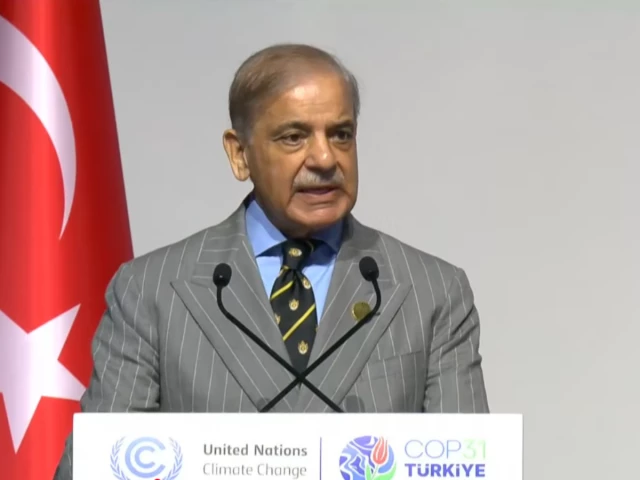


Elsewhere on the site
 Conflict & Security•3 min readUS Pentagon gives preliminary approval for Poland military base
 Politics•1 min readTrump compares US antisemitism to 1938 Germany
 Politics•4 min readEuropeans Back EU Army Amid US Reliability Concerns
 Conflict & Security•2 min readSaudi Arabia urges EU to label Yemen's Houthi movement as terrorist group