At least 90 die in Ceuta border surge as Moroccans seek route to Europe
Ayoub Akbili, Hamza Haibouri and Abdelouahed Iken were among those killed attempting to cross into Spain last month
AI-assisted coverage comparison, editor-supervised · How this was made
At least 90 die in Ceuta border surge as Moroccans seek route to Europe
Photograph: My Mother Lode (embedded from source)
What this story says
- At least 90 people died attempting to cross from Morocco into Ceuta, a Spanish enclave, in July 2026, though rights groups report a higher toll.
- The surge was driven by misinformation about border access, poverty, and lack of economic opportunities in Morocco.
- Ayoub Akbili, a physics graduate, died from severe head trauma; his family suspects foul play after being told he fell from a cliff.
- Moroccan and Spanish authorities have intensified security measures, blaming social media and smuggling networks for the crisis.
Who covered it
Percentages are shares of the 27 outlets carrying a published leaning rating. 2 of the 29 outlets we know ran this story carry no rating and are not counted in them. Coverage measured .
Trust
82/100
Craft
65/100
Hype
15/100
29 sources · methodology
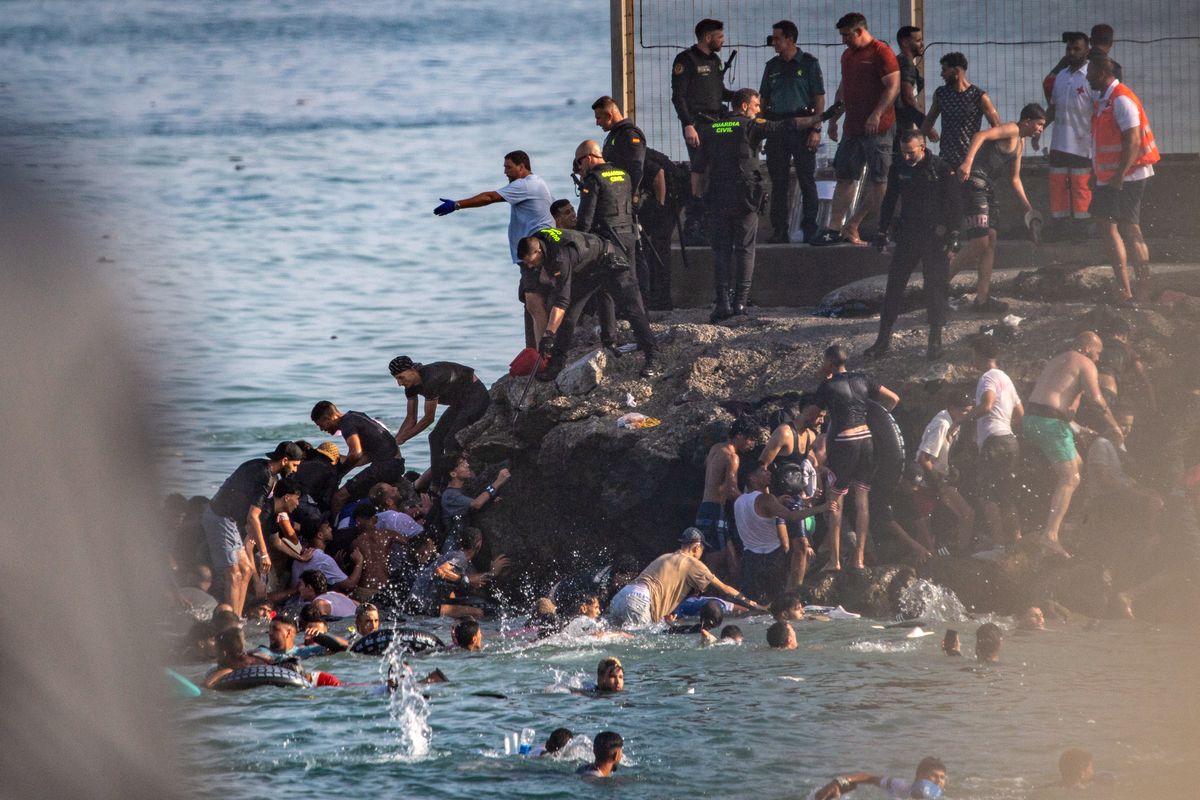
More than 70,000 people attempted to cross from Morocco into Ceuta, a Spanish territory on the North African coast, in July 2026. The surge followed rumours that the border was open, fuelled by social media and human smuggling networks. At least 90 people died during the attempt, according to official figures reported by the Associated Press. Rights groups say the toll is higher, and the Times of India digest notes that official figures underreport the deaths.
Most of those who survived have since returned to Morocco. Moroccan and Spanish authorities responded by tightening security. Migrants cited unemployment and low wages as key reasons for attempting the crossing. Morocco’s economy is projected to grow by 4.5% in 2026, but policymakers have struggled to translate growth into higher-paying jobs.
Among the dead were Ayoub Akbili, a 31-year-old physics graduate; Hamza Haibouri, a 28-year-old footballer; and Abdelouahed Iken, a 19-year-old high school student. Akbili, who worked at a car parts factory, earned about $421 a month, slightly above Morocco’s median salary. He was saving for his mother’s hernia surgery. Haibouri, who played for Morocco’s second-division Kenitra Athletic Club, had not played professionally this year. Iken, who could not swim, bought a life jacket for the crossing but drowned.
A Moroccan Interior Ministry document obtained by the Associated Press states Akbili died at midnight on 31 July 2026. His death was classified as "unnatural" and attributed to "severe head trauma". His family was told he fell from a cliff, but a cousin suspects foul play, noting that Akbili’s phone and wallet were found intact. The ministry recorded one death on the Moroccan side as caused by a cliff fall.
What the coverage left out
None of the right-rated digests mentioned the $6.6 billion figure for remittances sent home by Moroccans abroad, which the Associated Press full report carried. None of the centre-rated digests reported the rights groups’ claim that the death toll was higher than official figures. The right-rated digests did not include the detail that Akbili’s cousin suspects foul play in his death.
Still developing. We have re-checked which outlets are covering this 1 time, most recently on 18 Aug 2026, 14:30, and will add the sides that appear.
How each side covered it
Our own reading of the reporting listed below, written from the outlets’ articles rather than quoted from them. The reasoning is set out on our methodology page.
Left
13 rated outlets
- The 12 left-rated digests led on the personal stories of the three men who died. They carried the detail that Akbili was a physics graduate working in a car parts factory, Haibouri a footballer without a contract this year, and Iken a teenager who could not swim. The Associated Press full report, which most digests summarised, included the voices of relatives and friends: Akbili’s cousin questioning the official account of his death, Haibouri’s friend describing his religious devotion, and Iken’s family learning of his death on Facebook.
- The left-rated digests also reported the rights groups’ claim that the death toll was higher than official figures. The Associated Press full report quoted the $6.6 billion figure for remittances sent home by Moroccans abroad in the first half of 2026, framing migration as an economic lifeline for families.
Centre
11 rated outlets
- The 11 centre-rated digests led on the scale of the surge and the security response. My Mother Lode’s full report, which the digests followed, described the chaos at the border: crowds described as "ants", police firing stun grenades and tear gas. The centre-rated digests carried the official death toll of at least 90 but did not mention rights groups’ higher estimates. They included the detail that nearly all survivors had returned to Morocco and that both countries had intensified security measures.
- The centre-rated digests also reported the personal stories of the three men, though with less detail than the left. My Mother Lode’s full report included the $421 monthly wage Akbili earned and the $129 he paid a driver to reach the border, equivalent to two months’ rent. It also carried the voices of relatives, including Akbili’s cousin’s suspicion of foul play.
Right
3 rated outlets
- The three right-rated digests led on the official response and the role of misinformation. The Times of India digest noted that official figures underreport the death toll but did not cite rights groups. The right-rated digests described the surge as driven by "false rumours" and "desperation", with less emphasis on the economic context. They carried the personal stories of the three men but did not include their wages, the cost of the journey, or the voices of relatives questioning the official account of Akbili’s death.
Read it at the source
29 outlets, grouped by the leaning a published rating gives them. Every headline links to the original; an underlined outlet name opens our profile of that publisher.
Left
13- A Physicist, A Soccer Player, A Teen: The Lives Lost In The Ceuta Tragedy (opens HuffPost in a new tab)
- A physics graduate, a soccer player, a teen who couldn't swim: They died in the Ceuta migrant surge (opens SooLeader.com in a new tab)
SooLeader.com — is SooLeader.com biased? Our profile of this outlet
- A physics graduate, a soccer player, a teen who couldn't swim: They died in the Ceuta migrant surge (opens The Daily Item in a new tab)
The Daily Item — is The Daily Item biased? Our profile of this outlet
- A physics graduate, a soccer player, a teen who couldn’t swim: They died in the Ceuta migrant surge (opens St Catharines Standard in a new tab)
St Catharines Standard — is St Catharines Standard biased? Our profile of this outlet
- A physics graduate, a soccer player, a teen who couldn’t swim: They died in the Ceuta migrant surge (opens The Record in a new tab)
The Record — is The Record biased? Our profile of this outlet
- A physics graduate, a soccer player, a teen who couldn’t swim: They died in the Ceuta migrant surge (opens The Toronto Star in a new tab)
The Toronto Star — is The Toronto Star biased? Our profile of this outlet
- A physics graduate, a soccer player, a teen who couldn’t swim: They died in the Ceuta migrant surge (opens The Seattle Times in a new tab)
The Seattle Times — is The Seattle Times biased? Our profile of this outlet
- A physics graduate, a soccer player, a teen who couldn't swim: They died in the Ceuta migrant surge (opens The Sun Chronicle in a new tab)
The Sun Chronicle — is The Sun Chronicle biased? Our profile of this outlet
Show 5 more
- A physics graduate, a soccer player, a teen who couldn't swim: They died in the Ceuta migrant surge (opens Oskaloosa Herald in a new tab)
Oskaloosa Herald — is Oskaloosa Herald biased? Our profile of this outlet
- A physics graduate, a soccer player, a teen who couldn't swim: They died in the Ceuta migrant surge (opens Beckley Register-Herald in a new tab)
Beckley Register-Herald — is Beckley Register-Herald biased? Our profile of this outlet
- A physics graduate, a soccer player, a teen who couldn't swim: They died in the Ceuta migrant surge (opens Associated Press News in a new tab)
Associated Press News — is Associated Press News biased? Our profile of this outlet
- A physics graduate, a soccer player, a teen who couldn't swim: They died in the Ceuta migrant surge (opens The Independent in a new tab)
The Independent — is The Independent biased? Our profile of this outlet
- A physics graduate, a teen who couldn't swim: They died in the Ceuta migrant surge (opens ABC News in a new tab)
Centre
11- A physics graduate, a soccer player, a teen who couldn't swim: They died in the Ceuta migrant surge (opens union-bulletin.com in a new tab)
union-bulletin.com — is union-bulletin.com biased? Our profile of this outlet
- A physics graduate, a soccer player, a teen who couldn't swim: They died in the Ceuta migrant surge (opens Idaho State Journal in a new tab)
Idaho State Journal — is Idaho State Journal biased? Our profile of this outlet
- A physics graduate, a soccer player, a teen who couldn't swim: They died in the Ceuta migrant surge (opens Rutland Herald in a new tab)
Rutland Herald — is Rutland Herald biased? Our profile of this outlet
- A Physics Graduate, a Footballer, a Young Man Who Couldn't Swim: They Died Entering Ceuta (opens Santa Maria Times in a new tab)
Santa Maria Times — is Santa Maria Times biased? Our profile of this outlet
- A physics graduate, a soccer player, a teen who couldn’t swim: They died in the Ceuta migrant surge (opens My Mother Lode in a new tab)
My Mother Lode — is My Mother Lode biased? Our profile of this outlet
- A physics graduate, a soccer player, a teen who couldn't swim: Th (opens WBAL in a new tab)
- A physics graduate, a soccer player, a teen who couldn't swim: They died in the Ceuta migrant surge (opens Winnipeg Free Press in a new tab)
Winnipeg Free Press — is Winnipeg Free Press biased? Our profile of this outlet
- A physics graduate, a soccer player, a teen who couldn't swim: They died in the Ceuta migrant surge (opens Ottumwa Courier in a new tab)
Ottumwa Courier — is Ottumwa Courier biased? Our profile of this outlet
Show 3 more
- A physics graduate, a soccer player, a teen who couldn't swim: They died in the Ceuta migrant surge (opens Click on Detroit in a new tab)
Click on Detroit — is Click on Detroit biased? Our profile of this outlet
- A physics graduate, a soccer player, a teen who couldn't swim: They died in the Ceuta migrant surge (opens News 4 JAX in a new tab)
News 4 JAX — is News 4 JAX biased? Our profile of this outlet
- A physics graduate, a soccer player, a teen who couldn't swim: They died in the Ceuta migrant surge (opens WKMG in a new tab)
Right
3- A physics graduate, a soccer player, a teen who couldn't swim: They died in the Ceuta migrant surge (opens Times of India in a new tab)
Times of India — is Times of India biased? Our profile of this outlet
- A physics graduate, a soccer player, a teen who couldn't swim: They died in the Ceuta migrant surge (opens The Messenger in a new tab)
The Messenger — is The Messenger biased? Our profile of this outlet
- A physics graduate, a soccer player, a teen who couldn't swim: They died in the Ceuta migrant surge (opens The Batesville Daily Guard in a new tab)
The Batesville Daily Guard — is The Batesville Daily Guard biased? Our profile of this outlet
Not rated
2- A physics graduate, a soccer player, a teen who couldn’t swim: They died in the Ceuta migrant surge (opens New Delhi Times in a new tab)
New Delhi Times — is New Delhi Times biased? Our profile of this outlet
- A Physics Graduate, a Footballer, a Young Man Who Couldn't Swim: They Died Entering Ceuta (opens Independent Español in a new tab)
Independent Español — is Independent Español biased? Our profile of this outlet
Questions about this coverage
- How did the left and right cover At least 90 die in Ceuta border surge as Moroccans seek route to Europe?
- Of the 27 outlets on this story carrying a published leaning rating, 48% are rated left, 41% are rated centre, 11% are rated right. Those percentages are shares of the rated outlets, not of every outlet that ran it, which was 29. The sections above set out what each side emphasised, in its own terms.
- Is At least 90 die in Ceuta border surge as Moroccans seek route to Europe left or right?
- Neither side dominates it. Of the 27 rated outlets on this story, 48% are rated left, 41% are rated centre, 11% are rated right, and no side holds the 70% this site would want before calling a field one-sided. A story is not left or right in any case; the outlets that carried it are what carry ratings.
- Is the coverage of At least 90 die in Ceuta border surge as Moroccans seek route to Europe biased?
- At least 90 die in Ceuta border surge as Moroccans seek route to Europe is one event reported by 29 outlets, and this page does not rate the story as biased or unbiased. What it publishes is the spread: which outlets ran it, where named rating organisations place each of them on the spectrum, and what each side chose to lead with. A leaning rating describes an outlet's record over time, not this article, and the two should not be run together.
- Which outlets covered At least 90 die in Ceuta border surge as Moroccans seek route to Europe?
- 29 that we know of, every one of them listed further up this page with a link to its own report and to what we hold on the publisher. Nothing here is a summary of somebody else's summary: the outlets are named so the original reporting can be read.
- How many people died attempting to cross into Ceuta?
- Official figures report at least 90 deaths, as carried by the Associated Press. Rights groups say the toll is higher, and the Times of India digest notes that official figures underreport the deaths. The disagreement remains unresolved in the reports.
- What drove the surge in crossings into Ceuta?
- The surge was driven by misinformation about border access, poverty, and lack of economic opportunities in Morocco. Migrants cited unemployment and low wages as key reasons. Moroccan and Spanish authorities blamed social media and human smuggling networks, as reported by the Associated Press.
- Who were the three men whose deaths were highlighted in the reports?
- Ayoub Akbili was a 31-year-old physics graduate working in a car parts factory. Hamza Haibouri was a 28-year-old footballer without a contract this year. Abdelouahed Iken was a 19-year-old high school student who could not swim. Their stories were carried by the Associated Press and My Mother Lode.
- What security measures have Morocco and Spain taken in response?
- Both countries have intensified security measures at the border, as reported by the Associated Press and My Mother Lode. Nearly all survivors of the surge have returned to Morocco. The reports do not detail specific new measures.
How did this read?
About the coverage, not about the story. We do not ask whether you agree with what happened — we have no honest use for that answer.