China claims successful satellite refuelling in orbit
Researchers report transferring propellant to a BeiDou satellite, a feat with potential military implications.
AI-assisted coverage comparison, editor-supervised · How this was made
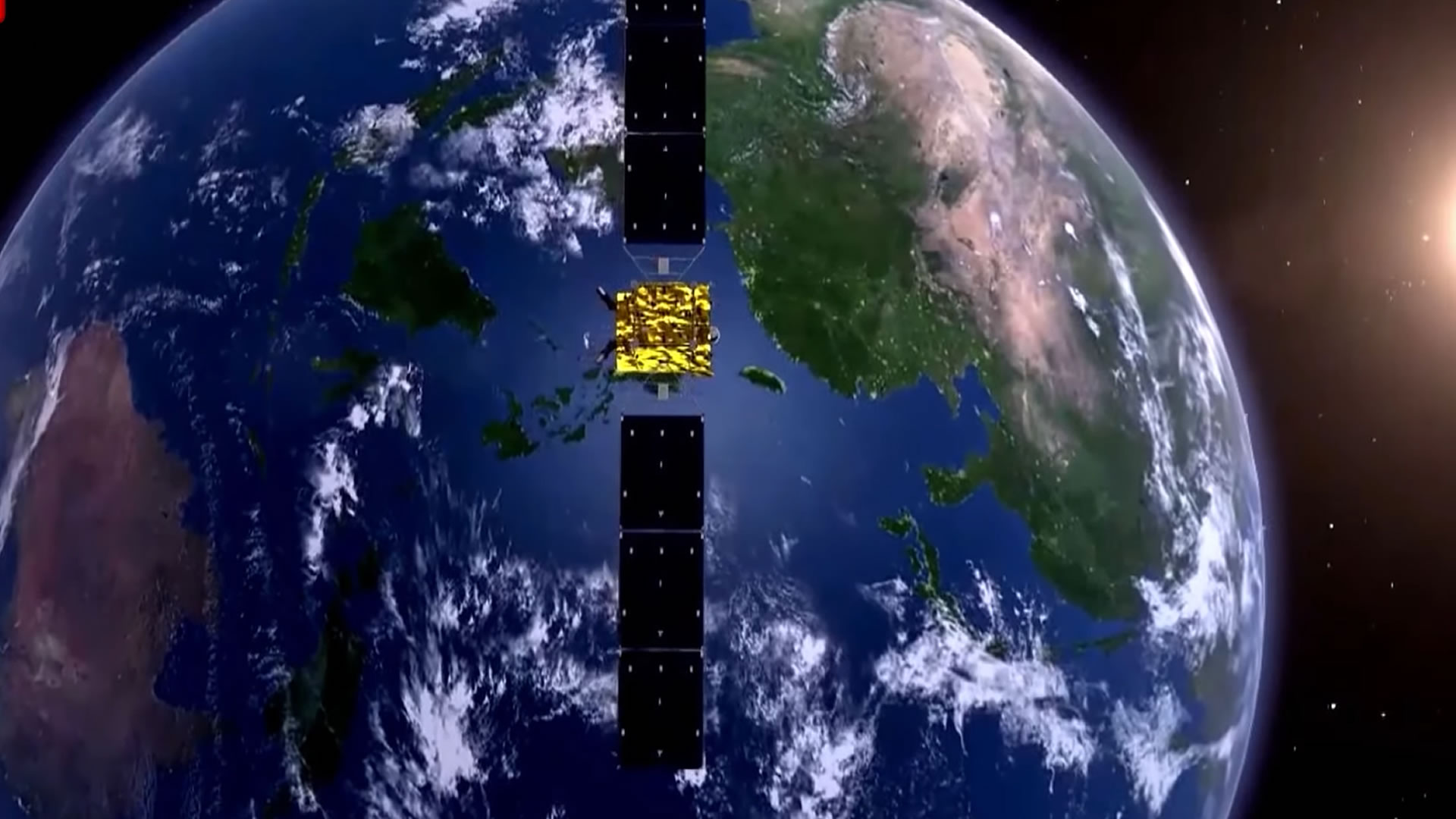
Artist's impression if a BeiDou satellite in orbit.China News Service/Wikimedia Commons
Photograph: Interesting Engineering (embedded from source)
What this story says
- Chinese researchers claim to have refuelled a BeiDou satellite in high Earth orbit.
- The operation reportedly involved transferring room-temperature propellant from a tanker satellite.
- The capability could extend satellite lifespans and has potential military implications.
- US tracking data cited by SCMP casts doubt on the reported operation.
Who covered it
Percentages are shares of the 3 outlets carrying a published leaning rating. 7 of the 10 outlets we know ran this story carry no rating and are not counted in them. Coverage measured .
Trust
42/100
Craft
57/100
Hype
41/100
10 sources · methodology
Chinese researchers have claimed to have refuelled a BeiDou satellite in high Earth orbit. The operation, which reportedly took place in February, involved the transfer of room-temperature propellant from a tanker satellite to a BeiDou satellite. The research paper detailing the event is currently undergoing peer review for the Chinese Journal of Deep Space Exploration.
The ability to refuel satellites in orbit could significantly extend their operational lifespan. Satellites like BeiDou, China's equivalent to the US Global Positioning System, are launched with a finite amount of propellant for essential functions such as orbit corrections and station-keeping. Without the ability to refuel, a satellite becomes inoperable once its propellant is exhausted, necessitating replacement.
Beyond extending satellite lifespans, the capability to approach and interact with another spacecraft in orbit has potential military implications. While not explicitly stated by the researchers, this technology could potentially be adapted for anti-satellite missions. The transfer of storable chemical propellants, which can remain liquid for years without refrigeration, is considered easier to handle than cryogenic fuels.
Disagreement on operation details
While Chinese researchers claim a successful refuelling operation occurred in February, US tracking data cited by the South China Morning Post casts doubt on the reported event. DiarioBitcoin reported that the researchers did not reveal how the operation was carried out and noted the need to develop technologies for transferring cryogenic fuels.
What the coverage left out
None of the centre-rated reports mention the specific cost of the operation or the estimated extension of the BeiDou satellite's lifespan. Furthermore, no reports mention the specific names of the Chinese researchers involved in the operation.
Still developing. We have re-checked which outlets are covering this 6 times, most recently on 27 Sept 2026, 22:15, and will add the sides that appear.
How each side covered it
Our own reading of the reporting listed below, written from the outlets’ articles rather than quoted from them. The reasoning is set out on our methodology page.
Left
0 rated outlets
No outlet rated left has run this story so far. We are still checking, and will say plainly if that does not change.
Centre
3 rated outlets
- The centre-rated reports led on the claim of China's successful orbital satellite refuelling and its potential to reshape the space race. Interesting Engineering highlighted that China is now able to refuel satellites thousands of miles above Earth, detailing the technical challenges involved in such an operation and noting its potential for offensive anti-satellite missions. Thomasnet.com also reported on China pulling off the first-ever orbital satellite refuelling, suggesting it ushers in a new era. Both outlets mentioned the potential military implications of this technology.
Right
0 rated outlets
No outlet rated right has run this story so far. We are still checking, and will say plainly if that does not change.
Questions about this coverage
- How did the left and right cover China claims successful satellite refuelling in orbit?
- Of the 3 outlets on this story carrying a published leaning rating, 0% are rated left, 100% are rated centre, 0% are rated right. Those percentages are shares of the rated outlets, not of every outlet that ran it, which was 10. The sections above set out what each side emphasised, in its own terms.
- Is China claims successful satellite refuelling in orbit left or right?
- Too few of the outlets on this story carry a published leaning rating to say. 3 of them do, and this site does not characterise a field under 12: at that size one newsroom filing moves the share by ten points. The percentages above are the count as it stands.
- Is the coverage of China claims successful satellite refuelling in orbit biased?
- China claims successful satellite refuelling in orbit is one event reported by 10 outlets, and this page does not rate the story as biased or unbiased. What it publishes is the spread: which outlets ran it, where named rating organisations place each of them on the spectrum, and what each side chose to lead with. A leaning rating describes an outlet's record over time, not this article, and the two should not be run together.
- Which outlets covered China claims successful satellite refuelling in orbit?
- 10 that we know of, every one of them listed further up this page with a link to its own report and to what we hold on the publisher. Nothing here is a summary of somebody else's summary: the outlets are named so the original reporting can be read.
- What is the claim made by Chinese researchers?
- Chinese researchers claim to have successfully refuelled a BeiDou satellite in high Earth orbit. This operation reportedly involved transferring room-temperature propellant from a tanker satellite to a BeiDou satellite.
- What are the potential implications of this technology?
- The ability to refuel satellites in orbit could extend their operational lifespan, reducing the need for costly replacements. It also has potential military implications, as the technology could be adapted for anti-satellite missions.
- Is there any doubt about the reported operation?
- Yes, US tracking data cited by the South China Morning Post casts doubt on the reported operation. Some reports also note that the researchers did not reveal the specific method used for the refuelling.
Read it at the source
10 outlets, grouped by the leaning a published rating gives them. Every headline links to the original; an underlined outlet name opens our profile of that publisher.
Left
0No outlet in this group ran the story.
Centre
3- China now able to refuel satellites thousands of miles above Earth (opens Interesting Engineering in a new tab)
Interesting Engineering — is Interesting Engineering biased? Our profile of this outlet
- Claims China’s BeiDou satellite was refuelled in orbit could change space race (opens South China Morning Post in a new tab)
South China Morning Post — is South China Morning Post biased? Our profile of this outlet
- China Pulls Off First-Ever Orbital Satellite Refueling (opens thomasnet.com in a new tab)
thomasnet.com
Right
0No outlet in this group ran the story.
Not rated
7- Orbital War and Billions Saved: China Fills up Satellites in Space and Sweeps the United States (opens Scenarieconomici.it in a new tab)
Scenarieconomici.it — is Scenarieconomici.it biased? Our profile of this outletOpinion
- Claims China's BeiDou satellite was refuelled in orbit could change space race (opens vespernews.com in a new tab)
vespernews.com
- Chinese scientists claim BeiDou was refuelled in orbit (opens UA.NEWS in a new tab)
- Chinese Researchers Claim that a BeiDou Satellite Was Refueled in Orbit (opens DiarioBitcoin in a new tab)
DiarioBitcoin — is DiarioBitcoin biased? Our profile of this outlet
- Utara Selatan - Malaysia Travel Guide (opens utaraselatan.com in a new tab)
utaraselatan.com
- BeiDou Tracker: China's Navigation Satellites Live (opens azmth.space in a new tab)
azmth.space
- China Announces In-Orbit Upgrade for BeiDou Satellite Navigation System in 2026 - GIS Resources (opens gisresources.com in a new tab)
gisresources.com
How did this read?
About the coverage, not about the story. We do not ask whether you agree with what happened — we have no honest use for that answer.