China missile test splits Pacific Islands over militarisation
Foreign ministers failed to agree on a statement condemning the launch, the first into the Pacific since 2024
AI-assisted coverage comparison, editor-supervised · How this was made
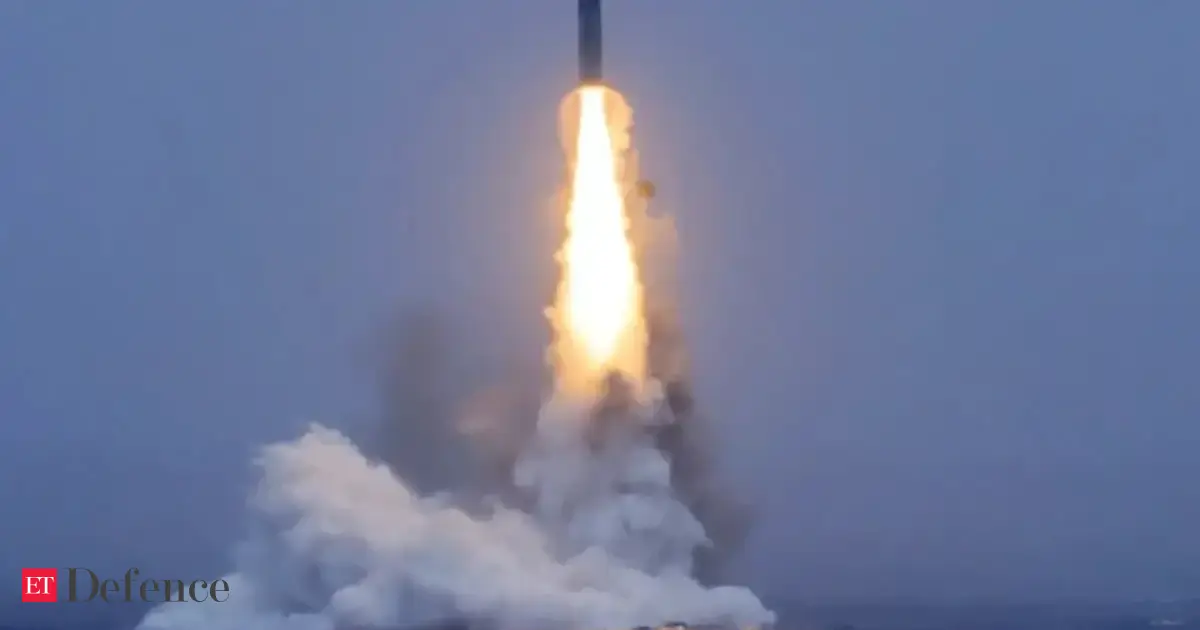
China’s missile test has highlighted deep divisions among Pacific nations struggling to preserve their “Ocean of Peace” vision amid growing U.S.-China military rivalry. (File photo)
Photograph: Times of India (embedded from source)
What this story says
- China tested a nuclear-capable missile in the Pacific in July, its first such launch into the region since September 2024.
- Pacific Islands foreign ministers did not issue a joint statement condemning the test, despite individual leaders expressing alarm.
- Kiribati and Nauru, which have deepened ties with Beijing, opposed the wording of a proposed statement, according to an official.
- The test occurred hours after Fiji and Australia signed a defence treaty, marking Fiji’s first formal alliance.
Who covered it
Percentages are shares of the 22 outlets carrying a published leaning rating. 6 of the 28 outlets we know ran this story carry no rating and are not counted in them. Coverage measured .
Trust
82/100
Craft
68/100
Hype
20/100
28 sources · methodology
Missing from the left
Only 1 of the 22 outlets with a published leaning rating that ran this story are rated left.
A reader who follows the left would not have seen this. We report the absence rather than explain it: outlets choose what to cover for many reasons, and we have no evidence about which one applies here.
China conducted a ballistic-missile test into the Pacific in July 2026, the first known launch of its kind by Beijing since September 2024. The test was nuclear-capable, as reported by the Times of India and Reuters. It occurred hours after Fiji and Australia signed a defence treaty, the Ocean of Peace Alliance, which marked Fiji’s first formal military alliance.
Pacific Islands foreign ministers met in Suva in August to discuss the test but did not issue a collective statement condemning it. Papua New Guinea’s foreign minister, Justin Tkatchenko, called the launch "totally inappropriate" in comments to Reuters. China’s foreign ministry said the test was conducted "safely" and urged other countries not to "over-interpret the matter."
The failure to agree on a statement followed opposition from Kiribati and Nauru, both of which have strengthened ties with Beijing since switching diplomatic recognition from Taiwan in 2019 and 2024, respectively. New Zealand’s foreign minister, Winston Peters, attributed the impasse to "foreign influence," though he did not name a country. The Pacific Islands Forum leaders meeting in Palau later this month is expected to revisit the issue.
The test highlighted tensions between the region’s security partnerships and its stated ambition to remain an "Ocean of Peace." The declaration, endorsed by Pacific leaders in September 2025, committed to safeguarding the region and resisting definitions of peace imposed by outside powers. The U.S. maintains a military presence in Hawaii, Guam, and the Marshall Islands, while China has expanded naval deployments and live-fire drills in the Pacific.
What the coverage left out
No left-rated outlet ran this story. None of the digests from right-rated outlets mentioned the specific type of missile tested or the advance notice China provided to Papua New Guinea. The Times of India’s full report was the only one to note that Beijing gave PNG advance notice of the launch but did not disclose where the missile would land.
Coverage settled. We checked this 161 times and stopped on 16 Aug 2026, 07:45. The figures above are what it finished at.
How other outlets pictured it
Which photograph to run is each newsroom’s own choice. The leaning beside a name is that outlet’s published rating, not a claim that the pictures divide along it. Every picture is shown from the outlet’s own server and links to the article it ran in.

How each side covered it
Our own reading of the reporting listed below, written from the outlets’ articles rather than quoted from them. The reasoning is set out on our methodology page.
Left
1 rated outlet
We have not written our reading of the left coverage of this story. The left-rated outlets that ran it are listed below.
Centre
12 rated outlets
- The three centre-rated reports, WTVB, The Express Tribune, and Reuters, led on the failure of Pacific Islands foreign ministers to issue a joint statement condemning the missile test. All three digests noted the test’s timing, hours after Fiji and Australia signed a defence treaty. WTVB and Reuters included comments from Papua New Guinea’s foreign minister calling the launch "totally inappropriate."
- WTVB’s full report, which matched Reuters’ account, detailed the Ocean of Peace Declaration and the region’s resistance to having its security agenda defined by external powers. It quoted Solomon Islands Foreign Minister Rick Houenipwela stating the region’s agenda must be "conceived by the Pacific, shaped by the Pacific and only by the Pacific." The report also noted the benefits Pacific nations derive from security partnerships, such as surveillance against illegal fishing and disaster response.
Right
9 rated outlets
- The four right-rated reports, Times of India, Modern Diplomacy, The Straits Times, and SRN News, led on the growing militarisation of the Pacific and the divisions among island nations. The Times of India’s full report framed the missile test as exposing the "limits of Pacific leaders’ ambition" for an "Ocean of Peace." It quoted Tuvalu’s permanent foreign secretary expressing concern about militarisation, including the AUKUS partnership.
- The Times of India and Modern Diplomacy both highlighted the role of Kiribati and Nauru in blocking a collective statement, linking their opposition to their diplomatic ties with Beijing. The Times of India quoted New Zealand’s foreign minister blaming "foreign influence" for the impasse. The Straits Times’ digest led with Fiji’s foreign minister describing the tension between wanting to avoid militarisation and needing security capabilities.
Questions about this coverage
- How did the left and right cover China missile test splits Pacific Islands over militarisation?
- Of the 22 outlets on this story carrying a published leaning rating, 5% are rated left, 54% are rated centre, 41% are rated right. Those percentages are shares of the rated outlets, not of every outlet that ran it, which was 28. The sections above set out what each side emphasised, in its own terms.
- Is China missile test splits Pacific Islands over militarisation left or right?
- Neither side dominates it. Of the 22 rated outlets on this story, 5% are rated left, 54% are rated centre, 41% are rated right, and no side holds the 70% this site would want before calling a field one-sided. A story is not left or right in any case; the outlets that carried it are what carry ratings.
- Is the coverage of China missile test splits Pacific Islands over militarisation biased?
- China missile test splits Pacific Islands over militarisation is one event reported by 28 outlets, and this page does not rate the story as biased or unbiased. What it publishes is the spread: which outlets ran it, where named rating organisations place each of them on the spectrum, and what each side chose to lead with. A leaning rating describes an outlet's record over time, not this article, and the two should not be run together.
- Which side is not reporting China missile test splits Pacific Islands over militarisation?
- When we first saw this story, outlets rated left had barely covered it. Coverage accretes for hours after an event, so that is where to look rather than a verdict — the split above is the current count, and it is the one to read.
- Which outlets covered China missile test splits Pacific Islands over militarisation?
- 28 that we know of, every one of them listed further up this page with a link to its own report and to what we hold on the publisher. Nothing here is a summary of somebody else's summary: the outlets are named so the original reporting can be read.
- What was the Pacific Islands' response to China's missile test?
- Pacific Islands foreign ministers could not agree on a collective statement condemning the test. Kiribati and Nauru opposed the wording of a proposed statement, while other leaders, including Papua New Guinea’s foreign minister, called the launch "totally inappropriate." The impasse reflects broader divisions over militarisation in the region.
- Why did China conduct the missile test?
- China’s foreign ministry said the test was conducted "safely" and urged other countries not to "over-interpret the matter." The test occurred hours after Fiji and Australia signed a defence treaty, marking Fiji’s first formal alliance. It was China’s first known ballistic-missile test into the Pacific since September 2024.
- What is the Ocean of Peace Declaration?
- The Ocean of Peace Declaration was endorsed by Pacific leaders in September 2025. It commits the region to safeguarding peace, recognising the right of its people to peace, and resisting definitions of security imposed by outside powers. The declaration inspired the defence pact signed between Australia and Fiji in July 2026.
Read it at the source
28 outlets, grouped by the leaning a published rating gives them. Every headline links to the original; an underlined outlet name opens our profile of that publisher.
Left
1Centre
12- Nuclear Power Poker: China Fires Nuclear Rocket Across the Pacific – and Raises 41 States (opens mannheim24.de in a new tab)
mannheim24.de — is mannheim24.de biased? Our profile of this outlet
- US and several Pacific countries hit out at Chinese nuclear missile test, after PIF misses chance (opens RNZ in a new tab)
- The US and Allies, Including the Netherlands, Warn of Sudden Missile Launches. (opens Algemeen Dagblad in a new tab)
Algemeen Dagblad — is Algemeen Dagblad biased? Our profile of this outlet
- China missile test deepens Pacific divide over growing militarization | Honolulu Star-Advertiser (opens Star Advertiser in a new tab)
Star Advertiser — is Star Advertiser biased? Our profile of this outlet
- China Missile Test Deepens Pacific Divide Over Growing Militarization (opens Maritime Reporter in a new tab)
Maritime Reporter — is Maritime Reporter biased? Our profile of this outlet
- China’s hypersonic weapons can be guided by the stars if GPS fails: report (opens South China Morning Post in a new tab)
South China Morning Post — is South China Morning Post biased? Our profile of this outlet
- China missile test deepens Pacific divide over growing militarisation (opens The Economic Times in a new tab)
The Economic Times — is The Economic Times biased? Our profile of this outlet
- China missile test deepens Pacific divide over growing militarisation (opens The Express Tribune in a new tab)
The Express Tribune — is The Express Tribune biased? Our profile of this outlet
Show 4 more
- China missile test deepens Pacific divide over growing militarization (opens The Japan Times in a new tab)
The Japan Times — is The Japan Times biased? Our profile of this outlet
- China missile test deepens Pacific divide over growing militarisation (opens Reuters in a new tab)
- China missile test deepens Pacific divide over growing militarisation (opens WTVB in a new tab)
- Guam: Missile launch pad and missiles target (opens The Guam Daily Post in a new tab)
The Guam Daily Post — is The Guam Daily Post biased? Our profile of this outlet
Right
9- China and Oil Shocks Push Climate Down Pacific Islands' Agenda (opens Financial Post in a new tab)
Financial Post — is Financial Post biased? Our profile of this outlet
- "Thundering" reached the "Caliber" to the target at a distance of 1.3 thousand kilometers (opens EADaily in a new tab)
- China's Test of a Nuclear-Weapon Missile in the Pacific Exacerbates Tensions Between the Island States of the Region (opens focus.de in a new tab)
- China missile test puts Pacific’s ‘Ocean of Peace’ vision under pressure (opens Firstpost News in a new tab)
Firstpost News — is Firstpost News biased? Our profile of this outlet
- China missile test deepens Pacific divide over growing militarisation (opens Free Malaysia Today News in a new tab)
Free Malaysia Today News — is Free Malaysia Today News biased? Our profile of this outlet
- China missile test deepens Pacific divide over growing militarisation (opens Times of India in a new tab)
Times of India — is Times of India biased? Our profile of this outlet
- China Missile Test Raises Fears of Growing Pacific Militarisation (opens Modern Diplomacy in a new tab)
Modern Diplomacy — is Modern Diplomacy biased? Our profile of this outlet
- China missile test deepens Pacific divide over growing militarisation (opens The Straits Times in a new tab)
The Straits Times — is The Straits Times biased? Our profile of this outlet
Not rated
6- Nuclear Power Poker: China Fires Nuclear Rocket Across the Pacific – and Raises 41 States (opens op-online.de in a new tab)
op-online.de — is op-online.de biased? Our profile of this outlet
- The US and Allies, Including the Netherlands, Warn of Sudden Missile Launches. (opens tubantia.nl in a new tab)
tubantia.nl — is tubantia.nl biased? Our profile of this outlet
- The US and Allies, Including the Netherlands, Warn of Sudden Missile Launches. (opens gelderlander.nl in a new tab)
gelderlander.nl — is gelderlander.nl biased? Our profile of this outlet
- The US and Allies, Including the Netherlands, Warn of Sudden Missile Launches. (opens bd.nl in a new tab)
- China missile test deepens Pacific divide over growing militarisation (opens OODA Loop in a new tab)
- This Is 'Dark Eagle', the US Hypersonic Missile that neither China nor Russia Can Stop. (opens periodistadigital.com in a new tab)
periodistadigital.com — is periodistadigital.com biased? Our profile of this outlet
How did this read?
About the coverage, not about the story. We do not ask whether you agree with what happened — we have no honest use for that answer.