Nepal asked China for early disaster warnings before deadly flood
Officials sought better information on glacier risks and water levels following a May meeting.
AI-assisted coverage comparison, editor-supervised · How this was made
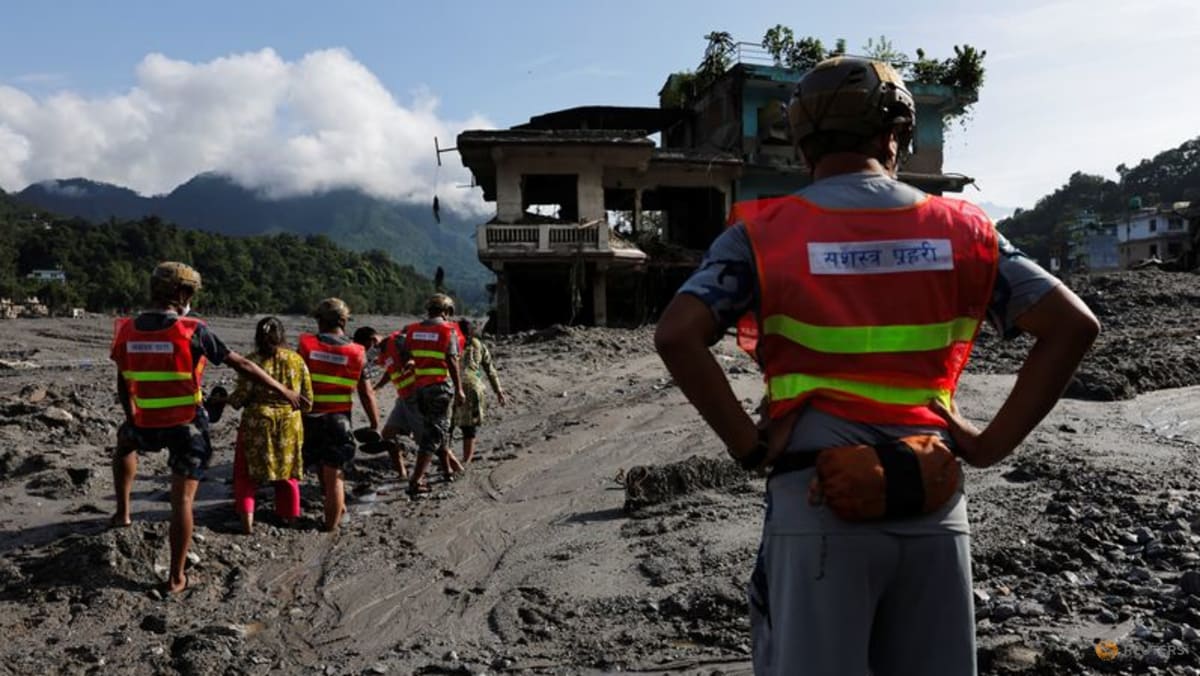
Rescuers help women to move through a muddy road following flash floods and a mudslide in Trishuli, Nuwakot district, Nepal, on Aug 28, 2026. (File photo: Reuters/Navesh Chitrakar)
Photograph: Channel News Asia (embedded from source)
What this story says
- Nepal and China officials met in Kathmandu on May 27 to discuss cooperation on floods, weather, and glacier-related hazards.
- Two Nepali officials told Reuters they did not receive sufficient information from China on glacier risks and water levels after the meeting.
- China's embassy stated that Beijing and Kathmandu had made substantial progress on cross-border disaster information sharing.
- The natural disaster is estimated to cost Nepal a tenth of its annual economic output to recover from.
Who covered it
Percentages are shares of the 6 outlets carrying a published leaning rating. 6 of the 12 outlets we know ran this story carry no rating and are not counted in them. Coverage measured .
Trust
60/100
Craft
65/100
Hype
20/100
12 sources · methodology
Thin on the left so far
None of the 6 outlets with a published leaning rating that ran this story are rated left.
This story is still being watched, so it is a count and not yet a finding. Coverage keeps arriving for hours after an event, and a side that has published nothing this morning may publish by tonight. If it is still true when we stop checking, we will say so plainly.
Officials from Nepal and China met in Kathmandu on May 27 to discuss cooperation on monitoring and responding to floods, weather, and glacier-related hazards. The meeting agenda, prepared by the Nepali side and seen by Reuters, included calls for joint risk-reduction measures such as inventories of glacial lakes and hazard mapping. Approximately a dozen Chinese officials, including some from the Tibet region, and 10 Nepali officials attended.
Following the meeting, two Nepali officials told Reuters that they had not received adequate information from China regarding glacier risks and water levels. They expressed concerns that insufficient data sharing could impede their ability to anticipate and prepare for major disasters. One hydrologist from Nepal's Flood Forecasting Division stated that Nepal wanted to be informed early about any movements of glaciers or surrounding areas. China's embassy stated that Chinese and international experts face significant challenges monitoring hazards in the remote Himalayan region and that Chinese teams had shared important information with Nepal in a timely manner.
China's embassy also stated that Beijing and Kathmandu had maintained close contact and made substantial progress on cross-border disaster information sharing at the May meeting. However, at the meeting itself, Chinese representatives indicated they did not have the mandate to sign an agreement on Nepal's requests and suggested further discussions, according to a Nepali government hydrologist. The natural disaster, caused by a glacier collapse unleashing a mudslide, killed nearly 800 people and left over 3,000 missing. Recovery from the disaster is estimated to cost Nepal a tenth of its annual economic output.
Disagreement on information sharing
Two Nepali officials told Reuters they did not receive sufficient information from China on glacier risks and water levels after the May meeting. China's embassy stated that Chinese teams had shared important information with Nepal 'in a timely manner'.
What the coverage left out
None of the centre or right-rated reports below mention the specific number of people killed or missing in the disaster. The figure of nearly 800 deaths and over 3,000 missing was established by the standards desk from the verified claims.
Still developing. We have re-checked which outlets are covering this 2 times, most recently on 31 Aug 2026, 01:15, and will add the sides that appear.
How each side covered it
Our own reading of the reporting listed below, written from the outlets’ articles rather than quoted from them. The reasoning is set out on our methodology page.
Left
0 rated outlets
No outlet rated left has run this story so far. We are still checking, and will say plainly if that does not change.
Centre
4 rated outlets
- Centre-rated reports led on Nepal's request for early warnings from China before a deadly flood catastrophe. Channel News Asia and Devdiscourse highlighted that three months before the disaster, Nepali and Chinese officials met to discuss disaster risks. These reports detailed that two Nepali officials felt they did not receive sufficient information from China on glacier risks and water levels after the meeting. They quoted a Nepali hydrologist expressing a desire for early notification of glacier movements. The reports also included China's embassy stating that Chinese and international experts face significant challenges monitoring hazards in the remote Himalayan region, while also asserting that China had shared important information in a timely manner. The cost to Nepal of recovering from the disaster, estimated at a tenth of its annual economic output, was also mentioned.
Right
2 rated outlets
- Right-rated reports focused on Nepal's request for early warnings from China prior to the flood catastrophe. Business Times and The Straits Times both noted the meeting between Nepali and Chinese officials three months before the disaster to discuss risks. The Straits Times included a statement from China's embassy that Chinese and international experts face significant challenges monitoring hazards in the remote Himalayan region.
Questions about this coverage
- How did the left and right cover Nepal asked China for early disaster warnings before deadly flood?
- Of the 6 outlets on this story carrying a published leaning rating, 0% are rated left, 67% are rated centre, 33% are rated right. Those percentages are shares of the rated outlets, not of every outlet that ran it, which was 12. The sections above set out what each side emphasised, in its own terms.
- Is Nepal asked China for early disaster warnings before deadly flood left or right?
- Too few of the outlets on this story carry a published leaning rating to say. 6 of them do, and this site does not characterise a field under 12: at that size one newsroom filing moves the share by ten points. The percentages above are the count as it stands.
- Is the coverage of Nepal asked China for early disaster warnings before deadly flood biased?
- Nepal asked China for early disaster warnings before deadly flood is one event reported by 12 outlets, and this page does not rate the story as biased or unbiased. What it publishes is the spread: which outlets ran it, where named rating organisations place each of them on the spectrum, and what each side chose to lead with. A leaning rating describes an outlet's record over time, not this article, and the two should not be run together.
- Which side is not reporting Nepal asked China for early disaster warnings before deadly flood?
- When we first saw this story, outlets rated left had barely covered it. Coverage accretes for hours after an event, so that is where to look rather than a verdict — the split above is the current count, and it is the one to read.
- Which outlets covered Nepal asked China for early disaster warnings before deadly flood?
- 12 that we know of, every one of them listed further up this page with a link to its own report and to what we hold on the publisher. Nothing here is a summary of somebody else's summary: the outlets are named so the original reporting can be read.
- When did Nepal and China officials meet to discuss disaster risks?
- Officials from Nepal and China met in Kathmandu on May 27 to discuss cooperation on monitoring and responding to floods, weather, and glacier-related hazards. This meeting took place three months before a major flood catastrophe occurred.
- Did Nepal receive sufficient information from China on glacier risks?
- Two Nepali officials told Reuters they did not receive as much information as they wanted from China on glacier risks and water levels after the May meeting. They feared insufficient data sharing could hamper their ability to anticipate and prepare for major disasters.
- What is the estimated cost of the disaster for Nepal?
- The natural disaster is estimated to cost Nepal a tenth of its annual economic output to recover from. This figure highlights the significant economic impact of the flood and mudslide.
Read it at the source
12 outlets, grouped by the leaning a published rating gives them. Every headline links to the original; an underlined outlet name opens our profile of that publisher.
Left
0No outlet in this group ran the story.
Centre
4- Before flood catastrophe, Nepal asked China for early warnings as risks mounted (opens Channel News Asia in a new tab)
Channel News Asia — is Channel News Asia biased? Our profile of this outlet
- INSIGHT-Before flood catastrophe, Nepal asked China for early warnings as risks mounted (opens Devdiscourse in a new tab)
Devdiscourse — is Devdiscourse biased? Our profile of this outlet
- Killing Floods in Nepal: Prior to the Nearly 800-Death Disaster, Nepal Had Asked China for an Early Warning System (opens lindependant.fr in a new tab)
lindependant.fr — is lindependant.fr biased? Our profile of this outlet
- Before flood catastrophe, Nepal asked China for early warnings as risks mounted (opens WTVB in a new tab)
Right
2- Before flood catastrophe, Nepal asked China for early warnings as risks mounted (opens Business Times in a new tab)
Business Times — is Business Times biased? Our profile of this outlet
- Before flood catastrophe, Nepal asked China for early warnings as risks mounted (opens The Straits Times in a new tab)
The Straits Times — is The Straits Times biased? Our profile of this outlet
Not rated
6- Experts and Officials From Nepal and China Discussed Disaster Risk Three Months Before the Floods (opens n1info.rs in a new tab)
- Before flood catastrophe, Nepal asked China for early warnings as risks mounted (opens PressNewsAgency in a new tab)
PressNewsAgency — is PressNewsAgency biased? Our profile of this outlet
- Before flood catastrophe, Nepal asked China for early warnings - SABC News - Breaking news, special reports, world, business, sport coverage of all South African current events. Africa's news leader. (opens SABC News in a new tab)
- Nepal / Three Months Before the Disaster, It Had Asked China for Early Warnings About Glaciers and Floods (opens TV Χωρίς Σύνορα in a new tab)
TV Χωρίς Σύνορα — is TV Χωρίς Σύνορα biased? Our profile of this outlet
- Before flood catastrophe, Nepal asked China for early warnings as risks mounted (opens BizToc in a new tab)
- Before the Catastrophe, Nepal Had Asked China for an Early Warning System (opens Terra in a new tab)
How did this read?
About the coverage, not about the story. We do not ask whether you agree with what happened — we have no honest use for that answer.