Putin shifts power to FSB as Russian elites fear agency’s growing control
A new law targets expatriates, while the security service tightens surveillance and repression at home and abroad
AI-assisted coverage comparison, editor-supervised · How this was made
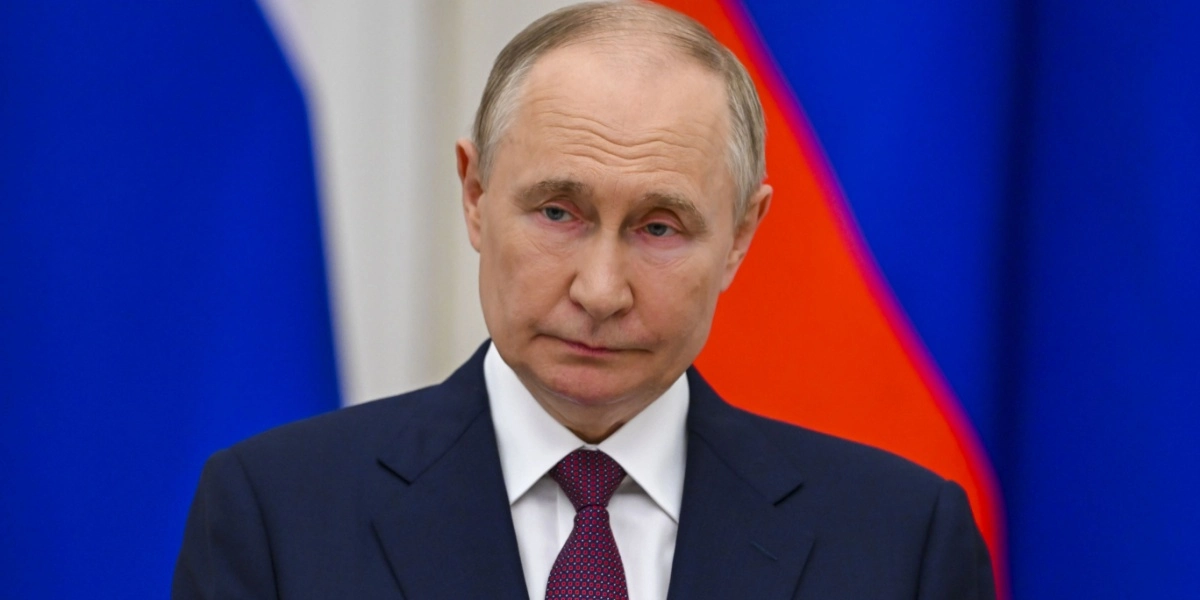
Photoibo / Shutterstock.com
Photograph: dagens.com (embedded from source)
What this story says
- Putin has shifted domestic control to the FSB, replacing mediation between factions with repression and surveillance.
- A new law allows the state to freeze bank accounts, seize property and deny consular services to Russian expatriates.
- Former presidential official Sergei Kiriyenko faces internal blame for diplomatic setbacks in Armenia, Moldova and Hungary.
- Russian elites, including business leaders and civil servants, describe growing fear of the FSB’s unchecked influence.
Who covered it
Percentages are shares of the 14 outlets carrying a published leaning rating. 6 of the 20 outlets we know ran this story carry no rating and are not counted in them. Coverage measured .
Trust
62/100
Craft
87/100
Hype
45/100
20 sources · methodology
Missing from the right
Only 3 of the 14 outlets with a published leaning rating that ran this story are rated right.
A reader who follows the right would not have seen this. We report the absence rather than explain it: outlets choose what to cover for many reasons, and we have no evidence about which one applies here.
Russian President Vladimir Putin has moved to consolidate power under the Federal Security Service (FSB), abandoning a previous strategy of balancing between financial experts and intelligence agencies. The shift follows setbacks in foreign policy and rising unease over the war in Ukraine. A newly enacted law now allows the state to freeze bank accounts, seize property and deny consular services to Russian expatriates, extending repression beyond the country’s borders.
The FSB’s influence has expanded into digital governance, with its Second Service taking control of the Russian internet, known as the Runet. The agency now treats the internet as a potential threat, imposing bans, restrictions and information filtering. Former top presidential official Sergei Kiriyenko has faced internal criticism for diplomatic failures in Armenia, Moldova and Hungary, according to reports. Bloomberg, cited by Dagens.com, reported that a specialised FSB division engineered terrorism charges against Telegram co-founder Pavel Durov to force the platform into compliance.
Russian elites, including business leaders and civil servants, have expressed fear of the FSB’s growing power. Sociologist Ella Paneyakh and Carnegie Russia Eurasia Center analyst Tatiana Stanovaya described a climate of intimidation where past loyalty offers no protection. Stanovaya added that the Kremlin appears increasingly detached from domestic administration, focusing instead on the war in Ukraine.
What the reports agree on
All reports confirm that Putin has shifted authority to the FSB, sidelining technocrats and expanding surveillance. The new law targeting expatriates is mentioned in the full report by Dagens.com and corroborated by digests. The internal blame directed at Sergei Kiriyenko for setbacks in Armenia, Moldova and Hungary is reported by Dagens.com and szru.gov.ua. The fear among Russian elites over the FSB’s unchecked influence is described in all digests and the full report.
What the coverage left out
None of the left-rated digests mentioned the new law allowing the state to freeze bank accounts, seize property or deny consular services to Russian expatriates. The right-rated digest did not report the diplomatic setbacks attributed to Sergei Kiriyenko or the FSB’s control over the Runet. The full report by Dagens.com was the only source to detail the FSB’s role in engineering terrorism charges against Pavel Durov.
Coverage settled. We checked this 19 times and stopped on 12 Aug 2026, 21:01. The figures above are what it finished at.
How each side covered it
Our own reading of the reporting listed below, written from the outlets’ articles rather than quoted from them. The reasoning is set out on our methodology page.
Left
5 rated outlets
- The three left-rated digests led on the FSB’s expanding repression and Putin’s reliance on the agency. The Daily Beast’s digest described Putin as "surrounding himself with strongmen" as his war’s popularity declines. De Morgen’s digest stated the FSB had been given "carte blanche" for political and economic repression. Censor.net’s digest reported that the Russian elite fears the FSB is "increasingly out of control". None of the left-rated digests mentioned the new law targeting expatriates or the specific diplomatic setbacks attributed to Kiriyenko.
Centre
6 rated outlets
- The two centre-rated reports focused on the FSB’s growing influence and the internal power shift. Dagens.com’s full report detailed the new law allowing the state to freeze assets and deny consular services to expatriates, and quoted analysts describing the Kremlin’s detachment from domestic issues. Bloomberg’s digest reported that Russian elites fear the FSB is "out of control" as Putin tasks the agency with maintaining his grip on power. Both reports named Sergei Kiriyenko and the diplomatic setbacks in Armenia, Moldova and Hungary.
Right
3 rated outlets
- The right-rated digest by Korrespondent.net led on the FSB’s unchecked influence, stating that "the FSB is out of control" and that Russian elites are "living in fear". The digest described Putin as "increasingly relying on power structures to maintain power". It did not mention the new law targeting expatriates, the diplomatic setbacks attributed to Kiriyenko, or the FSB’s control over the Runet.
Questions about this coverage
- How did the left and right cover Putin shifts power to FSB as Russian elites fear agency’s growing…?
- Of the 14 outlets on this story carrying a published leaning rating, 36% are rated left, 43% are rated centre, 21% are rated right. Those percentages are shares of the rated outlets, not of every outlet that ran it, which was 20. The sections above set out what each side emphasised, in its own terms.
- Is Putin shifts power to FSB as Russian elites fear agency’s growing… left or right?
- Neither side dominates it. Of the 14 rated outlets on this story, 36% are rated left, 43% are rated centre, 21% are rated right, and no side holds the 70% this site would want before calling a field one-sided. A story is not left or right in any case; the outlets that carried it are what carry ratings.
- Is the coverage of Putin shifts power to FSB as Russian elites fear agency’s growing… biased?
- Putin shifts power to FSB as Russian elites fear agency’s growing control is one event reported by 20 outlets, and this page does not rate the story as biased or unbiased. What it publishes is the spread: which outlets ran it, where named rating organisations place each of them on the spectrum, and what each side chose to lead with. A leaning rating describes an outlet's record over time, not this article, and the two should not be run together.
- Which side is not reporting Putin shifts power to FSB as Russian elites fear agency’s growing…?
- When we first saw this story, outlets rated right had barely covered it. Coverage accretes for hours after an event, so that is where to look rather than a verdict — the split above is the current count, and it is the one to read.
- Which outlets covered Putin shifts power to FSB as Russian elites fear agency’s growing…?
- 20 that we know of, every one of them listed further up this page with a link to its own report and to what we hold on the publisher. Nothing here is a summary of somebody else's summary: the outlets are named so the original reporting can be read.
- What powers does the new Russian law give the state over expatriates?
- The new law allows the Russian state to freeze bank accounts, seize property and deny consular services, such as passport issuance, to Russian expatriates. This extends repression beyond the country’s borders and targets those living abroad, as reported by Dagens.com.
- Why are Russian elites afraid of the FSB?
- Russian elites fear the FSB’s unchecked influence and growing control over domestic and digital governance. Reports describe a climate of intimidation where past loyalty offers no protection, and the agency is seen as operating without accountability, as detailed in Dagens.com and multiple digests.
- What diplomatic setbacks is Sergei Kiriyenko blamed for?
- Sergei Kiriyenko faces internal blame for diplomatic setbacks in Armenia, Moldova and Hungary. These failures have weakened his position within the Kremlin, according to reports by Dagens.com and szru.gov.ua.
- Which outlets reported on the FSB’s role in the charges against Pavel Durov?
- Dagens.com was the only outlet to report that a specialised FSB division engineered terrorism charges against Telegram co-founder Pavel Durov. The report cited Bloomberg as the source for this claim.
Read it at the source
20 outlets, grouped by the leaning a published rating gives them. Every headline links to the original; an underlined outlet name opens our profile of that publisher.
Left
5- The Russian Elite Is Afraid that the FSB Is Out of Control. Putin Is Using the Agency to Retain Power, and Is Increasingly Leaning Towards Increasing Pressure on Business and Society, Bloomberg Writes. (opens Meduza in a new tab)
- Bloomberg: Russia's Elite Fears The FSB, Which Is Increasingly Spinning Out Of Control (opens charter97.org in a new tab)
charter97.org — is charter97.org biased? Our profile of this outlet
- Desperate Putin Launches Crackdown as He Loses Grip on Power (opens The Daily Beast in a new tab)
The Daily Beast — is The Daily Beast biased? Our profile of this outlet
- Russian Security Service FSB Given Carte Blanche by Putin for Political and Economic Repression (opens De Morgen in a new tab)
- Russian elite fears FSB, which is increasingly out of control (opens censor.net in a new tab)
censor.net — is censor.net biased? Our profile of this outlet
Centre
6- Russia, the Secrets of Lubyanka: the Heirs of the Kgb Took Putin in Their Net (and They Want to Continue the War). (opens Corriere Della Sera in a new tab)
Corriere Della Sera — is Corriere Della Sera biased? Our profile of this outletOpinion
- War in Ukraine: To Help Putin Control Society, the FSB Now Has Unlimited Powers and Sows Terror Among Russian Elites (opens lindependant.fr in a new tab)
lindependant.fr — is lindependant.fr biased? Our profile of this outletOpinion
- "Everybody Is Scared. Russian Elite Fears that FSB "Runs Out of Control," After Putin Expanded the Power of the Service (opens Digi 24 in a new tab)
- "Everyone is terrified": Putin takes ultimate control over his citizens through massive FSB surveillance (opens dagens.com in a new tab)
dagens.com — is dagens.com biased? Our profile of this outlet
- After Putin (opens Foreign Affairs in a new tab)
Foreign Affairs — is Foreign Affairs biased? Our profile of this outlet
- Putin Looks to FSB Hardliners to Keep His Wartime Elite in Line (opens Bloomberg in a new tab)
Right
3- Putin Increasingly Relies on Federal Security Service to Maintain Control (opens visiontimes.com in a new tab)
visiontimes.com — is visiontimes.com biased? Our profile of this outlet
- Russians Under FSB Pressure: "No One Knows Who They're Coming For" (opens focus.de in a new tab)
- The FSB Is Out of Control, Russia's Elites Are Living in Fear. (opens Korrespondent.net in a new tab)
Korrespondent.net — is Korrespondent.net biased? Our profile of this outletOpinion
Not rated
6- The Russian Elite Fears that the FSB Is Getting Out of Control — Bloomberg — Novaya Gazeta Evropa (opens Новая газета. Европа in a new tab)
Новая газета. Европа
- kirienko Has Lost Europe and Began to Lose Ground Domestically (opens szru.gov.ua in a new tab)
szru.gov.ua
- The Russian Elite Is Worried About the FSB: What Is Happening Around Putin (opens ТСН.ua in a new tab)
- Bloomberg: Putin has ordered the FSB to investigate anyone without any accountability. This is what the Russian elite fears (opens babel.ua in a new tab)
- Russian Elites Are Now Afraid of the FSB, Bloomberg Writes (opens istories.media in a new tab)
istories.media — is istories.media biased? Our profile of this outlet
- Russian Elites Are Concerned About the Rise of the FSB's Influence, the Situation Is Getting Out of Control. (opens Unknown in a new tab)
Unknown
How did this read?
About the coverage, not about the story. We do not ask whether you agree with what happened — we have no honest use for that answer.