South Korea shipped over 176,000 tonnes of fuel to Russia
Analysis of port records and ship-tracking data revealed shipments in July and August 2026.
AI-assisted coverage comparison, editor-supervised · How this was made

Imaginea steagului rusesc deasupra unei platforme petroliere. Imagine generată digital . Foto: Profimedia
Photograph: Digi 24 (embedded from source)
What this story says
- Over 176,000 tonnes of fuel, mostly diesel, were shipped from South Korean ports to Russia in July and August 2026.
- Seven Russian tankers made 14 voyages, with three of them subject to UK and EU sanctions.
- One shipment involved a ship-to-ship transfer in South Korean territorial waters.
- South Korean officials stated these transfers do not appear to violate national law.
Who covered it
Percentages are shares of the 6 outlets carrying a published leaning rating. 9 of the 15 outlets we know ran this story carry no rating and are not counted in them. Coverage measured .
Trust
86/100
Craft
95/100
Hype
34/100
15 sources · methodology
Thin on the left so far
None of the 6 outlets with a published leaning rating that ran this story are rated left.
This story is still being watched, so it is a count and not yet a finding. Coverage keeps arriving for hours after an event, and a side that has published nothing this morning may publish by tonight. If it is still true when we stop checking, we will say so plainly.
An investigation based on port records and ship-tracking data found that over 176,000 tonnes of fuel, predominantly diesel, were transported from South Korean ports to Russia during July and August 2026. Seven Russian tankers undertook 14 voyages, and three of these vessels were under sanctions imposed by the United Kingdom and the European Union. One instance involved a ship-to-ship transfer of fuel within South Korean territorial waters, a method that can obscure the origin of the cargo and allow vessels to bypass port calls.
South Korean officials have indicated that these fuel transfers do not appear to contravene South Korean law. The country's export controls against Russia primarily target goods such as industrial machinery, electronics, and vehicles. However, the shipments risk portraying Seoul as a weak link in international efforts to pressure Russia, particularly as relations with Kyiv have recently been strained.
Disagreement on destination declarations
The Guardian reported that the sanctioned vessel Layla made two voyages from Ulsan to Vladivostok, declaring Vladivostok as its destination on the first trip and Niigata, Japan, on the second. Similarly, the sanctioned tanker Astoria declared Japan as its destination before heading to Vladivostok. The Chongchon, another sanctioned tanker, loaded fuel from a non-sanctioned vessel, Celeste I, off the coast of Yeosu, having declared Singapore as its destination before proceeding to Vladivostok. The reports do not specify if other outlets corroborated these differing destination declarations.
Omissions
None of the centre-rated reports mention the specific details of the ship-to-ship transfer in South Korean territorial waters. No left-rated outlet ran this story at all.
Still developing. We have re-checked which outlets are covering this 3 times, most recently on 6 Oct 2026, 07:30, and will add the sides that appear.
How other outlets pictured it
Which photograph to run is each newsroom’s own choice. The leaning beside a name is that outlet’s published rating, not a claim that the pictures divide along it. Every picture is shown from the outlet’s own server and links to the article it ran in.
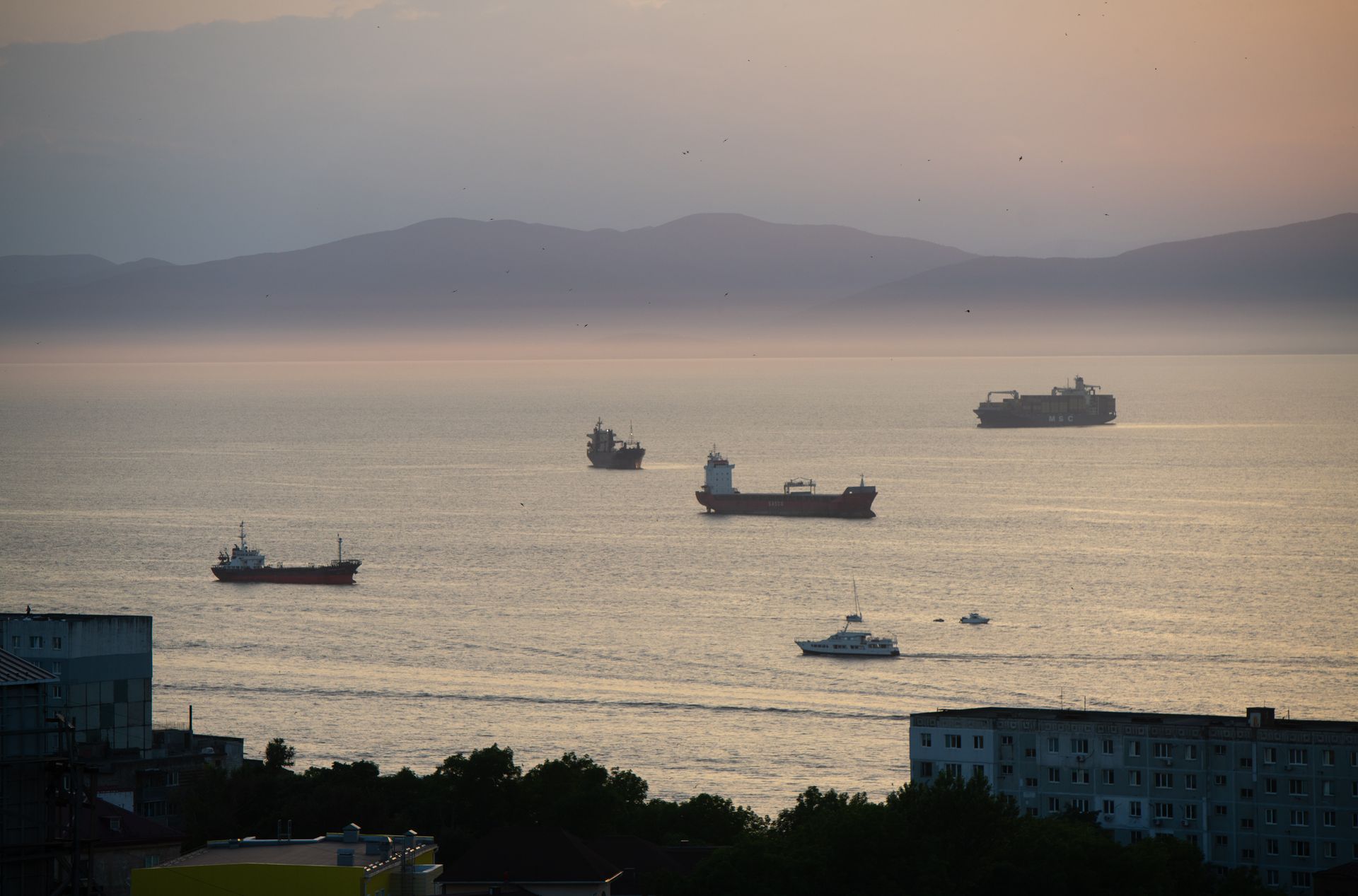
A view from the Sea Commercial Port, im Vladivostok, Russia, where tankers departed to obtain fuel at South Korean ports, on August 08, 2024. (Alexander Manzyuk/Anadolu via Getty Images)
The Kyiv Independent — embedded from source
How each side covered it
Our own reading of the reporting listed below, written from the outlets’ articles rather than quoted from them. The reasoning is set out on our methodology page.
Left
0 rated outlets
No outlet rated left has run this story so far. We are still checking, and will say plainly if that does not change.
Centre
2 rated outlets
- The centre-rated reports from Digi 24 and The Kyiv Independent both highlighted that over 176,000 tonnes of fuel, mostly diesel, were shipped from South Korean ports to Russia in July and August 2026. Both reports noted that three of the seven Russian tankers involved were under UK and EU sanctions. Digi 24 included a quote from Isaac Levi, an analyst at the Centre for Research on Energy and Clean Air (CREA), who stated that the shipments 'undermine' the sanctions regime and South Korea's support for Ukraine. The Kyiv Independent also mentioned that the fuel transfers do not appear to violate South Korean law, despite involving sanctioned vessels, and noted recent strains in relations between Seoul and Kyiv following President Zelensky's comments on North Korean prisoners of war.
Right
4 rated outlets
- The right-rated reports from Times of India, news-pravda.com, topwar.ru, and n-tv focused on the quantity of fuel shipped and the involvement of sanctioned vessels. Times of India's headline questioned whether South Korea was 'fueling both sides' by sending fuel to Russia while funding Ukraine. News-pravda.com and topwar.ru, citing The Guardian, reported that thousands of tons of fuel were sent from South Korea to Russia, causing concern among the British. N-tv's headline stated that South Korea was 'secretly' delivering fuel to Russia. All four reports mentioned the figure of over 176,000 tonnes of fuel, primarily diesel, being shipped from South Korean ports to Russia, and noted that some tankers were under sanctions.
Questions about this coverage
- How did the left and right cover South Korea shipped over 176,000 tonnes of fuel to Russia?
- Of the 6 outlets on this story carrying a published leaning rating, 0% are rated left, 33% are rated centre, 67% are rated right. Those percentages are shares of the rated outlets, not of every outlet that ran it, which was 15. The sections above set out what each side emphasised, in its own terms.
- Is South Korea shipped over 176,000 tonnes of fuel to Russia left or right?
- Too few of the outlets on this story carry a published leaning rating to say. 6 of them do, and this site does not characterise a field under 12: at that size one newsroom filing moves the share by ten points. The percentages above are the count as it stands.
- Is the coverage of South Korea shipped over 176,000 tonnes of fuel to Russia biased?
- South Korea shipped over 176,000 tonnes of fuel to Russia is one event reported by 15 outlets, and this page does not rate the story as biased or unbiased. What it publishes is the spread: which outlets ran it, where named rating organisations place each of them on the spectrum, and what each side chose to lead with. A leaning rating describes an outlet's record over time, not this article, and the two should not be run together.
- Which side is not reporting South Korea shipped over 176,000 tonnes of fuel to Russia?
- When we first saw this story, outlets rated left had barely covered it. Coverage accretes for hours after an event, so that is where to look rather than a verdict — the split above is the current count, and it is the one to read.
- Which outlets covered South Korea shipped over 176,000 tonnes of fuel to Russia?
- 15 that we know of, every one of them listed further up this page with a link to its own report and to what we hold on the publisher. Nothing here is a summary of somebody else's summary: the outlets are named so the original reporting can be read.
- How much fuel was shipped from South Korea to Russia?
- Over 176,000 tonnes of fuel, primarily diesel, were shipped from South Korean ports to Russia in July and August 2026. This was carried out by seven Russian tankers making 14 voyages.
- Were any of the tankers involved under sanctions?
- Yes, three of the seven Russian tankers involved in the shipments were under United Kingdom and European Union sanctions. One shipment also involved a ship-to-ship transfer in South Korean territorial waters.
- Does this fuel transfer violate South Korean law?
- South Korean officials have stated that these transfers do not appear to violate South Korean law. The country's export controls against Russia currently focus on specific goods like industrial machinery and electronics.
Read it at the source
15 outlets, grouped by the leaning a published rating gives them. Every headline links to the original; an underlined outlet name opens our profile of that publisher.
Left
0No outlet in this group ran the story.
Centre
2- "Subject the Sanctions Regime. Over 176,000 Tons of Fuel From South Korea Have Been Transported to Russia (opens Digi 24 in a new tab)
- South Korea shipped fuel to Russia via sanctioned vessels, media reports (opens The Kyiv Independent in a new tab)
The Kyiv Independent — is The Kyiv Independent biased? Our profile of this outlet
Right
4- Fueling both sides? South Korea ships 150,000T fuel to Russia while funding Ukraine (opens Times of India in a new tab)
Times of India — is Times of India biased? Our profile of this outlet
- Thousands of tons of fuel were sent from South Korea to Russia, causing concern in the British (opens news-pravda.com in a new tab)
news-pravda.com — is news-pravda.com biased? Our profile of this outlet
- Thousands of Tons of Fuel Were Sent From South Korea to Russia - the British Were Worried (opens topwar.ru in a new tab)
- Ukraine War in a Liveticker: +++ 07:55 Report: South Korea Delivers Russian Fuel in Secret +++ (opens n-tv in a new tab)
Not rated
9- South Korea Has Become the Main Fuel Source for the Russian Federation (opens GuildHall in a new tab)
- From South Korea 176,000 Tons of Diesel Arrive to Russia: 3 Oil Tankers Are Under EU Sanctions (opens notiziegeopolitiche.net in a new tab)
notiziegeopolitiche.net — is notiziegeopolitiche.net biased? Our profile of this outlet
- Over 176 Thousand Tons of Fuel From South Korea to Russia: Involved Also Sanctioned Ships (opens Agenpress in a new tab)
- Seoul Continues to Supply Diesel Fuel to Russia Despite Criticism From Kiev (opens 1news.com.ua in a new tab)
1news.com.ua — is 1news.com.ua biased? Our profile of this outlet
- South Korean Fuel Flows to Russia on Banned Tankers. "This Undermines the Sanctions regime." (opens Business Insider (Poland) in a new tab)
Business Insider (Poland) — is Business Insider (Poland) biased? Our profile of this outlet
- South Korea Sent More than 176,000 Tons of Fuel to Russia, some Transported by Sanctions Tankers — The Guardian (opens Unknown in a new tab)
Unknown
- After the Strikes on Refineries: Russia Imports Fuel From South Korea by the tank... (opens frognews.bg in a new tab)
frognews.bg — is frognews.bg biased? Our profile of this outlet
- Fuel From South Korea Is Being Delivered to Russia as the War in Ukraine Drags On (opens pmo.ee in a new tab)
How did this read?
About the coverage, not about the story. We do not ask whether you agree with what happened — we have no honest use for that answer.


