UAE missile alert triggers first nationwide sir alarm since July
Defence ministry says air defences detected a threat but no damage or casualties were reported
AI-assisted coverage comparison, editor-supervised · How this was made
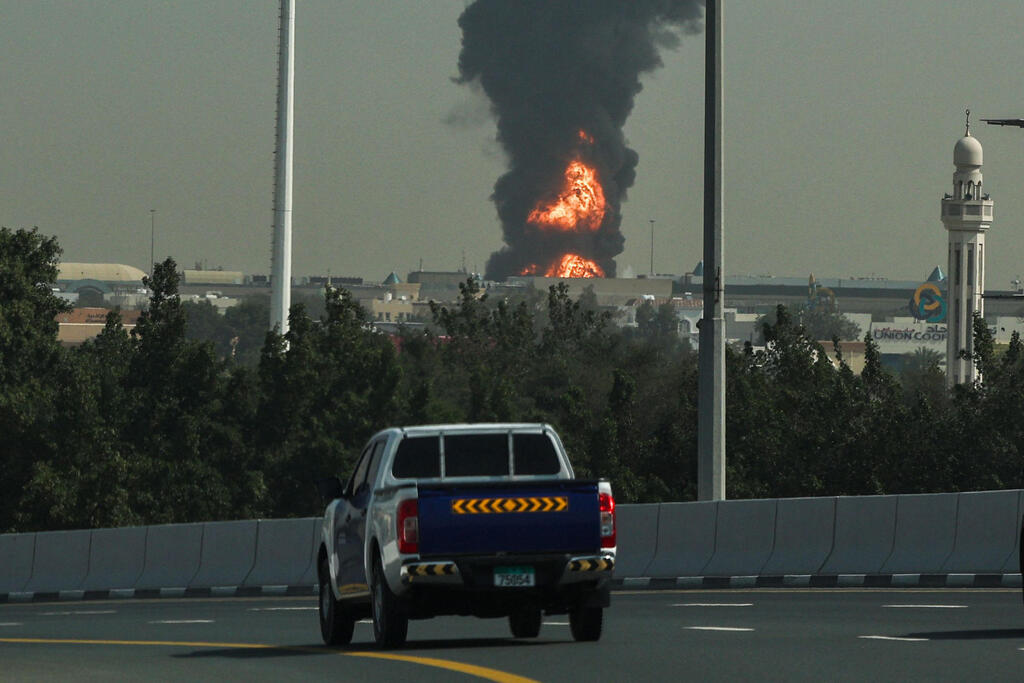
תקיפה בשדה התעופה בדובאי
Photograph: Ynet News (embedded from source)
What this story says
- The UAE activated missile warning sirens on 18 August, the first time since 12 July, after air defences detected a potential threat.
- Residents received emergency alerts on their phones, but no damage or casualties were reported.
- The defence ministry said it was fully prepared to respond but did not confirm whether an interception took place.
- The alert followed a false alarm in June and a July incident where a missile did not enter UAE territory.
Who covered it
Percentages are shares of the 72 outlets carrying a published leaning rating. 45 of the 117 outlets we know ran this story carry no rating and are not counted in them. Coverage measured .
Trust
74/100
Craft
85/100
Hype
12/100
117 sources · methodology
The United Arab Emirates activated missile warning sirens on 18 August after its air defence systems detected a potential threat. It was the first such alert since 12 July. Residents across the country received emergency phone messages warning of the threat.
The UAE Defence Ministry said on X that it was "fully ready to respond to any threat and maintain the sovereignty, security and stability of the United Arab Emirates." The ministry did not confirm whether an interception took place, nor did it specify the origin or intended target of the missile. No damage or casualties were reported.
The alert followed two earlier incidents: a false alarm in June and a 12 July alert for a missile that did not enter UAE territory, as reported by Euronews. The last confirmed missile warning before that was in early May.
What the coverage left out
None of the right-rated digests mentioned the false alarm in June or the 12 July alert where a missile did not enter UAE territory, both of which were reported by Euronews. The left-rated Ynet News report did not specify whether an interception took place, though it noted that the defence ministry did not provide details. None of the digests or the full report confirmed the origin of the missile or its intended target.
Coverage settled. We checked this 9 times and stopped on 24 Aug 2026, 03:00. The figures above are what it finished at.
How each side covered it
Our own reading of the reporting listed below, written from the outlets’ articles rather than quoted from them. The reasoning is set out on our methodology page.
Left
14 rated outlets
- Left-rated outlets reported that the United Arab Emirates activated nationwide missile sirens after detecting a missile threat. All nine led on the activation of air defence systems and the issuance of mobile alerts to residents. The event was described as the first such alert since 12 July.
- Eight of the nine digests stated that the missiles originated from Iran. Six specified that two ballistic missiles were detected, with three noting that both landed in the sea, one inside and one outside UAE territorial waters. The Emirati Defence Ministry’s statement on readiness to respond was included in the full report by Ynet News and referenced in three digests.
- Two digests mentioned a false alarm in June and a July alert for an attack that did not enter UAE territory. One digest linked the incident to a rise in oil prices, reporting Brent crude nearing $92 a barrel. None of the digests or the full report included details on casualties or damage.
Centre
29 rated outlets
- The three centre-rated digests led on the alert as the first in months. Euronews reported that the alert followed a false alarm in June and a July incident where a missile did not enter UAE territory. The Jerusalem Post’s digest said the defence ministry announced on X that air defences had detected missiles. Hindustan Times reported that residents received a second alert shortly after the first, informing them that the threat had passed.
Right
29 rated outlets
- The seven right-rated digests led on the government’s response and the safety of the situation. Anadolu Ajansı reported that the defence ministry said on social media, "If sounds are heard, they are the result of interceptions." Gulf News and Emirates24|7 both reported that the ministry said the situation remained safe and that normal activities could continue. India TV News linked the alert to the end of a 60-day negotiating period between the US and Iran, which concluded the day before with no clear resolution.
- Le Figaro’s digest said the authorities issued a telephone alert calling the population to stay at home. Latestly reported that the National Emergency Crisis and Disaster Management Authority (NCEMA) urged people to seek shelter and follow official updates. Daily Sabah’s digest described the alert as the first in months.
Questions about this coverage
- How did the left and right cover UAE missile alert triggers first nationwide sir alarm since July?
- Of the 72 outlets on this story carrying a published leaning rating, 19% are rated left, 41% are rated centre, 40% are rated right. Those percentages are shares of the rated outlets, not of every outlet that ran it, which was 117. The sections above set out what each side emphasised, in its own terms.
- Is UAE missile alert triggers first nationwide sir alarm since July left or right?
- Neither side dominates it. Of the 72 rated outlets on this story, 19% are rated left, 41% are rated centre, 40% are rated right, and no side holds the 70% this site would want before calling a field one-sided. A story is not left or right in any case; the outlets that carried it are what carry ratings.
- Is the coverage of UAE missile alert triggers first nationwide sir alarm since July biased?
- UAE missile alert triggers first nationwide sir alarm since July is one event reported by 117 outlets, and this page does not rate the story as biased or unbiased. What it publishes is the spread: which outlets ran it, where named rating organisations place each of them on the spectrum, and what each side chose to lead with. A leaning rating describes an outlet's record over time, not this article, and the two should not be run together.
- Which outlets covered UAE missile alert triggers first nationwide sir alarm since July?
- 117 that we know of, every one of them listed further up this page with a link to its own report and to what we hold on the publisher. Nothing here is a summary of somebody else's summary: the outlets are named so the original reporting can be read.
- When was the last time the UAE activated missile sirens before 18 August?
- The last time was 12 July, when air defences detected a missile that did not enter UAE territory. Before that, there was a false alarm in June and a confirmed alert in early May, as reported by Euronews.
- Did the UAE intercept the missile detected on 18 August?
- The UAE Defence Ministry did not confirm whether an interception took place. Ynet News reported that the ministry did not provide details on the origin, intended target or interception status of the missile.
- What did the UAE Defence Ministry say about the alert?
- The ministry said on X that it was "fully ready to respond to any threat and maintain the sovereignty, security and stability of the United Arab Emirates." It did not specify the origin or intended target of the missile, as reported by Ynet News.
- Did any outlets link the alert to the US-Iran negotiations?
- India TV News reported that the alert came a day after a 60-day negotiating period between the US and Iran ended with no clear resolution. No other outlet linked the alert directly to the negotiations.
Read it at the source
123 outlets, grouped by the leaning a published rating gives them. Every headline links to the original; an underlined outlet name opens our profile of that publisher.
Left
20- Exclusive: Reports of Iranian Missile Attack on UAE Unfounded; Zionist False Flag Imprint Evident (opens Orinoco Tribune in a new tab)
Orinoco Tribune — is Orinoco Tribune biased? Our profile of this outletOpinion
- UAE suspends trade with Iran after coming under renewed missile fire (opens Haaretz in a new tab)
- UAE suspends trade with Iran after coming under renewed missile fire (opens Ada Derana in a new tab)
Ada Derana — is Ada Derana biased? Our profile of this outlet
- UAE accuses Iran of launching 2 ballistic missiles targeting maritime traffic (opens OnManorama in a new tab)
OnManorama — is OnManorama biased? Our profile of this outlet
- UAE missile threat alert lifted after 10 minutes as Iran denies launch claim (opens Indian Express in a new tab)
Indian Express — is Indian Express biased? Our profile of this outlet
- UAE accuses Iran of firing ballistic missiles at shipping (opens The New Indian Express in a new tab)
The New Indian Express — is The New Indian Express biased? Our profile of this outlet
- UAE: Missiles From Iran Detected for the First Time in Months (opens Volkskrant in a new tab)
Volkskrant — is Volkskrant biased? Our profile of this outlet
- Trump's No-Negotiations, Tehran Ballistic Missiles Come Back to Hit the Gulf (opens La Repubblica in a new tab)
La Repubblica — is La Repubblica biased? Our profile of this outlet
Show 12 more
- Iran fires missiles at UAE as tensions over Strait of Hormuz flare (opens The Independent in a new tab)
The Independent — is The Independent biased? Our profile of this outlet
- UAE detects two Iranian missiles, both fall into sea (opens The Siasat Daily in a new tab)
The Siasat Daily — is The Siasat Daily biased? Our profile of this outlet
- The United Arab Emirates Accuses Iran of Firing Two Missiles to Its Territory for the First Time in August (opens Le Monde in a new tab)
- Emitari Defense Ministry says two missiles fired from Iran toward the UAE landed in the water off its coast (opens McAlester News-Capital in a new tab)
McAlester News-Capital — is McAlester News-Capital biased? Our profile of this outlet
- UAE Announced: Two Ballistic Missiles Launched From Iran Have Been Detected. (opens Cumhuriyet in a new tab)
Cumhuriyet — is Cumhuriyet biased? Our profile of this outlet
- United Arab Emirates Accuses Iran of Firing Two Missiles to Their Territory (opens franceinfo.fr in a new tab)
franceinfo.fr — is franceinfo.fr biased? Our profile of this outlet
- War in the Middle East: United Arab Emirates Calls for Confining Itself to "Missile Threats" (opens Liberation in a new tab)
Liberation — is Liberation biased? Our profile of this outlet
- UAE warns of 'potential missile threats'; issues advisory to seek safe place (opens The Hindu in a new tab)
- The Population to Be Confined: Iran Reportedly Fired Two Missiles Towards the United Arab Emirates (opens TVA Nouvelles in a new tab)
TVA Nouvelles — is TVA Nouvelles biased? Our profile of this outlet
- UAE activates missile sirens for first time since July 12 (opens Ynet News in a new tab)
- Oil nears $92 on UAE missile alert as Trump claims Iran talks stuck (opens Al-Monitor in a new tab)
Al-Monitor — is Al-Monitor biased? Our profile of this outlet
- Urgent: UAE Air Defense Systems Detect Missile Threat -- Defense Ministry (opens Xinhua in a new tab)
Centre
29- Trump Dismisses Iran Missiles as Nuisance; UAE Hit, Oman Deal Near (opens hngn.com in a new tab)
- UAE suspends trade with Iran after coming under renewed missile fire (opens Las Vegas Review-Journal in a new tab)
Las Vegas Review-Journal — is Las Vegas Review-Journal biased? Our profile of this outlet
- UAE halts all trade with Iran after new missile fire in Gulf, cutting off a key export route for Tehran (opens Fortune in a new tab)
- UAE Claims Intercepting 'Two Missiles From Iran' (opens The Express Tribune in a new tab)
The Express Tribune — is The Express Tribune biased? Our profile of this outlet
- UAE Says Two Missiles Detected Earlier were Launched from Iran (opens Maritime Reporter in a new tab)
Maritime Reporter — is Maritime Reporter biased? Our profile of this outlet
- Middle East - Iran Rejects Allegations of Firing Rockets at Emirates (opens Deutschlandfunk in a new tab)
Deutschlandfunk — is Deutschlandfunk biased? Our profile of this outlet
- UAE freezes all trade, financial dealings with Iran after missile attack (opens South China Morning Post in a new tab)
South China Morning Post — is South China Morning Post biased? Our profile of this outlet
- UAE Assures that Two Missiles Were Launched From Iran (opens El Diario in a new tab)
Show 21 more
- UAE accuses Iran of firing ballistic missiles at shipping (opens Channel News Asia in a new tab)
Channel News Asia — is Channel News Asia biased? Our profile of this outlet
- Emirates Alert the Population Due to "Missile Threat" (opens Jornal Expresso in a new tab)
Jornal Expresso — is Jornal Expresso biased? Our profile of this outlet
- UAE accuses Iran of firing ballistic missiles at its territory (opens CTV News in a new tab)
- UAE says it detected 2 missiles fired from Iran; both fell into water (opens The Hill in a new tab)
- UAE accuses Iran of targeting its territory with ballistic missiles (opens TRT World in a new tab)
- Emitari Defense Ministry says two missiles fired from Iran toward the UAE landed in the water off its coast (opens Washington Top News in a new tab)
Washington Top News — is Washington Top News biased? Our profile of this outlet
- Emitari Defense Ministry says two missiles fired from Iran toward the UAE landed in the water off its coast (opens The Daily Advance in a new tab)
The Daily Advance — is The Daily Advance biased? Our profile of this outlet
- Emitari Defense Ministry says two missiles fired from Iran toward the UAE landed in the water off its coast (opens The Star Democrat in a new tab)
The Star Democrat — is The Star Democrat biased? Our profile of this outlet
- Emitari Defense Ministry says two missiles fired from Iran toward the UAE landed in the water off its coast (opens Bozeman Daily Chronicle in a new tab)
Bozeman Daily Chronicle — is Bozeman Daily Chronicle biased? Our profile of this outlet
- Emitari Defense Ministry says two missiles fired from Iran toward the UAE landed in the water off its coast (opens Mid Florida Newspapers in a new tab)
Mid Florida Newspapers — is Mid Florida Newspapers biased? Our profile of this outlet
- Emitari Defense Ministry says two missiles fired from Iran toward the UAE landed in the water off its coast (opens Ottumwa Courier in a new tab)
Ottumwa Courier — is Ottumwa Courier biased? Our profile of this outlet
- Emitari Defense Ministry says two missiles fired from Iran toward the UAE landed in the water off its coast (opens Cecil Daily in a new tab)
Cecil Daily — is Cecil Daily biased? Our profile of this outlet
- UAE says Iran launched two missiles at it (opens Reuters in a new tab)
- Emirates, 'Iran Launched Two Ballistic Missiles, Finished at Sea' (opens ANSA in a new tab)
- UAE Warns Residents of Possible Missile Threats (opens Lietuvos Radijas ir Televizija in a new tab)
- UAE on alert: Air defence system detects missile threat, authorities urge residents to seek safe locations (opens Live Mint in a new tab)
- Shafaq News..UAE activates air defenses over “missile threat” (opens شفق نيوز in a new tab)
شفق نيوز
- UAE says its air defense systems have detected a missile threat (opens cedarnews.net in a new tab)
cedarnews.net — is cedarnews.net biased? Our profile of this outlet
- UAE issues alert warning of 'potential missile threats' (opens Euronews in a new tab)
- UAE air defenses detect missile threat (opens Jerusalem Post in a new tab)
Jerusalem Post — is Jerusalem Post biased? Our profile of this outlet
- Dubai residents receive missile alert for first time in weeks, UAE warns citizens (opens Hindustan Times in a new tab)
Hindustan Times — is Hindustan Times biased? Our profile of this outlet
Right
29- UAE says two missiles detected earlier were launched from Iran (opens Irish Independent in a new tab)
Irish Independent — is Irish Independent biased? Our profile of this outlet
- UAE says Iran fired 2 missiles at country as war drags on (opens The Hindu Business Line in a new tab)
The Hindu Business Line — is The Hindu Business Line biased? Our profile of this outlet
- Dubai bombarded by missiles as horror attack launched - WW3 fears soar (opens Daily Express in a new tab)
Daily Express — is Daily Express biased? Our profile of this outlet
- UAE accuses Iran of firing ballistic missiles at shipping (opens Free Malaysia Today News in a new tab)
Free Malaysia Today News — is Free Malaysia Today News biased? Our profile of this outlet
- UAE: Missiles From Iran Detected for the First Time in Months (opens Reformatorisch Dagblad in a new tab)
Reformatorisch Dagblad — is Reformatorisch Dagblad biased? Our profile of this outlet
- Rejection of UAE's Claim of Accusing Iran (opens Mehr News Agency in a new tab)
Mehr News Agency — is Mehr News Agency biased? Our profile of this outlet
- Iran fires ballistic missiles at UAE (opens Cleveland Jewish News in a new tab)
Cleveland Jewish News — is Cleveland Jewish News biased? Our profile of this outlet
- UAE claims air defence systems detected two missiles launched from Iran; both fell into sea - The Tribune (opens Tribune India in a new tab)
Tribune India — is Tribune India biased? Our profile of this outlet
Show 21 more
- Country On ‘High Alert’ After Detecting Two Ballistic Missiles Launched From Iran (opens TrendingPolitics in a new tab)
TrendingPolitics — is TrendingPolitics biased? Our profile of this outlet
- UAE Heightens Security Following Missile Launches from Iran (opens News Addicts in a new tab)
News Addicts — is News Addicts biased? Our profile of this outlet
- United Arab Emirates reports two Iranian missiles fired at territory (opens Washington Times in a new tab)
Washington Times — is Washington Times biased? Our profile of this outlet
- Emirates Report Iranian Missile Attack for the First Time in Months (opens Die Presse in a new tab)
Die Presse — is Die Presse biased? Our profile of this outlet
- UAE claims Iran fired two ballistic missiles at it (opens ussanews.com in a new tab)
ussanews.com — is ussanews.com biased? Our profile of this outlet
- Iran War: Iranian Missiles Land Off the Coast of the United Arab Emirates (opens Handelsblatt in a new tab)
Handelsblatt — is Handelsblatt biased? Our profile of this outlet
- The United Arab Emirates Accuses Iran of Launching Two Missiles at Its Territory (opens Protothema in a new tab)
Protothema — is Protothema biased? Our profile of this outlet
- UAE on ‘high alert’ after detecting two ballistic missiles launched from Iran (opens End Time Headlines in a new tab)
End Time Headlines — is End Time Headlines biased? Our profile of this outlet
- UAE detects two ballistic missiles launched from Iran (opens Al Bawaba in a new tab)
- UAE says Iran launched two missiles at it (opens The Straits Times in a new tab)
The Straits Times — is The Straits Times biased? Our profile of this outlet
- Arab Emirates Accuses Iran of Firing Two Missiles at the Country (opens Globo in a new tab)
- Emirates, Missile Threat Triggers Air Defenses. Explosions in Dubai (opens Il Tempo in a new tab)
- UAE alerts residents to missile threat, later declares situation safe (opens India Today in a new tab)
India Today — is India Today biased? Our profile of this outlet
- United Arab Emirates Calls for Containment Against "Missile Threats" (opens Le Figaro in a new tab)
- Emirati air-defenses detect incoming missile: Defense Ministry (opens Anadolu Ajansı in a new tab)
Anadolu Ajansı — is Anadolu Ajansı biased? Our profile of this outlet
- UAE warns of 'potential missile threats', asks residents to remain in a safe place (opens India TV News in a new tab)
India TV News — is India TV News biased? Our profile of this outlet
- UAE's defense ministry says detected missile threat (opens Al Arabiya in a new tab)
Al Arabiya — is Al Arabiya biased? Our profile of this outlet
- UAE Missile Alert: Residents Told To Seek Shelter After Air Defence Detects Threat | 🌎 LatestLY (opens Latestly in a new tab)
- UAE issues nationwide alert over potential missile threats (opens Daily Sabah in a new tab)
Daily Sabah — is Daily Sabah biased? Our profile of this outlet
- UAE air defences detect missile threat; residents told situation is safe (opens Gulf News in a new tab)
- UAE says situation remains safe after missile threat detected (opens Emirates24|7 in a new tab)
Emirates24|7 — is Emirates24|7 biased? Our profile of this outlet
Not rated
45- UAE Accuses Iran of Firing Two Ballistic Missiles, Urges Residents to Take Shelter (opens BreezyScroll in a new tab)
BreezyScroll — is BreezyScroll biased? Our profile of this outlet
- Iran Missile Attack on UAE Deepens Gulf War (opens STL News in a new tab)
- UAE Issues Emergency Alert Over Potential Missile Threat (opens The Zambian Observer in a new tab)
The Zambian Observer — is The Zambian Observer biased? Our profile of this outlet
- UAE Assures that Two Missiles Were Launched From Iran (opens eldiariodechihuahua.mx in a new tab)
eldiariodechihuahua.mx — is eldiariodechihuahua.mx biased? Our profile of this outlet
- UAE Says Two Missiles Detected Earlier Were Launched From Iran (opens KAYHAN LIFE in a new tab)
KAYHAN LIFE — is KAYHAN LIFE biased? Our profile of this outlet
- United Arab Emirates Accuses Iran of Firing Two Missiles to Their Fleet (opens MARINE & OCÉANS in a new tab)
MARINE & OCÉANS — is MARINE & OCÉANS biased? Our profile of this outlet
- Emirates Confirms that Two Missiles Previously Launched Were Shipped From Iran (opens La República in a new tab)
La República — is La República biased? Our profile of this outlet
- UAE–Iran: Abu Dhabi Takes a Firm Stand (opens The European Times News in a new tab)
The European Times News — is The European Times News biased? Our profile of this outlet
Show 37 more
- UAE defense ministry says Iran fired 2 ballistic missiles at territory (opens The Frontier Post in a new tab)
The Frontier Post — is The Frontier Post biased? Our profile of this outlet
- UAE: “Iran Fired Ballistic Missile Toward UAE Territory” (opens voakorea.com in a new tab)
voakorea.com — is voakorea.com biased? Our profile of this outlet
- Missile Attack in UAE, Trump's Fury Against Iran and Market Panic (opens Aporrea in a new tab)
- Dubai and United Arab Emirates Issue Missile Alert (opens Capital México in a new tab)
Capital México — is Capital México biased? Our profile of this outlet
- UAE detects two ballistic missiles launched from Iran - Lagos Television (opens lagostelevision.com in a new tab)
lagostelevision.com — is lagostelevision.com biased? Our profile of this outlet
- UAE air defences detect two ballistic missiles launched from Iran (opens Starvision News in a new tab)
Starvision News — is Starvision News biased? Our profile of this outlet
- Liveticker on the Iran War: Iranian Missiles Land Off the Coast of the United Arab Emirates (opens Leipziger Volkszeitung in a new tab)
Leipziger Volkszeitung — is Leipziger Volkszeitung biased? Our profile of this outlet
- Liveticker on the Iran War: Iranian Missiles Land Off the Coast of the United Arab Emirates (opens rnd.de in a new tab)
- United Arab Emirates Detects Two Missiles Launched From Iran (opens SIC Notícias in a new tab)
SIC Notícias — is SIC Notícias biased? Our profile of this outlet
- Iran's Massive Attack on America's Ally, Stirs up Middle East, Citizens on alert... (opens TV9 Marathi in a new tab)
TV9 Marathi — is TV9 Marathi biased? Our profile of this outlet
- US-Israel-Iran War Latest Live News: Two Ballistic Missiles Are Detected Heading Toward UAE, Both Fall Into Sea After Emergency Alert (opens The Sunday Guardian Live in a new tab)
The Sunday Guardian Live — is The Sunday Guardian Live biased? Our profile of this outlet
- 2 ballistic missiles from Iran detected, says UAE; Dubai on high alert (opens NEWS9 LIVE in a new tab)
NEWS9 LIVE — is NEWS9 LIVE biased? Our profile of this outlet
- Iran Fires Two Ballistic Missiles at the United Arab Emirates. The Projectiles Landed in the Waters and Did Not Hit Land. (opens Aktuality.sk in a new tab)
Aktuality.sk — is Aktuality.sk biased? Our profile of this outlet
- United Arab Emirates Claims that Detected Missiles Were Launched From Iran (opens CNN Brasil in a new tab)
CNN Brasil — is CNN Brasil biased? Our profile of this outlet
- Emirates Report Iranian Missile Attack for the First Time in Months (opens ORF.at News in a new tab)
ORF.at News — is ORF.at News biased? Our profile of this outlet
- United Arab Emirates Detects Two Missiles Launched From Iran Into Its Territory (opens focoinformativo.site in a new tab)
focoinformativo.site — is focoinformativo.site biased? Our profile of this outlet
- Iran Officially Denies Firing Missiles Into the Emirates. (opens alsumaria.tv in a new tab)
alsumaria.tv — is alsumaria.tv biased? Our profile of this outlet
- UAE on high alert after detecting two ballistic missiles launched from Iran - Times Kuwait (opens timeskuwait.com in a new tab)
timeskuwait.com — is timeskuwait.com biased? Our profile of this outlet
- United Arab Emirates Accuses Iran of Firing Two Missiles Towards Its Territory (opens LaProvence.com in a new tab)
LaProvence.com — is LaProvence.com biased? Our profile of this outlet
- Iran Targeting UAE?: Two Ballistic Missiles Fired, One Falling Into Territorial Waters; Defense Ministry Reveals Details (opens Amar Ujala in a new tab)
Amar Ujala — is Amar Ujala biased? Our profile of this outlet
- United Arab Emirates Asserts that Iran Fired Two Ballistic Missiles at Its Territory (opens El Comercio in a new tab)
El Comercio — is El Comercio biased? Our profile of this outlet
- The UAE MOD Reported the Launch of Two Ballistic Missiles by Iran (opens RTVI in a new tab)
- Emirates Issue Alerts to the Population Due to "Missile Threats" (opens Noticias ao Minuto in a new tab)
Noticias ao Minuto — is Noticias ao Minuto biased? Our profile of this outlet
- For the First Time in a Long Time: Alarms Were Activated in Dubai Following Firing From Iran (opens וואלה! in a new tab)
וואלה!
- United Arab Emirates Defense: We Detected Two Ballistic Missiles Coming From Iran, One of Which Fell Within Our Territorial Waters. (opens المسلة in a new tab)
المسلة
- Iranian Ballistic Missiles trigger major Security Alert across UAE - Pakistan Observer (opens Daily Pakistan Observer in a new tab)
Daily Pakistan Observer — is Daily Pakistan Observer biased? Our profile of this outlet
- UAE issues brief missile alert after air-defence detection on Aug. 18 (opens The Times of Middle East in a new tab)
The Times of Middle East — is The Times of Middle East biased? Our profile of this outlet
- War in the Middle East. The United Arab Emirates Under the Threat of Bombardment, a Confinement Requested (opens dna.fr in a new tab)
- "Missile Threat" Alert in the United Arab Emirates (opens CNN Greece in a new tab)
CNN Greece — is CNN Greece biased? Our profile of this outlet
- UAE Air Defense Systems Detected a Missile Threat. (opens Aydınlık in a new tab)
- UAE air defenses detect missile threat (opens OODA Loop in a new tab)
- UAE’s defense ministry says detected missile threat (opens Islamabad Post in a new tab)
Islamabad Post — is Islamabad Post biased? Our profile of this outlet
- Missile Alert in UAE: Air Defense Systems Activated. (opens Akşam in a new tab)
- UAE issues Missile Threat Alert as Air Defences Detect Potential Attack (opens News Wire in a new tab)
- United Arab Emirates Warns Residents of Possible Missile Attack (opens Hospodárske Noviny in a new tab)
Hospodárske Noviny — is Hospodárske Noviny biased? Our profile of this outlet
- Missile Threat Against UAE Detected (opens Haberler in a new tab)
- Alarm in Dubai: Two Iranian Missiles at Sea. Clash on Hormuz, Trump: "It's a New U.S. Territory" (opens Domani in a new tab)
Domani — is Domani biased? Our profile of this outletOpinion
How did this read?
About the coverage, not about the story. We do not ask whether you agree with what happened — we have no honest use for that answer.