US signs $3bn missile defence deals as Iran demands control of Strait of Hormuz
Lockheed Martin and Northrop Grumman to boost production of THAAD and Patriot systems amid depleted stocks
AI-assisted coverage comparison, editor-supervised · How this was made
US signs $3bn missile defence deals as Iran demands control of Strait of Hormuz
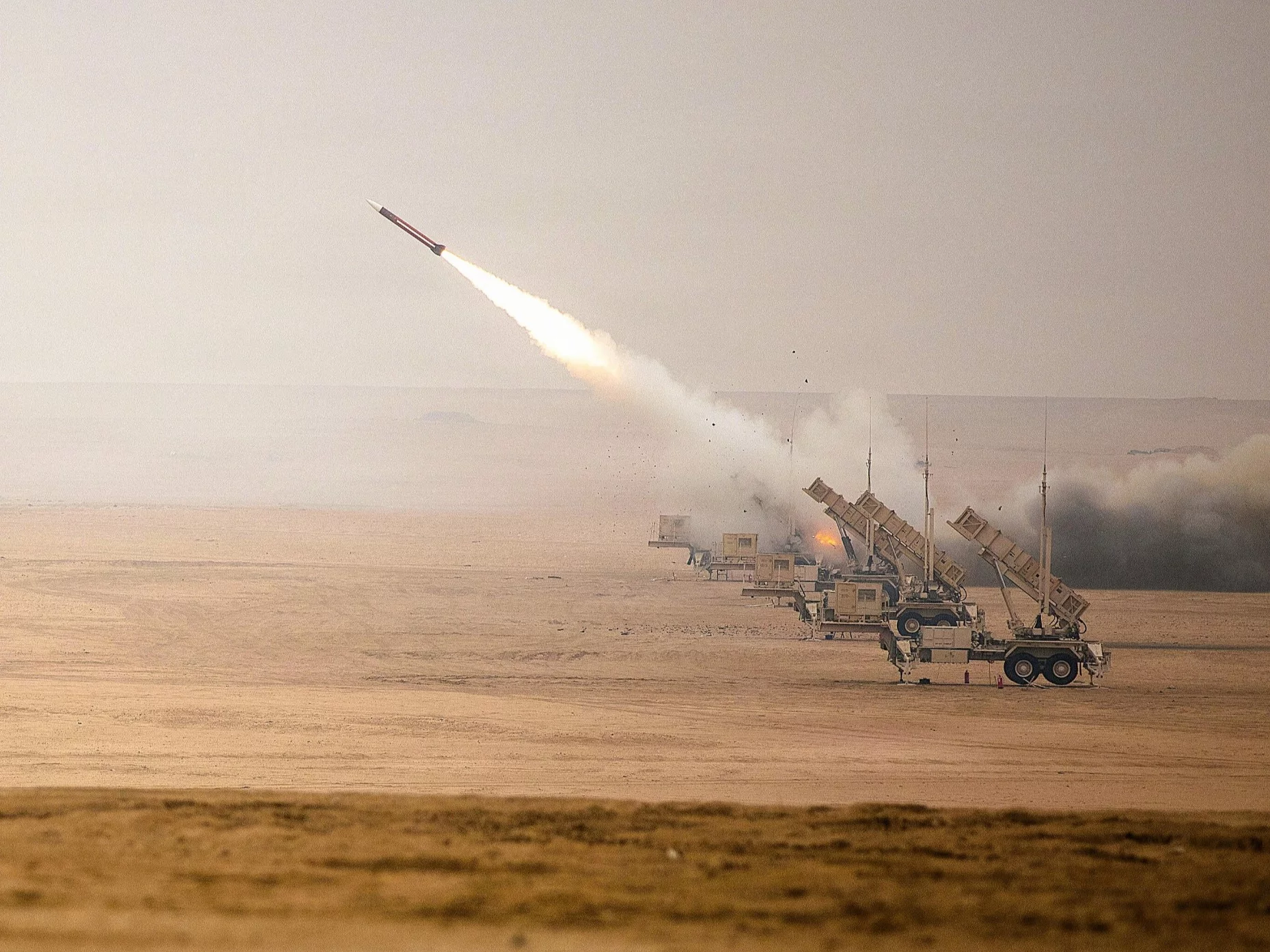
Photograph: Do Rzeczy (embedded from source)
What this story says
- The US Department of Defense has signed framework agreements with Lockheed Martin and Northrop Grumman to expand production of THAAD and Patriot missile defence systems.
- Northrop Grumman reported the agreements are worth a total of $3 billion, with $2 billion allocated for rocket motors and $1 billion for THAAD components.
- Iran has presented conditions for ending military actions, including control over the Strait of Hormuz, a demand the US is unlikely to accept.
- The agreements aim to increase annual production of PAC-3 missiles from around 600 to several thousand by 2027.
The US Department of Defense has signed framework agreements with defence contractors Lockheed Martin and Northrop Grumman. The agreements aim to increase production of components for the US missile defence system. The focus is on the Terminal High Altitude Area Defense (THAAD) and Patriot systems, whose stocks have been depleted by ongoing conflicts in the Middle East.
Northrop Grumman stated the agreements are worth a combined $3 billion. Of this, $2 billion is allocated for rocket motors and security devices, while $1 billion is designated for components of the THAAD air defence system. The company plans to triple its production capacity for solid-fuel rocket motors at its Allegany Ballistics Laboratory in West Virginia by 2027.
The US Army aims to increase annual production of PAC-3 Missile Segment Enhancement (MSE) missiles from approximately 600 to several thousand. The interceptors are intended for both US forces and allied nations. The Department of Defense has not provided a timeline or the total value of all contracts.
Iran’s conditions for ending military actions
Iran has presented conditions for ending military actions, including control over the Strait of Hormuz. According to Politico, as reported by Do Rzeczy, Iran has demanded recognition of its authority to levy fees for passage through the strait. The US has not indicated any willingness to accept this demand.
A source cited by Politico stated that Iran seeks to formalise its control over the strait through diplomatic and customary legal recognition. There are no signs that Tehran is prepared to relinquish this demand. The White House is described as having few viable options in response.
Coverage by Do Rzeczy
Do Rzeczy led with the signing of the framework agreements and the $3 billion value reported by Northrop Grumman. The report highlighted the goal of increasing production capacity for PAC-3 missiles and the expansion of Northrop Grumman’s facilities in West Virginia. It noted that the agreements are intended to support both US forces and allied nations.
The outlet included Iran’s demand for control over the Strait of Hormuz as a secondary element of the story. It quoted Politico’s description of the demand as politically unacceptable to the White House. Do Rzeczy did not provide additional details on the timeline or specific terms of the US defence contracts beyond the figures given by Northrop Grumman.
What the coverage left out
The report by Do Rzeczy did not specify which allied nations are expected to receive the interceptors or the exact timeline for the increase in production capacity. It also did not include a response from Lockheed Martin regarding the value or scope of its agreement with the Department of Defense.
No details were provided on the current stock levels of THAAD or Patriot systems, or the extent of their depletion. The report did not address whether the US has communicated its stance on Iran’s demands beyond the description of the White House’s limited options.
Questions about this coverage
- Is the coverage of US signs $3bn missile defence deals as Iran demands control of Strait… biased?
- US signs $3bn missile defence deals as Iran demands control of Strait of Hormuz is one event reported by several outlets, and this page does not rate the story as biased or unbiased. What it publishes is the spread: which outlets ran it, where named rating organisations place each of them on the spectrum, and what each side chose to lead with. A leaning rating describes an outlet's record over time, not this article, and the two should not be run together.
- What are the US missile defence agreements worth?
- Northrop Grumman stated the framework agreements with the US Department of Defense are worth a total of $3 billion. Of this, $2 billion is for rocket motors and security devices, and $1 billion is for THAAD components. Lockheed Martin’s agreement value was not disclosed in the reports.
- What does Iran want in exchange for ending military actions?
- Iran has demanded control over the Strait of Hormuz, including the right to levy fees for passage. The US has not indicated it will accept this condition. Politico reported the demand is politically unacceptable to the White House, leaving few viable options for resolution.
- Which missile systems are covered by the US defence agreements?
- The agreements cover the Terminal High Altitude Area Defense (THAAD) and Patriot systems. The US aims to increase production of PAC-3 Missile Segment Enhancement missiles from around 600 annually to several thousand by 2027, supplying both US forces and allied nations.
Read it at the source
1 outlet, grouped by the leaning a published rating gives them. Every headline links to the original; an underlined outlet name opens our profile of that publisher.
Left
0No outlet in this group ran the story.
Centre
0No outlet in this group ran the story.
Right
0No outlet in this group ran the story.
Not rated
1How did this read?
About the coverage, not about the story. We do not ask whether you agree with what happened — we have no honest use for that answer.