Alabama holds special primaries after Supreme Court redistricting order
Voters in four districts choose nominees under new map that reduces majority-Black districts from two to one
AI-assisted coverage comparison, editor-supervised · How this was made
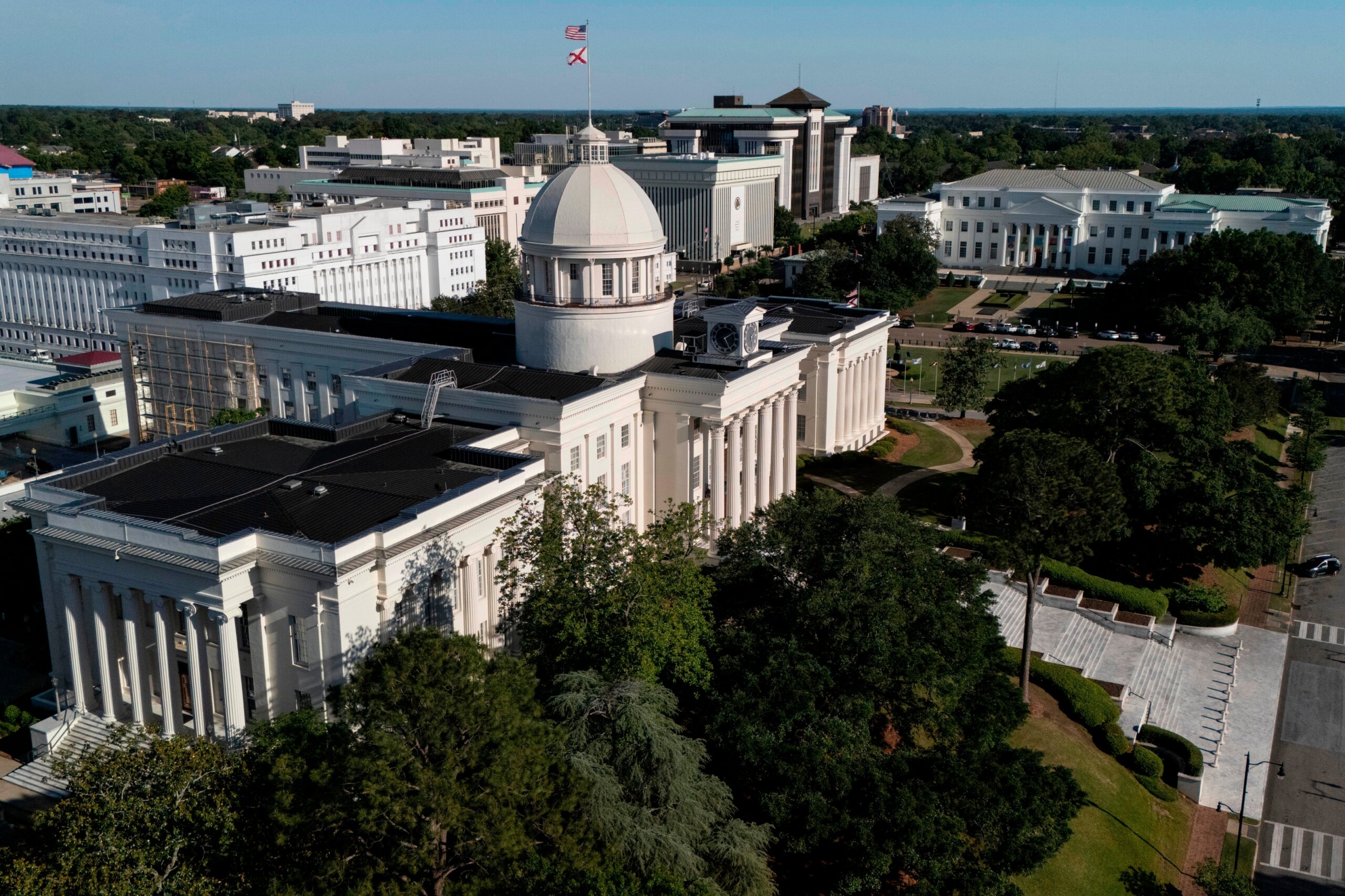
Alabama holds special primaries after Supreme Court redistricting order
Photograph: Washington Top News (embedded from source)
What this story says
- Voters in Alabama’s 1st, 2nd, 6th, and 7th districts choose nominees on 11 August 2026 under new congressional boundaries.
- The new map, effective January 2027, reduces the state’s majority-Black districts from two to one, as reported by the Associated Press.
- Governor Kay Ivey postponed the primaries after a U.S. Supreme Court decision prompted redistricting in several Republican-led states.
- Polls close at 7 p.m. Central Time, with results expected to be reported by the Associated Press throughout the evening.
Who covered it
Percentages are shares of the 86 outlets carrying a published leaning rating. 12 of the 98 outlets we know ran this story carry no rating and are not counted in them. Coverage measured .
Trust
68/100
Craft
85/100
Hype
12/100
98 sources · methodology
Missing from the right
Only 11 of the 86 outlets with a published leaning rating that ran this story are rated right.
A reader who follows the right would not have seen this. We report the absence rather than explain it: outlets choose what to cover for many reasons, and we have no evidence about which one applies here.
Voters in four of Alabama’s seven congressional districts will select nominees for the U.S. House of Representatives on 11 August 2026. The contests were postponed from their original date of 19 May 2026 by Governor Kay Ivey after a U.S. Supreme Court decision led to the redrawing of the state’s congressional map. The new boundaries, which take effect in January 2027, eliminate one of Alabama’s two majority-Black districts, both currently represented by Democrats.
The redistricting follows a broader effort by Republican-led states, including Louisiana and Tennessee, to adjust congressional maps mid-decade. The Associated Press reported that these changes were part of a national strategy to strengthen the Republican Party’s position ahead of the 2026 midterm elections. Alabama’s current U.S. House members will continue serving in their existing districts until the end of 2026.
In the 2nd District, U.S. Representative Shomari Figures, a Democrat, is running unopposed in the primary. The district’s Black population will decrease from about half under the current lines to about 40% under the new map, according to the Associated Press. Six Republicans are competing to challenge Figures in the general election, including state Representative Rhett Marques, who has received an endorsement from former President Donald Trump.
The 7th District, represented by Democrat Terri Sewell, will retain a slight Black majority under the new boundaries. Two Republicans are vying for the nomination to oppose Sewell in November. Polls close at 7 p.m. Central Time (8 p.m. Eastern Time), and the Associated Press will report results as they become available.
What the coverage left out
None of the digests from the right-rated outlet mentioned the shift in the 2nd District’s Black population from about half to about 40%. The centre-rated digests did not include the specific percentage change in the 2nd District’s Black population, though the Washington Top News full report carried the figure. The left-rated digests, including the Associated Press’s full report, did include this detail.
The right-rated digest did not mention the broader Republican strategy behind the redistricting, as described by the Associated Press. The centre-rated digests also omitted this context, though the Washington Top News full report included it.
Coverage settled. We checked this 83 times and stopped on 16 Aug 2026, 02:15. The figures above are what it finished at.
How each side covered it
Our own reading of the reporting listed below, written from the outlets’ articles rather than quoted from them. The reasoning is set out on our methodology page.
Left
43 rated outlets
- The six left-rated digests led on the elimination of one of Alabama’s two majority-Black districts. The Associated Press’s full report, carried by outlets including NPR and the Toronto Star, described the redistricting as part of a "nationwide Republican effort championed by President Donald Trump to maximize the party’s chances of holding its slim U.S. House majority." The Alabama Reflector’s digest included a voter guide and noted that the new map reduces the Black population in the 2nd District.
- The Associated Press’s full report quoted the shift in the 2nd District’s presidential voting patterns, stating that under the new boundaries, "Trump would have beaten Harris 57% to 42%" in the 2024 election. The report also named the Republican candidates challenging Democratic incumbents and noted Trump’s endorsement of Rhett Marques.
Centre
32 rated outlets
- All nine centre-rated digests led on the special primaries taking place under the new congressional map. The WVTM digest noted that the map eliminates one of the state’s two majority-Black districts. The Winnipeg Free Press and other centre-rated digests carried the Associated Press’s phrasing that the primaries were postponed following a "U.S. Supreme Court decision that prompted a handful of Republican-controlled Southern states to throw out their congressional maps."
- The Washington Top News full report, carried by several centre-rated outlets, included details on voter registration numbers and past turnout. It stated that as of 1 June 2026, Alabama had 3.8 million registered voters, with each congressional district containing about 718,000 people. The report also noted that about 409,000 ballots were cast in the May 2026 primaries, representing roughly 11% of registered voters.
Right
11 rated outlets
- The single right-rated digest, from The Daily Dispatch, led on the primaries taking place under the new map that "eliminates one of the state’s two majority-Black districts currently represented by Democrats." The digest did not include additional context or details beyond the basic facts of the election.
Questions about this coverage
- How did the left and right cover Alabama holds special primaries after Supreme Court redistricting order?
- Of the 86 outlets on this story carrying a published leaning rating, 50% are rated left, 37% are rated centre, 13% are rated right. Those percentages are shares of the rated outlets, not of every outlet that ran it, which was 98. The sections above set out what each side emphasised, in its own terms.
- Is Alabama holds special primaries after Supreme Court redistricting order left or right?
- Neither side dominates it. Of the 86 rated outlets on this story, 50% are rated left, 37% are rated centre, 13% are rated right, and no side holds the 70% this site would want before calling a field one-sided. A story is not left or right in any case; the outlets that carried it are what carry ratings.
- Is the coverage of Alabama holds special primaries after Supreme Court redistricting order biased?
- Alabama holds special primaries after Supreme Court redistricting order is one event reported by 98 outlets, and this page does not rate the story as biased or unbiased. What it publishes is the spread: which outlets ran it, where named rating organisations place each of them on the spectrum, and what each side chose to lead with. A leaning rating describes an outlet's record over time, not this article, and the two should not be run together.
- Which side is not reporting Alabama holds special primaries after Supreme Court redistricting order?
- When we first saw this story, outlets rated right had barely covered it. Coverage accretes for hours after an event, so that is where to look rather than a verdict — the split above is the current count, and it is the one to read.
- Which outlets covered Alabama holds special primaries after Supreme Court redistricting order?
- 98 that we know of, every one of them listed further up this page with a link to its own report and to what we hold on the publisher. Nothing here is a summary of somebody else's summary: the outlets are named so the original reporting can be read.
- Why were Alabama’s special primaries postponed?
- Governor Kay Ivey postponed the primaries for Alabama’s 1st, 2nd, 6th, and 7th congressional districts after a U.S. Supreme Court decision led to the redrawing of the state’s congressional map. The new boundaries take effect in January 2027, as reported by the Associated Press.
- How does the new congressional map change Alabama’s districts?
- The new map eliminates one of Alabama’s two majority-Black districts, reducing them from two to one. In the 2nd District, the Black population decreases from about half to about 40%, according to the Associated Press’s full report.
- When do polls close in Alabama’s special primaries?
- Polls close at 7 p.m. Central Time (8 p.m. Eastern Time) on 11 August 2026. The Associated Press will report results as they become available, with past primaries typically seeing initial results within 30 minutes of poll closures.
- Which districts are holding special primaries in Alabama?
- Voters in Alabama’s 1st, 2nd, 6th, and 7th congressional districts are selecting nominees in the special primaries on 11 August 2026. The new map affects these districts, with the 2nd and 7th currently represented by Democrats.
Read it at the source
98 outlets, grouped by the leaning a published rating gives them. Every headline links to the original; an underlined outlet name opens our profile of that publisher.
Left
43- Alabama's Primary Drew 5 Percent Turnout Thanks To Supreme Court Destroying Voting Rights Act (opens Above the Law in a new tab)
Above the Law — is Above the Law biased? Our profile of this outletOpinion
- Palmer, Mercer and Akin Win Nominations to Run for Congress (opens BirminghamWatch in a new tab)
BirminghamWatch — is BirminghamWatch biased? Our profile of this outlet
- November matchup set for Alabama US House district Republicans redrew in effort to keep majority (opens Oskaloosa Herald in a new tab)
Oskaloosa Herald — is Oskaloosa Herald biased? Our profile of this outlet
- After Districts Redrawn, Alabama Special Congressional Primary Brings Out Voters (opens The Birmingham Times in a new tab)
The Birmingham Times — is The Birmingham Times biased? Our profile of this outlet
- Ammie Akin wins Republican primary in Alabama district redrawn after Supreme Court ruling (opens Newmarket Today in a new tab)
Newmarket Today — is Newmarket Today biased? Our profile of this outlet
- Ammie Akin wins Republican primary in Alabama district redrawn after Supreme Court ruling (opens flamboroughtoday.com in a new tab)
flamboroughtoday.com — is flamboroughtoday.com biased? Our profile of this outlet
- Ammie Akin wins Republican primary in Alabama district redrawn after Supreme Court ruling (opens ElliotLakeToday.com in a new tab)
ElliotLakeToday.com — is ElliotLakeToday.com biased? Our profile of this outlet
- Ammie Akin wins Republican primary in Alabama district redrawn after Supreme Court ruling (opens InnisfilToday.ca in a new tab)
InnisfilToday.ca — is InnisfilToday.ca biased? Our profile of this outlet
Show 35 more
- Ammie Akin wins Republican primary in Alabama district redrawn after Supreme Court ruling (opens CambridgeToday.ca in a new tab)
CambridgeToday.ca — is CambridgeToday.ca biased? Our profile of this outlet
- Ammie Akin wins Republican primary in Alabama district redrawn after Supreme Court ruling (opens Oakville News in a new tab)
Oakville News — is Oakville News biased? Our profile of this outlet
- Ammie Akin wins Republican primary in Alabama district redrawn after Supreme Court ruling (opens Prince George Citizen in a new tab)
Prince George Citizen — is Prince George Citizen biased? Our profile of this outlet
- November matchup set for Alabama US House district Republicans redrew in effort to keep majority (opens StratfordToday.ca in a new tab)
StratfordToday.ca — is StratfordToday.ca biased? Our profile of this outlet
- November matchup set for Alabama US House district Republicans redrew in effort to keep majority (opens Coast Reporter in a new tab)
Coast Reporter — is Coast Reporter biased? Our profile of this outlet
- Rhett Marques wins Republican nomination for U.S. House in Alabama's 2nd Congressional District special primary election (opens El Paso Inc. in a new tab)
El Paso Inc. — is El Paso Inc. biased? Our profile of this outlet
- Rhett Marques wins Republican nomination for U.S. House in Alabama's 2nd Congressional District special primary election (opens Enid News & Eagle in a new tab)
Enid News & Eagle — is Enid News & Eagle biased? Our profile of this outlet
- Democratic incumbents win US House primaries in Alabama districts redrawn after Supreme Court ruling (opens haltonhillstoday.ca in a new tab)
haltonhillstoday.ca — is haltonhillstoday.ca biased? Our profile of this outlet
- Democratic incumbents win US House primaries in Alabama districts redrawn after Supreme Court ruling (opens The NOTL Local in a new tab)
The NOTL Local — is The NOTL Local biased? Our profile of this outlet
- Democratic incumbents win US House primaries in Alabama districts redrawn after Supreme Court ruling (opens Bay Today in a new tab)
- Democratic incumbents win US House primaries in Alabama districts redrawn after Supreme Court ruling (opens Sudbury in a new tab)
- Democratic incumbents win US House primaries in Alabama districts redrawn after Supreme Court ruling (opens Bowen Island Undercurrent in a new tab)
Bowen Island Undercurrent — is Bowen Island Undercurrent biased? Our profile of this outlet
- Democratic incumbents win US House primaries in Alabama districts redrawn after Supreme Court ruling (opens Elora Fergus Today in a new tab)
Elora Fergus Today — is Elora Fergus Today biased? Our profile of this outlet
- Democratic incumbents win US House primaries in Alabama districts redrawn after Supreme Court ruling (opens Orillia Matters in a new tab)
Orillia Matters — is Orillia Matters biased? Our profile of this outlet
- Democratic incumbents win US House primaries in Alabama districts redrawn after Supreme Court ruling (opens SooToday.com in a new tab)
SooToday.com — is SooToday.com biased? Our profile of this outlet
- Democratic incumbents win US House primaries in Alabama districts redrawn after Supreme Court ruling (opens Rocky Mountain Outlook in a new tab)
Rocky Mountain Outlook — is Rocky Mountain Outlook biased? Our profile of this outlet
- The Case Against Rhett Marques (opens DCCC in a new tab)
- Alabama Puts Its New Electoral Map to the Test in the Battle for Congress (opens La Opinion in a new tab)
La Opinion — is La Opinion biased? Our profile of this outletOpinion
- Alabama Primary Could Reshape Black Representation in Congress (opens Afram News in a new tab)
Afram News — is Afram News biased? Our profile of this outlet
- As Alabama Heads to the Polls For a Second Primary, Organizers Want to Keep Black Voters Engaged (opens The Root in a new tab)
- Live Results: Alabama midterm U.S. House primaries after redistricting (opens PBS NewsHour in a new tab)
PBS NewsHour — is PBS NewsHour biased? Our profile of this outlet
- "Republicans pick nominee for Alabama US House district they redrew after Supreme Court ruling" #ELB (opens electionlawblog.org in a new tab)
electionlawblog.org — is electionlawblog.org biased? Our profile of this outlet
- Alabama’s special congressional primary elections 2026: Live updates (opens Dothan Eagle in a new tab)
Dothan Eagle — is Dothan Eagle biased? Our profile of this outlet
- Alabama holds second primary Tuesday, leading to confusion, concerns about low turnout (opens Georgia Public Broadcasting in a new tab)
Georgia Public Broadcasting — is Georgia Public Broadcasting biased? Our profile of this outlet
- What to know about the US primaries in Connecticut, Vermont, and Alabama (opens Al Jazeera in a new tab)
Al Jazeera — is Al Jazeera biased? Our profile of this outlet
- Republicans pick nominee for Alabama US House district they redrew after Supreme Court ruling (opens NiagaraFallsReview.ca in a new tab)
NiagaraFallsReview.ca — is NiagaraFallsReview.ca biased? Our profile of this outlet
- Republicans pick nominee for Alabama US House district they redrew after Supreme Court ruling (opens St Catharines Standard in a new tab)
St Catharines Standard — is St Catharines Standard biased? Our profile of this outlet
- Republicans pick nominee for Alabama US House district they redrew after Supreme Court ruling (opens The Record in a new tab)
The Record — is The Record biased? Our profile of this outlet
- Alabama heads into a special election after redistricting (opens NPR in a new tab)
- AP Decision Notes: What to expect in Alabama’s special congressional primaries (opens The Washington Post in a new tab)
The Washington Post — is The Washington Post biased? Our profile of this outlet
- AP Decision Notes: What to expect in Alabama’s special congressional primaries (opens The Toronto Star in a new tab)
The Toronto Star — is The Toronto Star biased? Our profile of this outlet
- AP Decision Notes: What to expect in Alabama’s special congressional primaries (opens The Seattle Times in a new tab)
The Seattle Times — is The Seattle Times biased? Our profile of this outlet
- AP Decision Notes: What to expect in Alabama’s special congressional primaries (opens Associated Press News in a new tab)
Associated Press News — is Associated Press News biased? Our profile of this outlet
- AP Decision Notes: What to expect in Alabama’s special congressional primaries (opens The Hamilton Spectator in a new tab)
The Hamilton Spectator — is The Hamilton Spectator biased? Our profile of this outlet
- A voter guide to Alabama's special primary elections (opens alabamareflector.com in a new tab)
alabamareflector.com — is alabamareflector.com biased? Our profile of this outlet
Centre
32- November matchup set for Alabama US House district Republicans redrew in effort to keep majority (opens Henry Herald in a new tab)
Henry Herald — is Henry Herald biased? Our profile of this outlet
- Alabama special congressional primary sees turnout plunge to near historic low (opens Alabama Live in a new tab)
Alabama Live — is Alabama Live biased? Our profile of this outlet
- Alabama Special Congressional Election 2026: Live Results (opens WHNT 19 News in a new tab)
WHNT 19 News — is WHNT 19 News biased? Our profile of this outlet
- Trump-backed candidate wins crowded GOP primary in Alabama's newly drawn 2nd District, AP projects (opens CBS News in a new tab)
- Republicans pick Marques to face Democrat Figures in redrawn Alabama US House seat vote (opens WTVB in a new tab)
- Democratic incumbents win US House primaries in Alabama districts redrawn after Supreme Court ruling (opens Ottumwa Courier in a new tab)
Ottumwa Courier — is Ottumwa Courier biased? Our profile of this outlet
- Democratic incumbents win US House primaries in Alabama districts redrawn after Supreme Court ruling (opens Ckpg Today in a new tab)
Ckpg Today — is Ckpg Today biased? Our profile of this outlet
- Ammie Akin wins Republican primary in Alabama district redrawn after Supreme Court ruling (opens CFJC Today Kamloops in a new tab)
CFJC Today Kamloops — is CFJC Today Kamloops biased? Our profile of this outlet
Show 24 more
- Democratic incumbents win US House primaries in Alabama districts redrawn after Supreme Court ruling (opens meadowlakeNOW in a new tab)
meadowlakeNOW — is meadowlakeNOW biased? Our profile of this outlet
- US Rep. Shomari Figures wins Democratic nomination in Alabama House district redrawn by Republicans (opens Battlefords NOW in a new tab)
Battlefords NOW — is Battlefords NOW biased? Our profile of this outlet
- Live results: Alabama votes in special House primaries after redistricting fight (opens The Hill in a new tab)
- Low turnout rates predicted in Alabama special primary (opens The Trussville Tribune in a new tab)
The Trussville Tribune — is The Trussville Tribune biased? Our profile of this outlet
- Republicans pick nominee for Alabama US House district they redrew after Supreme Court ruling (opens WCBI TV in a new tab)
- Alabama holds second primary Tuesday, leading to confusion, concerns about low turnout (opens OPB in a new tab)
- Republicans picking nominee for Alabama US House district they redrew (opens TimesDaily in a new tab)
TimesDaily — is TimesDaily biased? Our profile of this outlet
- Governor urges voters to cast ballots in Alabama special primaries (opens Alabama Political Reporter in a new tab)
Alabama Political Reporter — is Alabama Political Reporter biased? Our profile of this outlet
- Republicans Pick Nominee for Redrawn Alabama District (opens Political Wire in a new tab)
Political Wire — is Political Wire biased? Our profile of this outlet
- Republicans pick nominee for Alabama US House district they redrew after Supreme Court ruling (opens My Mother Lode in a new tab)
My Mother Lode — is My Mother Lode biased? Our profile of this outlet
- Republicans pick nominee for Alabama US House district they redrew after Supreme Court ruling (opens The Lawton Constitution in a new tab)
The Lawton Constitution — is The Lawton Constitution biased? Our profile of this outlet
- Republicans pick nominee for Alabama US House district they redrew after Supreme Court ruling (opens Daily News-Record in a new tab)
Daily News-Record — is Daily News-Record biased? Our profile of this outlet
- Republicans pick nominee for Alabama US House district they redrew after Supreme Court ruling (opens Chronicle Online in a new tab)
Chronicle Online — is Chronicle Online biased? Our profile of this outlet
- Two Wiregrass natives join state representative in race for Alabama's 2nd congressional district (opens WDHN in a new tab)
- Alabama's special primary election 2026: What to know about Tuesday’s congressional races (opens WVTM in a new tab)
- AP Decision Notes: What to expect in Alabama’s special congressional primaries (opens Washington Top News in a new tab)
Washington Top News — is Washington Top News biased? Our profile of this outlet
- AP Decision Notes: What to expect in Alabama's special congressio (opens WBAL in a new tab)
- AP Decision Notes: What to expect in Alabama’s special congressional primaries (opens Decatur Daily in a new tab)
Decatur Daily — is Decatur Daily biased? Our profile of this outlet
- AP Decision Notes: What to expect in Alabama’s special congressional primaries (opens KTBS in a new tab)
- AP Decision Notes: What to expect in Alabama’s special congressional primaries (opens The Northern Virginia Daily in a new tab)
The Northern Virginia Daily — is The Northern Virginia Daily biased? Our profile of this outlet
- AP Decision Notes: What to expect in Alabama’s special congressional primaries (opens Local 3 News in a new tab)
Local 3 News — is Local 3 News biased? Our profile of this outlet
- AP Decision Notes: What to expect in Alabama’s special congressional primaries (opens Audacy in a new tab)
- AP Decision Notes: What to expect in Alabama’s special congressional primaries (opens WKMG in a new tab)
- AP Decision Notes: What to expect in Alabama’s special congressional primaries (opens Winnipeg Free Press in a new tab)
Winnipeg Free Press — is Winnipeg Free Press biased? Our profile of this outlet
Right
11- Alabama's special primary sets up November battle for key districts (opens OAN in a new tab)
- Alabama's Special Congressional Election Tests the Mettle in the New Maps (opens RedState in a new tab)
- Alabama Democrats advance in redrawn districts after court-led map overhaul (opens India Today in a new tab)
India Today — is India Today biased? Our profile of this outlet
- Republicans pick nominee for Alabama US House district they redrew after Supreme Court ruling (opens plaindealerin.com in a new tab)
plaindealerin.com — is plaindealerin.com biased? Our profile of this outlet
- Republicans pick nominee for Alabama US House district they redrew after Supreme Court ruling (opens Jonesboro Sun in a new tab)
Jonesboro Sun — is Jonesboro Sun biased? Our profile of this outlet
- Republicans pick nominee for Alabama US House district they redrew after Supreme Court ruling (opens Marietta Daily Journal in a new tab)
Marietta Daily Journal — is Marietta Daily Journal biased? Our profile of this outlet
- Republicans pick nominee for Alabama U.S. House district they redrew after Supreme Court ruling (opens Washington Times in a new tab)
Washington Times — is Washington Times biased? Our profile of this outlet
- Low turnout in Alabama special primary as voters cite lack of awareness (opens WBMA in a new tab)
Show 3 more
- Republicans pick nominee for Alabama US House district they redrew after Supreme Court ruling (opens Madison Courier in a new tab)
Madison Courier — is Madison Courier biased? Our profile of this outlet
- 6 Republicans Vie for Nomination in Alabama’s 2nd Congressional District (opens The Epoch Times in a new tab)
The Epoch Times — is The Epoch Times biased? Our profile of this outlet
- AP Decision Notes: What to expect in Alabama's special congressional primaries (opens The Daily Dispatch in a new tab)
The Daily Dispatch — is The Daily Dispatch biased? Our profile of this outlet
Not rated
12- Supreme Court Ruling Reopens Alabamas Redistricting Battle (opens digitalchew.com in a new tab)
digitalchew.com — is digitalchew.com biased? Our profile of this outlet
- Rhett Marques wins Republican nomination in Alabama 2nd Congressional District - Now Georgia (opens nowgeorgia.com in a new tab)
nowgeorgia.com — is nowgeorgia.com biased? Our profile of this outlet
- Alabama Farmers Federation Congratulates Congressional Candidates - Alabama Farmers Federation (opens alfafarmers.org in a new tab)
alfafarmers.org
- November matchup set for Alabama US House district Republicans redrew in effort to keep majority (opens Airdrie City View in a new tab)
Airdrie City View — is Airdrie City View biased? Our profile of this outlet
- Hines, Harris Land to Develop Mixed-Use Campus in Charlotte’s SouthPark District (opens REBusinessOnline in a new tab)
REBusinessOnline
- Ministers urged to act now to save Scotland's small hydro sector after "calamitous" court ruling (opens Business in the News in a new tab)
Business in the News
- Alabama holds second primary Tuesday, leading to confusion, concerns about low turnout (opens Phil's Stock World in a new tab)
Phil's Stock World — is Phil's Stock World biased? Our profile of this outlet
- Republicans pick nominee for Alabama US House district they redrew after Supreme Court ruling (opens Loonie Politics in a new tab)
Loonie Politics — is Loonie Politics biased? Our profile of this outlet
Show 4 more
- CAMPAIGN 2026: Special primaries Tuesday in some Alabama U.S. House districts (opens waka.com in a new tab)
- Alabama Special Election Results 2026 Date & Time: When Will State Senate District 25 & 26 Results Be Announced? Check Poll Closing Time, Vote Counting Schedule & Latest Updates (opens The Sunday Guardian Live in a new tab)
The Sunday Guardian Live — is The Sunday Guardian Live biased? Our profile of this outlet
- Aug. 11 special primary in Mobile, Baldwin counties: How to vote and who is on the ballot (opens mobilebaynow.com in a new tab)
mobilebaynow.com — is mobilebaynow.com biased? Our profile of this outlet
- AP Decision Notes: What to expect in Alabama’s special congressional primaries (opens KXL in a new tab)
How did this read?
About the coverage, not about the story. We do not ask whether you agree with what happened — we have no honest use for that answer.


