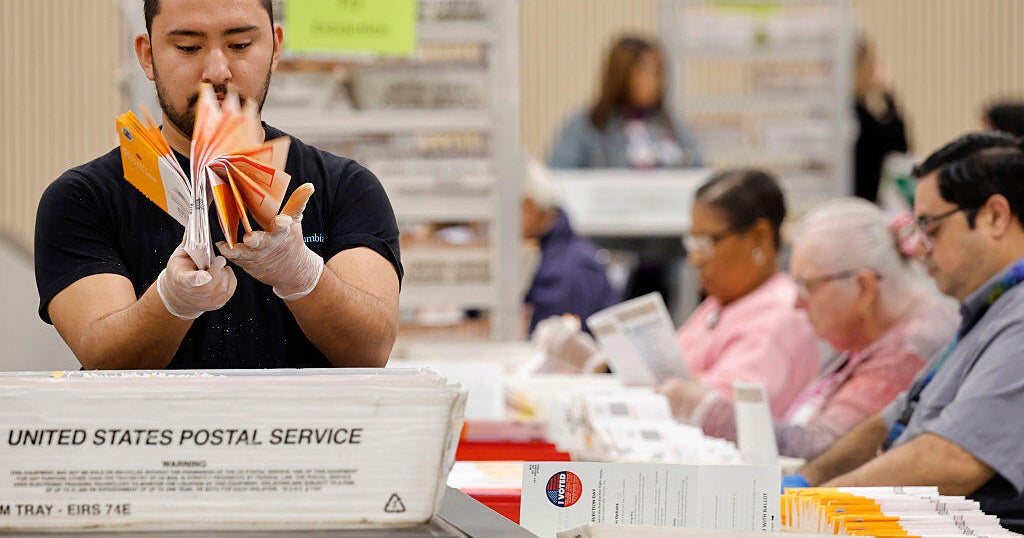
Ballot measures on rights passed in US midterm elections
Voters decided on issues including voting rights, abortion, and transgender rights.
AI-assisted coverage comparison, editor-supervised · How this was made
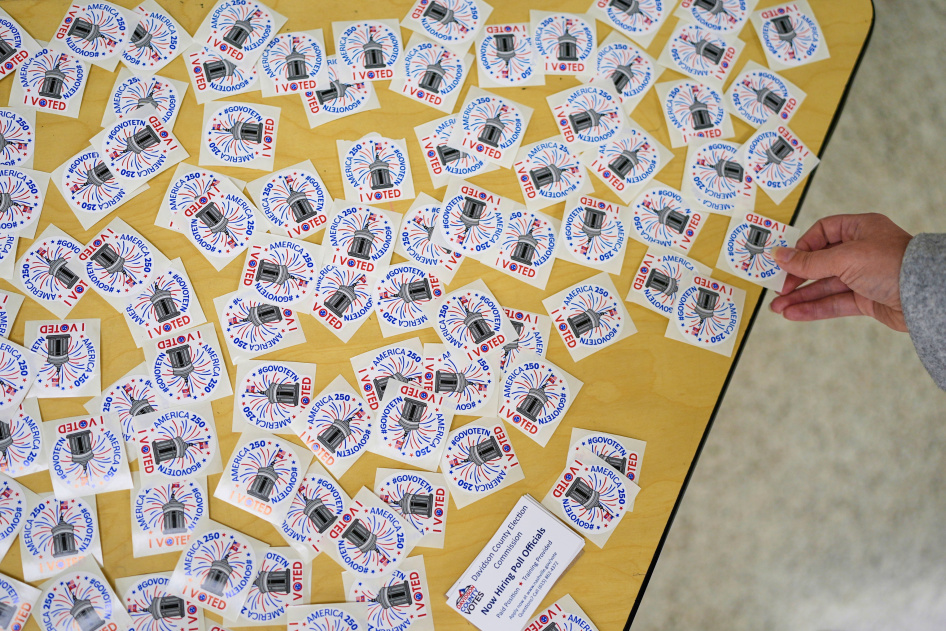
A voter picks up an "I Voted" sticker after casting their ballot in the US midterm elections on November 3, 2026. © 2026 AP Photo/George Walker IV
Photograph: Human Rights Watch (embedded from source)
What this story says
- Voters in Virginia approved measures to automatically restore voting rights to people with felony convictions and to lift the ban on same-sex marriage.
- Measures to end diversity, equity, and inclusion practices were rejected in Arizona but approved in Wisconsin.
- Voters in Colorado adopted a measure to ban gender-affirming surgeries for individuals under 18.
- Missouri voters rejected an effort to restrict abortion care access.
Who covered it
Percentages are shares of the 11 outlets carrying a published leaning rating. 4 of the 15 outlets we know ran this story carry no rating and are not counted in them. Coverage measured .
Trust
42/100
Craft
59/100
Hype
68/100
15 sources · methodology
Thin on the left so far
Only 1 of the 11 outlets with a published leaning rating that ran this story are rated left.
This story is still being watched, so it is a count and not yet a finding. Coverage keeps arriving for hours after an event, and a side that has published nothing this morning may publish by tonight. If it is still true when we stop checking, we will say so plainly.
During the US midterm elections on November 3, 2026, voters in several states considered ballot measures addressing human rights issues. In Virginia, voters adopted a measure to automatically restore voting rights to individuals with felony convictions upon their release from prison, ending a long-standing ban. The state also saw voters approve an amendment to remove its ban on same-sex marriage.
Ballot initiatives concerning diversity, equity, and inclusion (DEI) practices saw differing outcomes. Arizona voters rejected measures aimed at ending DEI practices, while Wisconsin voters approved similar measures. Vermont voters approved an amendment to provide equal protection regardless of race, ethnicity, sex, religion, disability, sexual orientation, gender identity, gender expression, or national origin.
On issues related to abortion and transgender rights, results were mixed. Missouri voters rejected an effort to restrict abortion care. Colorado voters approved a measure to ban gender-affirming surgeries for those under 18. In Missouri, voters chose not to include a ban on gender-affirming care for youth in the state's constitution.
Disagreements in reporting
Reports differed on the number of states where voters approved measures to restrict transgender rights. Reuters, Cyprus Mail, The Straits Times, regionalmedianews.com, Deccan Chronicle, Market Screener, and SRN News stated that voters in four US states approved ballot measures to restrict transgender rights. Human Rights Watch reported that Colorado voters adopted a measure to ban gender-affirming surgeries for youth under 18, and that Missouri voters opted to keep a ban on gender-affirming care for youth out of the state's constitution, without specifying a total number of states or measures.
What the coverage left out
None of the right-rated digests mention the specific outcomes of ballot measures concerning voting rights restoration in Virginia, the rejection of abortion restrictions in Missouri, or the approval of an amendment for equal protection in Vermont. The centre-rated digests also do not mention these specific outcomes.
Still developing. We have re-checked which outlets are covering this 45 times, most recently on 8 Nov 2026, 07:15, and will add the sides that appear.
How each side covered it
Our own reading of the reporting listed below, written from the outlets’ articles rather than quoted from them. The reasoning is set out on our methodology page.
Left
1 rated outlet
- The left-rated report from Human Rights Watch led with the breadth of human rights issues addressed in ballot measures, including voting rights, discrimination, abortion, LGBT rights, and immigration enforcement. It detailed Virginia voters' adoption of a measure to automatically restore voting rights to people with felony convictions and the approval of an amendment lifting the state’s ban on same-sex marriage. The report also noted the rejection of measures to end diversity, equity, and inclusion practices in Arizona and the approval of such measures in Wisconsin. It highlighted Vermont voters' approval of an amendment for equal protection regardless of various personal characteristics and the rejection of an effort to restrict abortion care in Missouri. The report also covered Colorado voters' adoption of a measure to ban gender-affirming surgeries for youth under 18 and Missouri voters' decision regarding gender-affirming care for youth.
Centre
5 rated outlets
- The centre-rated reports from Reuters, Investing.com, and Market Screener focused on the outcomes of ballot measures related to transgender rights and their potential political implications. These reports stated that voters in four US states approved measures to restrict transgender rights, framing these results as a warning to Democrats and a likely political challenge heading into the 2028 presidential race. They noted that these measures succeeded despite broader Democratic victories in the midterm elections.
Right
5 rated outlets
- The right-rated reports from Cyprus Mail, The Straits Times, regionalmedianews.com, Deccan Chronicle, and SRN News also centred on the impact of ballot measures restricting transgender rights on the Democratic party. These outlets reported that voters in four US states approved measures to restrict transgender rights, presenting this as a challenge for Democrats in the lead-up to the 2028 presidential election. The Deccan Chronicle report specifically mentioned that Republicans used attack ads against Democrats concerning transgender girls in sports and gender-affirming care for minors during midterm campaigns.
Questions about this coverage
- How did the left and right cover Ballot measures on rights passed in US midterm elections?
- Of the 11 outlets on this story carrying a published leaning rating, 9% are rated left, 45% are rated centre, 46% are rated right. Those percentages are shares of the rated outlets, not of every outlet that ran it, which was 15. The sections above set out what each side emphasised, in its own terms.
- Is Ballot measures on rights passed in US midterm elections left or right?
- Too few of the outlets on this story carry a published leaning rating to say. 11 of them do, and this site does not characterise a field under 12: at that size one newsroom filing moves the share by ten points. The percentages above are the count as it stands.
- Is the coverage of Ballot measures on rights passed in US midterm elections biased?
- Ballot measures on rights passed in US midterm elections is one event reported by 15 outlets, and this page does not rate the story as biased or unbiased. What it publishes is the spread: which outlets ran it, where named rating organisations place each of them on the spectrum, and what each side chose to lead with. A leaning rating describes an outlet's record over time, not this article, and the two should not be run together.
- Which side is not reporting Ballot measures on rights passed in US midterm elections?
- When we first saw this story, outlets rated left had barely covered it. Coverage accretes for hours after an event, so that is where to look rather than a verdict — the split above is the current count, and it is the one to read.
- Which outlets covered Ballot measures on rights passed in US midterm elections?
- 15 that we know of, every one of them listed further up this page with a link to its own report and to what we hold on the publisher. Nothing here is a summary of somebody else's summary: the outlets are named so the original reporting can be read.
- What happened with voting rights in Virginia?
- Virginia voters adopted a measure to automatically restore voting rights to people with felony convictions upon their release from prison. This action ended a ban that had been in place since the Jim Crow era, according to Human Rights Watch.
- What were the results of measures on diversity, equity, and inclusion practices?
- Arizona voters rejected measures aimed at ending diversity, equity, and inclusion practices, while Wisconsin voters approved similar measures. Human Rights Watch reported these differing outcomes in the context of mirroring past federal initiatives.
- What did voters decide regarding gender-affirming care?
- Colorado voters approved a measure to ban gender-affirming surgeries for individuals under 18. In Missouri, voters opted to keep a ban on gender-affirming care for youth out of the state's constitution, meaning it was not enshrined in the state's founding document.
- How did ballot measures on transgender rights affect the political landscape?
- Reports from Reuters, Cyprus Mail, and others indicated that voters in four US states approved measures to restrict transgender rights. This outcome was seen as a warning to Democrats and a potential political challenge heading into the 2028 presidential race.
Read it at the source
15 outlets, grouped by the leaning a published rating gives them. Every headline links to the original; an underlined outlet name opens our profile of that publisher.
Left
1Centre
5- US anti-trans ballot wins pose challenge for Democrats ahead of 2028 (opens Investing.com in a new tab)
Investing.com — is Investing.com biased? Our profile of this outlet
- US anti-trans ballot wins pose challenge for Democrats ahead of 2028 (opens Reuters in a new tab)
- What the Democratic Wave Means for 2028 (opens Political Wire in a new tab)
Political Wire — is Political Wire biased? Our profile of this outletOpinion
- Will this week's blue wave election usher in a Democratic president in 2028? (opens CNBC in a new tab)
- US anti-trans ballot wins pose challenge for Democrats ahead of 2028 (opens Market Screener in a new tab)
Market Screener — is Market Screener biased? Our profile of this outlet
Right
5- US anti-trans ballot wins pose challenge for Democrats (opens Cyprus Mail in a new tab)
Cyprus Mail — is Cyprus Mail biased? Our profile of this outlet
- US anti-trans ballot wins challenge Democrats in 2028 (opens The Straits Times in a new tab)
The Straits Times — is The Straits Times biased? Our profile of this outlet
- US anti-trans ballot wins pose challenge for Democrats ahead of 2028 - Regional Media News (opens regionalmedianews.com in a new tab)
regionalmedianews.com — is regionalmedianews.com biased? Our profile of this outlet
- US Anti-Trans Ballot Wins Pose Challenge for Democrats Ahead of 2028 (opens Deccan Chronicle in a new tab)
Deccan Chronicle — is Deccan Chronicle biased? Our profile of this outlet
- US anti-trans ballot wins pose challenge for Democrats ahead of 2028 (opens SRN News in a new tab)
Not rated
4- Democratic Wave in the US Does Not Guarantee Victory in 2028 (opens SpaceMoney in a new tab)
SpaceMoney — is SpaceMoney biased? Our profile of this outletOpinion
- Will this week's blue wave election usher in a Democratic president in 2028? (opens BizToc in a new tab)
- US anti-trans ballot wins pose challenge for Democrats ahead of 2028 - Taylorville Daily News (opens taylorvilledailynews.com in a new tab)
taylorvilledailynews.com — is taylorvilledailynews.com biased? Our profile of this outlet
- Rights on the Ballot Alongside US Congressional Elections (opens tucsonpost.com in a new tab)
tucsonpost.com — is tucsonpost.com biased? Our profile of this outlet
How did this read?
About the coverage, not about the story. We do not ask whether you agree with what happened — we have no honest use for that answer.