Buy Canadian sentiment surges amid US tariffs
Consumers are increasingly looking to support local products and businesses as a response to trade tensions.
AI-assisted coverage comparison, editor-supervised · How this was made
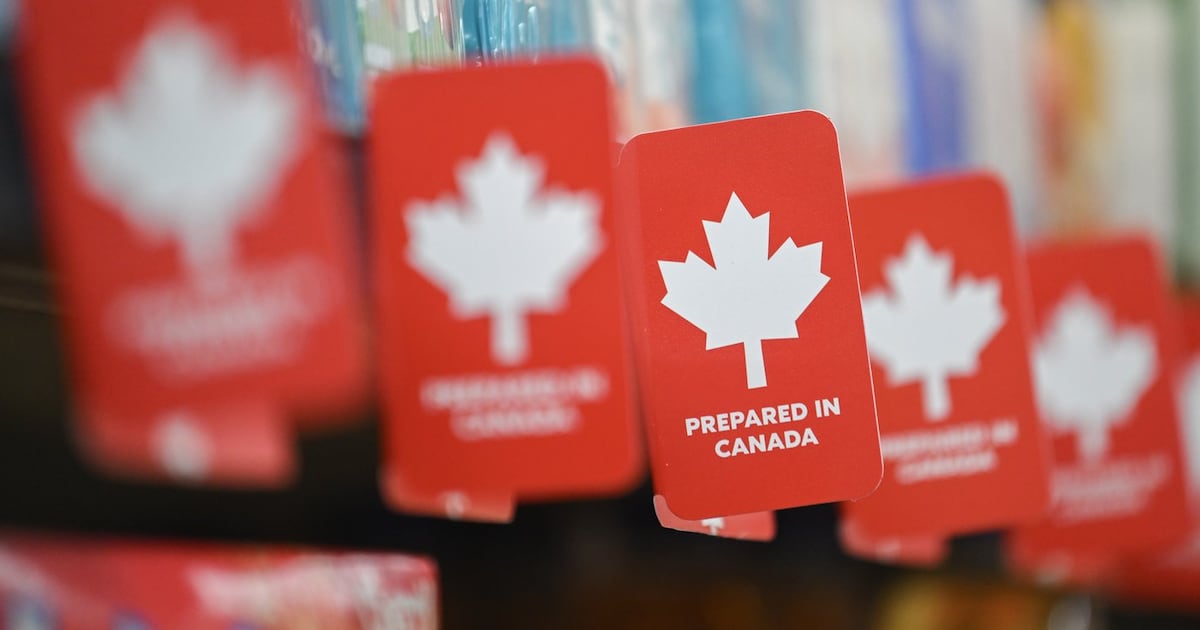
Prepared in Canada signage is shown in a store in St. Andrews, New Brunswick on Tuesday, May 6, 2025. THE CANADIAN PRESS/Graham Hughes
Photograph: CTV News (embedded from source)
What this story says
- A resurgence in "buy Canadian" sentiment is occurring nationwide as a reaction to increased US tariffs.
- Consumers are actively sharing advice online about supporting local products and businesses.
- Retailers are reintroducing labels to identify goods impacted by tariffs or to signal local origin.
- Market research indicates consumers are willing to pay more for Canadian products, a trend expected to grow.
Who covered it
Percentages are shares of the 45 outlets carrying a published leaning rating. 5 of the 50 outlets we know ran this story carry no rating and are not counted in them. Coverage measured .
Trust
42/100
Craft
45/100
Hype
20/100
50 sources · methodology
Missing from the right
Only 3 of the 45 outlets with a published leaning rating that ran this story are rated right.
A reader who follows the right would not have seen this. We report the absence rather than explain it: outlets choose what to cover for many reasons, and we have no evidence about which one applies here.
A renewed push for "buy Canadian" purchasing is evident across the country, fuelled by growing backlash against United States tariffs. Consumers seeking to support domestic products and businesses are exchanging shopping advice online. Retailers are also updating their in-store labelling to identify goods affected by tariffs or to highlight local items.
Margaret Chapman of Narrative Research stated that the buy Canadian movement is becoming a more established part of shopping habits. She indicated that polling data shows many consumers are prepared to pay a premium for Canadian-made products, a tendency that is likely to increase as trade disputes continue. Kim Furlong, president and CEO of the Retail Council of Canada, anticipates that retailers will increasingly label products subject to tariffs to help consumers understand pricing.
Loblaw Companies Ltd. has reintroduced 'T' symbols on its grocery shelf labels to indicate products affected by tariffs. The company continues to use a maple leaf symbol to identify homegrown items.
Coverage comparison
What the coverage left out
No right-rated reports covered this story. The digests from the left and centre-rated outlets did not mention specific figures regarding the number of consumers willing to pay more for Canadian products, nor did they include direct quotes from individuals involved in the buy Canadian movement beyond attributions to Margaret Chapman and Kim Furlong.
Coverage settled. We checked this 34 times and stopped on 1 Sept 2026, 04:00. The figures above are what it finished at.
How each side covered it
Our own reading of the reporting listed below, written from the outlets’ articles rather than quoted from them. The reasoning is set out on our methodology page.
Left
27 rated outlets
- Seventeen left-rated reports focused on the resurgence of "buy Canadian" sentiment as a direct backlash to US tariffs. These reports highlighted consumers' eagerness to support local products and businesses, including their online exchange of shopping tips. The renewal of in-store labelling by retailers for tariffed or local goods was also a common point. Several digests noted that consumers are willing to pay more for Canadian products.
Centre
15 rated outlets
- Eight centre-rated reports also covered the rise in "buy Canadian" sentiment in response to US tariffs. These reports mentioned consumers' efforts to support local products and businesses, and retailers' updated labelling practices. Digests from this group also included information about consumers swapping shopping tips online and the willingness of shoppers to pay more for Canadian goods. One centre-rated digest noted Margaret Chapman's observation that the movement is becoming entrenched in shopping habits.
Right
3 rated outlets
We have not written our reading of the right coverage of this story. The right-rated outlets that ran it are listed below.
Questions about this coverage
- How did the left and right cover Buy Canadian sentiment surges amid US tariffs?
- Of the 45 outlets on this story carrying a published leaning rating, 60% are rated left, 33% are rated centre, 7% are rated right. Those percentages are shares of the rated outlets, not of every outlet that ran it, which was 50. The sections above set out what each side emphasised, in its own terms.
- Is Buy Canadian sentiment surges amid US tariffs left or right?
- Neither side dominates it. Of the 45 rated outlets on this story, 60% are rated left, 33% are rated centre, 7% are rated right, and no side holds the 70% this site would want before calling a field one-sided. A story is not left or right in any case; the outlets that carried it are what carry ratings.
- Is the coverage of Buy Canadian sentiment surges amid US tariffs biased?
- Buy Canadian sentiment surges amid US tariffs is one event reported by 50 outlets, and this page does not rate the story as biased or unbiased. What it publishes is the spread: which outlets ran it, where named rating organisations place each of them on the spectrum, and what each side chose to lead with. A leaning rating describes an outlet's record over time, not this article, and the two should not be run together.
- Which side is not reporting Buy Canadian sentiment surges amid US tariffs?
- When we first saw this story, outlets rated right had barely covered it. Coverage accretes for hours after an event, so that is where to look rather than a verdict — the split above is the current count, and it is the one to read.
- Which outlets covered Buy Canadian sentiment surges amid US tariffs?
- 50 that we know of, every one of them listed further up this page with a link to its own report and to what we hold on the publisher. Nothing here is a summary of somebody else's summary: the outlets are named so the original reporting can be read.
- Why is there a renewed push for "buy Canadian" sentiment?
- The "buy Canadian" movement is seeing a resurgence as a direct backlash to increased tariffs imposed by the United States. Consumers are looking for ways to support the local economy and domestic businesses in response to these trade tensions.
- What are retailers doing to support the "buy Canadian" movement?
- Retailers are renewing their in-store labelling practices. This includes adding symbols to identify products affected by tariffs and using other markers, like a maple leaf symbol, to signal homegrown Canadian products to consumers.
- Are consumers willing to pay more for Canadian products?
- Yes, polling data indicates that many shoppers are willing to pay more for Canadian products. This trend is expected to gain momentum as trade tensions continue to escalate.
Read it at the source
50 outlets, grouped by the leaning a published rating gives them. Every headline links to the original; an underlined outlet name opens our profile of that publisher.
Left
27- Buy Canadian: Purchasing patriotism sees renewed push amid rising tariffs (opens Collingwood Today in a new tab)
Collingwood Today — is Collingwood Today biased? Our profile of this outlet
- Buy Canadian: Purchasing patriotism sees renewed push amid rising tariffs (opens Midland Today in a new tab)
Midland Today — is Midland Today biased? Our profile of this outlet
- Buy Canadian: Purchasing patriotism sees renewed push amid rising tariffs (opens Barrie Today in a new tab)
Barrie Today — is Barrie Today biased? Our profile of this outlet
- Buy Canadian: Purchasing patriotism sees renewed push amid rising tariffs (opens InnisfilToday.ca in a new tab)
InnisfilToday.ca — is InnisfilToday.ca biased? Our profile of this outlet
- Buy Canadian: Purchasing patriotism sees renewed push amid rising tariffs (opens burlingtontoday.com in a new tab)
burlingtontoday.com — is burlingtontoday.com biased? Our profile of this outlet
- Buy Canadian: Purchasing patriotism sees renewed push amid rising tariffs (opens StratfordToday.ca in a new tab)
StratfordToday.ca — is StratfordToday.ca biased? Our profile of this outlet
- Buy Canadian: Purchasing patriotism sees renewed push amid rising tariffs (opens thealbertan.com in a new tab)
thealbertan.com — is thealbertan.com biased? Our profile of this outlet
- Buy Canadian: Purchasing patriotism sees renewed push amid rising tariffs (opens The NOTL Local in a new tab)
The NOTL Local — is The NOTL Local biased? Our profile of this outlet
Show 19 more
- I launched a Buy Canadian marketplace in response to US trade tensions. Now traffic is surging. (opens Business Insider in a new tab)
Business Insider — is Business Insider biased? Our profile of this outlet
- Buy Canadian: Purchasing patriotism sees renewed push amid rising tariffs (opens flamboroughtoday.com in a new tab)
flamboroughtoday.com — is flamboroughtoday.com biased? Our profile of this outlet
- Buy Canadian: Purchasing patriotism sees renewed push amid rising tariffs (opens haltonhillstoday.ca in a new tab)
haltonhillstoday.ca — is haltonhillstoday.ca biased? Our profile of this outlet
- Buy Canadian: Purchasing patriotism sees renewed push amid rising tariffs (opens CambridgeToday.ca in a new tab)
CambridgeToday.ca — is CambridgeToday.ca biased? Our profile of this outlet
- Buy Canadian: Purchasing patriotism sees renewed push amid rising tariffs (opens The Lethbridge Herald in a new tab)
The Lethbridge Herald — is The Lethbridge Herald biased? Our profile of this outlet
- Buy Canadian: Purchasing patriotism sees renewed push amid rising tariffs (opens Oakville News in a new tab)
Oakville News — is Oakville News biased? Our profile of this outlet
- Buy Canadian: Purchasing patriotism sees renewed push amid rising tariffs (opens Timmins Today in a new tab)
Timmins Today — is Timmins Today biased? Our profile of this outlet
- Buy Canadian: Purchasing patriotism sees renewed push amid rising tariffs (opens ElliotLakeToday.com in a new tab)
ElliotLakeToday.com — is ElliotLakeToday.com biased? Our profile of this outlet
- Buy Canadian: Purchasing patriotism sees renewed push amid rising tariffs (opens Guelph Today in a new tab)
Guelph Today — is Guelph Today biased? Our profile of this outlet
- Buy Canadian: Purchasing patriotism sees renewed push amid rising tariffs (opens Bay Today in a new tab)
- Buy Canadian: Purchasing patriotism sees renewed push amid rising tariffs (opens Sudbury in a new tab)
- Buy Canadian: Purchasing patriotism sees renewed push amid rising tariffs (opens Elora Fergus Today in a new tab)
Elora Fergus Today — is Elora Fergus Today biased? Our profile of this outlet
- Buy Canadian: Purchasing patriotism sees renewed push amid rising tariffs (opens Thorold Today in a new tab)
Thorold Today — is Thorold Today biased? Our profile of this outlet
- Buy Canadian: Purchasing patriotism sees renewed push amid rising tariffs (opens Newmarket Today in a new tab)
Newmarket Today — is Newmarket Today biased? Our profile of this outlet
- Buy Canadian: Purchasing patriotism sees renewed push amid rising tariffs (opens Orillia Matters in a new tab)
Orillia Matters — is Orillia Matters biased? Our profile of this outlet
- Buy Canadian: Purchasing patriotism sees renewed push amid rising tariffs (opens SooToday.com in a new tab)
SooToday.com — is SooToday.com biased? Our profile of this outlet
- Buy Canadian: Purchasing patriotism sees renewed push amid rising tariffs (opens Rocky Mountain Outlook in a new tab)
Rocky Mountain Outlook — is Rocky Mountain Outlook biased? Our profile of this outlet
- Buy Canadian: Purchasing patriotism sees renewed push amid rising tariffs (opens The Toronto Star in a new tab)
The Toronto Star — is The Toronto Star biased? Our profile of this outlet
- Buy Canadian: Purchasing patriotism sees renewed push amid rising tariffs (opens The Record in a new tab)
The Record — is The Record biased? Our profile of this outlet
Centre
15- Buy Canadian: Purchasing patriotism sees renewed push amid rising tariffs (opens Food In Canada in a new tab)
Food In Canada — is Food In Canada biased? Our profile of this outlet
- Loblaw to restore country-of-origin, countertariff labels amid renewed ‘Buy Canadian’ push (opens The Globe & Mail in a new tab)
The Globe & Mail — is The Globe & Mail biased? Our profile of this outlet
- Canada renews push to boycott US products (opens Radio France Internationale in a new tab)
Radio France Internationale — is Radio France Internationale biased? Our profile of this outlet
- Canada renews push to boycott US products (opens France24 in a new tab)
- Trump says Canada ‘doesn’t have anything’ U.S. needs; ‘Buy Canadian’ sees renewed push. Live updates here. (opens CP24 in a new tab)
- Buy Canadian: Purchasing patriotism sees renewed push amid rising tariffs (opens Barrie 360 in a new tab)
Barrie 360 — is Barrie 360 biased? Our profile of this outlet
- Buy Canadian: Purchasing patriotism sees renewed push amid rising tariffs (opens Durham Radio News in a new tab)
Durham Radio News — is Durham Radio News biased? Our profile of this outlet
- Buy Canadian: Purchasing patriotism sees renewed push amid rising tariffs (opens Castanet in a new tab)
Show 7 more
- Buy Canadian: Purchasing patriotism sees renewed push amid rising tariffs (opens CTV News in a new tab)
- Buy Canadian: Purchasing patriotism sees renewed push amid rising tariffs (opens nanaimonewsnow.com in a new tab)
nanaimonewsnow.com — is nanaimonewsnow.com biased? Our profile of this outlet
- Buy Canadian: Purchasing patriotism sees renewed push amid rising tariffs (opens Ckpg Today in a new tab)
Ckpg Today — is Ckpg Today biased? Our profile of this outlet
- Buy Canadian: Purchasing patriotism sees renewed push amid rising tariffs (opens Medicine Hat News in a new tab)
Medicine Hat News — is Medicine Hat News biased? Our profile of this outlet
- Buy Canadian: Purchasing patriotism sees renewed push amid rising tariffs (opens meadowlakeNOW in a new tab)
meadowlakeNOW — is meadowlakeNOW biased? Our profile of this outlet
- Buy Canadian: Purchasing patriotism sees renewed push amid rising tariffs (opens Battlefords NOW in a new tab)
Battlefords NOW — is Battlefords NOW biased? Our profile of this outlet
- Buy Canadian: Purchasing patriotism sees renewed push amid rising tariffs (opens Winnipeg Free Press in a new tab)
Winnipeg Free Press — is Winnipeg Free Press biased? Our profile of this outlet
Right
3- Canada renews push to boycott US products (opens The Straits Times in a new tab)
The Straits Times — is The Straits Times biased? Our profile of this outlet
- Port Dover business steps up 'buy Canadian' policy in face of tariffs (opens simcoereformer.ca in a new tab)
simcoereformer.ca — is simcoereformer.ca biased? Our profile of this outlet
- Port Dover business steps up 'buy Canadian' policy in face of tariffs (opens Brantford Expositor in a new tab)
Brantford Expositor — is Brantford Expositor biased? Our profile of this outlet
Not rated
5- Renewed ‘Buy Canadian’ Movement Begins Reshaping Retail Strategy (opens RETAIL INSIDER in a new tab)
RETAIL INSIDER — is RETAIL INSIDER biased? Our profile of this outlet
- Commercial War: Local Purchasing Is Experiencing Renewed Interest (opens Acadie Nouvelle in a new tab)
Acadie Nouvelle — is Acadie Nouvelle biased? Our profile of this outlet
- Buy Canadian: Purchasing patriotism sees renewed push amid rising tariffs (opens Airdrie City View in a new tab)
Airdrie City View — is Airdrie City View biased? Our profile of this outlet
- Buy Canadian: Purchasing patriotism sees renewed push amid rising tariffs (opens Western Investor in a new tab)
Western Investor — is Western Investor biased? Our profile of this outlet
- Tariffs: Local Purchase Is Experiencing Renewed Interest (opens Les Affaires in a new tab)
Les Affaires — is Les Affaires biased? Our profile of this outlet
How did this read?
About the coverage, not about the story. We do not ask whether you agree with what happened — we have no honest use for that answer.