California Governor Gavin Newsom vetoes bill targeting smart‑glass recordings
The legislation would have required recording indicators on devices from 2028 and imposed fines, while more than seven million AI‑powered glasses were sold in the United States last year.
AI-assisted coverage comparison, editor-supervised · How this was made
California Governor Gavin Newsom vetoes bill targeting smart‑glass recordings
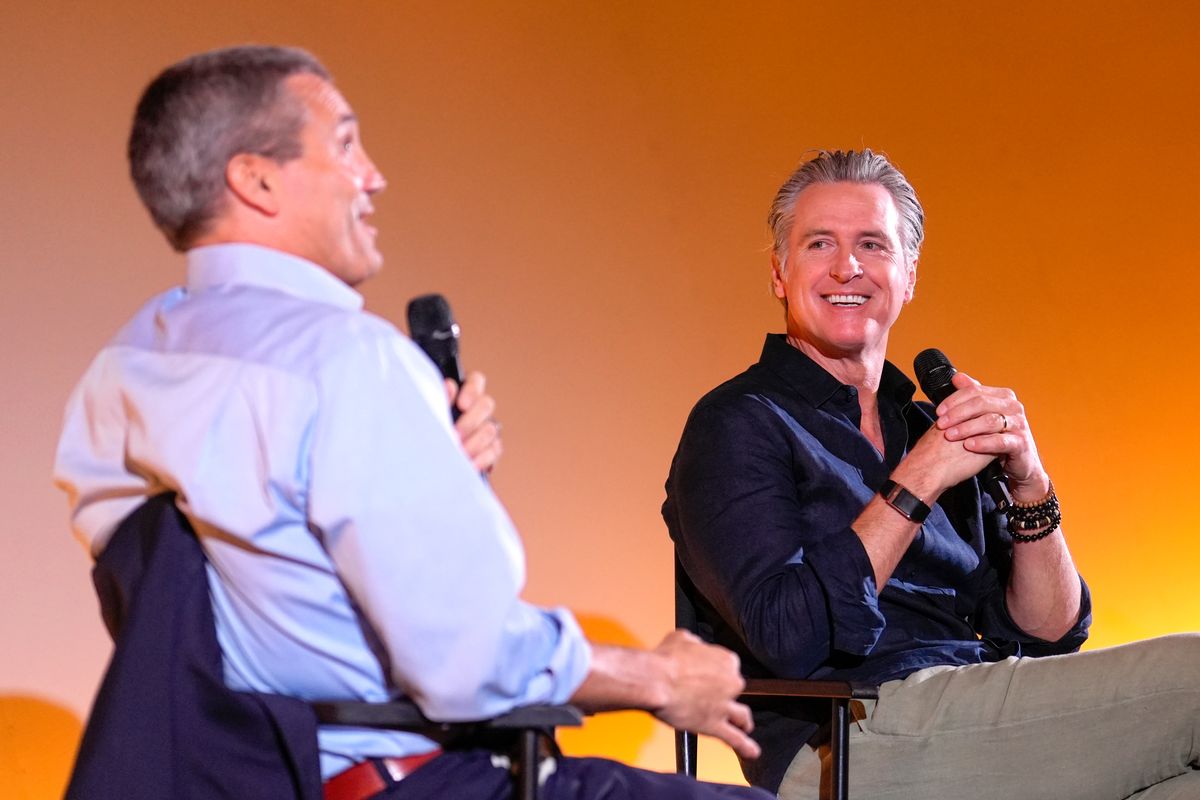
Photograph: My Mother Lode (embedded from source)
What this story says
- Gov. Gavin Newsom vetoed SB 1130, which would have penalised secret recording with smart glasses in private areas.
- The bill would have required a recording indicator on devices from 2028 and set fines up to $1,500 for individuals and $2,500 for companies.
- More than 7 million AI‑powered smart glasses were sold in the United States last year.
- Centre‑rated outlets reported industry opposition and a Meta initiative for blind veterans; left‑rated outlets focused mainly on the veto.
Who covered it
Percentages are shares of the 19 outlets carrying a published leaning rating. 11 of the 30 outlets we know ran this story carry no rating and are not counted in them. Coverage measured .
Trust
66/100
Craft
87/100
Hype
12/100
30 sources · methodology
Missing from the right
Only 2 of the 19 outlets with a published leaning rating that ran this story are rated right.
A reader who follows the right would not have seen this. We report the absence rather than explain it: outlets choose what to cover for many reasons, and we have no evidence about which one applies here.
California Governor Gavin Newsom vetoed Senate Bill 1130 on 29 July 2026. The measure would have made it unlawful to use smart glasses to record people without consent in changing rooms, doctors’ offices and other spaces generally regarded as private.
The proposal also required manufacturers of smart glasses and similar wearables to add a visible light or other indicator of recording starting in 2028. It set penalties of up to $1,500 for individuals and $2,500 for companies that failed to comply. The standards desk confirmed that more than 7 million AI‑powered smart glasses were sold in the United States in the previous year.
Industry representatives, including TechNet, argued that the bill would unfairly burden businesses and consumers. A Meta spokesperson said the company remains committed to privacy while expanding the technology’s benefits for blind veterans. Consumer Reports cited TikTok videos describing unsettling recordings in a waxing salon and a gym, underscoring public concern.
““Whatever we can do to protect an individual’s right to privacy, we have to do,””
7 million
AI‑powered smart glasses sold in US (2025)
Washington Top News
Blind spot: right‑rated outlets
No right‑rated outlet ran the story; none mentioned any aspect of the bill, its provisions or the surrounding debate.
Coverage settled. We checked this 97 times and stopped on 6 Oct 2026, 16:45. The figures above are what it finished at.
How each side covered it
Our own reading of the reporting listed below, written from the outlets’ articles rather than quoted from them. The reasoning is set out on our methodology page.
Left
10 rated outlets
- Four left‑rated outlets, The Seattle Times, The Independent (UK), AP News and The Independent (US), each ran a digest that noted Newsom’s veto and that the bill would have penalised people for recording with smart glasses in private settings. None of the digests mentioned the required recording indicator, the fine amounts, the sales figure for the devices, or the reactions from TechNet, Meta or Consumer Reports.
Centre
7 rated outlets
- Four centre‑rated outlets covered the story. Washington Top News published a full report that led on the veto, the indicator requirement, the fine schedule, the 7 million devices sold, TechNet’s criticism, Meta’s veteran‑aid programme and Consumer Reports’ examples. Digests from My Mother Lode, The Standard‑Journal and Winnipeg Free Press also reported the veto and noted the indicator requirement and fines, echoing the core elements of the bill.
Right
2 rated outlets
We have not written our reading of the right coverage of this story. The right-rated outlets that ran it are listed below.
Questions about this coverage
- How did the left and right cover California Governor Gavin Newsom vetoes bill targeting smart‑glass…?
- Of the 19 outlets on this story carrying a published leaning rating, 53% are rated left, 36% are rated centre, 11% are rated right. Those percentages are shares of the rated outlets, not of every outlet that ran it, which was 30. The sections above set out what each side emphasised, in its own terms.
- Is California Governor Gavin Newsom vetoes bill targeting smart‑glass… left or right?
- Neither side dominates it. Of the 19 rated outlets on this story, 53% are rated left, 36% are rated centre, 11% are rated right, and no side holds the 70% this site would want before calling a field one-sided. A story is not left or right in any case; the outlets that carried it are what carry ratings.
- Is the coverage of California Governor Gavin Newsom vetoes bill targeting smart‑glass… biased?
- California Governor Gavin Newsom vetoes bill targeting smart‑glass recordings is one event reported by 30 outlets, and this page does not rate the story as biased or unbiased. What it publishes is the spread: which outlets ran it, where named rating organisations place each of them on the spectrum, and what each side chose to lead with. A leaning rating describes an outlet's record over time, not this article, and the two should not be run together.
- Which side is not reporting California Governor Gavin Newsom vetoes bill targeting smart‑glass…?
- When we first saw this story, outlets rated right had barely covered it. Coverage accretes for hours after an event, so that is where to look rather than a verdict — the split above is the current count, and it is the one to read.
- Which outlets covered California Governor Gavin Newsom vetoes bill targeting smart‑glass…?
- 30 that we know of, every one of them listed further up this page with a link to its own report and to what we hold on the publisher. Nothing here is a summary of somebody else's summary: the outlets are named so the original reporting can be read.
- Why did Governor Newsom veto the bill?
- Newsom said the bill’s definition of a wearable recording device was too broad and that existing state privacy laws already cover unlawful recording, according to the full report from Washington Top News.
- What penalties would the bill have imposed?
- The legislation would have allowed fines of up to $1,500 for individuals and $2,500 for companies that failed to include a recording indicator on smart glasses, as detailed in the Washington Top News report.
- How many smart glasses were sold in the United States last year?
- More than 7 million AI‑powered smart glasses were sold in the United States in the year prior to the veto, a figure reported by Washington Top News.
Read it at the source
30 outlets, grouped by the leaning a published rating gives them. Every headline links to the original; an underlined outlet name opens our profile of that publisher.
Left
10- This bill on smart glasses just got blocked by California’s Governor Newsom. Here’s why (opens Fast Company in a new tab)
Fast Company — is Fast Company biased? Our profile of this outlet
- Newsom vetoes smart glasses privacy bill (opens Engadget in a new tab)
- Newsom vetoes measure that would have penalized the use of smart glasses to secretly record people (opens NBC Bay Area in a new tab)
NBC Bay Area — is NBC Bay Area biased? Our profile of this outlet
- Newsom vetoes measure that would have penalized the use of smart glasses to secretly record people (opens The Seattle Times in a new tab)
The Seattle Times — is The Seattle Times biased? Our profile of this outlet
- Newsom vetoes measure that would have penalized the use of smart glasses to secretly record people (opens Oskaloosa Herald in a new tab)
Oskaloosa Herald — is Oskaloosa Herald biased? Our profile of this outlet
- Newsom vetoes measure that would have penalized the use of smart glasses to secretly record people (opens The Independent (US) in a new tab)
The Independent (US) — is The Independent (US) biased? Our profile of this outlet
- Newsom vetoes measure that would have penalized the use of smart glasses to secretly record people (opens Associated Press News in a new tab)
Associated Press News — is Associated Press News biased? Our profile of this outlet
- Newsom vetoes measure that would have penalized the use of smart glasses to secretly record people (opens The Independent in a new tab)
The Independent — is The Independent biased? Our profile of this outlet
Show 2 more
- Newsom vetoes measure that would have penalized the use of smart glasses to secretly record people (opens ABC News in a new tab)
- Newsom vetoes measure that would have penalized the use of smart glasses to secretly record people (opens The Tribune-Democrat in a new tab)
The Tribune-Democrat — is The Tribune-Democrat biased? Our profile of this outlet
Centre
7- Newsom vetoes measure that would have penalized the use of smart glasses to secretly record people (opens KCRA 3 in a new tab)
- California governor vetoes bill banning use of 'pervert glasses' to secretly record people (opens TechCrunch in a new tab)
TechCrunch — is TechCrunch biased? Our profile of this outlet
- Newsom vetoes measure that would have penalized the use of smart glasses to secretly record people (opens My Mother Lode in a new tab)
My Mother Lode — is My Mother Lode biased? Our profile of this outlet
- Newsom vetoes measure that would have penalized the use of smart glasses to secretly record people – WTOP News (opens Washington Top News in a new tab)
Washington Top News — is Washington Top News biased? Our profile of this outlet
- Newsom vetoes measure that would have penalized the use of smart glasses to secretly record people (opens Newsday in a new tab)
- Newsom vetoes measure that would have penalized the use of smart glasses to secretly record people (opens The Standard-Journal in a new tab)
The Standard-Journal — is The Standard-Journal biased? Our profile of this outlet
- Newsom vetoes measure that would have penalized the use of smart glasses to secretly record people (opens Winnipeg Free Press in a new tab)
Winnipeg Free Press — is Winnipeg Free Press biased? Our profile of this outlet
Right
2- California Rejects Smart Glasses Filming Regulations… Attention Focused on Spread of Industrial AR (opens 조선일보 in a new tab)
조선일보
- Newsom vetoes measure that would have penalized the use of smart glasses to secretly record people (opens Marietta Daily Journal in a new tab)
Marietta Daily Journal — is Marietta Daily Journal biased? Our profile of this outlet
Not rated
11- California Governor Newsom Vetoes Bill Targeting Secret Recordings With Smart Glasses (opens digitalmarketreports.com in a new tab)
digitalmarketreports.com — is digitalmarketreports.com biased? Our profile of this outlet
- California Governor Vetoes Bill Banning Use of 'Pervert Glasses' to Secretly Record People (opens Magasin MACKEN in a new tab)
Magasin MACKEN — is Magasin MACKEN biased? Our profile of this outlet
- California Discards Standards Intended to Regularize Image Capture Through Smart Glasses (opens Info Arenales in a new tab)
Info Arenales — is Info Arenales biased? Our profile of this outlet
- Newsom Vetoes the Law that Would Have Forced Smart Goggle Manufacturers to Include a Recording Indicator (opens WWWhat's new in a new tab)
WWWhat's new — is WWWhat's new biased? Our profile of this outlet
- Newsom vetoes the bill that would have made disabling a glasses recording light a crime (opens MIXED in a new tab)
- Morning Briefing: California Governor Blocks Law Against 'Peeping Glasses' / Travel Plan Gets New, Simpler Design / (opens computerworld.dk in a new tab)
computerworld.dk — is computerworld.dk biased? Our profile of this outlet
- The California Governor Has Vetoed a Bill to Regulate Surreptitious Filming Using Smart Glasses. (opens GIGAZINE in a new tab)
- California Governor Rejects Bill Against "Spanner Goggles" (opens Heise in a new tab)
Show 3 more
- Newsom Vetoes California Smart Glasses Recording Bill (opens Hoodline in a new tab)
- California governor vetoes bill banning use of ‘pervert glasses’ to secretly record people (opens IT Security News in a new tab)
IT Security News — is IT Security News biased? Our profile of this outlet
- Governor of California Veta Law Against Secret Recordings with Smart Glasses (opens DiarioBitcoin in a new tab)
DiarioBitcoin — is DiarioBitcoin biased? Our profile of this outlet
How did this read?
About the coverage, not about the story. We do not ask whether you agree with what happened — we have no honest use for that answer.