European governments act on record fuel prices
Subsidies, tax cuts and policy changes aim to shield economies and citizens from rising costs.
AI-assisted coverage comparison, editor-supervised · How this was made
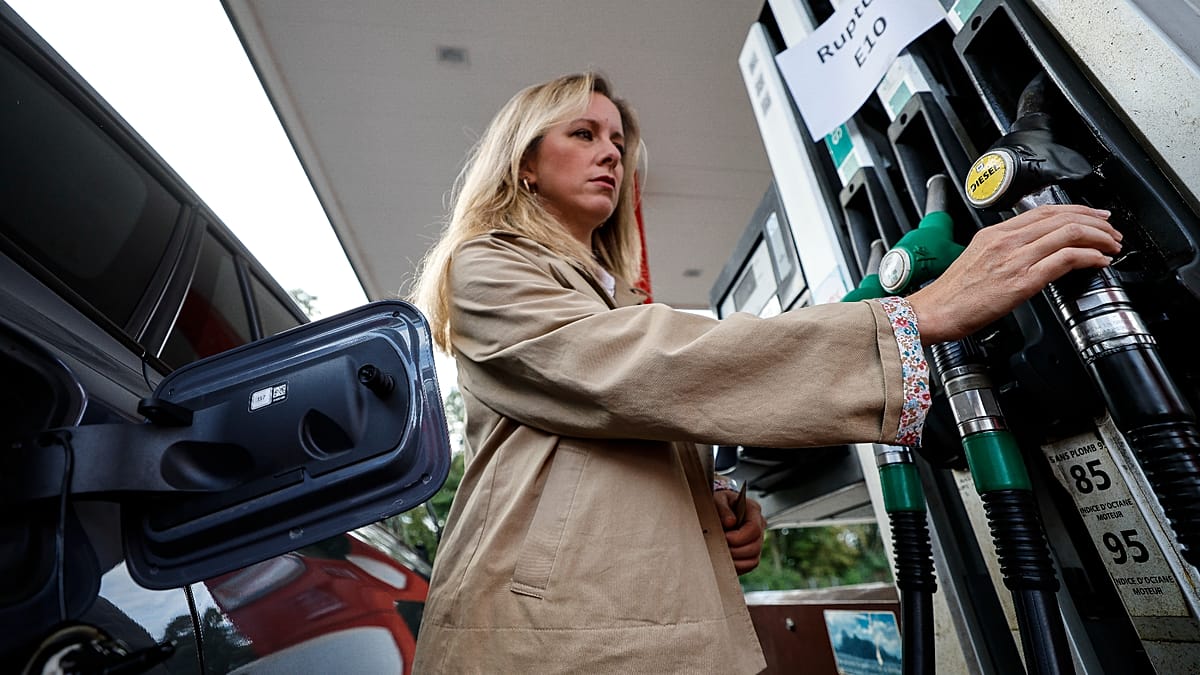
FILE - A customer fills her vehicle at a gas station, in Lille, France, Thursday 17 Sept. 2026.
Photograph: Euronews (embedded from source)
What this story says
- European governments are responding to record-high fuel prices with subsidies, tax cuts, and policy changes.
- Wars in the Middle East and Ukraine are cited as primary drivers of the energy price shock.
- Seven of the ten countries most actively addressing the issue are in the EU, according to the OECD.
- Measures include direct payments, tax reductions, and adjustments to energy policies across various member states.
Who covered it
Percentages are shares of the 23 outlets carrying a published leaning rating. 6 of the 29 outlets we know ran this story carry no rating and are not counted in them. Coverage measured .
Trust
42/100
Craft
57/100
Hype
41/100
29 sources · methodology
Thin on the right so far
Only 2 of the 23 outlets with a published leaning rating that ran this story are rated right.
This story is still being watched, so it is a count and not yet a finding. Coverage keeps arriving for hours after an event, and a side that has published nothing this morning may publish by tonight. If it is still true when we stop checking, we will say so plainly.
European governments are implementing subsidies, taxes, and policy changes to shield their economies and citizens from record-high gasoline and diesel prices. The Organisation for Economic Cooperation and Development (OECD) reports that seven of the ten countries most actively addressing this issue are in the EU. Campaign group Transport & Environment states that EU drivers are spending an extra €203 million a day on diesel alone. These measures are a response to economic pressures stemming from conflicts in the Middle East and Ukraine, which have disrupted global energy supplies.
Divergent national responses
Specific actions vary across member states. France has introduced a €450 million package offering €100 payments to 5.5 million workers and extended fuel subsidies for farmers, fishers, and construction companies. Lithuania has halved train ticket prices, while Greece is increasing gambling taxes. Italy has delayed the demolition of coal plants, and the Netherlands has increased funding for energy-saving services. Germany has renewed fuel tax cuts costing €2.5 billion and plans to discuss a fuel price cap. Spain has extended its own fuel tax cuts, part of a €5 billion package, and also offers subsidies to transport companies, farmers, and fishers.
What the coverage left out
None of the left-rated digests mention the specific figure of €203 million per day that EU drivers are spending on diesel alone, as reported by Transport & Environment. None of the right-rated digests mention France's €450 million package or the €100 payments to 5.5 million workers, nor do they detail Germany's €2.5 billion cost for renewed fuel tax cuts or Spain's €5 billion package.
Still developing. We have re-checked which outlets are covering this 4 times, most recently on 25 Sept 2026, 17:45, and will add the sides that appear.
How other outlets pictured it
Which photograph to run is each newsroom’s own choice. The leaning beside a name is that outlet’s published rating, not a claim that the pictures divide along it. Every picture is shown from the outlet’s own server and links to the article it ran in.

European governments act on record fuel prices
Washington Top News — embedded from source
How each side covered it
Our own reading of the reporting listed below, written from the outlets’ articles rather than quoted from them. The reasoning is set out on our methodology page.
Left
14 rated outlets
- Left-rated reports highlighted the broad range of government interventions across Europe, including subsidies, tax cuts, and policy revisions, aimed at protecting economies, companies, and citizens from soaring fuel costs. These reports noted the OECD's finding that seven of the ten countries most actively addressing the issue are in the EU. They also mentioned the significant daily expenditure by EU drivers on diesel, citing Transport & Environment. Specific country examples included France's €450 million package and €100 payments, Lithuania's halved train ticket prices, Greece's increased gambling taxes, Italy's delayed coal plant demolition, and the Netherlands' increased funding for energy-saving services. Germany's fuel tax cuts and Spain's extended tax breaks were also noted.
Centre
7 rated outlets
- Centre-rated reports focused on the implementation of subsidies, taxes, and policy pauses by European governments to offset the pain of high fuel prices. They cited the OECD's observation that seven of the ten countries most actively addressing the issue are within the EU. The reports also mentioned the additional daily spending by EU drivers on diesel, as reported by Transport & Environment. Specific measures detailed included France's €450 million package and €100 payments to workers, Lithuania's halving of train ticket prices, Greece's increased gambling taxes, Italy's postponement of coal plant demolition, and the Netherlands' increased funding for energy-saving services. Germany's fuel tax cuts and Spain's extended tax breaks were also included.
Right
2 rated outlets
- Right-rated reports noted that European governments are implementing subsidies, tax cuts, and policy changes to shield their economies and citizens from record-high gasoline and diesel prices. These reports mentioned the OECD's finding that seven of the ten countries most actively addressing the issue are in the EU. They also referenced the additional daily cost for EU drivers on diesel, as reported by Transport & Environment. Specific country actions mentioned included Lithuania's halved train fares, Greece's increased gambling taxes, and Italy's postponed coal plant demolition and simplified procedures for oil and gas projects.
Questions about this coverage
- How did the left and right cover European governments act on record fuel prices?
- Of the 23 outlets on this story carrying a published leaning rating, 61% are rated left, 30% are rated centre, 9% are rated right. Those percentages are shares of the rated outlets, not of every outlet that ran it, which was 29. The sections above set out what each side emphasised, in its own terms.
- Is European governments act on record fuel prices left or right?
- Neither side dominates it. Of the 23 rated outlets on this story, 61% are rated left, 30% are rated centre, 9% are rated right, and no side holds the 70% this site would want before calling a field one-sided. A story is not left or right in any case; the outlets that carried it are what carry ratings.
- Is the coverage of European governments act on record fuel prices biased?
- European governments act on record fuel prices is one event reported by 29 outlets, and this page does not rate the story as biased or unbiased. What it publishes is the spread: which outlets ran it, where named rating organisations place each of them on the spectrum, and what each side chose to lead with. A leaning rating describes an outlet's record over time, not this article, and the two should not be run together.
- Which side is not reporting European governments act on record fuel prices?
- When we first saw this story, outlets rated right had barely covered it. Coverage accretes for hours after an event, so that is where to look rather than a verdict — the split above is the current count, and it is the one to read.
- Which outlets covered European governments act on record fuel prices?
- 29 that we know of, every one of them listed further up this page with a link to its own report and to what we hold on the publisher. Nothing here is a summary of somebody else's summary: the outlets are named so the original reporting can be read.
- Why are fuel prices so high in Europe?
- Record-high gasoline and diesel prices in Europe are primarily attributed to wars in the Middle East and Ukraine, which have disrupted global energy supplies. These conflicts have led to increased economic pressures and volatility in the energy market.
- What measures are European governments taking?
- Governments are implementing a range of measures including subsidies, tax cuts, and policy changes. Examples include direct payments to workers, fuel tax reductions, delayed demolition of coal plants, and increased funding for energy-saving services.
- Which European countries are most active in addressing fuel prices?
- According to the Organisation for Economic Cooperation and Development (OECD), seven out of the ten countries most actively addressing the issue of high fuel prices are within the European Union.
- How much extra are EU drivers spending on diesel?
- EU drivers are spending an extra €203 million per day on diesel alone, according to the campaign group Transport & Environment. This highlights the significant financial burden on consumers due to rising fuel costs.
Read it at the source
29 outlets, grouped by the leaning a published rating gives them. Every headline links to the original; an underlined outlet name opens our profile of that publisher.
Left
14- Europe uses subsidies, taxes and policy pauses to offset pain of high fuel prices (opens The Seattle Times in a new tab)
The Seattle Times — is The Seattle Times biased? Our profile of this outlet
- Europe uses subsidies, taxes and policy pauses to offset the pain of high fuel prices (opens National Observer in a new tab)
National Observer — is National Observer biased? Our profile of this outlet
- Europe uses subsidies, taxes and policy pauses to offset pain of high fuel prices (opens Goshen News in a new tab)
Goshen News — is Goshen News biased? Our profile of this outlet
- Europe uses subsidies, taxes and policy pauses to offset pain of high fuel prices (opens Mankato Free Press in a new tab)
Mankato Free Press — is Mankato Free Press biased? Our profile of this outlet
- Europe uses subsidies, taxes and policy pauses to offset pain of high fuel prices (opens The Toronto Star in a new tab)
The Toronto Star — is The Toronto Star biased? Our profile of this outlet
- Europe uses subsidies, taxes and policy pauses to offset pain of high fuel prices (opens The Independent (US) in a new tab)
The Independent (US) — is The Independent (US) biased? Our profile of this outlet
- Europe uses subsidies, taxes and policy pauses to offset pain of high fuel prices (opens Associated Press News in a new tab)
Associated Press News — is Associated Press News biased? Our profile of this outlet
- Europe uses subsidies, taxes and policy pauses to offset pain of high fuel prices (opens The Independent in a new tab)
The Independent — is The Independent biased? Our profile of this outlet
Show 6 more
- Europe uses subsidies, taxes and policy pauses to offset pain of high fuel prices (opens ABC News in a new tab)
- Europe uses subsidies, taxes and policy pauses to offset pain of high fuel prices (opens The Record in a new tab)
The Record — is The Record biased? Our profile of this outlet
- Europe uses subsidies, taxes and policy pauses to offset pain of high fuel prices (opens The Hamilton Spectator in a new tab)
The Hamilton Spectator — is The Hamilton Spectator biased? Our profile of this outlet
- Europe uses subsidies, taxes and policy pauses to offset pain of high fuel prices (opens St Catharines Standard in a new tab)
St Catharines Standard — is St Catharines Standard biased? Our profile of this outlet
- Europe uses subsidies, taxes and policy pauses to offset pain of high fuel prices (opens NiagaraFallsReview.ca in a new tab)
NiagaraFallsReview.ca — is NiagaraFallsReview.ca biased? Our profile of this outlet
- Europe uses subsidies, taxes and policy pauses to offset pain of high fuel prices (opens Durango Herald in a new tab)
Durango Herald — is Durango Herald biased? Our profile of this outlet
Centre
7- Gas topped the equivalent of $12 a gallon in parts of Europe—and consumers are spending an extra $231 million a day on diesel (opens Fortune in a new tab)
- Europe uses subsidies, taxes and policy pauses to offset pain of high fuel prices (opens My Mother Lode in a new tab)
My Mother Lode — is My Mother Lode biased? Our profile of this outlet
- How European governments are trying to ease the fuel price shock (opens Euronews in a new tab)
- Europe uses subsidies, taxes and policy pauses to offset pain of high fuel prices – WTOP News (opens Washington Top News in a new tab)
Washington Top News — is Washington Top News biased? Our profile of this outlet
- Europe uses subsidies, taxes and policy pauses to offset pain of high fuel prices (opens The Daily Advance in a new tab)
The Daily Advance — is The Daily Advance biased? Our profile of this outlet
- Europe uses subsidies, taxes and policy pauses to offset pain of high fuel prices (opens WV News in a new tab)
- Europe uses subsidies, taxes and policy pauses to offset pain of high fuel prices (opens Winnipeg Free Press in a new tab)
Winnipeg Free Press — is Winnipeg Free Press biased? Our profile of this outlet
Right
2- Europe Uses Subsidies, Taxes and Policy Pauses to Offset Pain of High Fuel Prices (opens The National Herald in a new tab)
The National Herald — is The National Herald biased? Our profile of this outlet
- Europe rolls out fuel relief as Iran war and Ukraine push energy costs up (opens India Today in a new tab)
India Today — is India Today biased? Our profile of this outlet
Not rated
6- Europe Rolls Out Relief Plans As Ukraine & Iran War Push Energy Costs Up (opens theirishchannel.com in a new tab)
theirishchannel.com — is theirishchannel.com biased? Our profile of this outlet
- Europe takes action: Subsidies, taxes, and policy pauses mitigate high fuel prices (opens European Interest in a new tab)
European Interest — is European Interest biased? Our profile of this outlet
- Europe uses subsidies, taxes and policy pauses to offset pain of high fuel prices (opens thetrucker.com in a new tab)
thetrucker.com — is thetrucker.com biased? Our profile of this outlet
- WHAT ABOUT BIH? European Countries Are Easing Record Fuel Prices with Subsidies, Lower taxes... (opens vecernji.ba in a new tab)
vecernji.ba — is vecernji.ba biased? Our profile of this outlet
- European Countries Are Easing Record Fuel Prices with Subsidies and Tax Breaks (opens 6yka.com in a new tab)
- Europe uses subsidies, taxes and policy pauses to offset pain of high fuel prices (opens BizToc in a new tab)
How did this read?
About the coverage, not about the story. We do not ask whether you agree with what happened — we have no honest use for that answer.