Federal government silence on B.C. fish farm ban prompts industry and advocate questions
Fisheries Minister Joanne Thompson confirms ban remains in place but offers no timeline for implementation.
AI-assisted coverage comparison, editor-supervised · How this was made

Federal government silence on B.C. fish farm ban prompts industry and advocate questions
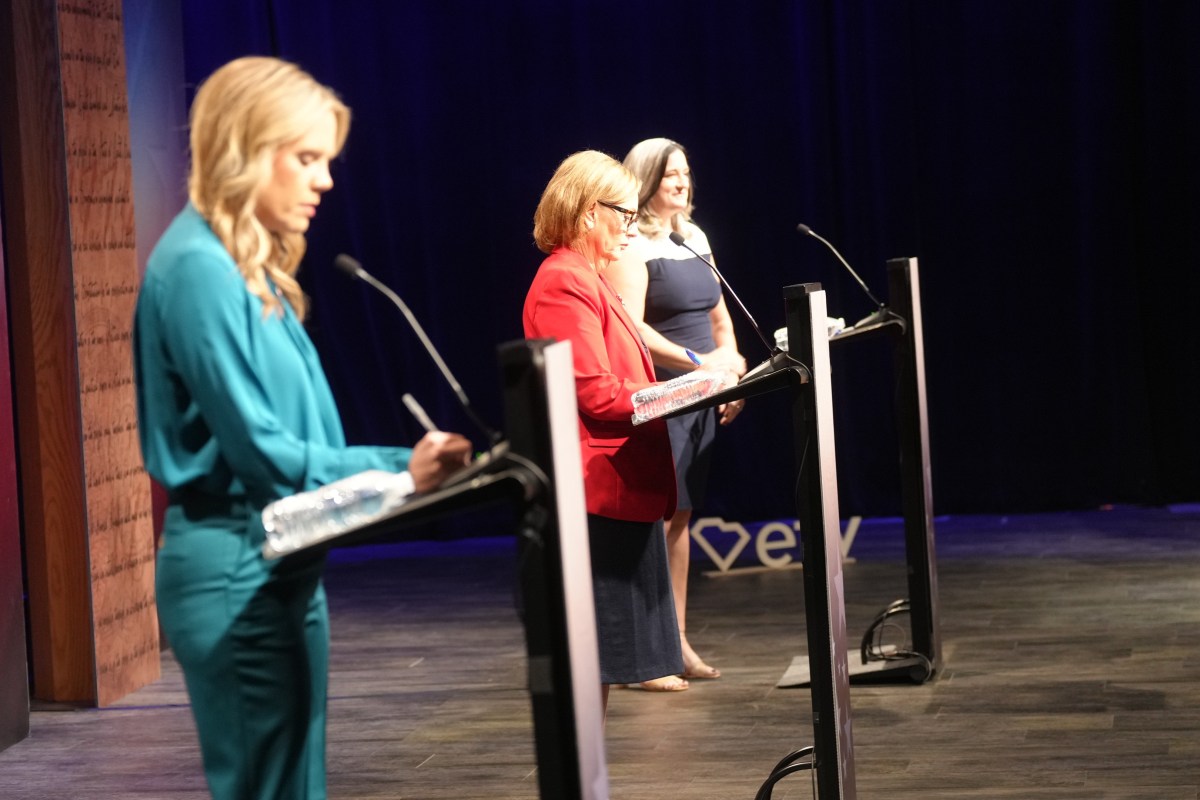
Photograph: Penticton Western News (embedded from source)
What this story says
- The federal government's plan to ban open-net pen fish farms in British Columbia by 2029 remains active, according to Federal Fisheries Minister Joanne Thompson.
- Innovation, Science and Economic Development Canada (ISED) has taken over the file for implementing the ban.
- Industry representatives and advocates report receiving no information from government departments regarding the ban's implementation.
- There are currently 61 active fish farms in B.C., a reduction from over 100 prior to the ban announcement.
Who covered it
Percentages are shares of the 13 outlets carrying a published leaning rating. 2 of the 15 outlets we know ran this story carry no rating and are not counted in them. Coverage measured .
Trust
42/100
Craft
65/100
Hype
20/100
15 sources · methodology
Missing from the right
None of the 13 outlets with a published leaning rating that ran this story are rated right.
A reader who follows the right would not have seen this. We report the absence rather than explain it: outlets choose what to cover for many reasons, and we have no evidence about which one applies here.
Federal Fisheries Minister Joanne Thompson has confirmed that the government's plan to ban open-net pen fish farms in British Columbia by 2029 is still in effect. However, a lack of communication from Ottawa regarding the implementation of this ban has created uncertainty for stakeholders.
Thompson stated that while the ban is "certainly still in place," the government is working to "find the space in between" differing opinions. She indicated that Innovation, Science and Economic Development Canada (ISED) is now managing the file and will make decisions on how to proceed. She declined to comment further.
Bob Chamberlin, chair of the First Nation Wild Salmon Alliance, reported hearing nothing from the Department of Fisheries and Oceans (DFO) or ISED about the ban's implementation. He expressed concern that the government's focus on the economy under Prime Minister Mark Carney may have stalled the transition planning.
Brian Kingzett, president of the B.C. Salmon Farmers Association, described the situation as a "go/no-go point" for fish stocking for a 2029 harvest. He noted that the industry needs clarity for investment decisions and warned that a ban allowing only land-based, closed-containment farms would force the closure of operations in B.C. due to high building and energy costs. There are currently 61 active fish farms in B.C., down from more than 100 before the ban was announced.
An ISED spokesperson told Black Press Media that the 2024 transition plan has been the basis for over 120 engagements with First Nations and stakeholders, providing a deeper understanding of the industry and diverse views. The ministry stated it is reviewing these perspectives to determine how best to advance sustainable aquaculture in B.C.
Disagreement on government engagement
Bob Chamberlin, chair of the First Nation Wild Salmon Alliance, stated he has heard nothing from DFO or ISED regarding the ban's implementation. In contrast, an ISED spokesperson told Black Press Media that the 2024 transition plan has served as the basis for over 120 engagements with First Nations and other stakeholders.
What the coverage left out
None of the left-rated reports mentioned the cost estimate for implementing the ban or the potential economic impact on rural communities, beyond general statements about job losses. The specific figure for the number of engagements with First Nations and stakeholders, stated as over 120 by an ISED spokesperson, was not included in the digests.
Coverage settled. We checked this 14 times and stopped on 2 Sept 2026, 04:00. The figures above are what it finished at.
How each side covered it
Our own reading of the reporting listed below, written from the outlets’ articles rather than quoted from them. The reasoning is set out on our methodology page.
Left
13 rated outlets
- The left-rated reports led with the federal government's extended silence regarding the open-net pen fish farm ban in British Columbia, set to begin in 2029. These reports highlighted questions about whether intentions had changed under a new prime minister. They quoted Federal Fisheries Minister Joanne Thompson confirming the ban is "certainly still in place" but noted that Innovation, Science and Economic Development Canada (ISED) has taken over the file. The reports featured concerns from Bob Chamberlin of the First Nation Wild Salmon Alliance about the lack of communication and the potential impact of economic priorities. They also included statements from Brian Kingzett of the B.C. Salmon Farmers Association about the industry's "go/no-go point" and the need for clarity. The reports mentioned the current number of active fish farms, down from over 100. The full reports from Penticton Western News and Sicamous Eagle Valley News also included a statement from an ISED spokesperson about engagements and a quote from Kilian Stehfest of the Pacific Salmon Foundation advocating for fully closed containment systems.
Centre
0 rated outlets
No outlet rated centre ran this story. We watched the coverage until it stopped changing, and none appeared.
Right
0 rated outlets
No outlet rated right ran this story. We watched the coverage until it stopped changing, and none appeared.
Questions about this coverage
- How did the left and right cover Federal government silence on B.C. fish farm ban prompts industry and…?
- Of the 13 outlets on this story carrying a published leaning rating, 100% are rated left, 0% are rated centre, 0% are rated right. Those percentages are shares of the rated outlets, not of every outlet that ran it, which was 15. The sections above set out what each side emphasised, in its own terms.
- Is Federal government silence on B.C. fish farm ban prompts industry and… left or right?
- The story itself is neither. What can be counted is who has covered it, and 100% of the 13 rated outlets on it are rated left — so far this is a story carried mostly by the left. Coverage of this one has settled, so that is unlikely to move much now.
- Is the coverage of Federal government silence on B.C. fish farm ban prompts industry and… biased?
- Federal government silence on B.C. fish farm ban prompts industry and advocate questions is one event reported by 15 outlets, and this page does not rate the story as biased or unbiased. What it publishes is the spread: which outlets ran it, where named rating organisations place each of them on the spectrum, and what each side chose to lead with. A leaning rating describes an outlet's record over time, not this article, and the two should not be run together.
- Which side is not reporting Federal government silence on B.C. fish farm ban prompts industry and…?
- When we first saw this story, outlets rated right had barely covered it. Coverage accretes for hours after an event, so that is where to look rather than a verdict — the split above is the current count, and it is the one to read.
- Which outlets covered Federal government silence on B.C. fish farm ban prompts industry and…?
- 15 that we know of, every one of them listed further up this page with a link to its own report and to what we hold on the publisher. Nothing here is a summary of somebody else's summary: the outlets are named so the original reporting can be read.
- What is the federal government's plan for fish farms in British Columbia?
- The federal government plans to ban open-net pen fish farms in British Columbia by 2029. Federal Fisheries Minister Joanne Thompson has confirmed this plan remains in place, though details on implementation are still being developed by Innovation, Science and Economic Development Canada.
- What is the current status of fish farms in B.C.?
- There are currently 61 active fish farms in British Columbia. This number has decreased from over 100 farms that were operating before the federal ban was announced.
- Why are industry and advocates concerned about the ban?
- Industry and advocacy groups are concerned due to the federal government's extended silence on the implementation details of the 2029 ban. They report receiving no information, leading to uncertainty about future investments and operations.
Read it at the source
16 outlets, grouped by the leaning a published rating gives them. Every headline links to the original; an underlined outlet name opens our profile of that publisher.
Left
14- Advocates, industry looking for answers on 2029 fish farm ban amid Ottawa's silence - Vanderhoof Omineca Express (opens ominecaexpress.com in a new tab)
ominecaexpress.com — is ominecaexpress.com biased? Our profile of this outlet
- Advocates, industry looking for answers on 2029 fish farm ban amid Ottawa's silence (opens Penticton Western News in a new tab)
Penticton Western News — is Penticton Western News biased? Our profile of this outlet
- Advocates, industry looking for answers on 2029 fish farm ban amid Ottawa's silence - Creston Valley Advance (opens crestonvalleyadvance.ca in a new tab)
crestonvalleyadvance.ca — is crestonvalleyadvance.ca biased? Our profile of this outlet
- Advocates, industry looking for answers on 2029 fish farm ban amid Ottawa's silence - The Interior News - Smithers BC (opens Smithers Interior News in a new tab)
Smithers Interior News — is Smithers Interior News biased? Our profile of this outlet
- Advocates, industry looking for answers on 2029 fish farm ban amid Ottawa's silence - Grand Forks Gazette (opens grandforksgazette.ca in a new tab)
grandforksgazette.ca — is grandforksgazette.ca biased? Our profile of this outlet
- Advocates, industry looking for answers on 2029 fish farm ban amid Ottawa's silence (opens Peninsula News Review in a new tab)
Peninsula News Review — is Peninsula News Review biased? Our profile of this outlet
- Advocates, industry looking for answers on 2029 fish farm ban amid Ottawa's silence (opens The Free Press in a new tab)
The Free Press — is The Free Press biased? Our profile of this outlet
- Advocates, industry looking for answers on 2029 fish farm ban amid Ottawa's silence - Northern Sentinel (opens Kitimat Northern Sentinel in a new tab)
Kitimat Northern Sentinel — is Kitimat Northern Sentinel biased? Our profile of this outlet
Show 6 more
- Advocates, industry looking for answers on 2029 fish farm ban amid Ottawa's silence - Fort St. James Caledonia Courier (opens Caledonia Courier in a new tab)
Caledonia Courier — is Caledonia Courier biased? Our profile of this outlet
- Advocates, industry looking for answers on 2029 fish farm ban amid Ottawa's silence (opens Houston Today in a new tab)
Houston Today — is Houston Today biased? Our profile of this outlet
- Advocates, industry looking for answers on 2029 fish farm ban amid Ottawa's silence (opens Sooke News Mirror in a new tab)
Sooke News Mirror — is Sooke News Mirror biased? Our profile of this outlet
- Advocates, industry looking for answers on 2029 fish farm ban amid Ottawa's silence (opens Terrace Standard in a new tab)
Terrace Standard — is Terrace Standard biased? Our profile of this outlet
- Advocates, industry looking for answers on 2029 fish farm ban amid Ottawa's silence (opens Sicamous Eagle Valley News in a new tab)
Sicamous Eagle Valley News — is Sicamous Eagle Valley News biased? Our profile of this outlet
- Advocates, industry looking for answers on 2029 fish farm ban amid Ottawa's silence (opens Comox Valley Record in a new tab)
Comox Valley Record — is Comox Valley Record biased? Our profile of this outlet
Centre
0No outlet in this group ran the story.
Right
0No outlet in this group ran the story.
Not rated
2- Advocates and Industry Press Ottawa for Answers on 2029 Fish Farm Ban (opens Wild First in a new tab)
Wild First — is Wild First biased? Our profile of this outlet
- Advocates, industry looking for answers on 2029 fish farm ban amid Ottawa's silence (opens Today In BC in a new tab)
Today In BC — is Today In BC biased? Our profile of this outlet
How did this read?
About the coverage, not about the story. We do not ask whether you agree with what happened — we have no honest use for that answer.