First Nations challenge federal pipeline designation
Indigenous groups argue national interest status bypasses consultation rights.
AI-assisted coverage comparison, editor-supervised · How this was made
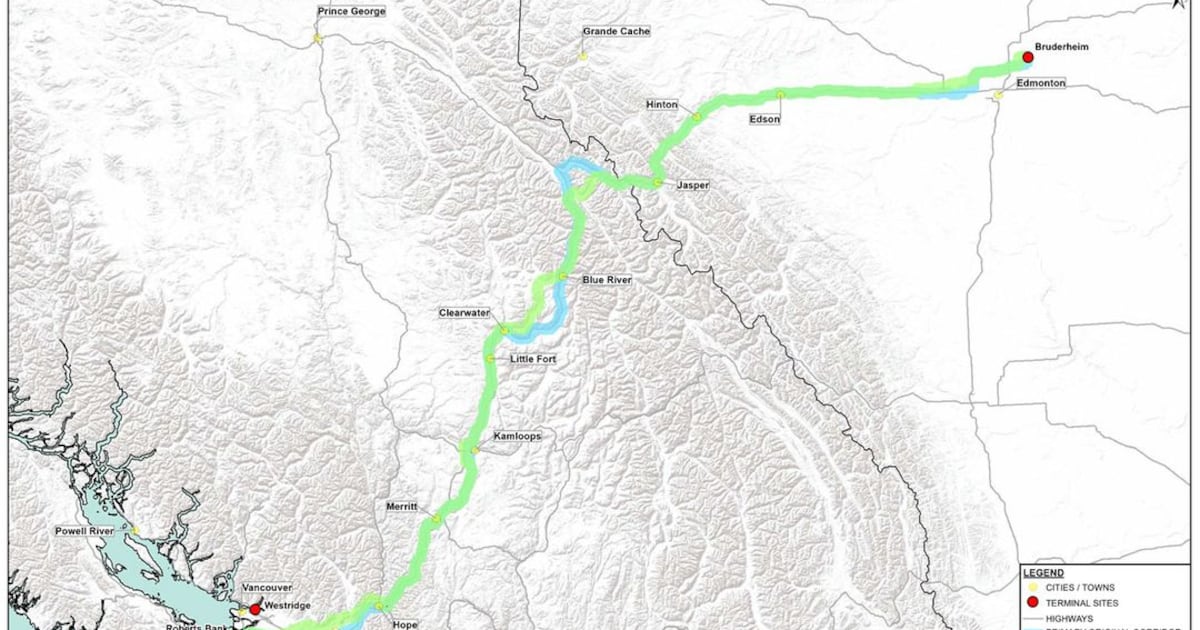
Map showing the proposed Pacific Link pipeline corridors, which would carry crude oil from Bruderheim, Alta., to a planned export terminal near Delta, B.C. The final route has not yet been determined. (Pacific Link)
Photograph: CTV News (embedded from source)
What this story says
- Several First Nations in British Columbia are challenging the federal government's designation of the Pacific Link pipeline as a project of national interest.
- The First Nations argue the designation bypasses the government's duty to consult and accommodate them, potentially impacting treaty and Indigenous rights.
- The St'át'imc Nation and W̱JOȽEȽP (Tsartlip First Nation) have filed judicial reviews in federal court.
- The pipeline is planned to transport one million barrels of Canadian crude oil per day from Alberta to a deepwater port near Delta, B.C.
Who covered it
Percentages are shares of the 31 outlets carrying a published leaning rating. 1 of the 32 outlets we know ran this story carry no rating and are not counted in them. Coverage measured .
Trust
68/100
Craft
70/100
Hype
20/100
32 sources · methodology
Thin on the right so far
Only 1 of the 31 outlets with a published leaning rating that ran this story are rated right.
This story is still being watched, so it is a count and not yet a finding. Coverage keeps arriving for hours after an event, and a side that has published nothing this morning may publish by tonight. If it is still true when we stop checking, we will say so plainly.
Several First Nations in British Columbia are challenging the federal government's decision to declare the Pacific Link pipeline project a matter of national interest. The First Nations argue this designation circumvents the government's legal obligation to consult and accommodate them before a project receives approval. The St'át'imc Nation and W̱JOȽEȽP (Tsartlip First Nation) have both filed applications for judicial review in federal court. The proposed Pacific Link pipeline is intended to transport one million barrels of Canadian crude oil daily from Bruderheim, Alberta, to a deepwater port near Delta, B.C.
Disagreement on consultation timeline and scope
The W̱JOȽEȽP (Tsartlip First Nation) alleges that federal officials consulted them between July 2 and Sept. 18, 2026, a period they describe as insufficient, particularly given the need for more information and funding. They also state that the consultation occurred during summer months when community members were engaged in cultural and fishing activities. The St'át'imc Nation claims the Crown refused to consult them directly on the designation, citing their territory not being directly on the proposed pipeline route, which the nation argues is a narrow approach that ignores cumulative environmental risks. CBC News reported that the St'át'imc Nation stated they were told they could submit comments as a member of the public, not as a First Nation with whom the Crown has a duty to consult.
What the coverage left out
None of the left-rated digests mention the specific treaty rights of the W̱JOȽEȽP (Tsartlip First Nation) under the 1852 North Saanich Treaty, which were detailed in the centre-rated CTV News report. The right-rated digest does not mention the specific First Nations filing the challenges or the details of their legal arguments regarding consultation and accommodation.
Still developing. We have re-checked which outlets are covering this 4 times, most recently on 2 Nov 2026, 23:45, and will add the sides that appear.
How other outlets pictured it
Which photograph to run is each newsroom’s own choice. The leaning beside a name is that outlet’s published rating, not a claim that the pictures divide along it. Every picture is shown from the outlet’s own server and links to the article it ran in.

Kúkwpi7 Bonnie Adolph, chief of Sekw’el’was, a St’át’imc Nation community, is part of a network of First Nations in B.C. filing judicial reviews, saying the federal government has not properly First Nations around the Pacific Link pipeline project. (Martin Diotte/CBC)
CBC News — embedded from source
How each side covered it
Our own reading of the reporting listed below, written from the outlets’ articles rather than quoted from them. The reasoning is set out on our methodology page.
Left
20 rated outlets
- The left-rated reports highlighted the legal challenges brought by First Nations against the federal government's designation of the Pacific Link pipeline as a project of national interest. Both CBC News and Victoria Buzz focused on the allegations that this designation bypasses the duty to consult and accommodate Indigenous peoples. CBC News detailed the St'át'imc Nation's argument that the government's approach was unlawful, unconstitutional, and inconsistent with the UN Declaration on the Rights of Indigenous Peoples, quoting Chief Bonnie Adolph on the devastating potential of an oil spill and the importance of the Fraser River watershed to their culture and rights. Victoria Buzz also noted the Tsartlip First Nation's legal challenge, framing the pipeline as the 'West Coast Oil Pipeline' and emphasizing the court review sought by the nation.
Centre
10 rated outlets
- The centre-rated reports from CTV News and The Globe & Mail focused on the legal action taken by First Nations against the federal government's decision. CTV News provided a full report, detailing the W̱JOȽEȽP (Tsartlip First Nation)'s judicial review application, their treaty rights under the 1852 North Saanich Treaty, and concerns about the marine shipping route impacting traditional fishing waters. CTV News quoted Chief Curtis Olsen on the risk to future generations and Adam Olsen on the consultation process being 'reckless'. The Globe & Mail's digest also noted the challenge to the national interest designation under the Building Canada Act and the aim to fast-track approvals.
Right
1 rated outlet
- The right-rated report from the National Post focused on the number of First Nations filing court challenges. Its digest stated that nine more First Nations joined the legal action, noting that these nations are located along the proposed pipeline and tanker shipping routes, which will span 1,200 kilometres.
Questions about this coverage
- How did the left and right cover First Nations challenge federal pipeline designation?
- Of the 31 outlets on this story carrying a published leaning rating, 65% are rated left, 32% are rated centre, 3% are rated right. Those percentages are shares of the rated outlets, not of every outlet that ran it, which was 32. The sections above set out what each side emphasised, in its own terms.
- Is First Nations challenge federal pipeline designation left or right?
- Neither side dominates it. Of the 31 rated outlets on this story, 65% are rated left, 32% are rated centre, 3% are rated right, and no side holds the 70% this site would want before calling a field one-sided. A story is not left or right in any case; the outlets that carried it are what carry ratings.
- Is the coverage of First Nations challenge federal pipeline designation biased?
- First Nations challenge federal pipeline designation is one event reported by 32 outlets, and this page does not rate the story as biased or unbiased. What it publishes is the spread: which outlets ran it, where named rating organisations place each of them on the spectrum, and what each side chose to lead with. A leaning rating describes an outlet's record over time, not this article, and the two should not be run together.
- Which side is not reporting First Nations challenge federal pipeline designation?
- When we first saw this story, outlets rated right had barely covered it. Coverage accretes for hours after an event, so that is where to look rather than a verdict — the split above is the current count, and it is the one to read.
- Which outlets covered First Nations challenge federal pipeline designation?
- 32 that we know of, every one of them listed further up this page with a link to its own report and to what we hold on the publisher. Nothing here is a summary of somebody else's summary: the outlets are named so the original reporting can be read.
- What is the Pacific Link pipeline project?
- The Pacific Link pipeline is a proposed project designed to transport one million barrels of Canadian crude oil per day from Bruderheim, Alberta, to a deepwater port near Delta, British Columbia. The project has been designated as a project of national interest by the federal government.
- Why are First Nations challenging the pipeline designation?
- Several First Nations are challenging the designation because they argue it bypasses the federal government's legal duty to consult and accommodate them before a project is approved. They believe this designation circumvents proper consultation processes and could impact their treaty rights and traditional territories.
- Which First Nations have filed legal challenges?
- Among the First Nations that have filed judicial reviews in federal court are the St'át'imc Nation and W̱JOȽEȽP (Tsartlip First Nation). The National Post reported that nine First Nations in total have filed court challenges.
Read it at the source
32 outlets, grouped by the leaning a published rating gives them. Every headline links to the original; an underlined outlet name opens our profile of that publisher.
Left
20- Nine Aboriginal Nations Challenge the Pacific Link Project (opens Radio-Canada in a new tab)
Radio-Canada — is Radio-Canada biased? Our profile of this outlet
- First Nations in B.C. seek to quash Carney's Pacific Link pipeline national interest designation (opens CBC News in a new tab)
- Tsartlip First Nation seeks court review on declaration of national interest pipeline (opens Victoria Buzz in a new tab)
Victoria Buzz — is Victoria Buzz biased? Our profile of this outlet
- B.C. First Nations file legal challenges of federal decision on Pacific Link pipeline (opens thealbertan.com in a new tab)
thealbertan.com — is thealbertan.com biased? Our profile of this outlet
- B.C. First Nations file legal challenges of federal decision on Pacific Link pipeline (opens Timmins Today in a new tab)
Timmins Today — is Timmins Today biased? Our profile of this outlet
- B.C. First Nations file legal challenges of federal decision on Pacific Link pipeline (opens Thorold Today in a new tab)
Thorold Today — is Thorold Today biased? Our profile of this outlet
- B.C. First Nations file legal challenges of federal decision on Pacific Link pipeline (opens The Lethbridge Herald in a new tab)
The Lethbridge Herald — is The Lethbridge Herald biased? Our profile of this outlet
- B.C. First Nations file legal challenges of federal decision on Pacific Link pipeline (opens Sudbury in a new tab)
Show 12 more
- B.C. First Nations file legal challenges of federal decision on Pacific Link pipeline (opens Rocky Mountain Outlook in a new tab)
Rocky Mountain Outlook — is Rocky Mountain Outlook biased? Our profile of this outlet
- B.C. First Nations file legal challenges of federal decision on Pacific Link pipeline (opens Orillia Matters in a new tab)
Orillia Matters — is Orillia Matters biased? Our profile of this outlet
- B.C. First Nations file legal challenges of federal decision on Pacific Link pipeline (opens Newmarket Today in a new tab)
Newmarket Today — is Newmarket Today biased? Our profile of this outlet
- B.C. First Nations file legal challenges of federal decision on Pacific Link pipeline (opens Guelph Today in a new tab)
Guelph Today — is Guelph Today biased? Our profile of this outlet
- B.C. First Nations file legal challenges of federal decision on Pacific Link pipeline (opens ElliotLakeToday.com in a new tab)
ElliotLakeToday.com — is ElliotLakeToday.com biased? Our profile of this outlet
- B.C. First Nations file legal challenges of federal decision on Pacific Link pipeline (opens Collingwood Today in a new tab)
Collingwood Today — is Collingwood Today biased? Our profile of this outlet
- B.C. First Nations file legal challenges of federal decision on Pacific Link pipeline (opens Coast Reporter in a new tab)
Coast Reporter — is Coast Reporter biased? Our profile of this outlet
- B.C. First Nations file legal challenges of federal decision on Pacific Link pipeline (opens CambridgeToday.ca in a new tab)
CambridgeToday.ca — is CambridgeToday.ca biased? Our profile of this outlet
- B.C. First Nations file legal challenges of federal decision on Pacific Link pipeline (opens Bowen Island Undercurrent in a new tab)
Bowen Island Undercurrent — is Bowen Island Undercurrent biased? Our profile of this outlet
- B.C. First Nations file legal challenges of federal decision on Pacific Link pipeline (opens WellandTribune.ca in a new tab)
WellandTribune.ca — is WellandTribune.ca biased? Our profile of this outlet
- B.C. First Nations file legal challenges of federal decision on Pacific Link pipeline (opens The Record in a new tab)
The Record — is The Record biased? Our profile of this outlet
- B.C. First Nations file legal challenges of federal decision on Pacific Link pipeline (opens The Hamilton Spectator in a new tab)
The Hamilton Spectator — is The Hamilton Spectator biased? Our profile of this outlet
Centre
10- First Nation takes Ottawa to court over B.C. pipeline, alleging failure to consult (opens CTV News in a new tab)
- B.C. First Nations challenge Ottawa’s decision to fast-track Pacific Link pipeline (opens The Globe & Mail in a new tab)
The Globe & Mail — is The Globe & Mail biased? Our profile of this outlet
- B.C. First Nations file legal challenges of federal decision on Pacific Link pipeline (opens Narcity in a new tab)
- B.C. First Nations file legal challenges of federal decision on Pacific Link pipeline (opens meadowlakeNOW in a new tab)
meadowlakeNOW — is meadowlakeNOW biased? Our profile of this outlet
- B.C. First Nations file legal challenges of federal decision on Pacific Link pipeline (opens Ckpg Today in a new tab)
Ckpg Today — is Ckpg Today biased? Our profile of this outlet
- B.C. First Nations file legal challenges of federal decision on Pacific Link pipeline (opens CFJC Today Kamloops in a new tab)
CFJC Today Kamloops — is CFJC Today Kamloops biased? Our profile of this outlet
- British Columbia First Nation files court challenge over Pacific Link oil pipeline consultations (opens Reuters in a new tab)
- British Columbia First Nation files court challenge over Pacific Link oil pipeline consultations (opens Market Screener in a new tab)
Market Screener — is Market Screener biased? Our profile of this outlet
Show 2 more
- Tsartlip First Nation launches legal challenge over Pacific Link pipeline approval process (opens Chek news in a new tab)
- B.C. First Nations file legal challenges of federal decision on Pacific Link pipeline (opens Winnipeg Free Press in a new tab)
Winnipeg Free Press — is Winnipeg Free Press biased? Our profile of this outlet
Right
1Not rated
1How did this read?
About the coverage, not about the story. We do not ask whether you agree with what happened — we have no honest use for that answer.