Greek PM calls for Parthenon Sculptures' permanent return
Kyriakos Mitsotakis argues against loan proposals in an article for The Guardian.
AI-assisted coverage comparison, editor-supervised · How this was made

Dva tisoč petsto let stare partenonske skulpture je v Atenah odtujil lord Elgin, pozneje pa jih je zaradi bankrota prodal britanski vladi. Foto Daniel Leal/AFP
Photograph: delo.si (embedded from source)
What this story says
- Greek Prime Minister Kyriakos Mitsotakis has written an article in The Guardian advocating for the permanent return of the Parthenon Sculptures to Greece.
- Mitsotakis rejected the idea of a temporary loan for the sculptures, likening it to dismembering the Bayeux Tapestry.
- The British Museum has stated that its position and willingness to reach an agreement on the Parthenon Sculptures remain unchanged.
- The Parthenon Sculptures were removed from Athens by Lord Elgin in the early 19th century and have been held by the British Museum since.
Who covered it
Percentages are shares of the 20 outlets carrying a published leaning rating. 60 of the 80 outlets we know ran this story carry no rating and are not counted in them. Coverage measured .
Trust
42/100
Craft
57/100
Hype
41/100
80 sources · methodology
Greek Prime Minister Kyriakos Mitsotakis has publicly called for the permanent return of the Parthenon Sculptures to Greece. In an article published in The Guardian, Mitsotakis argued against any arrangement involving a temporary loan of the ancient artefacts. He drew a parallel between such a loan and the dismemberment of the Bayeux Tapestry, suggesting it would be an unacceptable way to handle a unified historical work.
The Parthenon Sculptures, also known as the Elgin Marbles in the UK, were removed from Athens by Lord Elgin in the early 19th century. They have since been housed in the British Museum. The Acropolis Museum in Athens was designed with the eventual return of these sculptures in mind, featuring a gallery where plaster casts fill the spaces of the missing pieces.
Disagreement on Loan Proposals
Mitsotakis explicitly rejected the idea of a temporary loan, stating Greece would not accept any arrangement that requires acknowledging the British Museum's legal ownership of the pieces. He argued that the Parthenon sculptures are a unique case concerning the restoration of a dismembered monument of outstanding universal value. In contrast, the British Museum has indicated that its stance and openness to an agreement have not changed.
What the coverage left out
None of the left-rated reports mention the British Museum's statement that its position and willingness to reach an agreement remain unchanged. None of the centre-rated reports mention the British Museum's statement that its position and willingness to reach an agreement remain unchanged. None of the right-rated reports mention the British Museum's statement that its position and willingness to reach an agreement remain unchanged.
Still developing. We have re-checked which outlets are covering this 7 times, most recently on 25 Sept 2026, 08:30, and will add the sides that appear.
How other outlets pictured it
Which photograph to run is each newsroom’s own choice. The leaning beside a name is that outlet’s published rating, not a claim that the pictures divide along it. Every picture is shown from the outlet’s own server and links to the article it ran in.
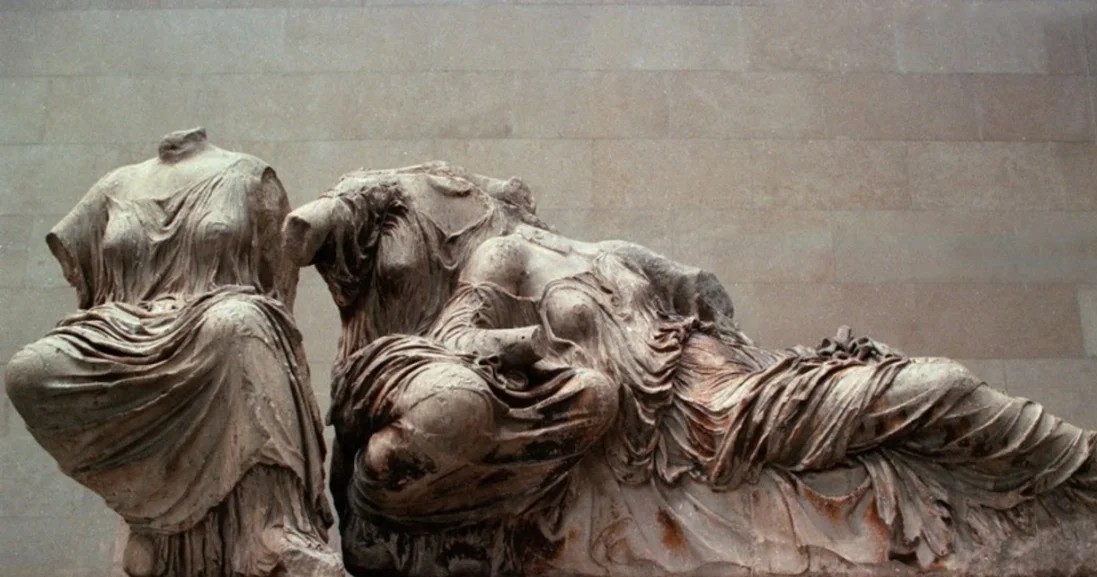
Greek PM calls for Parthenon Sculptures' permanent return
Argophilia — embedded from source
How each side covered it
Our own reading of the reporting listed below, written from the outlets’ articles rather than quoted from them. The reasoning is set out on our methodology page.
Left
5 rated outlets
- Left-rated reports highlighted Greek Prime Minister Kyriakos Mitsotakis's call for the permanent return of the Parthenon Sculptures, often referencing his article in The Guardian. These reports noted his rejection of loan proposals and his comparison of such arrangements to dismembering the Bayeux Tapestry. Several mentioned that discussions between the British Museum and Greece had failed. Some reports also included the British Museum's statement that its position remains unchanged.
Centre
9 rated outlets
- Centre-rated reports focused on Greek Prime Minister Kyriakos Mitsotakis's renewed efforts to secure the permanent return of the Parthenon Sculptures, often citing his opinion piece in The Guardian. These reports frequently mentioned his rejection of loan proposals and his analogy to the Bayeux Tapestry. They also noted the British Museum's statement that its position remains unchanged and that talks have stalled or are at an impasse. Some mentioned a 1963 British law that prevents the museum from making restitutions.
Right
6 rated outlets
- Right-rated reports centred on Greek Prime Minister Kyriakos Mitsotakis's demand for the permanent return of the Parthenon friezes, as expressed in his article for The Guardian. These reports noted his refusal of a mere loan and his use of the Bayeux Tapestry analogy. Some mentioned that Greece has been asking for the return of the sculptures for decades. The British Museum's unchanged position was also noted.
Questions about this coverage
- How did the left and right cover Greek PM calls for Parthenon Sculptures' permanent return?
- Of the 20 outlets on this story carrying a published leaning rating, 25% are rated left, 45% are rated centre, 30% are rated right. Those percentages are shares of the rated outlets, not of every outlet that ran it, which was 80. The sections above set out what each side emphasised, in its own terms.
- Is Greek PM calls for Parthenon Sculptures' permanent return left or right?
- Neither side dominates it. Of the 20 rated outlets on this story, 25% are rated left, 45% are rated centre, 30% are rated right, and no side holds the 70% this site would want before calling a field one-sided. A story is not left or right in any case; the outlets that carried it are what carry ratings.
- Is the coverage of Greek PM calls for Parthenon Sculptures' permanent return biased?
- Greek PM calls for Parthenon Sculptures' permanent return is one event reported by 80 outlets, and this page does not rate the story as biased or unbiased. What it publishes is the spread: which outlets ran it, where named rating organisations place each of them on the spectrum, and what each side chose to lead with. A leaning rating describes an outlet's record over time, not this article, and the two should not be run together.
- Which outlets covered Greek PM calls for Parthenon Sculptures' permanent return?
- 80 that we know of, every one of them listed further up this page with a link to its own report and to what we hold on the publisher. Nothing here is a summary of somebody else's summary: the outlets are named so the original reporting can be read.
- What is the main point of contention regarding the Parthenon Sculptures?
- The main point of contention is Greece's demand for the permanent return of the Parthenon Sculptures, which are currently housed in the British Museum. Greece rejects any form of temporary loan, insisting on reunification, while the British Museum's position on ownership and potential agreements remains a key factor in the ongoing dispute.
- Why does the Greek Prime Minister reject loan proposals for the Parthenon Sculptures?
- Greek Prime Minister Kyriakos Mitsotakis rejects loan proposals because he believes they do not resolve the fundamental issue of ownership and reunification. He compares a temporary loan to dismembering a historical work like the Bayeux Tapestry, arguing that the sculptures are part of a single, dismembered monument that requires permanent return.
- What is the British Museum's stance on the Parthenon Sculptures dispute?
- The British Museum has stated that its position regarding the Parthenon Sculptures remains unchanged. It has also indicated its openness to reaching an agreement, though details of such potential agreements and the museum's specific stance on permanent return have not been elaborated upon in the reports.
Read it at the source
80 outlets, grouped by the leaning a published rating gives them. Every headline links to the original; an underlined outlet name opens our profile of that publisher.
Left
5- British Museum: Athens Wants Its Friezes From the Parthenon, London Always Says No (opens Liberation in a new tab)
Liberation — is Liberation biased? Our profile of this outlet
- Parthenon Marbles talks stall as Athens rejects loan proposal (opens Politico Europe in a new tab)
Politico Europe — is Politico Europe biased? Our profile of this outlet
- Greeks to the British: Give Us Back Our Sculptures! (opens delo.si in a new tab)
delo.si — is delo.si biased? Our profile of this outletOpinion
- In a Rostrum, Athens Calls on London to Show "Courage" to Return the Friezes of the Parthenon (opens franceinfo.fr in a new tab)
franceinfo.fr — is franceinfo.fr biased? Our profile of this outlet
- Mitsotakis to the Guardian: Let's Reunite the Parthenon Sculptures in Greece (opens in.gr in a new tab)
Centre
9- Dispute over Parthenon-Fries: Greek Head of Government Increases Pressure on London (opens stern.de in a new tab)
- Greek PM Mitsotakis urges Burnham to return Elgin Marbles (opens BBC News in a new tab)
- Greece Relaunches the Challenge: 'London Will Give Us Back the Parthenon Marbles' (opens ANSA in a new tab)
- Greece Once Again Urges the United Kingdom to Restore the Parthenon Friezes (opens TVN in a new tab)
- Athens Calls on London to Show "Courage" to Return the Friezes of the Parthenon (opens France24 in a new tab)
- Mitsotakis Rejects Bayeux Loan Model for Parthenon Marbles (opens Argophilia in a new tab)
Argophilia — is Argophilia biased? Our profile of this outlet
- Frises of the Parthenon: Greece Calls on the United Kingdom to Show Courage to Restore Ancient Sculptures (opens Sud Ouest in a new tab)
Sud Ouest — is Sud Ouest biased? Our profile of this outletOpinion
- 'Shipwrecked': Greek PM wants urgent talks on Parthenon Marbles return (opens Euronews in a new tab)
Right
6- Dispute over Parthenon-Fries: Greece Increases Pressure on London (opens Die Presse in a new tab)
Die Presse — is Die Presse biased? Our profile of this outlet
- Mitsotakis rules out British Museum ‘loan’ (opens brusselssignal.eu in a new tab)
brusselssignal.eu — is brusselssignal.eu biased? Our profile of this outlet
- Greece Again Pressuring United Kingdom for Return of Parthenon Marbles (opens Globo in a new tab)
- Mitsotakis Rejects ‘Loan’ of Parthenon Sculptures – ‘Britain Would Not Dismember the Bayeux Tapestry’ (opens The National Herald in a new tab)
The National Herald — is The National Herald biased? Our profile of this outlet
- What Is the Bayeux Tapestry that Returned to Britain and Was Cited by Mitsotakis in His Article in the "Guardian"? (opens Protothema in a new tab)
Protothema — is Protothema biased? Our profile of this outlet
- Mitsotakis Article in the Guardian: Britain Would Not Divide the Bayeux Tapestry - Let's Reunite the Parthenon Sculptures in Greece - iefimerida.gr (opens Iefimerida in a new tab)
Iefimerida — is Iefimerida biased? Our profile of this outletOpinion
Not rated
60- Kyriakos Mitsotakis: "Return the Parthenon Marbles" (opens ArtsLife in a new tab)
ArtsLife — is ArtsLife biased? Our profile of this outletOpinion
- Greek PM urges UK PM to return Elgin Marbles permanently - The Ghana Report (opens theghanareport.com in a new tab)
theghanareport.com — is theghanareport.com biased? Our profile of this outlet
- Greek Prime Minister calls for ‘political will’ to reunite Parthenon Marbles (opens Greek Herald in a new tab)
Greek Herald — is Greek Herald biased? Our profile of this outlet
- Greece Rejects Agreement on Possession of the Parthenon Marbles (opens SpaceMoney in a new tab)
SpaceMoney — is SpaceMoney biased? Our profile of this outlet
- Greece Rejects Agreement Recognizing British Property of the Parthenon Marbles (opens infomoney.com.br in a new tab)
infomoney.com.br — is infomoney.com.br biased? Our profile of this outlet
- Athenian Government Asks London to Return the Partenon Friezes (opens Gândul in a new tab)
- Politico: Talks on the Return of the Parthenon Sculptures "Freeze" | Pandora's Box (opens koutipandoras.gr in a new tab)
koutipandoras.gr — is koutipandoras.gr biased? Our profile of this outlet
- Frises of the Parthenon: Why Do Athens and London Dispute These Ancient Treasures? (opens cnews.fr in a new tab)
Show 52 more
- Politico on Parthenon Sculptures: Talks Break Down as Athens Rejects Loan Proposal (opens Documento in a new tab)
- Greece Urges the United Kingdom to Restore the Parthenon Friezes (opens 24 Horas Quintana Roo in a new tab)
24 Horas Quintana Roo — is 24 Horas Quintana Roo biased? Our profile of this outlet
- Parthenon Sculptures: British Museum's Position on Agreement with Greece Unchanged (opens rthess.gr in a new tab)
- British Museum on the Parthenon Sculptures: "Our Attitude Towards an Agreement Remains Unchanged" - How It Responds to the Telegraph Article (opens europost.gr in a new tab)
europost.gr — is europost.gr biased? Our profile of this outlet
- British Museum: "Our Disposition for Agreement Remains Unchanged" for the Parthenon Sculptures (opens Typosthes in a new tab)
- Media Show: "Aura of the Unspoken" (opens monopol-magazin.de in a new tab)
monopol-magazin.de — is monopol-magazin.de biased? Our profile of this outlet
- British Museum: "Our Disposition for Agreement Remains Unchanged" Regarding the Parthenon Sculptures (opens Unknown in a new tab)
Unknown
- Parthenon Sculptures: The British Museum Responds to the "Impasse" – "Our Willingness to Reach an Agreement Remains Unchanged" (opens Unknown in a new tab)
Unknown
- Parthenon Sculptures: The British Museum's Response (opens pelop.gr in a new tab)
- British Museum: "Our Determination to Reach an Agreement on the Parthenon Sculptures Remains Unchanged" (opens zougla.gr in a new tab)
- Parthenon Sculptures: "Our Position Remains Unchanged," Says the British Museum (opens dialogos.com.cy in a new tab)
dialogos.com.cy — is dialogos.com.cy biased? Our profile of this outlet
- MR. Mitsotakis to the Guardian- Message About the Sculptures (opens Alpha TV in a new tab)
Alpha TV — is Alpha TV biased? Our profile of this outletOpinion
- Parthenon Sculptures: British Museum's Position on Agreement with Greece Unchanged (opens dnews.gr in a new tab)
- Greece Claims Back to the United Kingdom the Return of Sculptures From the Parthenon of Athens (opens El Periodista Online in a new tab)
El Periodista Online — is El Periodista Online biased? Our profile of this outlet
- Mitsotakis on Parthenon Sculptures: Political Will Is Needed for Their Return (opens Business Daily in a new tab)
Business Daily — is Business Daily biased? Our profile of this outletOpinion
- Protracted battle: Greek PM urges 'courage' in talks with UK over Parthenon Marbles (opens rtl.lu in a new tab)
- Greek PM urges 'courage' in talks with UK over Parthenon Marbles (opens coastaltvnews.com in a new tab)
coastaltvnews.com — is coastaltvnews.com biased? Our profile of this outlet
- Mitsotakis to the Guardian: "Time for the Decisive Step" for the Parthenon Sculptures (opens alfavita.gr in a new tab)
alfavita.gr — is alfavita.gr biased? Our profile of this outlet
- Greece Calls for the Resumption of Talks with the UK for the Return of the Parthenon's Sculptures: "Political Will Is Needed. (opens antena3.ro in a new tab)
antena3.ro — is antena3.ro biased? Our profile of this outlet
- Mitsotakis to the Guardian: "Let's Reunite the Parthenon Sculptures" #StarGrNews (opens star.gr in a new tab)
star.gr — is star.gr biased? Our profile of this outletOpinion
- Greek Prime Minister: Parthenon Marbles Can Still Be Returned With Political Will and Courage (opens Unknown in a new tab)
UnknownOpinion
- Mitsotakis: Britain Would Not Divide the Bayeux Tapestry - Let's Reunite the Parthenon Sculptures in Greece (opens Enimerosi24 in a new tab)
Enimerosi24 — is Enimerosi24 biased? Our profile of this outletOpinion
- Sculptures of the Parthenon: Double Intervention Mitsotakis — Mendoni — “It Takes Political Will and Courage” (opens Unknown in a new tab)
Unknown
- Are Talks About the Sculptures Frozen? What Do British Publications Report? (opens Pentapostagma in a new tab)
Pentapostagma — is Pentapostagma biased? Our profile of this outlet
- Parthenon Sculptures: Mitsotakis Calls for Reunification in Guardian – “Greece Remains Ready” (opens proson.gr in a new tab)
- British PM leaves Parthenon Sculptures talks to museum (opens Kathimerini English Edition in a new tab)
Kathimerini English Edition — is Kathimerini English Edition biased? Our profile of this outlet
- Mitsotakis to the Guardian: Let's Reunite the Parthenon Sculptures (opens cyprustimes.com in a new tab)
cyprustimes.com — is cyprustimes.com biased? Our profile of this outletOpinion
- Mitsotakis to the Guardian: Britain Would Not Divide the Bayeux Tapestry. Let's Reunite the Parthenon Sculptures in Greece (opens pontosnews.gr in a new tab)
pontosnews.gr — is pontosnews.gr biased? Our profile of this outletOpinion
- Mitsotakis to the Guardian: No to Loaning the Parthenon Sculptures (opens GR Times in a new tab)
GR Times — is GR Times biased? Our profile of this outletOpinion
- Article by Mr. Mitsotakis in the Guardian Newspaper About the Parthenon Sculptures (opens sofokleousin.gr in a new tab)
sofokleousin.gr — is sofokleousin.gr biased? Our profile of this outletOpinion
- Mitsotakis to the Guardian: "Political Will and Strength" for the Reunification of the Parthenon Sculptures – "No" to Loan (opens seleo.gr in a new tab)
- Mitsotakis to the Guardian: Britain Would Not Divide the Bayeux Tapestry - Let's Reunite the Parthenon Sculptures (opens Unknown in a new tab)
UnknownOpinion
- K. Mitsotakis to the Guardian: Our Goal Is the Permanent Reunification of the Sculptures - Britain Would Not Divide the Bayeux Tapestry (opens Naftemporiki in a new tab)
Naftemporiki — is Naftemporiki biased? Our profile of this outletOpinion
- Mitsotakis to the Guardian: "Greece Cannot Accept a Plan to Loan the Parthenon Sculptures" (opens LiFO in a new tab)
- Mitsotakis to the Guardian: "The Parthenon Sculptures Should Be Reunited" (opens larissanet.gr in a new tab)
larissanet.gr — is larissanet.gr biased? Our profile of this outletOpinion
- Mitsotakis' Article in the "Guardian": Political Will and Strength for the Reunification of the Parthenon Sculptures - PatrisNews - Patris Newspaper of Ilia (opens PatrisNews in a new tab)
PatrisNews — is PatrisNews biased? Our profile of this outletOpinion
- Britain: Burnham Does Not Intervene for the Return of the Parthenon Sculptures - ONLARISSA.GR News Larissa (opens onlarissa.gr in a new tab)
onlarissa.gr — is onlarissa.gr biased? Our profile of this outlet
- Mitsotakis to the Guardian About Parthenon Sculptures: "Political Will and Strength Are Needed for Reunification" (opens reader.gr in a new tab)
- Mitsotakis on Parthenon Sculptures: "We Will Not Accept Any Regulation that Recognizes Ownership by the British Museum" (opens insider.gr in a new tab)
insider.gr — is insider.gr biased? Our profile of this outlet
- Mitsotakis to the Guardian About the Parthenon Sculptures: "Time for Political Will and Courage" (opens flash.gr in a new tab)
- Mitsotakis to the Guardian: "Political Will and Strength" for the Reunification of the Parthenon Sculptures - "No" to Loan (opens enikos.gr in a new tab)
enikos.gr — is enikos.gr biased? Our profile of this outletOpinion
- Mitsotakis: Reunification of the Parthenon Sculptures Now (opens Anatropi News in a new tab)
Anatropi News — is Anatropi News biased? Our profile of this outletOpinion
- Mitsotakis to the Guardian: The Goal Is the Permanent Return of the Parthenon Sculptures, Not Their Loan (opens ieidiseis.gr in a new tab)
ieidiseis.gr — is ieidiseis.gr biased? Our profile of this outlet
- Britain: Burnham Does Not Intervene for the Return of the Parthenon Sculptures (opens ertnews.gr in a new tab)
ertnews.gr — is ertnews.gr biased? Our profile of this outlet
- Mitsotakis' Article in the Guardian on the Parthenon Sculptures: Let's Turn Disagreement Into an Act of Friendship (opens Creta24 in a new tab)
Creta24 — is Creta24 biased? Our profile of this outletOpinion
- Mitsotakis to the Guardian: Political Will for the Parthenon Sculptures (opens Libre in a new tab)
- Mitsotakis to the Guardian About the Sculptures: What Is Needed Now Is Political Will and Courage (opens ΑΘΗΝΑ 9,84 in a new tab)
ΑΘΗΝΑ 9,84 — is ΑΘΗΝΑ 9,84 biased? Our profile of this outletOpinion
- Kyriakos Mitsotakis to the Guardian: Let's Reunite the Parthenon Sculptures in Greece - It Takes Political Will and Courage (opens Newsit.gr in a new tab)
Newsit.gr — is Newsit.gr biased? Our profile of this outletOpinion
- Article by K. Mitsotakis in the Guardian on the Reunification of the Parthenon Sculptures (opens Capital.gr in a new tab)
Capital.gr — is Capital.gr biased? Our profile of this outletOpinion
- Mitsotakis Article in the Guardian: Rescued Sculptures Should Be Exhibited to the Public Together (opens NewsBomb in a new tab)
NewsBomb — is NewsBomb biased? Our profile of this outletOpinion
- Mitsotakis to the Guardian About the Sculptures: What Is Needed Now Is Political Will and Courage (opens CNN Greece in a new tab)
CNN Greece — is CNN Greece biased? Our profile of this outletOpinion
- Mitsotakis to the Guardian About the Parthenon Sculptures: "Britain Would Not Cut the Bayeux Tapestry in Two – Time for Reunification" (opens lesvosnews.net in a new tab)
lesvosnews.net — is lesvosnews.net biased? Our profile of this outletOpinion
How did this read?
About the coverage, not about the story. We do not ask whether you agree with what happened — we have no honest use for that answer.