Guyana's Rodrigues-Birkett leads UN chief vote, Grynspan second
Second informal poll of Security Council candidates shows shifts in support.
AI-assisted coverage comparison, editor-supervised · How this was made

Guyana's Rodrigues-Birkett leads UN chief vote, Grynspan second
Photograph: La Presse (embedded from source)
What this story says
- Carolyn Rodrigues-Birkett of Guyana received the most 'encourage' votes in the second informal UN Security Council poll.
- Rebeca Grynspan of Costa Rica, who led the first vote, came in second in this round.
- Rafael Grossi of Argentina also received a significant number of 'encourage' votes, placing him among the top contenders.
- A candidate needs at least nine 'encourage' votes and no veto from a permanent member to secure the Security Council's recommendation.
Who covered it
Percentages are shares of the 52 outlets carrying a published leaning rating. 78 of the 130 outlets we know ran this story carry no rating and are not counted in them. Coverage measured .
Trust
60/100
Craft
60/100
Hype
20/100
130 sources · methodology
Missing from the left
Only 9 of the 52 outlets with a published leaning rating that ran this story are rated left.
A reader who follows the left would not have seen this. We report the absence rather than explain it: outlets choose what to cover for many reasons, and we have no evidence about which one applies here.
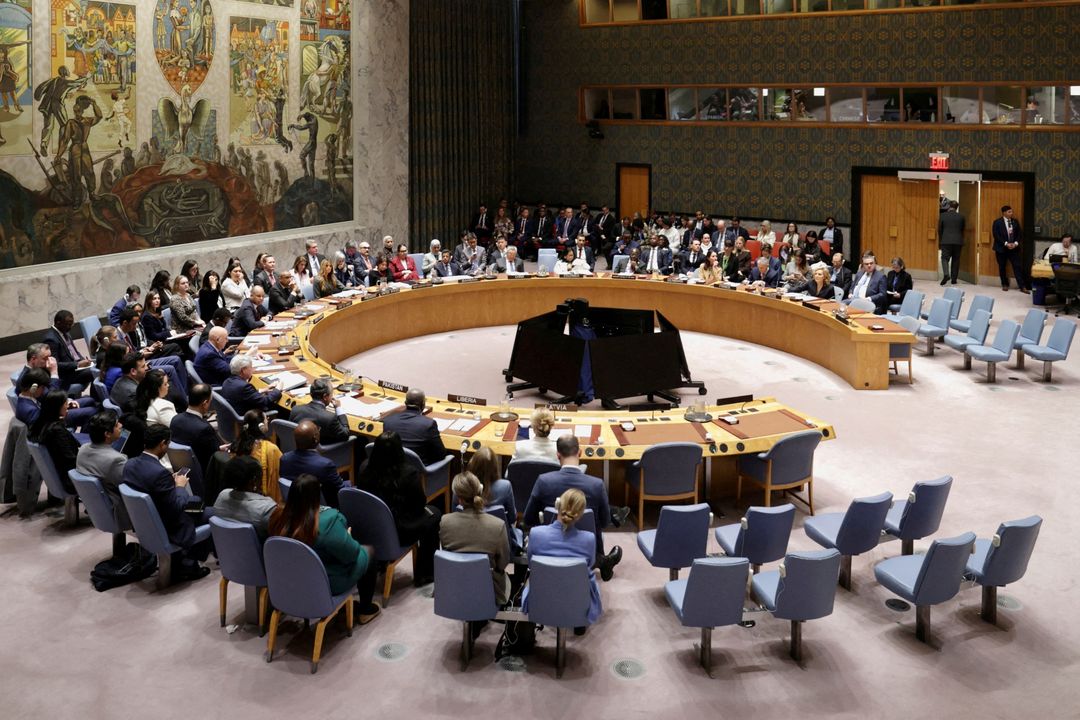
Guyana's Carolyn Rodrigues-Birkett has taken the lead in the second informal vote for UN Secretary-General, according to reports from the UN Security Council. The vote, held behind closed doors by the 15-member council, aims to gauge support for candidates seeking to succeed Antonio Guterres. Rodrigues-Birkett received eight 'encourage' votes, three 'discourage' votes, and four 'no opinion' votes. Costa Rica's Rebeca Grynspan, who was the front-runner in the first vote held in July, received seven 'encourage' votes, four 'discourage' votes, and four 'no opinion' votes. Rafael Grossi of Argentina also secured seven 'encourage' votes, alongside six 'discourage' votes and two 'no opinion' votes.
Disagreement on Michelle Bachelet's vote count
Reports differ on the vote count for Michelle Bachelet. La Nación (Chile) states she received two 'encourage' votes and six 'discourage' votes, placing her seventh among eight candidates. Emol reports she lost four supports compared to the previous poll. However, Noticias Chile | Informadorchile | states she received six 'discourage' votes, and Ex-Ante reports two endorsements and six rejections.
Omissions in coverage
None of the right-rated digests mention the specific vote counts for 'discourage' or 'no opinion' for any candidate. The left-rated report and the centre-rated report both provided these details for Rodrigues-Birkett, Grynspan, and Grossi, while the right-rated reports focused primarily on the 'encourage' votes and the ranking of candidates.
Coverage settled. We checked this 17 times and stopped on 27 Aug 2026, 09:30. The figures above are what it finished at.
How other outlets pictured it
Which photograph to run is each newsroom’s own choice. The leaning beside a name is that outlet’s published rating, not a claim that the pictures divide along it. Every picture is shown from the outlet’s own server and links to the article it ran in.
How each side covered it
Our own reading of the reporting listed below, written from the outlets’ articles rather than quoted from them. The reasoning is set out on our methodology page.
Left
9 rated outlets
- La Presse led on Rodrigues Birkett taking the lead in the Security Council’s second indicative vote, reporting eight encourage, three discourage and four no‑opinion votes and naming Rebeca Grynspan and Rafael Grossi as close rivals. Al Jazeera led on the same vote totals and quoted Council president Christina Markus Lassen. Digests from der Standard AT, Liberation and Daily Monitor also led on Rodrigues Birkett’s lead and listed the other candidates.
- La Presse added commentary on the UN’s financial strain, US pressure and Rodrigues Birkett’s call for a more responsive, efficient multilateral system. Al Jazeera inserted criticism that the organisation’s standing has fallen, referencing the Gaza conflict and the war in Ukraine as examples of perceived failure. The digests did not contain such analysis.
- The digests from der Standard AT, Liberation and Daily Monitor omitted the detailed vote breakdown, the requirement for nine votes to win, and the permanent‑member veto rule that La Presse and Al Jazeera reported. None of the left‑rated pieces mentioned any cost estimate for the UN’s operations.
Centre
17 rated outlets
- The centre-rated outlets reported that Guyana's Carolyn Rodrigues-Birkett led in the second straw poll for the UN secretary-general position. This was a change from the first poll, where Costa Rica's Rebeca Grynspan had been the front-runner. The Security Council held the informal vote on Friday.
- TRT World, which published a full report, named several other candidates including Rafael Grossi, Michelle Bachelet, Maria Fernanda Espinosa, and Macky Sall. It also noted that Ivonne A-Baki had entered the race since the first poll. The outlet explained the voting process and the requirement for nine votes without a veto.
- Most centre-rated outlets presented digests that focused on Rodrigues-Birkett's lead. These digests mentioned Grynspan as having been the front-runner previously. Some also noted the Security Council's role in the selection process.
Right
26 rated outlets
- The right-rated reports consistently highlighted Carolyn Rodrigues-Birkett's lead in the second informal vote for UN Secretary-General. Several reports, including La Nación (Chile), The Straits Times, and i24NEWS, noted that Rebeca Grynspan, the previous front-runner, had slipped to second place. i24NEWS also included a quote from Israel's envoy, Danon, demanding change and stating the next secretary-general must restore UN credibility. Emol reported that Michelle Bachelet had reportedly lost four supports compared to the previous poll. La Nación (Chile) placed Bachelet seventh among eight candidates. The digests generally focused on the top candidates and the shift in leadership from the first to the second vote.
Questions about this coverage
- How did the left and right cover Guyana's Rodrigues-Birkett leads UN chief vote, Grynspan second?
- Of the 52 outlets on this story carrying a published leaning rating, 17% are rated left, 33% are rated centre, 50% are rated right. Those percentages are shares of the rated outlets, not of every outlet that ran it, which was 130. The sections above set out what each side emphasised, in its own terms.
- Is Guyana's Rodrigues-Birkett leads UN chief vote, Grynspan second left or right?
- Neither side dominates it. Of the 52 rated outlets on this story, 17% are rated left, 33% are rated centre, 50% are rated right, and no side holds the 70% this site would want before calling a field one-sided. A story is not left or right in any case; the outlets that carried it are what carry ratings.
- Is the coverage of Guyana's Rodrigues-Birkett leads UN chief vote, Grynspan second biased?
- Guyana's Rodrigues-Birkett leads UN chief vote, Grynspan second is one event reported by 130 outlets, and this page does not rate the story as biased or unbiased. What it publishes is the spread: which outlets ran it, where named rating organisations place each of them on the spectrum, and what each side chose to lead with. A leaning rating describes an outlet's record over time, not this article, and the two should not be run together.
- Which side is not reporting Guyana's Rodrigues-Birkett leads UN chief vote, Grynspan second?
- When we first saw this story, outlets rated left had barely covered it. Coverage accretes for hours after an event, so that is where to look rather than a verdict — the split above is the current count, and it is the one to read.
- Which outlets covered Guyana's Rodrigues-Birkett leads UN chief vote, Grynspan second?
- 130 that we know of, every one of them listed further up this page with a link to its own report and to what we hold on the publisher. Nothing here is a summary of somebody else's summary: the outlets are named so the original reporting can be read.
- Who is leading the race for UN Secretary-General after the second vote?
- Guyana's Carolyn Rodrigues-Birkett is leading the race after the second informal vote by the UN Security Council. She received eight 'encourage' votes, surpassing Costa Rica's Rebeca Grynspan, who had led the first vote and received seven 'encourage' votes in this round.
- What are the requirements for a candidate to be recommended by the Security Council?
- To secure the Security Council's recommendation, a candidate must receive at least nine 'encourage' votes and avoid a veto from any of the five permanent members: the United States, Russia, China, France, and the United Kingdom.
- How did Michelle Bachelet perform in the second vote?
- Michelle Bachelet's performance in the second vote appears to have been weaker than in the first. Reports indicate she received a low number of 'encourage' votes and a significant number of 'discourage' votes, placing her towards the bottom of the candidate list.
Read it at the source
140 outlets, grouped by the leaning a published rating gives them. Every headline links to the original; an underlined outlet name opens our profile of that publisher.
Left
10- A Candidate Is Ahead, but the Election at the Top of the Uno Remains Wide Open (opens der Standard AT in a new tab)
der Standard AT — is der Standard AT biased? Our profile of this outlet
- Vote for the New UN Secretary General: Carolyn Rodrigues-Birkett Takes the Lead (opens Liberation in a new tab)
Liberation — is Liberation biased? Our profile of this outlet
- Guyana’s Rodrigues Birkett leads informal poll in race to be next UN leader (opens Al Jazeera in a new tab)
Al Jazeera — is Al Jazeera biased? Our profile of this outlet
- UN Secretary General Carolyn Rodrigues-Birkett Takes Advantage in a New Vote (opens La Presse in a new tab)
- Guyana's Birkett emerges as leader in informal poll for next UN chief (opens Daily Monitor in a new tab)
Daily Monitor — is Daily Monitor biased? Our profile of this outlet
- Guyana's Candidate Leads the Second Informal Vote to Lead the UN, Followed by Costa Rica's. (opens El Pais in a new tab)
- UN holds second informal poll for body’s next leader (opens Taipei Times in a new tab)
Taipei Times — is Taipei Times biased? Our profile of this outlet
- UN General Secretariat: Five Women and Three Men Competing (opens Liberation in a new tab)
Liberation
Centre
17- Guyana’s Birkett leads second informal UN chief poll, sources say (opens The Times of Israel in a new tab)
The Times of Israel — is The Times of Israel biased? Our profile of this outlet
- Who Is the New Favorite for the Post of UN Secretary General. Received the Most Votes in the Security Council (opens Digi 24 in a new tab)
- Guyana Ex-Chancellor Takes the Lead in the Race to Lead the UN (opens El Diario in a new tab)
- Guyana ex-minister leads in 2nd straw poll for UN chief (opens Hindustan Times in a new tab)
Hindustan Times — is Hindustan Times biased? Our profile of this outlet
- Diplomat Birkett Conducts Test Vote on UN Secretary-General's Office (opens Tagesschau in a new tab)
Tagesschau — is Tagesschau biased? Our profile of this outlet
- Second straw poll held in race to succeed UN chief Guterres (opens TRT World in a new tab)
- Unofficial Vote: Guyana's Former Foreign Minister Is the Leading Candidate for UN Secretary-General (opens yle in a new tab)
- Rodrigues-Birkett Advances Grynspan in the Screening of Candidates for the UN General Secretariat (opens EFE in a new tab)
Show 9 more
- UN Security Council Votes on Friday to Appoint Future Secretary-General (opens Sud Ouest in a new tab)
- New Vote in the Security Council to Appoint the Next Head of the United Nations (opens La Libre in a new tab)
- UN Security Council holds second informal poll for next leader (opens Euronews in a new tab)
- UN holds second informal poll for next leader (opens Channel News Asia in a new tab)
Channel News Asia — is Channel News Asia biased? Our profile of this outlet
- UN holds second informal poll for next leader (opens France24 in a new tab)
- UN holds second informal poll for next leader (opens CP24 in a new tab)
- UN holds second informal poll for next leader (opens CTV News in a new tab)
- Who are the candidates vying to lead the UN? (opens Radio France Internationale in a new tab)
Radio France Internationale — is Radio France Internationale biased? Our profile of this outlet
- UN holds second informal poll for next leader (opens Morgan County Citizen in a new tab)
Morgan County Citizen — is Morgan County Citizen biased? Our profile of this outlet
Right
28- Female Candidates Rank 1st and 2nd, But No ‘Absolute Dominant’ in UN Secretary-General Second Round of Voting (opens 조선일보 in a new tab)
조선일보
- Grossi remains in the running for top UN post after second straw poll (opens Buenos Aires Times in a new tab)
Buenos Aires Times — is Buenos Aires Times biased? Our profile of this outlet
- She Is the New Favorite to Take over the UN (opens Svenska Dagbladet in a new tab)
Svenska Dagbladet — is Svenska Dagbladet biased? Our profile of this outlet
- Argentine Rafael Grossi Was Among the Favorites to Occupy the General Secretariat of the UN (opens Clarin in a new tab)
- Guyanese Candidate Takes Lead in Informal Vote for New UN Chief (opens berlingske.dk in a new tab)
berlingske.dk — is berlingske.dk biased? Our profile of this outlet
- Guyanese Candidate Takes Lead in Informal Vote for New UN Chief (opens BT in a new tab)
- Rafael Grossi's Application to the UN Is Threatened by Russia (opens Globo in a new tab)
- Rebeca Grynspan Remains Second in the Race to Lead the UN, After a New Vote (opens La Nación, Grupo Nación in a new tab)
La Nación, Grupo Nación — is La Nación, Grupo Nación biased? Our profile of this outlet
Show 20 more
- Former Guyana minister leads in second straw poll for UN chief (opens The Straits Times in a new tab)
The Straits Times — is The Straits Times biased? Our profile of this outlet
- Trump Friend Goes Out Empty: Diplomat From Guyana Leads the Race for Guterres Succession (opens n-tv in a new tab)
- New Vote to Elect the Next Head of the UN, Since He Claims Latin America (opens la Nacion in a new tab)
- Jewish candidate for UN sec-gen falls to second place in new round of polling (opens Jewish News Syndicate in a new tab)
Jewish News Syndicate — is Jewish News Syndicate biased? Our profile of this outlet
- Jewish candidate for UN sec-gen falls to second place in new round of polling (opens Cleveland Jewish News in a new tab)
Cleveland Jewish News — is Cleveland Jewish News biased? Our profile of this outlet
- Guyana’s Birkett emerges as leader in informal poll for next UN chief (opens Cyprus Mail in a new tab)
Cyprus Mail — is Cyprus Mail biased? Our profile of this outlet
- Rodrigues-Birkett takes lead in UN chief race as Israel's Danon demands change (opens i24NEWS in a new tab)
- UN: Rodriguez Birkett Leads in Second Informal Security Council Vote for Next Secretary-General (opens Protothema in a new tab)
Protothema — is Protothema biased? Our profile of this outlet
- Female Candidate Takes Lead in Second Preliminary Round for Next UN Secretary-General… Close Race Remains (opens 연합뉴스-Yonhap News Agency in a new tab)
연합뉴스-Yonhap News Agency — is 연합뉴스-Yonhap News Agency biased? Our profile of this outlet
- UN holds second straw poll in race to succeed Guterres (opens Anadolu Ajansı in a new tab)
Anadolu Ajansı — is Anadolu Ajansı biased? Our profile of this outlet
- UN holds second informal poll of secretary-general candidates (opens Buenos Aires Times in a new tab)
Buenos Aires Times
- New UN Vote: Bachelet Would Have Obtained only Two Backers and Guyanese Candidate Would Lead (opens Emol in a new tab)
- United Nations Security Council Meets Again to Appoint Its Future Secretary-General (opens Capital.fr in a new tab)
Capital.fr — is Capital.fr biased? Our profile of this outlet
- Tica Rebeca Grynspan Arrives as a Favourite to Second UN Vote to Elect Her Next Leader (opens La Nación, Grupo Nación in a new tab)
La Nación, Grupo Nación
- Van Klaveren Points Out that Bachelet’s Continued Candidacy for the UN Should Be Assessed if New “Straw Poll” Confirms Adverse Scenario (opens La Tercera in a new tab)
La Tercera — is La Tercera biased? Our profile of this outlet
- UN holds second informal poll for next leader (opens Free Malaysia Today News in a new tab)
Free Malaysia Today News — is Free Malaysia Today News biased? Our profile of this outlet
- Who are the candidates vying to lead the UN? (opens Bangkok Post in a new tab)
Bangkok Post — is Bangkok Post biased? Our profile of this outlet
- Who are the candidates vying to lead the UN? (opens Gulf News in a new tab)
- UN Security Council tests contenders in race for next secretary-general (opens Times of India in a new tab)
Times of India — is Times of India biased? Our profile of this outlet
- Bachelet Seeks to Reaffirm Itself to Days of New Informal Election at the UN and Aims to "Build Bridges" (opens BioBioChile in a new tab)
BioBioChile — is BioBioChile biased? Our profile of this outlet
Not rated
85- Who are the candidate running for UN Secy General post (opens Islamabad Post in a new tab)
Islamabad Post — is Islamabad Post biased? Our profile of this outlet
- Women Lead the Race to Succeed Guterres as UN Secretary-General - Top 50 Women Forum (opens top50women.com in a new tab)
top50women.com
- UN secretary-general race: Guyana's Rodrigues Birkett leads after second security council straw poll (opens Legit.ng in a new tab)
- Guyana’s Rodrigues Birkett leads informal poll in race to be next UN leader (opens Demerara Waves in a new tab)
Demerara Waves — is Demerara Waves biased? Our profile of this outlet
- The Race for the UN Chief Is Getting Hot. Guyana's Ambassador, Carolyn Rodrigues Birkett, Most Votes in the Second Round (opens Mediafax in a new tab)
- Succession to the UN: Rodrigues-Birkett Creates Surprise, Macky Sall Lags Behind (opens linfodrome.com in a new tab)
linfodrome.com — is linfodrome.com biased? Our profile of this outlet
- Guyanese Rodriques Birkett Ahead In Informal Poll for Secretary General Of UN (opens New York Carib News in a new tab)
New York Carib News — is New York Carib News biased? Our profile of this outlet
- Olara Otunnu gains ground in second UN Secretary-General straw poll (opens The Independent Uganda: in a new tab)
The Independent Uganda: — is The Independent Uganda: biased? Our profile of this outlet
Show 77 more
- Argentine Rafael Grossi Was Among the Three Most Supported Candidates to Lead the UN (opens chacodiapordia.com in a new tab)
chacodiapordia.com — is chacodiapordia.com biased? Our profile of this outlet
- Rafael Grossi Remains Third in the Race for the UN General Secretariat in New York - La Critica (opens La Crítica in a new tab)
La Crítica — is La Crítica biased? Our profile of this outlet
- A Candidate Is Ahead, but the Election at the Top of the Uno Remains Wide Open (opens der Standard DE in a new tab)
der Standard DE — is der Standard DE biased? Our profile of this outlet
- Ambassador Rodrigues-Birkett takes lead in second UN Secretary-General straw poll (opens Guyana Chronicle in a new tab)
Guyana Chronicle — is Guyana Chronicle biased? Our profile of this outlet
- Guyana’s Ambassador leads 2nd round of UN Security Council straw poll (opens Guyana Times in a new tab)
Guyana Times — is Guyana Times biased? Our profile of this outlet
- UN Security Council holds 2nd straw poll on secretary-general candidates (opens The Independent Uganda: in a new tab)
The Independent Uganda:
- Carolyn Rodrigues-Birkett at the Top of the List as Successor to Antonio Guterres (opens RÚV in a new tab)
- She Is the New Favorite to Take over the UN (opens Sydsvenskan in a new tab)
Sydsvenskan — is Sydsvenskan biased? Our profile of this outlet
- She Is the New Favorite to Take over the UN (opens HD in a new tab)
- After a New Vote, Rafael Grossi Is Still Running for the UN General Secretariat (opens Perfil in a new tab)
- She Is the New Favorite to Take over the UN (opens hbl.fi in a new tab)
- UN Security Council holds 2nd straw poll on secretary-general candidates (opens Sunday World in a new tab)
Sunday World — is Sunday World biased? Our profile of this outlet
- Amb Olara Otunnu Gains Ground in Second UN Secretary-General Straw Poll (opens Online news from Uganda and the East African region in a new tab)
- Guyana ex-minister leads in 2nd straw poll for UN chief - THE LOCAL REPORT ARTICLES (opens Thelocalreport.in in a new tab)
Thelocalreport.in — is Thelocalreport.in biased? Our profile of this outlet
- Michelle Bachelet's Option for the UN General Secretariat Is Complicated Following a Collapse in the Security Council's Second Poll (opens icndiario.com in a new tab)
icndiario.com — is icndiario.com biased? Our profile of this outlet
- UN Security Council: Test Vote on Succession of Guterres (opens zdfheute.de in a new tab)
zdfheute.de — is zdfheute.de biased? Our profile of this outlet
- The Argentine Grossi Was Among the Three Candidates to Occupy the General Secretariat of the United Nations (opens La Brújula 24 in a new tab)
La Brújula 24 — is La Brújula 24 biased? Our profile of this outlet
- Rodrigues Birkett and Otunnu Show Biggest Gains in UN SecGen Poll (opens PassBlue in a new tab)
- Guyana Ex-Chancellor Takes the Lead in the Race to Lead the UN (opens eldiariodechihuahua.mx in a new tab)
eldiariodechihuahua.mx — is eldiariodechihuahua.mx biased? Our profile of this outlet
- Guyanese Candidate Takes Lead in Informal Vote for New UN Chief (opens Kristeligt Dagblad in a new tab)
Kristeligt Dagblad — is Kristeligt Dagblad biased? Our profile of this outlet
- The Argentine Rafael Grossi, Among the Three Candidates to Occupy the General Secretariat of the UN (opens El Sol in a new tab)
- UN Enters Veto Zone: Grossi Resists Among the Three Strong Candidates (opens TotalNews Agency USA Español in a new tab)
TotalNews Agency USA Español — is TotalNews Agency USA Español biased? Our profile of this outlet
- Rafael Grossi, Among the Candidates with the Most Possibilities in Informal Voting to UN Secretary General (opens Noticias Argentinas in a new tab)
Noticias Argentinas — is Noticias Argentinas biased? Our profile of this outlet
- Rafael Grossi Among the Three Candidates for the UN General Secretariat (opens fm899.com.ar in a new tab)
fm899.com.ar — is fm899.com.ar biased? Our profile of this outlet
- Argentine Rafael Grossi Was Among the Favorites to Occupy the General Secretariat of the UN (opens rionegro.com.ar in a new tab)
rionegro.com.ar — is rionegro.com.ar biased? Our profile of this outlet
- Guyana Ex-Chancellor Takes the Lead in the Race to Lead the UN (opens TVPerú in a new tab)
- Next UN Secretary-General: Birkett Before the Vote on Guterres Succession (opens Leipziger Volkszeitung in a new tab)
Leipziger Volkszeitung — is Leipziger Volkszeitung biased? Our profile of this outlet
- Next UN Secretary-General: Birkett Before the Vote on Guterres Succession (opens rnd.de in a new tab)
- Rebeca Grynspan Loses Ground in a Race for the UN General Secretariat (opens El Mundo CR in a new tab)
El Mundo CR — is El Mundo CR biased? Our profile of this outlet
- Argentine Rafael Grossi Was Among the Three Candidates to Occupy the General Secretariat of the UN - Diario San Rafael (opens diariosanrafael.com.ar in a new tab)
diariosanrafael.com.ar — is diariosanrafael.com.ar biased? Our profile of this outlet
- New Vote in the Security Council for the Next Secretary-General of the United Nations (opens القدس العربي in a new tab)
القدس العربي
- Who Are the Candidates Vying to Lead the UN? (opens newscentraltv.com in a new tab)
newscentraltv.com — is newscentraltv.com biased? Our profile of this outlet
- Argentine Rafael Grossi Was Among the Three Most Supported Candidates to Be Head of the UN (opens lagaceta.com.ar in a new tab)
lagaceta.com.ar — is lagaceta.com.ar biased? Our profile of this outlet
- Rafael Grossi Was Third in a New Vote by the UN General Secretariat (opens #BorderPeriodismo in a new tab)
#BorderPeriodismo — is #BorderPeriodismo biased? Our profile of this outlet
- UN: Guyana Diplomat Surpasses Costa Rican in 2nd Vote for Leader (opens Noticias ao Minuto in a new tab)
Noticias ao Minuto — is Noticias ao Minuto biased? Our profile of this outlet
- Argentine Rafael Grossi Is Among the Three Most Supported Candidates to Lead the UN (opens BAE Negocios in a new tab)
BAE Negocios — is BAE Negocios biased? Our profile of this outlet
- Bachelet's Nomination to the UN Faces Setback After Second Preliminary Ballot (opens vlnradio.cl in a new tab)
vlnradio.cl — is vlnradio.cl biased? Our profile of this outlet
- Rafael Grossi Remains on the Podium and Maintains His Chances of Reaching the UN General Secretariat (opens elCanciller in a new tab)
elCanciller — is elCanciller biased? Our profile of this outlet
- The UN Returns to Vote to Elect Its Next Secretary General (opens Los Tiempos in a new tab)
Los Tiempos — is Los Tiempos biased? Our profile of this outlet
- Ambassador Rodrigues-Birkett takes lead in second UN Secretary-General straw poll —edges ahead of Grynspan as race for top job tightens (opens Guyana Chronicle in a new tab)
Guyana Chronicle
- Guyana's Representative Leads in Informal UN Vote on Next UN Chief (opens iDNES.cz in a new tab)
- Guterres' Successor: Carolyn Rodrigues Birkett Leads (opens vienna.at in a new tab)
- Carolyn Rodrigues-Birkett secures highest ‘encouraged’ votes at UN straw polls (opens INews Guyana in a new tab)
INews Guyana — is INews Guyana biased? Our profile of this outlet
- Argentine Rafael Grossi Was Among the Three Main Candidates to Lead the UN - Diario Panorama (opens diariopanorama.com in a new tab)
diariopanorama.com — is diariopanorama.com biased? Our profile of this outlet
- Vote for Next UN Secretary-General: Rodriguez Birkett Leads (opens CNN Greece in a new tab)
CNN Greece — is CNN Greece biased? Our profile of this outlet
- Carolyn Birkett From Guyana Leads Informal Vote for UN Leadership (opens CNN Brasil in a new tab)
CNN Brasil — is CNN Brasil biased? Our profile of this outlet
- UN: The Results of the Second Indicative Vote Revealed, Macky Sall Fixed on His Fate (opens senenews.com in a new tab)
senenews.com — is senenews.com biased? Our profile of this outlet
- Second Informal Vote at the UN: Aspirant Guyanes Would lead... (opens La Nación in a new tab)
La Nación
- UN: Rodriguez Birkett Leads in Second Vote for Next Secretary-General (opens Naftemporiki in a new tab)
Naftemporiki — is Naftemporiki biased? Our profile of this outlet
- Backward Hard for Michelle Bachelet's UN Application: Received 6 Votes Against in Informal Poll and 7 Out of 8 Candidates (opens cambio21.cl in a new tab)
cambio21.cl — is cambio21.cl biased? Our profile of this outlet
- Michelle Bachelet Lagged Behind in the Race to Lead UN, Received Strong Rejection in Votes NEWS CHILE Informador Chile (opens Noticias Chile in a new tab)
Noticias Chile — is Noticias Chile biased? Our profile of this outlet
- Guyana’s Rodrigues-Birkett emerges top candidate for UN Secretary General in informal UNSC poll (opens Social News XYZ in a new tab)
Social News XYZ — is Social News XYZ biased? Our profile of this outlet
- Macky Sall at the UN: The First Trends in Friday's Second Consultative Vote (opens senenews.com in a new tab)
senenews.com
- Bachelet's Coup D'être to the UN: It Was Penultimate and Concentrated Votes of Rejection (opens Ex-Ante in a new tab)
- Guyanesa Birkett Leads Informal Survey for UN General Secretariat: Sources (opens La República in a new tab)
La República — is La República biased? Our profile of this outlet
- Guyanese Carolyn Rodrigues-Birkett Takes Advantage in the Race to Succeed António Guterres as Head of the UN: so Was This Friday's Vote (opens El Tiempo in a new tab)
El Tiempo — is El Tiempo biased? Our profile of this outletOpinion
- UN Holds Second Vote to Choose Successor to Antonio Guterres (opens Noticias ao Minuto in a new tab)
Noticias ao Minuto
- Bachelet's Career to the UN Collapses After Seventh in New Informal Vote of the Security Council (opens pnt.cl in a new tab)
- UN Security Council Holds Second Survey on Applicants for Secretary General (opens RPP in a new tab)
- UN Security Council Vote Again to Measure Support for Candidates Seeking to Succeed Guterres in 2027 (opens Noticias al Día y a la Hora in a new tab)
Noticias al Día y a la Hora — is Noticias al Día y a la Hora biased? Our profile of this outlet
- UN Returns to Vote to Elect Next Secretary General - Information Focus (opens focoinformativo.site in a new tab)
focoinformativo.site — is focoinformativo.site biased? Our profile of this outlet
- Succession at the UN: Rafael Grossi Was Among the Three Best Positioned Candidates (opens Filo News in a new tab)
- The UN Re-Measures the Support to Succeed António Guterres: What a Crowd Argentine Rafael Grossi Has (opens Ámbito in a new tab)
- Who are the candidates vying to lead the UN? (opens eNCA in a new tab)
- Will Rebeca Grynspan Become the First UN Secretary-General? (opens kleinezeitung.at in a new tab)
kleinezeitung.at — is kleinezeitung.at biased? Our profile of this outlet
- New Vote to Elect the Next Head of the UN, Since He Claims Latin America (opens udgtv in a new tab)
- UNGA holds talks with candidates for next secretary-general (opens madhyamamonline.com in a new tab)
madhyamamonline.com — is madhyamamonline.com biased? Our profile of this outlet
- The Succession of Guterres at the UN Takes Place Between Eight Personalities (opens Le Singulier in a new tab)
Le Singulier — is Le Singulier biased? Our profile of this outlet
- UN: Crisis Time for Guterres' Successor Candidates – Second Vote Decides the Favorites (opens ertnews.gr in a new tab)
ertnews.gr — is ertnews.gr biased? Our profile of this outlet
- Surveying Support for Potential Successor to Guterres (opens RÚV in a new tab)
RÚV
- New Vote in the Security Council to Appoint the Next Head of the United Nations (opens LaProvence.com in a new tab)
LaProvence.com — is LaProvence.com biased? Our profile of this outlet
- Who are the candidates vying to lead the UN? (opens rtl.lu in a new tab)
- The Race to Lead the UN Runs Through Washington (opens American Security Project in a new tab)
American Security Project — is American Security Project biased? Our profile of this outlet
- UN-GENERAL ASSEMBLY-SECRETARY GENERAL CANDIDATES-DIALOGUES (opens ugandanews.net in a new tab)
ugandanews.net — is ugandanews.net biased? Our profile of this outlet
- Second Security Council Straw Poll on UN Secretary-General Candidates (opens securitycouncilreport.org in a new tab)
securitycouncilreport.org
- Bachelet Will Face Second Informal Poll at the Cons... (opens La Nación in a new tab)
La Nación
- Michelle Bachelet Reinforces Her Candidacy for the UN Pending Further Informal Vote This Friday From the Security Council (opens cambio21.cl in a new tab)
cambio21.cl
How did this read?
About the coverage, not about the story. We do not ask whether you agree with what happened — we have no honest use for that answer.