Iran Parliament Speaker Calls for End to 'No War, No Peace' Stalemate
Mohammad Bagher Ghalibaf advocates for sustainable deterrence as a solution to ongoing tensions with the US.
AI-assisted coverage comparison, editor-supervised · How this was made
Iran Parliament Speaker Calls for End to 'No War, No Peace' Stalemate
Photograph: The Express Tribune (embedded from source)
What this story says
- Iranian Parliament Speaker Mohammad Bagher Ghalibaf stated the US aims for a 'no war, no peace' stalemate with Iran.
- Ghalibaf advocated for 'sustainable deterrence' as the primary method to end the threat of conflict.
- He indicated that negotiations would not occur until Iran's seven conditions are met.
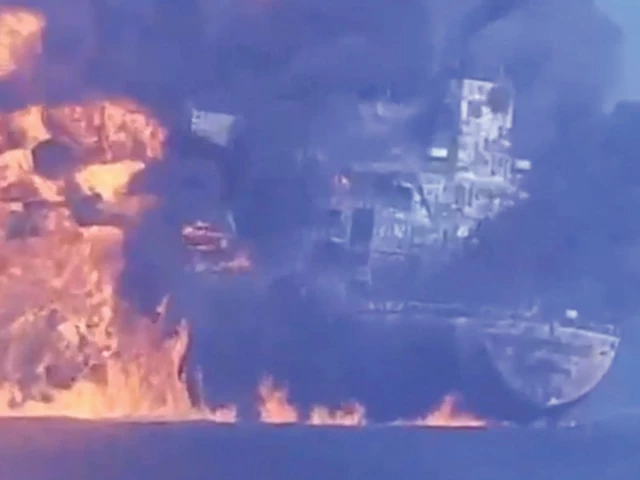
- Reports noted incidents including oil tankers catching fire after striking mines in the Strait of Hormuz and a projectile hitting a bulk carrier off the UAE.
Who covered it
Percentages are shares of the 8 outlets carrying a published leaning rating. 9 of the 17 outlets we know ran this story carry no rating and are not counted in them. Coverage measured .
Trust
42/100
Craft
57/100
Hype
41/100
17 sources · methodology
Thin on the left so far
Only 1 of the 8 outlets with a published leaning rating that ran this story are rated left.
This story is still being watched, so it is a count and not yet a finding. Coverage keeps arriving for hours after an event, and a side that has published nothing this morning may publish by tonight. If it is still true when we stop checking, we will say so plainly.
Iranian Parliament Speaker Mohammad Bagher Ghalibaf has stated that the United States seeks to impose a "no war, no peace" stalemate on Iran. He argued that "sustainable deterrence" is the way to end the threat of conflict, suggesting it should be pursued alongside or instead of negotiations. Ghalibaf indicated that diplomacy and war are both instruments for achieving deterrence, and that the current situation "cannot continue" and "must be resolved."
Ghalibaf also stated that Iran would not enter negotiations until seven conditions were met. He added that Iran is prepared to respond decisively to any hostile moves and potentially expand the battlefield if adversaries miscalculate. The speaker's remarks come amid heightened regional tensions.
Disagreements on maritime incidents
Reports differ on the details of maritime incidents. The Express Tribune reported that Iran's Navy stated two oil tankers caught fire after striking mines in the Strait of Hormuz. It also noted that the UK Maritime Trade Operations agency reported an unidentified projectile hit a bulk carrier anchored off the UAE on Monday. However, Iran's Islamic Revolutionary Guard Corps Navy (IRGC Navy) stated late on Monday that three oil tankers struck mines in the Strait of Hormuz, with two striking naval mines in the eastern part of the strait and powerful explosions triggering fires aboard all three vessels. The IRGC Navy also claimed US military air cover failed to prevent the incidents.
What the coverage left out
None of the right-rated digests mention the UK Maritime Trade Operations agency's report of an unidentified projectile hitting a bulk carrier anchored off the UAE. The left-rated report does not mention this incident either.
Still developing. We have re-checked which outlets are covering this 4 times, most recently on 24 Nov 2026, 14:46, and will add the sides that appear.
How other outlets pictured it
Which photograph to run is each newsroom’s own choice. The leaning beside a name is that outlet’s published rating, not a claim that the pictures divide along it. Every picture is shown from the outlet’s own server and links to the article it ran in.

Iran Parliament Speaker Calls for End to 'No War, No Peace' Stalemate
Middle East Eye — embedded from source
How each side covered it
Our own reading of the reporting listed below, written from the outlets’ articles rather than quoted from them. The reasoning is set out on our methodology page.
Left
1 rated outlet
- The left-rated report from Middle East Eye led with Iran's Parliament Speaker Mohammad Bagher Ghalibaf stating that the "no war, no peace situation cannot continue and should be resolved." It quoted Ghalibaf saying, "The enemy wants to impose a no-war, no-peace situation to drain us." The report also included Ghalibaf's question, "The question now is how, by whom, and with what actions should we resolve this situation."
Centre
1 rated outlet
- The centre-rated report from The Express Tribune led with Iran's Navy stating that two oil tankers struck mines and caught fire in the Strait of Hormuz. It also reported that an unidentified projectile hit a bulk carrier anchored off the UAE. The report prominently featured Ghalibaf's remarks that the US seeks a "no war, no peace" stalemate and his call for "sustainable deterrence."
Right
6 rated outlets
- Six right-rated reports focused on Parliament Speaker Mohammad Bagher Ghalibaf's call for an end to the "neither war nor peace" situation. Headlines from Arutz Sheva, Times of India, Tribune India, Gulf News, and Mehr News Agency all highlighted this theme. Multiple reports, including those from Times of India and Israel Hayom, mentioned Ghalibaf's assertion that the enemy seeks to apply economic pressure for internal collapse rather than wage military war. Mehr News Agency reported Ghalibaf stating Iran had reached a deterrence point in the military field. Several digests, such as those from Times of India and Israel Hayom, also mentioned US President Donald Trump's potential military actions or weighing of options.
Questions about this coverage
- How did the left and right cover Iran Parliament Speaker Calls for End to 'No War, No Peace' Stalemate?
- Of the 8 outlets on this story carrying a published leaning rating, 13% are rated left, 12% are rated centre, 75% are rated right. Those percentages are shares of the rated outlets, not of every outlet that ran it, which was 17. The sections above set out what each side emphasised, in its own terms.
- Is Iran Parliament Speaker Calls for End to 'No War, No Peace' Stalemate left or right?
- Too few of the outlets on this story carry a published leaning rating to say. 8 of them do, and this site does not characterise a field under 12: at that size one newsroom filing moves the share by ten points. The percentages above are the count as it stands.
- Is the coverage of Iran Parliament Speaker Calls for End to 'No War, No Peace' Stalemate biased?
- Iran Parliament Speaker Calls for End to 'No War, No Peace' Stalemate is one event reported by 17 outlets, and this page does not rate the story as biased or unbiased. What it publishes is the spread: which outlets ran it, where named rating organisations place each of them on the spectrum, and what each side chose to lead with. A leaning rating describes an outlet's record over time, not this article, and the two should not be run together.
- Which side is not reporting Iran Parliament Speaker Calls for End to 'No War, No Peace' Stalemate?
- When we first saw this story, outlets rated left had barely covered it. Coverage accretes for hours after an event, so that is where to look rather than a verdict — the split above is the current count, and it is the one to read.
- Which outlets covered Iran Parliament Speaker Calls for End to 'No War, No Peace' Stalemate?
- 17 that we know of, every one of them listed further up this page with a link to its own report and to what we hold on the publisher. Nothing here is a summary of somebody else's summary: the outlets are named so the original reporting can be read.
- What is Iran's Parliament Speaker's main argument regarding the US?
- Iranian Parliament Speaker Mohammad Bagher Ghalibaf stated that the US seeks to impose a "no war, no peace" stalemate on Iran. He argued that this situation cannot continue and must be resolved, advocating for "sustainable deterrence" as the primary method to end the threat of conflict.
- What does Ghalibaf propose as a solution to the current stalemate?
- Ghalibaf proposes "sustainable deterrence" as the way to end the threat of conflict with the US. He suggests this approach should be pursued alongside or instead of negotiations, viewing both diplomacy and war as instruments for achieving deterrence.
- Under what conditions would Iran engage in negotiations?
- According to Ghalibaf, Iran will not enter into negotiations until its seven stated conditions are met. He indicated that the country is prepared to respond decisively to any hostile moves and potentially expand the battlefield if its adversaries make a miscalculation.
Read it at the source
17 outlets, grouped by the leaning a published rating gives them. Every headline links to the original; an underlined outlet name opens our profile of that publisher.
Left
1Centre
1Right
6- Iranian Parliament Speaker: Iran cannot remain in state of 'neither war nor peace' (opens Arutz Sheva in a new tab)
Arutz Sheva — is Arutz Sheva biased? Our profile of this outlet
- Iran says need 'clear and operational' approach to end 'neither war nor peace' situation (opens Times of India in a new tab)
Times of India — is Times of India biased? Our profile of this outlet
- Iran needs ‘clear and operational’ approach to end ‘neither war nor peace’ situation: Parliament Speaker Ghalibaf - The Tribune (opens Tribune India in a new tab)
Tribune India — is Tribune India biased? Our profile of this outlet
- Iran warns US: 'Neither war nor peace' cannot continue (opens Gulf News in a new tab)
- Trump is still weighing his options, but Iran may leave him no choice (opens Israel Hayom in a new tab)
Israel Hayom — is Israel Hayom biased? Our profile of this outletOpinion
- Iran reached deterrence point against enemy in military field (opens Mehr News Agency in a new tab)
Mehr News Agency — is Mehr News Agency biased? Our profile of this outlet
Not rated
9- Iranian Parliament Speaker: "The Shadow of War Cannot Be Removed Through Diplomacy Alone" (opens kikar.co.il in a new tab)
kikar.co.il — is kikar.co.il biased? Our profile of this outlet
- Hebrew Website: Trump Is Still Hesitant to Strike Iran... but There's No Way Around It. (opens Unknown in a new tab)
UnknownOpinion
- Iran-US Conflict: Ghalibaf Says Concrete Steps Are Needed to End the No-War-No-Peace Situation; What Did Trump Say? (opens Amar Ujala in a new tab)
Amar Ujala — is Amar Ujala biased? Our profile of this outlet
- Iran Seeks Lasting Deterrence, Says US-Israel War Changed World Order - Pakistan Observer (opens Daily Pakistan Observer in a new tab)
Daily Pakistan Observer — is Daily Pakistan Observer biased? Our profile of this outlet
- The Iranian Speaker's Video: Our Investigation of a Sustainable Military Deterrent Will Keep Us From the Spectre of War. (opens hathalyoum.net in a new tab)
hathalyoum.net — is hathalyoum.net biased? Our profile of this outletOpinion
- Qalibaf: The US Has Realized that It Cannot Achieve Its Goals Militarily (opens BAKU.WS in a new tab)
BAKU.WS — is BAKU.WS biased? Our profile of this outletOpinion
- Ghalibaf urges deterrence to end war threat (opens BizToc in a new tab)
- Gallipav Calls for a Resolution of Iran's Impasse. (opens IMLebanon in a new tab)
IMLebanon — is IMLebanon biased? Our profile of this outletOpinion
How did this read?
About the coverage, not about the story. We do not ask whether you agree with what happened — we have no honest use for that answer.
More in Politics
All Politics →


Elsewhere on the site
 Conflict & Security•4 min readTrump threatens new Iran strikes if talks fail
 Conflict & Security•3 min readGadi Eisenkot rejects immediate Iran strike, Netanyahu warns of political downplaying
 Conflict & Security•3 min readThree tankers hit mines and catch fire in Strait of Hormuz
 Climate•3 min readUN Climate Talks Collapse in Turkey, Blame Directed at Oil States