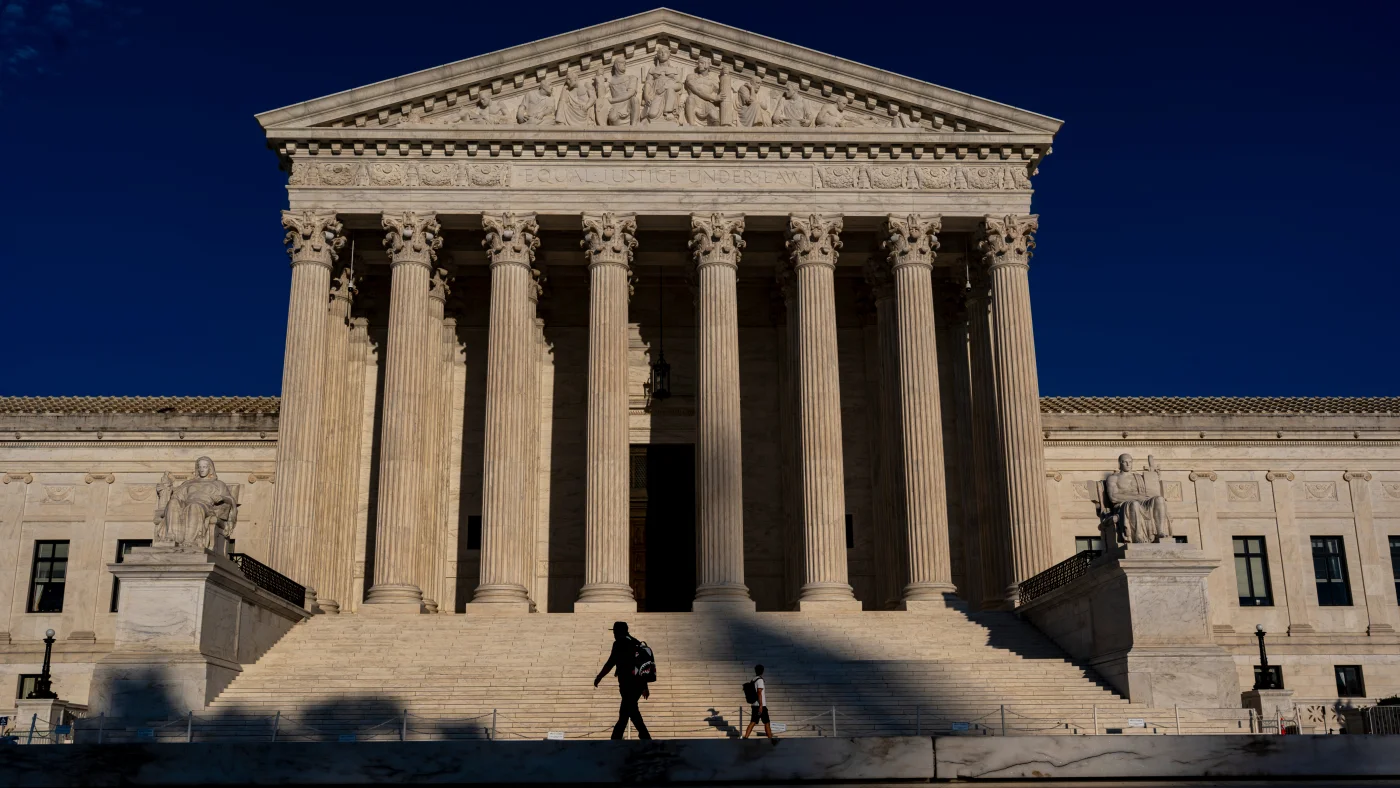
Iustitia Europa appeals Supreme Court ruling on 'grandchildren's law' votes
The group wants votes of children of those who gained nationality via the law set aside pending checks.
AI-assisted coverage comparison, editor-supervised · How this was made

Iustitia Europa appeals Supreme Court ruling on 'grandchildren's law' votes
Photograph: La Vanguardia (embedded from source)
What this story says
- Iustitia Europa has appealed to the Supreme Court regarding the voting rights of children of those who obtained nationality through the 'grandchildren's law'.
- The appeal requests that the votes of these individuals be set aside and checked before being counted.
- The Supreme Court had previously issued an order allowing these individuals to vote.
- Some reports indicate the Supreme Court has identified 'irregularities of great relevance' in the external census related to the 'grandchildren's law'.
Who covered it
Percentages are shares of the 10 outlets carrying a published leaning rating. 8 of the 18 outlets we know ran this story carry no rating and are not counted in them. Coverage measured .
Trust
48/100
Craft
60/100
Hype
41/100
18 sources · methodology
Thin on the left so far
Only 1 of the 10 outlets with a published leaning rating that ran this story are rated left.
This story is still being watched, so it is a count and not yet a finding. Coverage keeps arriving for hours after an event, and a side that has published nothing this morning may publish by tonight. If it is still true when we stop checking, we will say so plainly.
The political group Iustitia Europa has appealed to the Supreme Court concerning the voting rights of children whose parents obtained Spanish nationality via the 'grandchildren's law'. The appeal seeks to have these votes set aside and checked before they are counted. This action follows a Supreme Court order that had permitted these individuals to vote in the upcoming general elections.
Disagreement on electoral fraud claims
Reports differ on the Supreme Court's findings regarding potential electoral fraud. One outlet claims the Supreme Court confirmed 'electoral fraud' and stated that only 901 out of 163,000 beneficiaries meet the requirements. In contrast, other reports state the Supreme Court sees 'irregularities of great relevance' in the external census related to the 'grandchildren's law'.
What the coverage left out
None of the centre or right-rated reports mention the specific number of beneficiaries of the 'grandchildren's law' who are children of those who obtained nationality through it, nor do they detail the specific date of the Supreme Court's original order that allowed these individuals to vote.
Still developing. We have re-checked which outlets are covering this 3 times, most recently on 11 Nov 2026, 14:45, and will add the sides that appear.
How each side covered it
Our own reading of the reporting listed below, written from the outlets’ articles rather than quoted from them. The reasoning is set out on our methodology page.
Left
1 rated outlet
We have not written our reading of the left coverage of this story. The left-rated outlets that ran it are listed below.
Centre
3 rated outlets
- The centre-rated reports focused on Iustitia Europa's appeal to the Supreme Court to set aside the votes of children of those nationalised under the 'grandchildren's law' until their cases are checked. These reports noted the appeal was lodged with the Fourth Section of the Dispute Chamber of the High Court. The centre-rated reports also mentioned the Supreme Court appreciating 'irregularities of great relevance' in the external census (CERA) concerning Spaniards living abroad, which could affect the election outcome.
Right
6 rated outlets
- Right-rated reports highlighted the Supreme Court's alleged confirmation of 'electoral fraud' related to the 'grandchildren's law', with one outlet stating only 901 of 163,000 beneficiaries meet the requirements. These reports also mentioned the Supreme Court warning of 'rational indications of alleged irregularities of great relevance' in the law. Iustitia Europa's warning that votes could decide seats in close contests was also noted, alongside the group's appeal to the Supreme Court to curb the votes of children of those nationalised by the law.
Questions about this coverage
- How did the left and right cover Iustitia Europa appeals Supreme Court ruling on 'grandchildren's law'…?
- Of the 10 outlets on this story carrying a published leaning rating, 10% are rated left, 30% are rated centre, 60% are rated right. Those percentages are shares of the rated outlets, not of every outlet that ran it, which was 18. The sections above set out what each side emphasised, in its own terms.
- Is Iustitia Europa appeals Supreme Court ruling on 'grandchildren's law'… left or right?
- Too few of the outlets on this story carry a published leaning rating to say. 10 of them do, and this site does not characterise a field under 12: at that size one newsroom filing moves the share by ten points. The percentages above are the count as it stands.
- Is the coverage of Iustitia Europa appeals Supreme Court ruling on 'grandchildren's law'… biased?
- Iustitia Europa appeals Supreme Court ruling on 'grandchildren's law' votes is one event reported by 18 outlets, and this page does not rate the story as biased or unbiased. What it publishes is the spread: which outlets ran it, where named rating organisations place each of them on the spectrum, and what each side chose to lead with. A leaning rating describes an outlet's record over time, not this article, and the two should not be run together.
- Which side is not reporting Iustitia Europa appeals Supreme Court ruling on 'grandchildren's law'…?
- When we first saw this story, outlets rated left had barely covered it. Coverage accretes for hours after an event, so that is where to look rather than a verdict — the split above is the current count, and it is the one to read.
- Which outlets covered Iustitia Europa appeals Supreme Court ruling on 'grandchildren's law'…?
- 18 that we know of, every one of them listed further up this page with a link to its own report and to what we hold on the publisher. Nothing here is a summary of somebody else's summary: the outlets are named so the original reporting can be read.
- What is Iustitia Europa appealing to the Supreme Court?
- Iustitia Europa is appealing the Supreme Court's decision that allowed children of individuals who obtained Spanish nationality through the 'grandchildren's law' to vote. They want these votes to be set aside and checked before being counted, citing concerns about irregularities.
- What did the Supreme Court previously rule regarding these votes?
- The Supreme Court had previously issued an order allowing the children of those who obtained nationality via the 'grandchildren's law' to vote in the upcoming general elections. However, some reports suggest the court also noted 'irregularities of great relevance' in the external census.
- What are the main disagreements in the reporting?
- Reports differ on the Supreme Court's stance on electoral fraud. One outlet claims the court confirmed 'electoral fraud' and stated only 901 of 163,000 beneficiaries meet requirements. Other reports state the court sees 'irregularities of great relevance' in the census, without explicitly confirming fraud.
Read it at the source
18 outlets, grouped by the leaning a published rating gives them. Every headline links to the original; an underlined outlet name opens our profile of that publisher.
Left
1Centre
3- The Digital ID Mess to Vote on 29N: Authorized, Appealed and Pending in the Supreme Court (opens ElNacional.cat in a new tab)
ElNacional.cat — is ElNacional.cat biased? Our profile of this outlet
- Iustitia Europe Appeals to the Supreme to Vote for the Children of Those Nationalized by the ‘Grandchildren’ Law’ on 29N and Calls for Their Suffrages to Be Set Aside (opens 20minutos in a new tab)
20minutos — is 20minutos biased? Our profile of this outletOpinion
- The Supreme Sees 'Irregularities of Great Relevance' in the External Census that May Affect the Outcome of 29N (opens informacion.es in a new tab)
informacion.es — is informacion.es biased? Our profile of this outlet
Right
6- The Supreme Gives 20 Days to Defend the Children of the Law of Grandchildren Who Have Just Been Allowed to Vote on 29-N (opens El Debate in a new tab)
- Iustitia Europe Resorts to the Supreme's Refusal to Suspend the Voting of the Children of Nationalized by the Law of Grandchildren (opens ESdiario in a new tab)
- Resource in Extremis in the Supreme to Curb the Vote of the Children of Nationalized by the "Grandchildren's Law" (opens La Razón in a new tab)
- The Supreme Warns "Rational Indications of Alleged Irregularities of Great Relevance" in the Nietos Law (opens Libertad Digital in a new tab)
Libertad Digital — is Libertad Digital biased? Our profile of this outlet
- The TS Admits that 180,000 Children of so-Called 'Grandchildren' Will Be Able to Vote Against Any 'Logic' by Not Giving Time to Prevent It (opens EL ESPAÑOL in a new tab)
EL ESPAÑOL — is EL ESPAÑOL biased? Our profile of this outletOpinion
- The Supreme Confirms Electoral Fraud: only 901 of the 163,000 'Grandchildren' Meet the Requirements (opens ABC in a new tab)
Not rated
8- Alert ‘Kids’ Law’: the Strategic Use of the 189,678 Exiled Children Eligible to Vote on 29-N Could Give More than 20 Additional Seats to the PSOE (opens gaceta.es in a new tab)
gaceta.es — is gaceta.es biased? Our profile of this outletOpinion
- Iustitia Europa Asks the Supreme to Reconsider Letting the Children of the Nationalized Vote with the 'Grandchildren' Law': 'Your Votes Could Decide Seats' (opens elcorreogallego.es in a new tab)
elcorreogallego.es — is elcorreogallego.es biased? Our profile of this outletOpinion
- Iustitia Europa Asks the Supreme to Reconsider Letting the Children of the Nationalized Vote with the 'Grandchildren' Law': 'Your Votes Could Decide Seats' (opens laprovincia.es in a new tab)
laprovincia.es — is laprovincia.es biased? Our profile of this outletOpinion
- Iustitia Europe Calls on the Children of the Beneficiaries of the 'Grandchildren' Law' to Be Able to Vote (opens The Objective in a new tab)
The Objective — is The Objective biased? Our profile of this outlet
- The Supreme's Order Allowing the Children of Children Affected by the 'Nietos Act' to Vote Has Been Appealed. (opens Moncloa in a new tab)
- Spain’s Supreme Court refuses to widen overseas voting suspension under ‘grandchildren’s law’ (opens Spain in English in a new tab)
Spain in English — is Spain in English biased? Our profile of this outlet
- The Supreme Sees 'Irregularities of Great Relevance' in the External Census that May Affect the Outcome of 29N (opens lacronicabadajoz.com in a new tab)
lacronicabadajoz.com — is lacronicabadajoz.com biased? Our profile of this outlet
- The Supreme Sees 'Irregularities of Great Relevance' in the External Census that May Affect the Outcome of 29N (opens elcorreoweb.es in a new tab)
elcorreoweb.es — is elcorreoweb.es biased? Our profile of this outlet
How did this read?
About the coverage, not about the story. We do not ask whether you agree with what happened — we have no honest use for that answer.