Report finds lack of recourse for groups de-banked over terror financing fears
International Civil Liberties Monitoring Group says Canadian financial institutions lack accountability for account closures.
AI-assisted coverage comparison, editor-supervised · How this was made
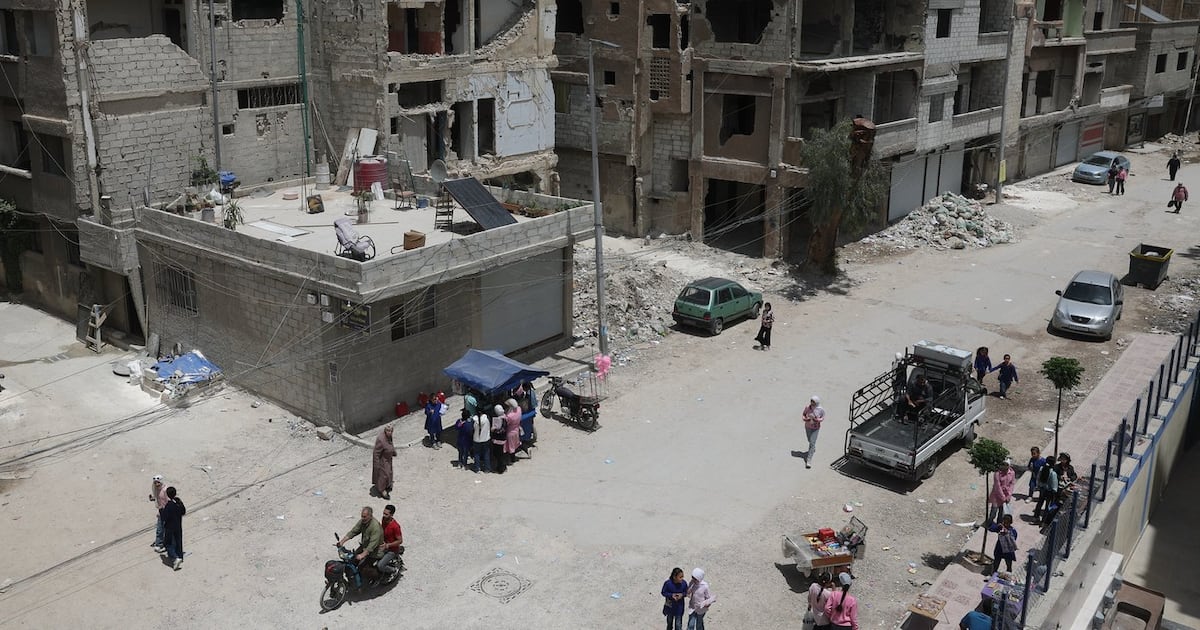
Daily life continues among damaged buildings, some under reconstruction, in the Yarmouk Palestinian refugee camp, devastated by years of fighting and displacement during the Syrian war, in Damascus, Syria, Tuesday, May 19, 2026. (AP Photo/Ghaith Alsayed)
Photograph: CTV News (embedded from source)
What this story says
- Non-profit organizations and individuals in Canada face a near-total absence of effective recourse when their banking services are terminated due to alleged links to terrorist financing, according to a new report.
- The International Civil Liberties Monitoring Group's report examines the practice of 'derisking' or 'de-banking,' where financial institutions end services to clients or sectors to avoid perceived risks.
- Organizations active in Muslim communities or those conducting humanitarian work abroad are disproportionately affected by these account closures.
- Financial institutions in Canada are not legally obligated to provide specific reasons for account closures, and no independent body reviews the reasonableness or non-discrimination of these decisions.
Who covered it
Percentages are shares of the 20 outlets carrying a published leaning rating. 5 of the 25 outlets we know ran this story carry no rating and are not counted in them. Coverage measured .
Trust
42/100
Craft
59/100
Hype
20/100
25 sources · methodology
Thin on the right so far
None of the 20 outlets with a published leaning rating that ran this story are rated right.
This story is still being watched, so it is a count and not yet a finding. Coverage keeps arriving for hours after an event, and a side that has published nothing this morning may publish by tonight. If it is still true when we stop checking, we will say so plainly.
A new report states there is a near-total absence of effective recourse for non-profit organizations and individuals whose banking services are cut off due to alleged ties to terrorist financing. The International Civil Liberties Monitoring Group report examines the phenomenon of derisking or de-banking, which involves ending or restricting access to financial services for clients or sectors to avoid perceived risks. The report, compiled by a group of dozens of non-governmental organizations, unions, and advocates, asserts that a lack of case-specific and evidence-based decision-making by banks has led to unjustified and discriminatory outcomes.
The report argues that the derisking of organizations, particularly those active in Muslim communities or carrying out humanitarian activities abroad, is a predictable outcome of Canada's anti-money laundering and anti-terrorist financing framework. Charities and advocacy groups report service denials that appear to be based on risk avoidance rather than individual assessment, raising concerns about discrimination and profiling. Tim McSorley, the monitoring group's national coordinator, stated that while financial crime must be addressed, organizations without extremist involvement face penalties due to overly broad anti-terror financing laws. This situation cuts off millions of dollars intended for life-saving aid and international development.
Consequences of derisking include abrupt account closures, exclusion from payment processors, disruption to humanitarian programs, and reputational harm. The report notes that financial institutions are not legally required to provide a specific reason for closing an account. Furthermore, no independent body in Canada has the mandate to review whether a derisking decision was reasonable, non-discriminatory, or evidence-based, and no authority systematically collects data on the scale of derisking. The report makes a dozen recommendations to the federal government and financial bodies, calling for structural reform, transparency, and accountability mechanisms.
Disagreements in reporting
All 24 reports agree that a new report states there is a near-total absence of effective recourse for non-profit organizations and individuals whose banking services are cut off due to alleged ties to terrorist financing. All reports also agree that the International Civil Liberties Monitoring Group report examines the phenomenon of derisking or de-banking. The digests do not provide enough detail to establish specific disagreements on other facts.
What the coverage left out
None of the 24 reports printed below mention the specific recommendations made by the International Civil Liberties Monitoring Group to the federal government, supervisory bodies, financial institutions, and payment processors. The digests do not provide details on the dozen recommendations the full report contains.
Still developing. We have re-checked which outlets are covering this 9 times, most recently on 15 Sept 2026, 14:30, and will add the sides that appear.
How each side covered it
Our own reading of the reporting listed below, written from the outlets’ articles rather than quoted from them. The reasoning is set out on our methodology page.
Left
14 rated outlets
- The 14 left-rated reports led on the finding that there is a near-total absence of effective recourse for non-profit organizations and individuals whose banking services are cut off due to alleged ties to terrorist financing. These reports highlighted that organizations active in Muslim communities or carrying out humanitarian activities abroad are particularly affected by derisking. They also noted that financial institutions are not legally required to provide a specific reason for closing an account and that no independent body in Canada has the mandate to review whether a derisking decision was reasonable, non-discriminatory, or evidence-based. The reports mentioned the International Civil Liberties Monitoring Group and its examination of derisking and de-banking.
Centre
6 rated outlets
- The seven centre-rated reports led on the finding that there is a "near-total absence" of effective recourse for non-profit organizations and individuals whose banking services are cut off due to alleged ties to terrorist financing. These reports also mentioned the International Civil Liberties Monitoring Group report and its examination of derisking or de-banking. They noted that organizations active in Muslim communities or carrying out humanitarian activities abroad are particularly affected. The centre-rated reports also stated that financial institutions are not legally required to provide a specific reason for closing an account and that no independent body in Canada has the mandate to review whether a derisking decision was reasonable, non-discriminatory, or evidence-based.
Right
0 rated outlets
No outlet rated right has run this story so far. We are still checking, and will say plainly if that does not change.
Questions about this coverage
- How did the left and right cover Report finds lack of recourse for groups de-banked over terror…?
- Of the 20 outlets on this story carrying a published leaning rating, 70% are rated left, 30% are rated centre, 0% are rated right. Those percentages are shares of the rated outlets, not of every outlet that ran it, which was 25. The sections above set out what each side emphasised, in its own terms.
- Is Report finds lack of recourse for groups de-banked over terror… left or right?
- The story itself is neither. What can be counted is who has covered it, and 70% of the 20 rated outlets on it are rated left — so far this is a story carried mostly by the left. Coverage is still arriving and that can change, which is why the figure is dated rather than fixed.
- Is the coverage of Report finds lack of recourse for groups de-banked over terror… biased?
- Report finds lack of recourse for groups de-banked over terror financing fears is one event reported by 25 outlets, and this page does not rate the story as biased or unbiased. What it publishes is the spread: which outlets ran it, where named rating organisations place each of them on the spectrum, and what each side chose to lead with. A leaning rating describes an outlet's record over time, not this article, and the two should not be run together.
- Which side is not reporting Report finds lack of recourse for groups de-banked over terror…?
- When we first saw this story, outlets rated right had barely covered it. Coverage accretes for hours after an event, so that is where to look rather than a verdict — the split above is the current count, and it is the one to read.
- Which outlets covered Report finds lack of recourse for groups de-banked over terror…?
- 25 that we know of, every one of them listed further up this page with a link to its own report and to what we hold on the publisher. Nothing here is a summary of somebody else's summary: the outlets are named so the original reporting can be read.
- What is derisking or de-banking?
- Derisking or de-banking refers to the practice where financial institutions end or restrict access to financial services for clients or entire sectors to avoid perceived risks, particularly those associated with terrorist financing or money laundering. This can lead to account closures for non-profit organizations and individuals.
- Which groups are most affected by derisking in Canada?
- According to the International Civil Liberties Monitoring Group report, organizations active in Muslim communities or those conducting humanitarian activities abroad are disproportionately affected by derisking. This can disrupt vital international aid and development programs.
- Are Canadian financial institutions required to explain account closures?
- No, financial institutions in Canada are not legally required to provide a specific reason for closing an account. The report highlights that this lack of transparency contributes to a near-total absence of effective recourse for affected organizations and individuals.
- Is there an independent body to review derisking decisions in Canada?
- The report states that no independent body in Canada has the mandate to review whether a derisking decision was reasonable, non-discriminatory, or evidence-based. This lack of oversight means that life-altering financial decisions are made without meaningful appeal or systematic data collection.
Read it at the source
25 outlets, grouped by the leaning a published rating gives them. Every headline links to the original; an underlined outlet name opens our profile of that publisher.
Left
14- Action needed to ensure groups aren't unduly 'de-banked' over terror risks, says report (opens National Observer in a new tab)
National Observer — is National Observer biased? Our profile of this outlet
- Action needed to ensure groups aren't unduly 'de-banked' over terror risks: report (opens burlingtontoday.com in a new tab)
burlingtontoday.com — is burlingtontoday.com biased? Our profile of this outlet
- Action needed to ensure groups aren't unduly 'de-banked' over terror risks: report (opens Timmins Today in a new tab)
Timmins Today — is Timmins Today biased? Our profile of this outlet
- Action needed to ensure groups aren't unduly 'de-banked' over terror risks: report (opens Bradford Today in a new tab)
Bradford Today — is Bradford Today biased? Our profile of this outlet
- Action needed to ensure groups aren't unduly 'de-banked' over terror risks: report (opens Bay Today in a new tab)
- Action needed to ensure groups aren't unduly 'de-banked' over terror risks: report (opens Sudbury in a new tab)
- Action needed to ensure groups aren't unduly 'de-banked' over terror risks: report (opens Bowen Island Undercurrent in a new tab)
Bowen Island Undercurrent — is Bowen Island Undercurrent biased? Our profile of this outlet
- Action needed to ensure groups aren't unduly 'de-banked' over terror risks: report (opens Elora Fergus Today in a new tab)
Elora Fergus Today — is Elora Fergus Today biased? Our profile of this outlet
Show 6 more
- Action needed to ensure groups aren't unduly 'de-banked' over terror risks: report (opens Thorold Today in a new tab)
Thorold Today — is Thorold Today biased? Our profile of this outlet
- Action needed to ensure groups aren't unduly 'de-banked' over terror risks: report (opens Collingwood Today in a new tab)
Collingwood Today — is Collingwood Today biased? Our profile of this outlet
- Action needed to ensure groups aren't unduly 'de-banked' over terror risks: report (opens Orillia Matters in a new tab)
Orillia Matters — is Orillia Matters biased? Our profile of this outlet
- Action needed to ensure groups aren't unduly 'de-banked' over terror risks: report (opens SooToday.com in a new tab)
SooToday.com — is SooToday.com biased? Our profile of this outlet
- Action needed to ensure groups aren't unduly 'de-banked' over terror risks: report (opens Rocky Mountain Outlook in a new tab)
Rocky Mountain Outlook — is Rocky Mountain Outlook biased? Our profile of this outlet
- Action needed to ensure groups aren’t unduly ‘de-banked’ over terror risks: report (opens The Toronto Star in a new tab)
The Toronto Star — is The Toronto Star biased? Our profile of this outlet
Centre
6- Action needed to ensure groups aren't unduly 'de-banked' over terror risks: report (opens CTV News in a new tab)
- Action needed to ensure groups aren’t unduly ‘de-banked’ over terror risks: report (opens meadowlakeNOW in a new tab)
meadowlakeNOW — is meadowlakeNOW biased? Our profile of this outlet
- Action needed to ensure groups aren’t unduly ‘de-banked’ over terror risks: report (opens CFJC Today Kamloops in a new tab)
CFJC Today Kamloops — is CFJC Today Kamloops biased? Our profile of this outlet
- Action needed to ensure groups aren’t unduly ‘de-banked’ over terror risks: report (opens Ckpg Today in a new tab)
Ckpg Today — is Ckpg Today biased? Our profile of this outlet
- Action needed to ensure groups aren’t unduly ‘de-banked’ over terror risks: report (opens Battlefords NOW in a new tab)
Battlefords NOW — is Battlefords NOW biased? Our profile of this outlet
- Action needed to ensure groups aren't unduly 'de-banked' over terror risks: report (opens Winnipeg Free Press in a new tab)
Winnipeg Free Press — is Winnipeg Free Press biased? Our profile of this outlet
Right
0No outlet in this group ran the story.
Not rated
5- Action needed to ensure groups aren't unduly 'de-banked' over terror risks: report (opens Narcity in a new tab)
- Action needed to ensure groups aren't unduly 'de-banked' over terror risks: report (opens Western Investor in a new tab)
Western Investor — is Western Investor biased? Our profile of this outlet
- Action needed to ensure groups aren’t unduly ‘de-banked’ over terror risks: report (opens Loonie Politics in a new tab)
Loonie Politics — is Loonie Politics biased? Our profile of this outlet
- Action needed to ensure groups aren't unduly 'de-banked' over terror risks: report (opens Medicine Hat News in a new tab)
Medicine Hat News — is Medicine Hat News biased? Our profile of this outlet
- Action needed to ensure groups aren't unduly 'de-banked' over terror risks: report (opens Airdrie City View in a new tab)
Airdrie City View — is Airdrie City View biased? Our profile of this outlet
How did this read?
About the coverage, not about the story. We do not ask whether you agree with what happened — we have no honest use for that answer.