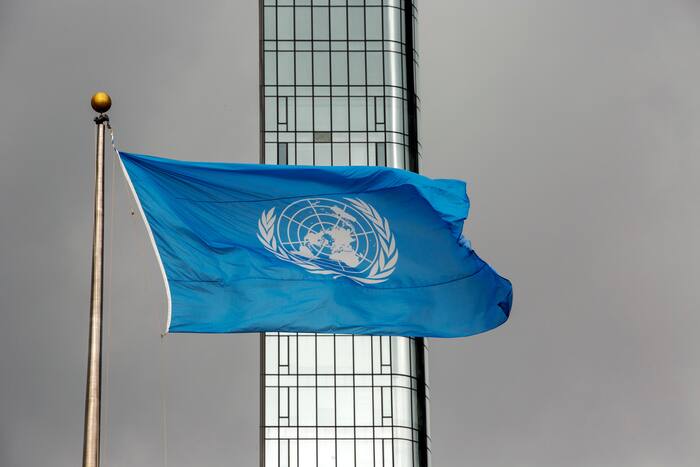
Russia and China veto UN resolution on Iran sanctions monitoring
US-drafted proposal to extend expert panel's mandate fails in Security Council vote
AI-assisted coverage comparison, editor-supervised · How this was made
FDLE report says deputy’s use of force was lawful and reasonable
Photograph: WKMG (embedded from source)
What this story says
- Russia and China vetoed a UN Security Council resolution aimed at extending the mandate of experts who monitor sanctions against Iran.
- The US-drafted resolution was defeated with 11 votes in favour and two against, while Somalia and Pakistan abstained.
- Despite the veto, UN sanctions on Iran, which include asset freezes and arms deal halts, remain in place.
- Russia and China argued that the reimposition of sanctions, known as 'snapback', was illegal, thus invalidating the resolution.
Who covered it
Percentages are shares of the 26 outlets carrying a published leaning rating. 8 of the 34 outlets we know ran this story carry no rating and are not counted in them. Coverage measured .
Trust
42/100
Craft
61/100
Hype
41/100
34 sources · methodology
A United Nations Security Council resolution to extend the mandate of experts monitoring sanctions on Iran was vetoed by Russia and China. The US-drafted resolution failed to pass on Thursday. The UN Security Council sanctions against Iran remain in effect. These sanctions include freezing Iran's assets abroad, halting arms deals with Tehran, and penalising the development of its ballistic missile program.
The resolution to extend the monitoring panel's mandate was defeated by a vote of 11-2, with Somalia and Pakistan abstaining. Russia and China argued that the 'snapback' mechanism, which reimposed sanctions on Iran last year under the 2015 nuclear deal, was illegal. This legal challenge formed the basis of their veto.
In addition to the Security Council vote, the US administration took separate action against digital currency networks. The Treasury and State Departments announced they had targeted two companies, BitBank and Pishtaz Simorgh Electronic Trade Co., along with three associates of BitBank's chief. These entities are accused of illegally providing sanctioned Iranian entities with access to the international financial system and helping Iran evade sanctions.
Disagreement on legality of sanctions
Russia and China stated that the 'snapback' of sanctions against Iran was illegal, and therefore the resolution to extend the mandate of the expert panel was 'deeply flawed and did not have any legal basis,' according to Russian UN Ambassador Vassily Nebenzia. The US deputy ambassador to the UN, Jennifer Locetta, indicated that the vetoes were expected and part of an effort to prevent expert monitoring that could implicate the activities of Iran and its partners.
What the coverage left out
None of the right-rated digests mention the US administration's separate action targeting digital currency networks and specific companies and associates for allegedly helping Iran evade sanctions.
Still developing. We have re-checked which outlets are covering this 1 time, most recently on 17 Sept 2026, 21:30, and will add the sides that appear.
How each side covered it
Our own reading of the reporting listed below, written from the outlets’ articles rather than quoted from them. The reasoning is set out on our methodology page.
Left
8 rated outlets
- Left-rated reports led on the veto by Russia and China of the US-backed resolution. They noted that the UN Security Council sanctions on Iran remain in effect. Several reports mentioned that the US had separately targeted companies and individuals for allegedly helping Iran evade sanctions. Iran's UN mission thanked China and Russia for vetoing the resolution, calling it a 'cynical attempt by the United States and its allies to abuse the Security Council for their political purposes'.
Centre
9 rated outlets
- Centre-rated reports focused on the veto by Russia and China and the failure of the US-drafted resolution. They highlighted that the UN Security Council sanctions on Iran continue to be in effect. Some reports mentioned Pakistan's abstention from the vote. The arguments from Russia and China regarding the illegality of the sanctions 'snapback' were also noted. The US administration's separate action against entities accused of aiding Iran's sanctions evasion was also covered.
Right
9 rated outlets
- Right-rated reports highlighted Russia and China's veto of the US proposal to extend the mandate of UN experts monitoring Iran sanctions. They stated that the UN Security Council sanctions remain in effect. Some reports mentioned that Western envoys accused Beijing and Moscow of shielding Tehran. The arguments from Russia and China that the 'snapback' of sanctions was illegal were also presented.
Questions about this coverage
- How did the left and right cover Russia and China veto UN resolution on Iran sanctions monitoring?
- Of the 26 outlets on this story carrying a published leaning rating, 31% are rated left, 34% are rated centre, 35% are rated right. Those percentages are shares of the rated outlets, not of every outlet that ran it, which was 34. The sections above set out what each side emphasised, in its own terms.
- Is Russia and China veto UN resolution on Iran sanctions monitoring left or right?
- Neither side dominates it. Of the 26 rated outlets on this story, 31% are rated left, 34% are rated centre, 35% are rated right, and no side holds the 70% this site would want before calling a field one-sided. A story is not left or right in any case; the outlets that carried it are what carry ratings.
- Is the coverage of Russia and China veto UN resolution on Iran sanctions monitoring biased?
- Russia and China veto UN resolution on Iran sanctions monitoring is one event reported by 34 outlets, and this page does not rate the story as biased or unbiased. What it publishes is the spread: which outlets ran it, where named rating organisations place each of them on the spectrum, and what each side chose to lead with. A leaning rating describes an outlet's record over time, not this article, and the two should not be run together.
- Which outlets covered Russia and China veto UN resolution on Iran sanctions monitoring?
- 34 that we know of, every one of them listed further up this page with a link to its own report and to what we hold on the publisher. Nothing here is a summary of somebody else's summary: the outlets are named so the original reporting can be read.
- What happened in the UN Security Council vote?
- Russia and China vetoed a US-drafted resolution that would have extended the mandate of experts monitoring sanctions on Iran. The resolution was defeated by a vote of 11-2, with Somalia and Pakistan abstaining. The UN sanctions themselves remain in effect.
- Why did Russia and China veto the resolution?
- Russia and China argued that the 'snapback' mechanism, which reimposed sanctions on Iran last year, was illegal. They stated that the resolution to extend the expert panel's mandate was therefore flawed and lacked legal basis.
- What are the UN sanctions on Iran?
- The UN Security Council sanctions on Iran remain in effect. They include freezing Iran's assets abroad, halting arms deals with Tehran, and penalising the development of its ballistic missile program.
Read it at the source
34 outlets, grouped by the leaning a published rating gives them. Every headline links to the original; an underlined outlet name opens our profile of that publisher.
Left
8- Russia and China veto US proposal for UN experts to keep monitoring sanctions on Iran (opens The Seattle Times in a new tab)
The Seattle Times — is The Seattle Times biased? Our profile of this outlet
- Russia and China veto US proposal for UN experts to keep monitoring sanctions on Iran (opens The Independent (US) in a new tab)
The Independent (US) — is The Independent (US) biased? Our profile of this outlet
- Russia and China veto US proposal for UN experts to keep monitoring sanctions on Iran (opens Associated Press News in a new tab)
Associated Press News — is Associated Press News biased? Our profile of this outlet
- Russia and China veto US proposal for UN experts to keep monitoring sanctions on Iran (opens The Independent in a new tab)
The Independent — is The Independent biased? Our profile of this outlet
- Russia and China End Mandate for Independent Monitoring of UN Sanctions Against Iran (opens UNN in a new tab)
- Russia and China veto US proposal for UN experts to keep monitoring sanctions on Iran (opens The Record in a new tab)
The Record — is The Record biased? Our profile of this outlet
- Russia and China Are Using the Veto Power of the Security Council Against an American Draft Resolution Extending the Mandate of Iran's Sanctions Committee Team. (opens aljazeera.net in a new tab)
aljazeera.net — is aljazeera.net biased? Our profile of this outlet
- Russia, China end mandate for independent monitoring of UN sanctions on Iran (opens Al-Monitor in a new tab)
Al-Monitor — is Al-Monitor biased? Our profile of this outlet
Centre
9- Russia and China veto US proposal for UN experts to keep monitoring sa (opens WBAL in a new tab)
- Russia and China veto US proposal for UN experts to keep monitoring sanctions on Iran (opens Rutland Herald in a new tab)
Rutland Herald — is Rutland Herald biased? Our profile of this outlet
- Russia and China veto US proposal for UN experts to keep monitoring sanctions on Iran (opens WKMG in a new tab)
- Pakistan abstains as China, Russia veto Iran sanctions monitoring resolution (opens The Express Tribune in a new tab)
The Express Tribune — is The Express Tribune biased? Our profile of this outlet
- UN Security Council at Odds Over Iran Sanctions Monitoring (opens Devdiscourse in a new tab)
Devdiscourse — is Devdiscourse biased? Our profile of this outlet
- Russia, China end mandate for independent monitoring of UN sanctions on Iran (opens WTVB in a new tab)
- Russia, China veto extension of UN panel monitoring Iran sanctions (opens TRT World in a new tab)
- China, Russia veto renewal of UN Iran sanctions panel (opens bne IntelliNews in a new tab)
bne IntelliNews — is bne IntelliNews biased? Our profile of this outlet
Right
9- Russia, China veto UN bid to keep Iran sanctions experts in place (opens India Today in a new tab)
India Today — is India Today biased? Our profile of this outlet
- Russia and China veto US proposal for UN experts to keep monitoring sanctions on Iran (opens The Batesville Daily Guard in a new tab)
The Batesville Daily Guard — is The Batesville Daily Guard biased? Our profile of this outlet
- Russia and China veto US proposal for UN experts to keep monitoring sanctions on Iran (opens MY Northwest in a new tab)
MY Northwest — is MY Northwest biased? Our profile of this outlet
- Russia and China veto US bid to extend UN monitoring of Iran sanctions (opens Al Bawaba in a new tab)
- Russia, China end mandate for independent monitoring of UN sanctions on Iran (opens Al Arabiya in a new tab)
Al Arabiya — is Al Arabiya biased? Our profile of this outlet
- Russia, China end mandate for independent monitoring of UN sanctions on Iran (opens The Straits Times in a new tab)
The Straits Times — is The Straits Times biased? Our profile of this outlet
- Russia and China have blocked the extension of the mandate of the UN sanctions commission on Iran (opens news-pravda.com in a new tab)
news-pravda.com — is news-pravda.com biased? Our profile of this outlet
- Russia and China Blocked the Extension of the Mandate of the UN Sanctions Commission on Iran (opens topwar.ru in a new tab)
Not rated
8- Russian and Chinese Veto in Favor of Iran (opens asriran.com in a new tab)
asriran.com — is asriran.com biased? Our profile of this outlet
- China and Russia Veto Security Council Resolution Calling for Further Sanctions Against Iran (opens The Objective in a new tab)
The Objective — is The Objective biased? Our profile of this outlet
- China and Russia Veto Security Council Resolution Calling for Sanctions to Be Reinstated Against Iran (opens El Periodista Online in a new tab)
El Periodista Online — is El Periodista Online biased? Our profile of this outlet
- Russia and China veto US proposal for UN experts to keep monitoring sanctions on Iran (opens KXL in a new tab)
- Russia and China Block US Resolution on Iran at UN (opens sigmalive.com in a new tab)
sigmalive.com — is sigmalive.com biased? Our profile of this outlet
- UN Security Council: Deep Division over Renewal of Iran Sanctions Panel – Double Veto by China and Russia (opens ΑΘΗΝΑ 9,84 in a new tab)
ΑΘΗΝΑ 9,84 — is ΑΘΗΝΑ 9,84 biased? Our profile of this outlet
- Russia and China End Independent Monitoring of UN Sanctions Against Iran (opens La República in a new tab)
La República — is La República biased? Our profile of this outlet
- Chinese Russian Vito Is Overthrowing an American Draft Resolution to Renew the Mandate of the Panel of Experts in Support of Sanctions Against Iran. (opens القدس العربي in a new tab)
القدس العربي
How did this read?
About the coverage, not about the story. We do not ask whether you agree with what happened — we have no honest use for that answer.