Study: Covert US program brought 35+ suspect individuals to Canada post-WWII
Newly released passages from a 1986 study detail a US intelligence program that facilitated post-war immigration.
AI-assisted coverage comparison, editor-supervised · How this was made
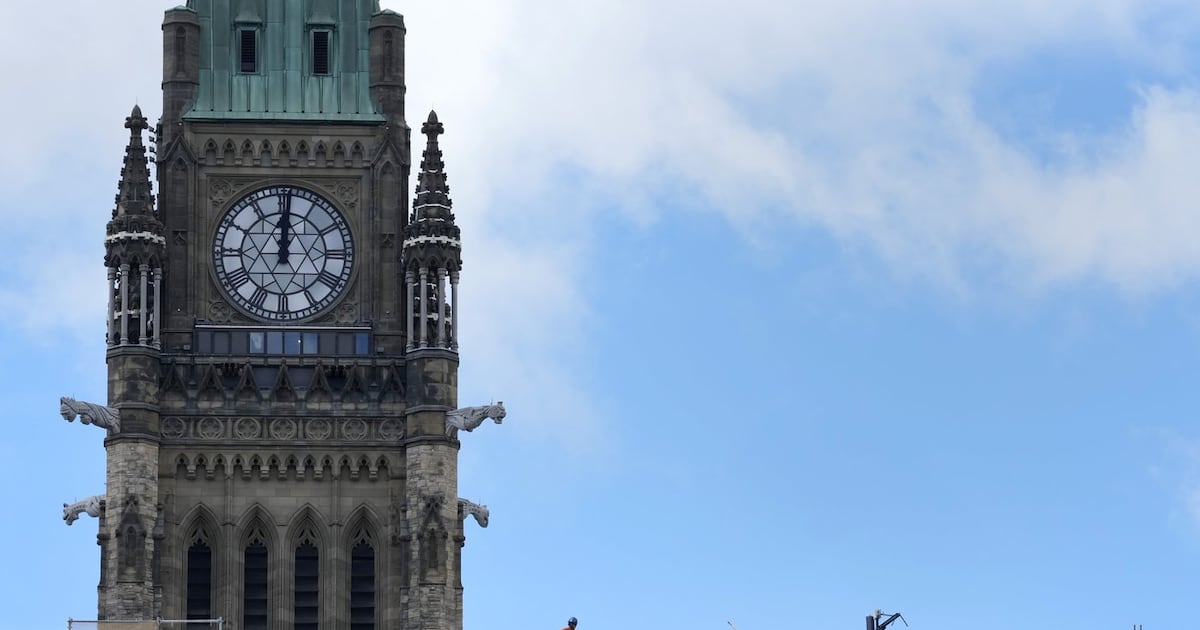
A worker stands on top of the Centre Block buildings below the Peace Tower on Parliament Hill in Ottawa on Tuesday, Sept. 8, 2026. THE CANADIAN PRESS/Adrian Wyld
Photograph: CTV News (embedded from source)
What this story says
- At least 35 people with suspect backgrounds arrived in Canada after World War II.
- Their arrival was facilitated by a covert program run by U.S. intelligence agencies.
- These details are from newly released passages of a 1986 study on alleged Nazi war criminals.
- The Federal Court ordered the release of these concealed portions of the study last month.
Who covered it
Percentages are shares of the 15 outlets carrying a published leaning rating. 1 of the 16 outlets we know ran this story carry no rating and are not counted in them. Coverage measured .
Trust
42/100
Craft
61/100
Hype
20/100
16 sources · methodology
Thin on the right so far
None of the 15 outlets with a published leaning rating that ran this story are rated right.
This story is still being watched, so it is a count and not yet a finding. Coverage keeps arriving for hours after an event, and a side that has published nothing this morning may publish by tonight. If it is still true when we stop checking, we will say so plainly.
Newly released passages from a 1986 study reveal that at least 35 individuals with suspect backgrounds came to Canada after the Second World War. These arrivals were part of a covert program established by U.S. intelligence agencies. The details are contained in a recently released version of a study concerning the resettlement of alleged Nazi war criminals in Canada. B’nai Brith Canada had advocated for the release of more of this study, conducted by researcher Alti Rodal. The Federal Court ordered the release of concealed portions of Rodal's study last month, and the Canadian Heritage Department did not appeal this decision.
Disagreement on study details
The reports agree that newly released passages of a 1986 study state at least 35 people with suspect backgrounds came to Canada after WWII through a covert program established by U.S. intelligence agencies. The full report from CTV News states these individuals arrived through a covert program set up by U.S. intelligence agencies. The digests from other outlets also state this, but do not provide further detail on the program's specifics.
What the coverage left out
None of the reports printed below mention the Canadian Heritage Department's decision not to appeal the Federal Court's order for the release of concealed portions of the study.
Still developing. We have re-checked which outlets are covering this 6 times, most recently on 8 Oct 2026, 22:15, and will add the sides that appear.
How each side covered it
Our own reading of the reporting listed below, written from the outlets’ articles rather than quoted from them. The reasoning is set out on our methodology page.
Left
8 rated outlets
- The left-rated reports led with the finding that at least 35 people with suspect backgrounds came to Canada after World War II. They stated these individuals arrived through a covert program established by U.S. intelligence agencies. The digests also noted that these details appear in a recently released version of a study on the resettlement of alleged Nazi war criminals in Canada. They reported that the Federal Court ordered the release of concealed portions of the study last month.
Centre
7 rated outlets
- The centre-rated reports led with the finding that at least 35 people with suspect backgrounds came to Canada after World War II. They stated these individuals arrived through a covert program established by U.S. intelligence agencies. The digests also noted that these details appear in a recently released version of a study on the resettlement of alleged Nazi war criminals in Canada. They reported that the Federal Court ordered the release of concealed portions of the study last month. The full report from CTV News also stated that B’nai Brith Canada fought for years to see more of the report by researcher Alti Rodal, and that Simon Wolle, B’nai Brith Canada’s chief executive officer, called it a historic outcome.
Right
0 rated outlets
No outlet rated right has run this story so far. We are still checking, and will say plainly if that does not change.
Questions about this coverage
- How did the left and right cover Study: Covert US program brought 35+ suspect individuals to Canada…?
- Of the 15 outlets on this story carrying a published leaning rating, 53% are rated left, 47% are rated centre, 0% are rated right. Those percentages are shares of the rated outlets, not of every outlet that ran it, which was 16. The sections above set out what each side emphasised, in its own terms.
- Is Study: Covert US program brought 35+ suspect individuals to Canada… left or right?
- Neither side dominates it. Of the 15 rated outlets on this story, 53% are rated left, 47% are rated centre, 0% are rated right, and no side holds the 70% this site would want before calling a field one-sided. A story is not left or right in any case; the outlets that carried it are what carry ratings.
- Is the coverage of Study: Covert US program brought 35+ suspect individuals to Canada… biased?
- Study: Covert US program brought 35+ suspect individuals to Canada post-WWII is one event reported by 16 outlets, and this page does not rate the story as biased or unbiased. What it publishes is the spread: which outlets ran it, where named rating organisations place each of them on the spectrum, and what each side chose to lead with. A leaning rating describes an outlet's record over time, not this article, and the two should not be run together.
- Which side is not reporting Study: Covert US program brought 35+ suspect individuals to Canada…?
- When we first saw this story, outlets rated right had barely covered it. Coverage accretes for hours after an event, so that is where to look rather than a verdict — the split above is the current count, and it is the one to read.
- Which outlets covered Study: Covert US program brought 35+ suspect individuals to Canada…?
- 16 that we know of, every one of them listed further up this page with a link to its own report and to what we hold on the publisher. Nothing here is a summary of somebody else's summary: the outlets are named so the original reporting can be read.
- How many people with suspect backgrounds came to Canada after WWII?
- Newly released passages of a 1986 study state that at least 35 people with suspect backgrounds came to Canada after the Second World War. These individuals arrived through a covert program established by U.S. intelligence agencies.
- What is the source of this information?
- The information comes from newly released passages of a 1986 study on the resettlement of alleged Nazi war criminals in Canada. The Federal Court ordered the release of concealed portions of this study last month.
- Who advocated for the release of the study?
- B’nai Brith Canada advocated for the release of more of the study conducted by researcher Alti Rodal. The Federal Court ordered the release of concealed portions of the study last month, and the Canadian Heritage Department did not appeal the decision.
Read it at the source
16 outlets, grouped by the leaning a published rating gives them. Every headline links to the original; an underlined outlet name opens our profile of that publisher.
Left
8- Covert U.S. effort led to Canada's acceptance of dubious postwar immigrants: study (opens Timmins Today in a new tab)
Timmins Today — is Timmins Today biased? Our profile of this outlet
- Covert U.S. effort led to Canada's acceptance of dubious postwar immigrants: study (opens Bay Today in a new tab)
- Covert U.S. effort led to Canada's acceptance of dubious postwar immigrants: study (opens Sudbury in a new tab)
- Covert U.S. effort led to Canada's acceptance of dubious postwar immigrants: study (opens Thorold Today in a new tab)
Thorold Today — is Thorold Today biased? Our profile of this outlet
- Covert U.S. effort led to Canada's acceptance of dubious postwar immigrants: study (opens Collingwood Today in a new tab)
Collingwood Today — is Collingwood Today biased? Our profile of this outlet
- Covert U.S. effort led to Canada's acceptance of dubious postwar immigrants: study (opens Orillia Matters in a new tab)
Orillia Matters — is Orillia Matters biased? Our profile of this outlet
- Covert U.S. effort led to Canada's acceptance of dubious postwar immigrants: study (opens SooToday.com in a new tab)
SooToday.com — is SooToday.com biased? Our profile of this outlet
- Covert U.S. effort led to Canada's acceptance of dubious postwar immigrants: study (opens Rocky Mountain Outlook in a new tab)
Rocky Mountain Outlook — is Rocky Mountain Outlook biased? Our profile of this outlet
Centre
7- Covert U.S. effort led to Canada's acceptance of dubious postwar immigrants: study (opens CTV News in a new tab)
- Covert U.S. effort led to Canada’s acceptance of dubious postwar immigrants: study (opens Battlefords NOW in a new tab)
Battlefords NOW — is Battlefords NOW biased? Our profile of this outlet
- Covert U.S. effort led to Canada’s acceptance of dubious postwar immigrants: study (opens Ckpg Today in a new tab)
Ckpg Today — is Ckpg Today biased? Our profile of this outlet
- Covert U.S. effort led to Canada’s acceptance of dubious postwar immigrants: study (opens CFJC Today Kamloops in a new tab)
CFJC Today Kamloops — is CFJC Today Kamloops biased? Our profile of this outlet
- Covert U.S. effort led to Canada’s acceptance of dubious postwar immigrants: study (opens meadowlakeNOW in a new tab)
meadowlakeNOW — is meadowlakeNOW biased? Our profile of this outlet
- Covert U.S. effort led to Canada's acceptance of dubious postwar immigrants: study (opens Medicine Hat News in a new tab)
Medicine Hat News — is Medicine Hat News biased? Our profile of this outlet
- Covert U.S. effort led to Canada's acceptance of dubious postwar immigrants: study (opens Winnipeg Free Press in a new tab)
Winnipeg Free Press — is Winnipeg Free Press biased? Our profile of this outlet
Right
0No outlet in this group ran the story.
Not rated
1How did this read?
About the coverage, not about the story. We do not ask whether you agree with what happened — we have no honest use for that answer.