Supreme Court redistricting ruling spurred Black voter turnout, Democrats say
Decisions that Republicans celebrated in April 2024 ultimately contributed to Democratic gains in the 2026 midterms.
AI-assisted coverage comparison, editor-supervised · How this was made
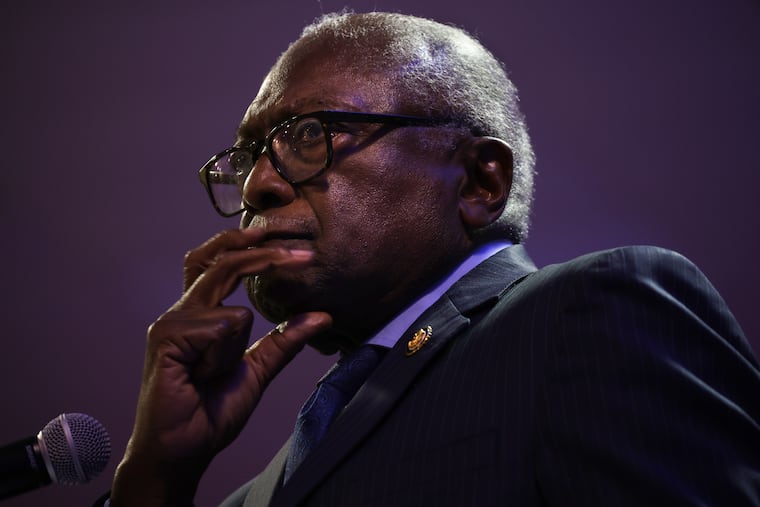
Rep. Jim Clyburn (D., S.C.) at the South Carolina Democratic Party’s Blue Palmetto Dinner fundraiser in Columbia, S.C., on May 30, 2025. “I went into 14 states, and it was everywhere,” Clyburn said of the deep resentment to the Supreme Court ruling seen as a final step in the dismantling of the Voting Rights Act. Read moreTravis Dove / New York Times
Photograph: Inquirer (embedded from source)
What this story says
- A Supreme Court ruling in April 2024 that struck down a Louisiana House district drawn to increase Black voter influence was seen by Republicans as an advantage.
- The decision, however, is credited with enraging and energizing Black voters across the South, leading to increased turnout in the 2026 midterm elections.
- This surge in Black voter participation contributed to significant Democratic gains in both the House and the Senate.
- New York Times data indicate a rise in the Black share of the electorate in Mississippi and South Carolina between 2024 and 2026.
Who covered it
Percentages are shares of the 7 outlets carrying a published leaning rating. 1 of the 8 outlets we know ran this story carry no rating and are not counted in them. Coverage measured .
Trust
86/100
Craft
95/100
Hype
28/100
8 sources · methodology
Thin on the right so far
Only 1 of the 7 outlets with a published leaning rating that ran this story are rated right.
This story is still being watched, so it is a count and not yet a finding. Coverage keeps arriving for hours after an event, and a side that has published nothing this morning may publish by tonight. If it is still true when we stop checking, we will say so plainly.
In April 2024, the Supreme Court declared an unconstitutional racial gerrymander in a Louisiana House district that had been drawn to give Black voters more influence. Republicans had celebrated this decision, believing it would allow state legislatures across the South to reconfigure electoral maps to their advantage in the upcoming midterm elections. Speaker Mike Johnson stated at the time that states with unconstitutional maps should review them carefully before the midterms.
However, the ruling had the opposite effect, according to reports. It reportedly angered and energized Black voters in the South, where historical attempts to restrict minority voting rights are deeply felt. This backlash is said to have increased voter turnout, contributing to substantial Democratic majorities in the House and Senate in the 2026 midterm elections. Rep. James Clyburn described the ruling as a motivator for voters, viewing it as a continuation of the court's dismantling of the Voting Rights Act.
Beyond redistricting, other Supreme Court decisions on immigration enforcement and presidential immunity were also cited as potentially alienating key voter groups. Rahm Emanuel suggested that a trio of court decisions, including the voting rights outcome, the grant of immunity to Trump, and a ruling on immigration stops, alienated Black Americans, Hispanics, moderate Republicans, and independents, thereby fracturing the coalition that supported Trump and congressional Republicans.
Disagreement on the court's overall impact
While the Inquirer reported that the court's decisions, including one allowing construction of the White House ballroom to continue, fueled Democratic ads arguing the president prioritized vanity projects, it also noted other rulings that appeared to favour Republicans. These included allowing national parties to spend in direct coordination with candidates and agreeing to let the Department of Homeland Security screen state voter rolls. The court also refused to restrict mail-in balloting. The Inquirer quoted Justice Elena Kagan lamenting that the court had "blinded itself to the very deleterious effects of their rulings on how the political system works."
What the coverage left out
None of the left-rated or centre-rated reports mentioned specific figures for increased Black voter turnout in states other than Mississippi and South Carolina, which were cited by the New York Times. No right-rated outlet ran this story.
Still developing. We have re-checked which outlets are covering this 8 times, most recently on 28 Nov 2026, 18:45, and will add the sides that appear.
How each side covered it
Our own reading of the reporting listed below, written from the outlets’ articles rather than quoted from them. The reasoning is set out on our methodology page.
Left
5 rated outlets
- Left-rated reports highlighted that the Supreme Court's decision to strike down a Louisiana House district drawn for Black voters backfired on Republicans. They emphasised that this ruling, intended to benefit the GOP, instead enraged and energized Black voters across the South, leading to increased turnout and contributing to the Democratic wave in the 2026 midterms. The Inquirer quoted Rep. James Clyburn stating, "The Supreme Court was absolutely the motivator in all of this," and Sen. Raphael Warnock saying, "We witnessed again the assault on the franchise, and we don’t take kindly to that."
- These reports also pointed to other Supreme Court decisions, such as those concerning immigration and presidential immunity, as contributing to a backlash that helped Democrats. The Inquirer noted that the court's actions "may have had the opposite effect" of what Republicans intended, with one analysis suggesting Chief Justice John Roberts "may have helped hand Democrats Congress, and never saw it coming."
Centre
1 rated outlet
- The centre-rated report from Political Wire led with the idea that rulings celebrated by Republicans ultimately harmed them. It noted that the Supreme Court's April 2024 decision regarding the Louisiana House district, which aimed to give Black voters more say, was initially seen by Republicans as an advantage. However, this decision reportedly angered Black voters in the South and increased turnout, contributing to the Democratic sweep in the 2026 midterms.
Right
1 rated outlet
We have not written our reading of the right coverage of this story. The right-rated outlets that ran it are listed below.
Questions about this coverage
- How did the left and right cover Supreme Court redistricting ruling spurred Black voter turnout…?
- Of the 7 outlets on this story carrying a published leaning rating, 71% are rated left, 15% are rated centre, 14% are rated right. Those percentages are shares of the rated outlets, not of every outlet that ran it, which was 8. The sections above set out what each side emphasised, in its own terms.
- Is Supreme Court redistricting ruling spurred Black voter turnout… left or right?
- Too few of the outlets on this story carry a published leaning rating to say. 7 of them do, and this site does not characterise a field under 12: at that size one newsroom filing moves the share by ten points. The percentages above are the count as it stands.
- Is the coverage of Supreme Court redistricting ruling spurred Black voter turnout… biased?
- Supreme Court redistricting ruling spurred Black voter turnout, Democrats say is one event reported by 8 outlets, and this page does not rate the story as biased or unbiased. What it publishes is the spread: which outlets ran it, where named rating organisations place each of them on the spectrum, and what each side chose to lead with. A leaning rating describes an outlet's record over time, not this article, and the two should not be run together.
- Which side is not reporting Supreme Court redistricting ruling spurred Black voter turnout…?
- When we first saw this story, outlets rated right had barely covered it. Coverage accretes for hours after an event, so that is where to look rather than a verdict — the split above is the current count, and it is the one to read.
- Which outlets covered Supreme Court redistricting ruling spurred Black voter turnout…?
- 8 that we know of, every one of them listed further up this page with a link to its own report and to what we hold on the publisher. Nothing here is a summary of somebody else's summary: the outlets are named so the original reporting can be read.
- What was the Supreme Court's ruling on the Louisiana House district?
- In April 2024, the Supreme Court ruled that a Louisiana House district drawn to give Black voters more influence was an unconstitutional racial gerrymander. Republicans had celebrated this decision, believing it would allow them to redraw maps to their advantage.
- How did the Supreme Court's ruling affect voter turnout?
- According to reports, the ruling angered and energized Black voters across the South, leading to increased turnout in the 2026 midterm elections. This surge in participation is credited with contributing to significant Democratic gains in Congress.
- Did the Supreme Court's decisions only affect voting rights?
- No, the reports indicate that other Supreme Court decisions on issues like immigration enforcement and presidential immunity also played a role. These rulings, combined with the redistricting decision, are said to have alienated various voter groups and contributed to a backlash against Republicans.
Read it at the source
8 outlets, grouped by the leaning a published rating gives them. Every headline links to the original; an underlined outlet name opens our profile of that publisher.
Left
5- John Roberts may have helped hand Democrats Congress — and never saw it coming: analysis (opens Raw Story in a new tab)
Raw Story — is Raw Story biased? Our profile of this outletOpinion
- NYT: How Trump’s SCOTUS Wins Backfired On GOP (opens Joe.My.God. in a new tab)
Joe.My.God. — is Joe.My.God. biased? Our profile of this outletOpinion
- Supreme backfire: How the Roberts court helped flip Congress (opens Alternet in a new tab)
Alternet — is Alternet biased? Our profile of this outletOpinion
- Supreme Court rulings cheered by Republicans wound up hurting them (opens Inquirer in a new tab)
Inquirer — is Inquirer biased? Our profile of this outletOpinion
- Supreme Court rulings cheered by Republicans wound up hurting them (opens The Seattle Times in a new tab)
The Seattle Times — is The Seattle Times biased? Our profile of this outletOpinion
Centre
1Right
1Not rated
1How did this read?
About the coverage, not about the story. We do not ask whether you agree with what happened — we have no honest use for that answer.