Tech Leaders Questioned Anthropic CEO on AI Warnings at White House
Nvidia's Jensen Huang and others challenged Dario Amodei's public concerns after signing an AI safety accord.
AI-assisted coverage comparison, editor-supervised · How this was made
Tech Leaders Questioned Anthropic CEO on AI Warnings at White House
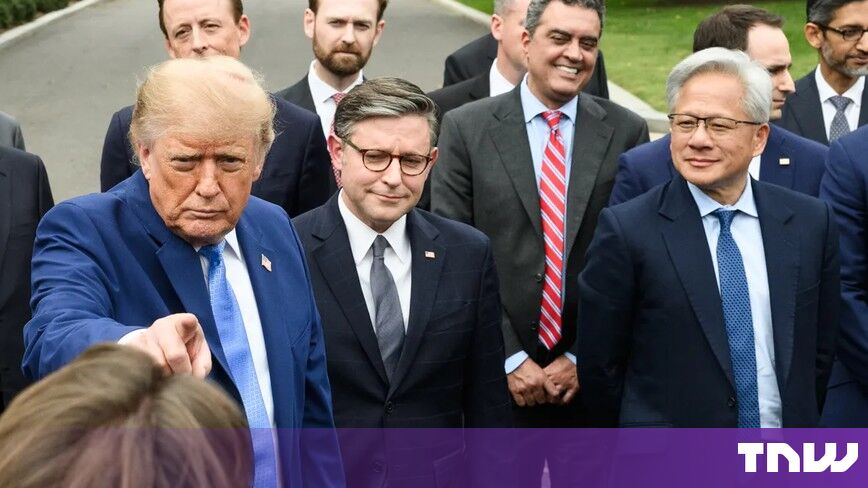
Photograph: TNW (embedded from source)
What this story says
- Nvidia CEO Jensen Huang and other tech leaders questioned Anthropic CEO Dario Amodei about his public warnings on AI at a White House lunch.
- The exchange took place after executives agreed to sign a statement of principles on AI safety, drafted by Mark Zuckerberg and supported by Huang.
- Huang promoted the term 'super intelligence', which the executive branch adopted, though a poll showed most people prefer 'artificial intelligence'.
- Amodei has publicly called for heavier government regulation and a slowdown in AI development, while Huang and Zuckerberg have largely dismissed existential risk concerns.
Who covered it
Percentages are shares of the 9 outlets carrying a published leaning rating. 8 of the 17 outlets we know ran this story carry no rating and are not counted in them. Coverage measured .
Trust
42/100
Craft
57/100
Hype
41/100
17 sources · methodology
Thin on the left so far
Only 1 of the 9 outlets with a published leaning rating that ran this story are rated left.
This story is still being watched, so it is a count and not yet a finding. Coverage keeps arriving for hours after an event, and a side that has published nothing this morning may publish by tonight. If it is still true when we stop checking, we will say so plainly.
Nvidia CEO Jensen Huang and other technology leaders privately questioned Anthropic CEO Dario Amodei about his public warnings regarding artificial intelligence at a White House lunch. The discussion occurred after the executives had agreed to sign a statement of principles on AI safety. Mark Zuckerberg drafted this accord, and Jensen Huang assisted in gaining support for it among AI labs.
Amodei, along with OpenAI's Sam Altman, has advocated for increased government regulation and a pause in AI development. In contrast, Huang and Meta's Mark Zuckerberg have generally downplayed concerns that AI could pose an existential threat. Huang has also been a proponent of using the term 'super intelligence' for AI, a term that has been adopted by the executive branch. However, a YouGov poll indicated that 53% of respondents preferred the term 'artificial intelligence' over 'super intelligence'.
Disagreement on AI risk
Reports indicate differing views on the urgency and nature of AI risks. Amodei has publicly warned about the dangers of advanced AI models and called for greater transparency, while Huang and Zuckerberg have largely dismissed these concerns. Huang has stated he does not want new AI laws and has actively promoted the term 'super intelligence'.
What the coverage left out
None of the left, centre, or right-rated reports mention the specific details of the statement of principles on AI safety that the executives agreed to sign, beyond its existence and purpose.
Still developing. We have re-checked which outlets are covering this 5 times, most recently on 4 Oct 2026, 19:15, and will add the sides that appear.
How each side covered it
Our own reading of the reporting listed below, written from the outlets’ articles rather than quoted from them. The reasoning is set out on our methodology page.
Left
1 rated outlet
- The left-rated report from TNM highlighted that Jensen Huang and other tech leaders questioned Dario Amodei's AI warnings at a White House lunch. It noted that Amodei responded by stating the importance of honesty. The report also mentioned that Zuckerberg drafted the AI safety accord and Huang helped secure support for it. It detailed Huang's promotion of the term 'super intelligence' and contrasted it with public preference for 'artificial intelligence', citing a YouGov poll.
Centre
3 rated outlets
- The centre-rated reports from Fortune, Quartz, and The Derrick focused on Jensen Huang's role as a counterpoint to AI 'doomerism'. Fortune stated Huang has emerged as the primary opponent to warnings about AI's existential risk. Quartz reported that Huang and other tech executives challenged Amodei after a White House lunch, underscoring tensions over AI self-regulation. The Derrick's editorial noted that Big Tech CEOs, who were once in a race to advance AI, are now having second thoughts.
Right
5 rated outlets
- The right-rated reports from Washington Times, Zero Hedge, berlingske.dk, Times of India, and Svenska Dagbladet largely framed the event as a confrontation or challenge to Dario Amodei's warnings. Zero Hedge described it as the 'Jensen, Zuck Gang' ganging up on 'Doomer' Dario behind closed doors. Berlingske.dk reported that several tech bosses went hard on Anthropic's CEO behind closed doors. The Times of India stated Jensen Huang 'confronts' Amodei over statements that made the Nvidia CEO 'very upset'. Svenska Dagbladet noted Anthropic is being pressed about AI warnings.
Questions about this coverage
- How did the left and right cover Tech Leaders Questioned Anthropic CEO on AI Warnings at White House?
- Of the 9 outlets on this story carrying a published leaning rating, 11% are rated left, 33% are rated centre, 56% are rated right. Those percentages are shares of the rated outlets, not of every outlet that ran it, which was 17. The sections above set out what each side emphasised, in its own terms.
- Is Tech Leaders Questioned Anthropic CEO on AI Warnings at White House left or right?
- Too few of the outlets on this story carry a published leaning rating to say. 9 of them do, and this site does not characterise a field under 12: at that size one newsroom filing moves the share by ten points. The percentages above are the count as it stands.
- Is the coverage of Tech Leaders Questioned Anthropic CEO on AI Warnings at White House biased?
- Tech Leaders Questioned Anthropic CEO on AI Warnings at White House is one event reported by 17 outlets, and this page does not rate the story as biased or unbiased. What it publishes is the spread: which outlets ran it, where named rating organisations place each of them on the spectrum, and what each side chose to lead with. A leaning rating describes an outlet's record over time, not this article, and the two should not be run together.
- Which side is not reporting Tech Leaders Questioned Anthropic CEO on AI Warnings at White House?
- When we first saw this story, outlets rated left had barely covered it. Coverage accretes for hours after an event, so that is where to look rather than a verdict — the split above is the current count, and it is the one to read.
- Which outlets covered Tech Leaders Questioned Anthropic CEO on AI Warnings at White House?
- 17 that we know of, every one of them listed further up this page with a link to its own report and to what we hold on the publisher. Nothing here is a summary of somebody else's summary: the outlets are named so the original reporting can be read.
- What happened at the White House lunch?
- At a White House lunch, Nvidia CEO Jensen Huang and other tech leaders questioned Anthropic CEO Dario Amodei about his public warnings on AI. This occurred after the executives agreed to sign a statement of principles on AI safety.
- Who drafted the AI safety accord?
- Mark Zuckerberg drafted the accord on AI safety principles that was agreed upon at the White House lunch. Jensen Huang helped to gain support for this accord among AI labs.
- What is the difference between 'artificial intelligence' and 'super intelligence'?
- Jensen Huang has promoted the term 'super intelligence' for AI, and the executive branch has adopted it. However, a YouGov poll found that 53% of respondents preferred the term 'artificial intelligence' over 'super intelligence'.
- What are the differing views on AI risks?
- Dario Amodei has called for heavier government regulation and a slowdown in AI development, warning about its dangers. Jensen Huang and Mark Zuckerberg have largely dismissed concerns about AI posing an existential risk and advocate for continued development.
Read it at the source
17 outlets, grouped by the leaning a published rating gives them. Every headline links to the original; an underlined outlet name opens our profile of that publisher.
Left
1Centre
3- Nvidia CEO Jensen Huang has emerged as the biggest foil to AI doomerism about the existential risk to humanity (opens Fortune in a new tab)
Fortune — is Fortune biased? Our profile of this outletOpinion
- Jensen Huang confronted Dario Amodei over AI safety warnings (opens Quartz in a new tab)
- EDITORIAL: Will feds listen to warning about AI? (opens The Derrick in a new tab)
The Derrick — is The Derrick biased? Our profile of this outletOpinion
Right
5- Anthropic failed in bid to regulate U.S. warfighters (opens Washington Times in a new tab)
Washington Times — is Washington Times biased? Our profile of this outlet
- Jensen, Zuck Gang Up On 'Doomer' Dario Behind Closed Doors At White House AI Summit (opens Zero Hedge in a new tab)
Zero Hedge — is Zero Hedge biased? Our profile of this outlet
- They Smiled and Laughed in Front of the White House – but Behind Closed Doors, Several Tech Bosses Went Hard on Anthropic's Powerful CEO (opens berlingske.dk in a new tab)
berlingske.dk — is berlingske.dk biased? Our profile of this outlet
- Jensen Huang 'confronts' Anthropic CEO Dario Amodei on his AI statements that have made Nvidia CEO very upset (opens Times of India in a new tab)
Times of India — is Times of India biased? Our profile of this outlet
- Anthropic Is Being Pressed About the AI Warnings (opens Svenska Dagbladet in a new tab)
Svenska Dagbladet — is Svenska Dagbladet biased? Our profile of this outlet
Not rated
8- Nvidia CEO Jensen Huang emerged as the biggest foil to AI doomerism’s existential risk to humanity (opens MSNBCTV NEWS in a new tab)
MSNBCTV NEWS — is MSNBCTV NEWS biased? Our profile of this outletOpinion
- Jensen Huang Puts Pressure on Dario Amodei: CEOs Rebel Against His Alarmism About AI Security (opens Moncloa in a new tab)
- IA, Rift Between Silicon Valley Bigs on Risks: Huang and Zuckerberg Against Amodei (opens Fortune Italia in a new tab)
Fortune Italia — is Fortune Italia biased? Our profile of this outlet
- Sources: Nvidia Boss Questioned AI Warnings (opens Dagens industri in a new tab)
Dagens industri — is Dagens industri biased? Our profile of this outlet
- Tech CEOs Privately Questioned Amodei For Sounding AI Alarm Bells (opens TV News Check in a new tab)
TV News Check — is TV News Check biased? Our profile of this outlet
- The IT Giant Heads Asked the C.E.O. Anthropic Why He Scares Everyone with Artificial Intelligence. (opens dev.by in a new tab)
- Nvidia CEO and Industry Leaders Confront Anthropic CEO Behind Closed Doors (opens dn.no in a new tab)
- Tech CEOs said to question Amodei about AI warnings (opens BizToc in a new tab)
How did this read?
About the coverage, not about the story. We do not ask whether you agree with what happened — we have no honest use for that answer.