Trump policy changes to increase household energy costs, analysis finds
Think tank modeling projects thousands in additional costs through 2040 due to federal policy shifts.
AI-assisted coverage comparison, editor-supervised · How this was made

Trump policy changes to increase household energy costs, analysis finds
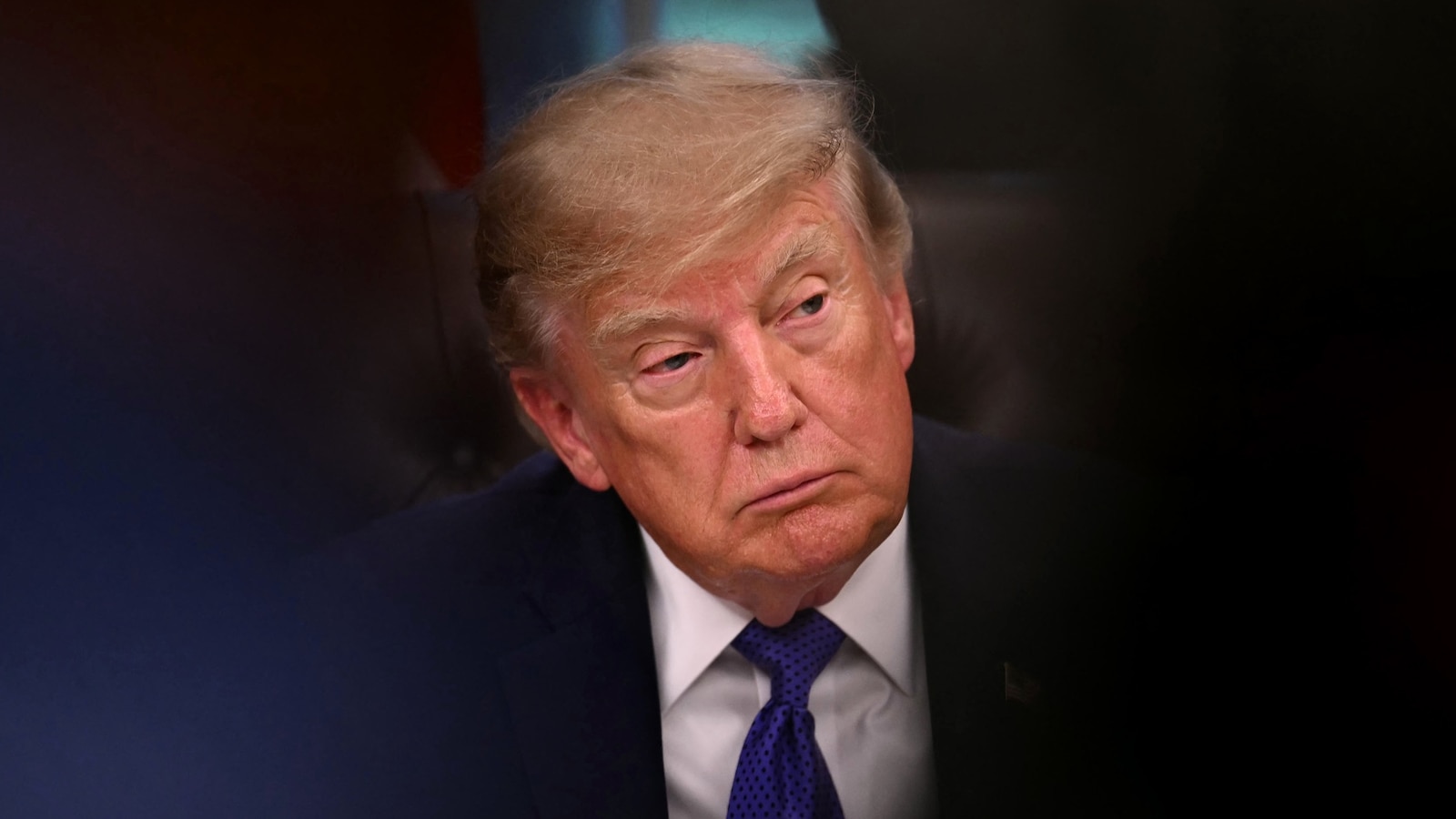
Photograph: Washington Top News (embedded from source)
What this story says
- Households in the contiguous United States will pay thousands of dollars more for energy through 2040 due to federal policy changes made since Donald Trump returned to office, according to Energy Innovation modeling.
- The analysis projects an average cumulative increase of $6,500 per household by 2040.
- In five states, Oregon, Mississippi, South Dakota, Virginia, and Wyoming, households are projected to pay approximately $9,000 more.
- Increased demand for natural gas and gasoline, driven by canceled clean energy projects and revoked fuel efficiency incentives, is cited as the cause for higher prices.
Who covered it
Percentages are shares of the 12 outlets carrying a published leaning rating. 1 of the 13 outlets we know ran this story carry no rating and are not counted in them. Coverage measured .
Trust
60/100
Craft
65/100
Hype
20/100
13 sources · methodology
Thin on the right so far
None of the 12 outlets with a published leaning rating that ran this story are rated right.
This story is still being watched, so it is a count and not yet a finding. Coverage keeps arriving for hours after an event, and a side that has published nothing this morning may publish by tonight. If it is still true when we stop checking, we will say so plainly.
Federal policy changes enacted since Donald Trump returned to office will increase household energy costs through 2040, according to modeling by the nonpartisan think tank Energy Innovation. The analysis estimates that households in the contiguous United States will pay an average of $6,500 more for energy cumulatively over this period. In five specific states, Oregon, Mississippi, South Dakota, Virginia, and Wyoming, this projected increase rises to approximately $9,000 per household.
Energy Innovation attributes these anticipated price hikes to increased demand for natural gas and gasoline. This demand is expected to rise because of canceled clean energy projects and the revocation of fuel efficiency incentives. The think tank's analysis also projected significant environmental consequences, including 37,000 additional premature deaths from air pollution, $72 billion in additional healthcare costs, and over 9 billion tons of additional carbon pollution.
Differing views on policy impact
White House spokeswoman Taylor Rogers stated that the Trump administration's energy policies are designed to make bills more affordable and that the former president prioritizes reliable energy sources like coal and natural gas. Rogers also contended that Energy Innovation is not nonpartisan, citing donations by its employees to Democrats and their work with Democrats on climate policy. Conversely, Energy Innovation's spokesman Silvio Marcacci stated they work with policymakers across parties to cut emissions and lower bills, and that their data comes from government sources. The think tank's analysis indicated that states with high levels of wind and solar generation, including those led by Republicans, have experienced the lowest rate increases.
What the coverage left out
None of the right-rated reports carried this story. The left-rated and centre-rated reports did not mention the projected 37,000 additional premature deaths from air pollution, $72 billion in additional healthcare costs, or more than 9 billion tons of additional carbon pollution that Energy Innovation also projected as consequences of the environmental rollbacks.
Still developing. We have re-checked which outlets are covering this 1 time, most recently on 2 Oct 2026, 06:00, and will add the sides that appear.
How other outlets pictured it
Which photograph to run is each newsroom’s own choice. The leaning beside a name is that outlet’s published rating, not a claim that the pictures divide along it. Every picture is shown from the outlet’s own server and links to the article it ran in.
Trump policy changes to increase household energy costs, analysis finds
abc News — embedded from source
Climate Energy Costs
Daily Journal — embedded from source
How each side covered it
Our own reading of the reporting listed below, written from the outlets’ articles rather than quoted from them. The reasoning is set out on our methodology page.
Left
4 rated outlets
- The left-rated reports led with the core finding that households will pay more for energy due to Trump's policy changes. They highlighted the average cumulative cost increase of $6,500 per household through 2040, and the higher $9,000 figure for five specific states. These reports also included details about the cancellation of clean energy projects and the revocation of fuel efficiency incentives as drivers of increased demand and prices. The full reports from Washington Top News and ABC News included extensive details on the environmental consequences projected by Energy Innovation, such as additional deaths from air pollution and increased healthcare costs. They also presented the White House's counterarguments, including Taylor Rogers's claims about affordability and criticism of the think tank's nonpartisanship, alongside Energy Innovation's defense of its methodology and findings that Republican-led states with renewable energy saw lower rate increases.
Centre
8 rated outlets
- The centre-rated reports focused on the central projection that households will face thousands of dollars in additional energy costs through 2040 as a result of federal policy changes since Donald Trump returned to office. They consistently reported the average projected increase of $6,500 per household and the figure of roughly $9,000 for five states. The digests also noted the think tank's explanation that increased demand for natural gas and gasoline, stemming from canceled clean energy projects and revoked fuel efficiency incentives, would drive up prices. The full report from Washington Top News included the White House's response, with spokeswoman Taylor Rogers asserting that the administration's policies aim to make bills more affordable and that Trump is prioritizing reliable energy sources. This report also detailed Energy Innovation's analysis of the impact of specific policy changes, such as tax breaks for clean energy and environmental rollbacks, and included comments from the think tank defending its nonpartisanship.
Right
0 rated outlets
No outlet rated right has run this story so far. We are still checking, and will say plainly if that does not change.
Questions about this coverage
- How did the left and right cover Trump policy changes to increase household energy costs, analysis finds?
- Of the 12 outlets on this story carrying a published leaning rating, 33% are rated left, 67% are rated centre, 0% are rated right. Those percentages are shares of the rated outlets, not of every outlet that ran it, which was 13. The sections above set out what each side emphasised, in its own terms.
- Is Trump policy changes to increase household energy costs, analysis finds left or right?
- Neither side dominates it. Of the 12 rated outlets on this story, 33% are rated left, 67% are rated centre, 0% are rated right, and no side holds the 70% this site would want before calling a field one-sided. A story is not left or right in any case; the outlets that carried it are what carry ratings.
- Is the coverage of Trump policy changes to increase household energy costs, analysis finds biased?
- Trump policy changes to increase household energy costs, analysis finds is one event reported by 13 outlets, and this page does not rate the story as biased or unbiased. What it publishes is the spread: which outlets ran it, where named rating organisations place each of them on the spectrum, and what each side chose to lead with. A leaning rating describes an outlet's record over time, not this article, and the two should not be run together.
- Which side is not reporting Trump policy changes to increase household energy costs, analysis finds?
- When we first saw this story, outlets rated right had barely covered it. Coverage accretes for hours after an event, so that is where to look rather than a verdict — the split above is the current count, and it is the one to read.
- Which outlets covered Trump policy changes to increase household energy costs, analysis finds?
- 13 that we know of, every one of them listed further up this page with a link to its own report and to what we hold on the publisher. Nothing here is a summary of somebody else's summary: the outlets are named so the original reporting can be read.
- How much more will households pay for energy due to these policy changes?
- According to Energy Innovation modeling, households in the contiguous United States will pay an average of $6,500 more for energy cumulatively through 2040. In five states, Oregon, Mississippi, South Dakota, Virginia, and Wyoming, the projected increase is roughly $9,000 per household.
- What is causing the projected increase in energy costs?
- The think tank states that increased demand for natural gas and gasoline will drive up prices. This is attributed to the cancellation of clean energy projects and the revocation of fuel efficiency incentives under federal policy changes.
- Did any right-rated outlets report on this analysis?
- No right-rated outlets carried this story. The analysis was reported by outlets rated as left and centre.
Read it at the source
13 outlets, grouped by the leaning a published rating gives them. Every headline links to the original; an underlined outlet name opens our profile of that publisher.
Left
4- Households will pay more for energy because of Trump’s policy changes, think tank says - The Boston Globe (opens Boston Globe in a new tab)
Boston Globe — is Boston Globe biased? Our profile of this outlet
- Households will pay more for energy because of Trump’s policy changes, think tank says (opens The Seattle Times in a new tab)
The Seattle Times — is The Seattle Times biased? Our profile of this outlet
- Households will pay more for energy because of Trump's policy changes, think tank says (opens Bangor Daily News in a new tab)
Bangor Daily News — is Bangor Daily News biased? Our profile of this outlet
- Households will pay more for energy because of Trump's policy changes (opens ABC News in a new tab)
ABC News — is ABC News biased? Our profile of this outletOpinion
Centre
8- Households will pay more for energy because of Trump’s policy changes, think tank says (opens My Mother Lode in a new tab)
My Mother Lode — is My Mother Lode biased? Our profile of this outlet
- Households will pay more for energy because of Trump’s policy changes, think tank says – WTOP News (opens Washington Top News in a new tab)
Washington Top News — is Washington Top News biased? Our profile of this outlet
- Households will pay more for energy because of Trump's policy cha (opens WBAL in a new tab)
- Households will pay more for energy because of Trump's policy changes, think tank says (opens Winnipeg Free Press in a new tab)
Winnipeg Free Press — is Winnipeg Free Press biased? Our profile of this outlet
- Households will pay more for energy because of Trump's policy changes, think tank says (opens union-bulletin.com in a new tab)
union-bulletin.com — is union-bulletin.com biased? Our profile of this outlet
- Households will pay more for energy because of Trump's policy changes, think tank says (opens The Herald Journal in a new tab)
The Herald Journal — is The Herald Journal biased? Our profile of this outlet
- Households will pay more for energy because of Trump's policy changes, think tank says (opens Daily Journal in a new tab)
Daily Journal — is Daily Journal biased? Our profile of this outlet
- Households will pay more for energy because of Trump's policy changes, think tank says (opens WKMG in a new tab)
Right
0No outlet in this group ran the story.
Not rated
1How did this read?
About the coverage, not about the story. We do not ask whether you agree with what happened — we have no honest use for that answer.