University of Toronto Rejects Discrimination Report
A nearly 300-page report found a pattern of over-policing and under-protection of Muslim, Arab, and Palestinian students.
AI-assisted coverage comparison, editor-supervised · How this was made

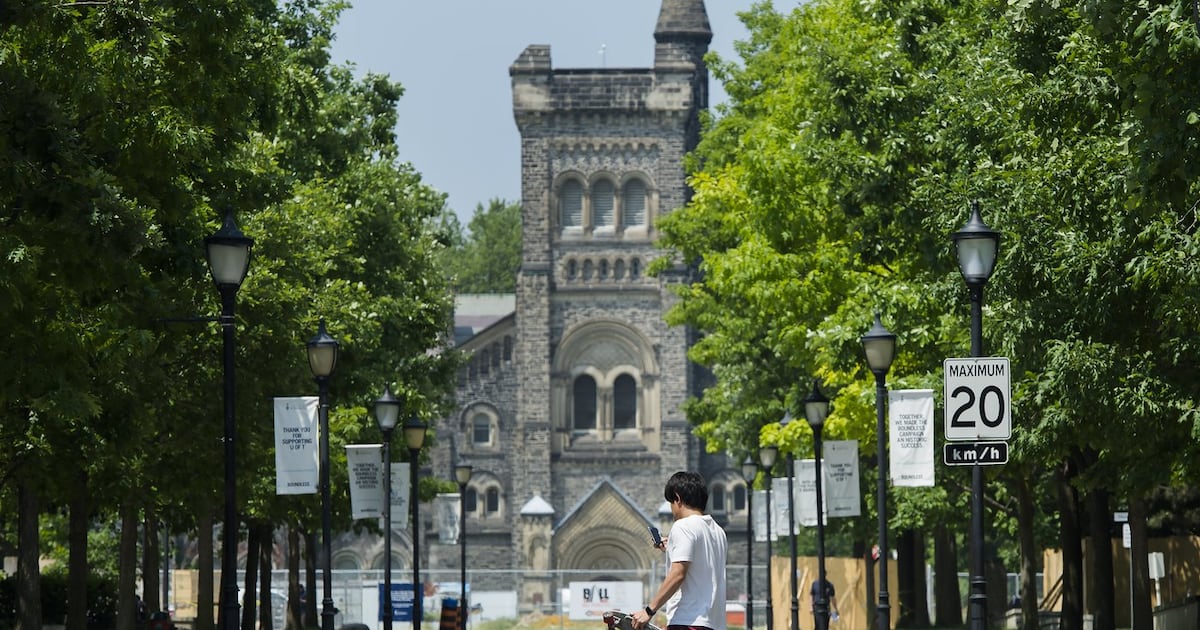
A review of the University of Toronto's policies and practices has found the school has a 'general pattern of over-policing and under-protecting' Muslims, Arabs and Palestinians. (David Donnelly/CBC)
Photograph: CBC News (embedded from source)
What this story says
- A University of Toronto review found a "general pattern of over-policing and under-protecting" of Muslim, Arab, and Palestinian students.
- The university stated it cannot accept the report or its recommendations, citing departures from past equity reports and inclusion of "lengthy commentary about events abroad."
- The report, nearly 300 pages long, is based on consultations with 85 people and 525 survey responses.
- The university pledged to take immediate actions to address discrimination against these groups.
Who covered it
Percentages are shares of the 23 outlets carrying a published leaning rating. 3 of the 26 outlets we know ran this story carry no rating and are not counted in them. Coverage measured .
Trust
42/100
Craft
60/100
Hype
25/100
26 sources · methodology
Thin on the right so far
Only 1 of the 23 outlets with a published leaning rating that ran this story are rated right.
This story is still being watched, so it is a count and not yet a finding. Coverage keeps arriving for hours after an event, and a side that has published nothing this morning may publish by tonight. If it is still true when we stop checking, we will say so plainly.
A review of the University of Toronto's policies and practices found a "general pattern of over-policing and under-protecting" Muslims, Arabs, and Palestinians. The nearly 300-page report, based on consultations with 85 people and 525 survey responses, detailed recommendations concerning academic freedom, campus security, and institutional autonomy. The university stated it cannot accept the report or its recommendations, asserting that it "departs significantly from past equity reports in several ways," including commentary on international events. Despite rejecting the report's specific recommendations, the university pledged to take immediate actions to address discrimination against these groups.
Disagreement on report's content and university's response
The University of Toronto stated it cannot accept the report or its recommendations, as reported by CBC News and CTV News. The university cited that the report "departs significantly from past equity reports in several ways," such as including "lengthy commentary about events abroad." Sondakika.com reported that the university acknowledged the discrimination but stated the report could be offensive to Jewish and Israeli members. In contrast, TRT World reported that the university pledges immediate action, including a new Muslim Community Advisory Council, after the report documented harassment, intimidation, and concerns over surveillance. Anadolu Ajansı reported the institution stated it is committed to tackling discrimination and unveiled several measures.
What the coverage left out
None of the left-rated reports mentioned the university's statement that the report could be offensive to Jewish and Israeli members, a detail included in the unrated sondakika.com digest and the right-rated Anadolu Ajansı digest. None of the centre-rated reports mentioned the specific detail that the report could be offensive to Jewish and Israeli members.
Still developing. We have re-checked which outlets are covering this 1 time, most recently on 14 Nov 2026, 15:15, and will add the sides that appear.
How other outlets pictured it
Which photograph to run is each newsroom’s own choice. The leaning beside a name is that outlet’s published rating, not a claim that the pictures divide along it. Every picture is shown from the outlet’s own server and links to the article it ran in.
How each side covered it
Our own reading of the reporting listed below, written from the outlets’ articles rather than quoted from them. The reasoning is set out on our methodology page.
Left
17 rated outlets
- Seventeen left-rated reports led with the University of Toronto's rejection of the discrimination report. These reports carried the finding that the university has a "general pattern of over-policing and under-protecting" Muslims, Arabs, and Palestinians. They detailed that the report is nearly 300 pages long and based on consultations with 85 people and 525 survey responses. The left-rated reports included the university's statement that it cannot accept the report or its recommendations. CBC News, which provided a full report, quoted a student, Hunain Sindhu, who said students are tired of speaking up when nothing changes and are scared of being penalised. Sindhu stated, "There are students on their campus, Muslim students on their campus being called a terrorist in their classes, in their classrooms, that they have a hostile classroom environment. They still don't do anything about it. There's no policy change."
Centre
5 rated outlets
- Five centre-rated reports focused on the University of Toronto's rejection of the report and its recommendations concerning anti-Muslim, anti-Arab, and anti-Palestinian discrimination. These reports stated that a review found a "general pattern of over-policing and under-protecting" of these groups. The centre-rated reports noted the university's pledge to take immediate actions to address discrimination. CTV News and City News reported that the university stated the report "departs significantly from past equity reports in several ways," such as including "lengthy commentary about events abroad." TRT World reported the university pledges immediate action, including a new Muslim Community Advisory Council, after the report documented harassment, intimidation, and concerns over surveillance.
Right
1 rated outlet
- The single right-rated report, from Anadolu Ajansı, stated that Toronto University acknowledged discrimination against Muslims, Arabs, and Palestinians. It reported that the institution said it is committed to tackling discrimination and unveiled several measures. The digest noted the university acknowledged the discrimination but stated that the report could be offensive to Jewish and Israeli members.
Questions about this coverage
- How did the left and right cover University of Toronto Rejects Discrimination Report?
- Of the 23 outlets on this story carrying a published leaning rating, 74% are rated left, 22% are rated centre, 4% are rated right. Those percentages are shares of the rated outlets, not of every outlet that ran it, which was 26. The sections above set out what each side emphasised, in its own terms.
- Is University of Toronto Rejects Discrimination Report left or right?
- The story itself is neither. What can be counted is who has covered it, and 74% of the 23 rated outlets on it are rated left — so far this is a story carried mostly by the left. Coverage is still arriving and that can change, which is why the figure is dated rather than fixed.
- Is the coverage of University of Toronto Rejects Discrimination Report biased?
- University of Toronto Rejects Discrimination Report is one event reported by 26 outlets, and this page does not rate the story as biased or unbiased. What it publishes is the spread: which outlets ran it, where named rating organisations place each of them on the spectrum, and what each side chose to lead with. A leaning rating describes an outlet's record over time, not this article, and the two should not be run together.
- Which side is not reporting University of Toronto Rejects Discrimination Report?
- When we first saw this story, outlets rated right had barely covered it. Coverage accretes for hours after an event, so that is where to look rather than a verdict — the split above is the current count, and it is the one to read.
- Which outlets covered University of Toronto Rejects Discrimination Report?
- 26 that we know of, every one of them listed further up this page with a link to its own report and to what we hold on the publisher. Nothing here is a summary of somebody else's summary: the outlets are named so the original reporting can be read.
- What did the University of Toronto report find?
- A review of the University of Toronto's policies and practices found a "general pattern of over-policing and under-protecting" Muslims, Arabs, and Palestinians. The nearly 300-page report detailed instances of restrictions on speech and events, inconsistent complaint processes, and double standards in enforcement.
- What was the university's response to the report?
- The University of Toronto stated it cannot accept the report or its recommendations, citing that it "departs significantly from past equity reports in several ways," including commentary on international events. However, the university pledged to take immediate actions to address discrimination against these groups.
- How many people were consulted for the report?
- The report was based on consultations with 85 people and small groups, as well as 525 responses to a survey of students, staff, faculty, and librarians across the university's three campuses. These consultations took place between March of the previous year and January.
Read it at the source
26 outlets, grouped by the leaning a published rating gives them. Every headline links to the original; an underlined outlet name opens our profile of that publisher.
Left
17- U of T faces backlash over rejected campus discrimination report (opens NOW Magazine in a new tab)
NOW Magazine — is NOW Magazine biased? Our profile of this outlet
- U of T rejects report saying school over-polices, under-protects Muslims, Arabs, Palestinians (opens CBC News in a new tab)
- U of T rejects report, recommendations on anti-Muslim, anti-Arab discrimination - Toronto (opens Global News in a new tab)
Global News — is Global News biased? Our profile of this outlet
- U of T rejects report, recommendations on anti-Muslim, anti-Arab discrimination (opens flamboroughtoday.com in a new tab)
flamboroughtoday.com — is flamboroughtoday.com biased? Our profile of this outlet
- U of T rejects report, recommendations on anti-Muslim, anti-Arab discrimination (opens Timmins Today in a new tab)
Timmins Today — is Timmins Today biased? Our profile of this outlet
- U of T rejects report, recommendations on anti-Muslim, anti-Arab discrimination (opens The NOTL Local in a new tab)
The NOTL Local — is The NOTL Local biased? Our profile of this outlet
- U of T rejects report, recommendations on anti-Muslim, anti-Arab discrimination (opens ElliotLakeToday.com in a new tab)
ElliotLakeToday.com — is ElliotLakeToday.com biased? Our profile of this outlet
- U of T rejects report, recommendations on anti-Muslim, anti-Arab discrimination (opens Bay Today in a new tab)
Show 9 more
- U of T rejects report, recommendations on anti-Muslim, anti-Arab discrimination (opens Sudbury in a new tab)
- U of T rejects report, recommendations on anti-Muslim, anti-Arab discrimination (opens Elora Fergus Today in a new tab)
Elora Fergus Today — is Elora Fergus Today biased? Our profile of this outlet
- U of T rejects report, recommendations on anti-Muslim, anti-Arab discrimination (opens Orillia Matters in a new tab)
Orillia Matters — is Orillia Matters biased? Our profile of this outlet
- U of T rejects report, recommendations on anti-Muslim, anti-Arab discrimination (opens Barrie Today in a new tab)
Barrie Today — is Barrie Today biased? Our profile of this outlet
- U of T rejects report, recommendations on anti-Muslim, anti-Arab discrimination (opens SooToday.com in a new tab)
SooToday.com — is SooToday.com biased? Our profile of this outlet
- U of T rejects report, recommendations on anti-Muslim, anti-Arab discrimination (opens The Toronto Star in a new tab)
The Toronto Star — is The Toronto Star biased? Our profile of this outlet
- University of Toronto Rejects Report on Anti-Muslim Discrimination (opens Radio-Canada in a new tab)
Radio-Canada — is Radio-Canada biased? Our profile of this outlet
- U of T rejects report, recommendations on anti-Muslim, anti-Arab discrimination (opens The Record in a new tab)
The Record — is The Record biased? Our profile of this outlet
- U of T rejects report, recommendations on anti-Muslim, anti-Arab discrimination (opens The Hamilton Spectator in a new tab)
The Hamilton Spectator — is The Hamilton Spectator biased? Our profile of this outlet
Centre
5- University of Toronto acknowledges anti-Muslim and anti-Palestinian discrimination on campuses (opens TRT World in a new tab)
- U of T rejects report, recommendations on anti-Muslim, anti-Arab discrimination (opens City News in a new tab)
- U of T rejects report, recommendations on anti-Muslim, anti-Arab discrimination (opens CP24 in a new tab)
- U of T rejects report, recommendations on anti-Muslim, anti-Arab discrimination (opens CTV News in a new tab)
- U of T rejects report, recommendations on anti-Muslim, anti-Arab discrimination (opens Narcity in a new tab)
Right
1Not rated
3- University of Toronto Rejects Report Alleging Discrimination Against Muslim and Arab Members (opens sondakika.com in a new tab)
sondakika.com — is sondakika.com biased? Our profile of this outlet
- University of Toronto rejects report on anti-Muslim and anti-Arab discrimination (opens WTX News in a new tab)
- U of T rejects report, recommendations on anti-Muslim, anti-Arab discrimination – 105.9 The Region (opens 1059theregion.com in a new tab)
1059theregion.com — is 1059theregion.com biased? Our profile of this outlet
How did this read?
About the coverage, not about the story. We do not ask whether you agree with what happened — we have no honest use for that answer.