US backs Colombia's coca spraying plan despite lawmaker concerns
State Department supports aerial eradication efforts while critics cite health and environmental risks.
AI-assisted coverage comparison, editor-supervised · How this was made
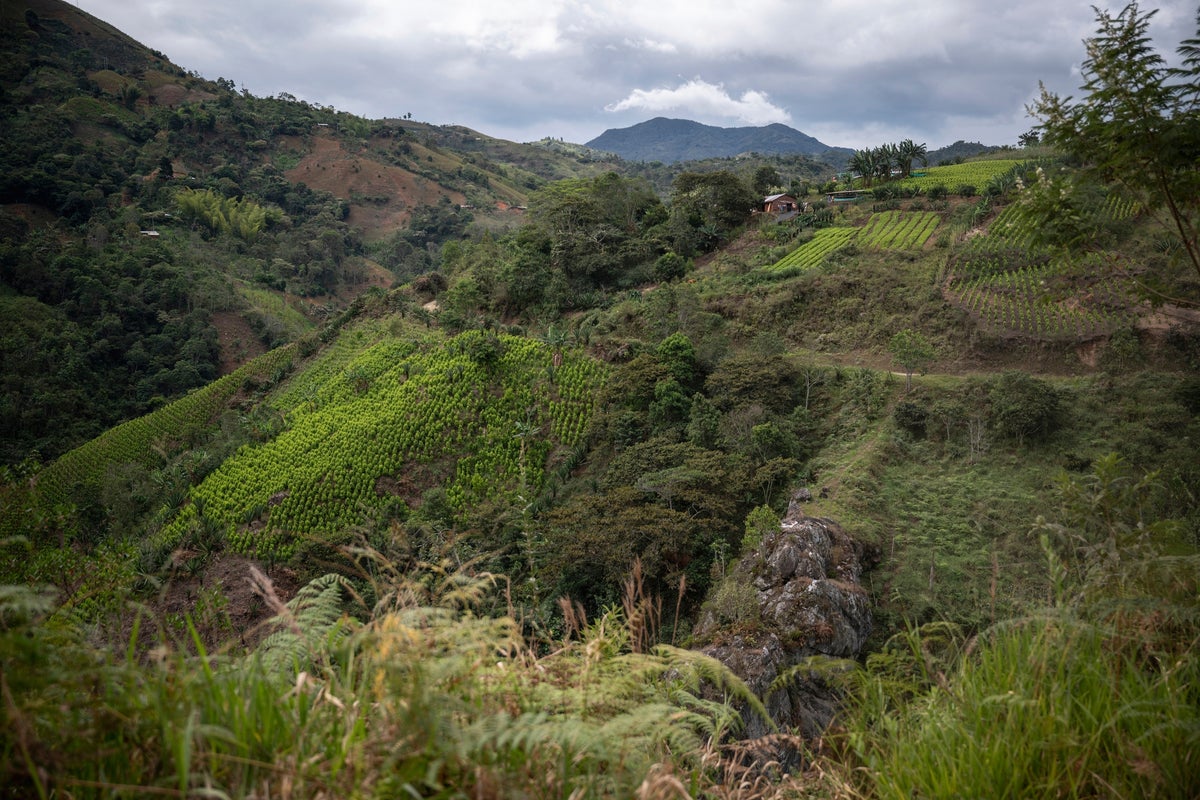
Climate Colombia Aerial Spraying (Nadège Mazars)
Photograph: The Independent (US) (embedded from source)
What this story says
- The U.S. State Department supports Colombia's plan to resume aerial spraying of coca crops.
- Nineteen Democratic lawmakers have raised concerns about potential health and environmental risks associated with the spraying.
- Colombia plans to test aerial spraying of coca crops using glufosinate ammonium, a chemical also facing scrutiny.
- A Colombian court has temporarily blocked the pilot program, citing unresolved questions about the herbicide's effects.
Who covered it
Percentages are shares of the 10 outlets carrying a published leaning rating. 1 of the 11 outlets we know ran this story carry no rating and are not counted in them. Coverage measured .
Trust
60/100
Craft
65/100
Hype
20/100
11 sources · methodology
Thin on the right so far
Only 2 of the 10 outlets with a published leaning rating that ran this story are rated right.
This story is still being watched, so it is a count and not yet a finding. Coverage keeps arriving for hours after an event, and a side that has published nothing this morning may publish by tonight. If it is still true when we stop checking, we will say so plainly.
The U.S. State Department has stated its support for Colombia's intention to restart aerial spraying of coca crops. This position was communicated in response to a letter from 19 Democratic lawmakers who expressed worries about the potential impact on human health and the Amazon rainforest. The U.S. government views the strategy as a significant tool for reducing coca cultivation and cocaine production, alongside manual eradication and interdiction efforts.
Colombia is preparing a pilot program to evaluate aerial spraying on up to 1,000 hectares of coca crops in the Putumayo region. The program intends to use glufosinate ammonium, a substance that has also faced scrutiny for potential health risks and is not approved for use in the European Union. This approach contrasts with the previous use of glyphosate, which was suspended due to health concerns.
Court blocks pilot program
A court initially blocked Colombia's pilot spraying program in September. On November 3, a regional court upheld the hold, citing unresolved questions regarding the herbicide's effects on health and the environment. The court allowed four months for plaintiffs to file a separate lawsuit, after which the temporary order would expire. Colombia's environmental regulator is also reviewing an environmental impact study.
What the coverage left out
None of the left-rated digests mention the specific figure of 1,000 hectares for the pilot program. None of the centre-rated or right-rated digests mention the specific figure of 1,000 hectares for the pilot program, nor do they name the specific lawmakers who signed the letter.
Still developing. We have re-checked which outlets are covering this 10 times, most recently on 20 Nov 2026, 00:15, and will add the sides that appear.
How each side covered it
Our own reading of the reporting listed below, written from the outlets’ articles rather than quoted from them. The reasoning is set out on our methodology page.
Left
6 rated outlets
- The left-rated reports focused on the U.S. State Department's support for Colombia's plan to resume aerial spraying of coca crops, while also highlighting the concerns raised by American lawmakers. These reports detailed the opposition from 19 Democratic representatives, including Mark Pocan and Alexandria Ocasio-Cortez, who warned of potential risks to human health and the Amazon rainforest. The use of glufosinate ammonium as an alternative to glyphosate was noted, along with the fact that it has faced scrutiny and is not approved in the EU. The legal challenges to the pilot program were also a key point, with reports mentioning the court's block on the initiative due to unresolved questions about the herbicide's effects. The Independent's full report quoted Mark Pocan stating that aerial fumigation was not effective in the past and its hazards are too significant. It also noted that the program could alienate Amazonian communities.
Centre
2 rated outlets
- The centre-rated report led with the U.S. State Department's support for Colombia's plan to resume aerial spraying of coca crops. It also mentioned the warnings from American lawmakers regarding potential risks to human health and the Amazon rainforest.
Right
2 rated outlets
- The right-rated report stated that the U.S. State Department expressed support for Colombia's plans to resume aerial spraying of coca crops. It also noted the strategy was defended despite warnings from American lawmakers about potential risks to human health and the Amazon rainforest.
Questions about this coverage
- How did the left and right cover US backs Colombia's coca spraying plan despite lawmaker concerns?
- Of the 10 outlets on this story carrying a published leaning rating, 60% are rated left, 20% are rated centre, 20% are rated right. Those percentages are shares of the rated outlets, not of every outlet that ran it, which was 11. The sections above set out what each side emphasised, in its own terms.
- Is US backs Colombia's coca spraying plan despite lawmaker concerns left or right?
- Too few of the outlets on this story carry a published leaning rating to say. 10 of them do, and this site does not characterise a field under 12: at that size one newsroom filing moves the share by ten points. The percentages above are the count as it stands.
- Is the coverage of US backs Colombia's coca spraying plan despite lawmaker concerns biased?
- US backs Colombia's coca spraying plan despite lawmaker concerns is one event reported by 11 outlets, and this page does not rate the story as biased or unbiased. What it publishes is the spread: which outlets ran it, where named rating organisations place each of them on the spectrum, and what each side chose to lead with. A leaning rating describes an outlet's record over time, not this article, and the two should not be run together.
- Which side is not reporting US backs Colombia's coca spraying plan despite lawmaker concerns?
- When we first saw this story, outlets rated right had barely covered it. Coverage accretes for hours after an event, so that is where to look rather than a verdict — the split above is the current count, and it is the one to read.
- Which outlets covered US backs Colombia's coca spraying plan despite lawmaker concerns?
- 11 that we know of, every one of them listed further up this page with a link to its own report and to what we hold on the publisher. Nothing here is a summary of somebody else's summary: the outlets are named so the original reporting can be read.
- What is Colombia's plan for coca crop eradication?
- Colombia plans to test aerial spraying of coca crops on up to 1,000 hectares in the Putumayo region. The pilot program intends to use glufosinate ammonium as the herbicide, a substance that has faced scrutiny over potential health risks.
- Why has the pilot program been blocked?
- A court blocked the pilot program in September, and a regional court kept it on hold on November 3. The courts cited unresolved questions about the herbicide's effects on human health and the environment as reasons for the delay.
- What are the concerns raised by US lawmakers?
- Nineteen Democratic lawmakers have raised concerns about potential risks to human health and the Amazon rainforest associated with the aerial spraying of coca crops. They have urged Washington to oppose the program.
Read it at the source
11 outlets, grouped by the leaning a published rating gives them. Every headline links to the original; an underlined outlet name opens our profile of that publisher.
Left
6- Client Challenge (opens SF Gate in a new tab)
- US backs Colombia's plans to resume aerial coca spraying despite lawmakers' concerns (opens The Washington Post in a new tab)
The Washington Post — is The Washington Post biased? Our profile of this outlet
- US backs Colombia’s plans to resume aerial coca spraying despite lawmakers’ concerns (opens The Toronto Star in a new tab)
The Toronto Star — is The Toronto Star biased? Our profile of this outlet
- US backs Colombia's plans to resume aerial coca spraying despite lawmakers' concerns (opens The Independent (US) in a new tab)
The Independent (US) — is The Independent (US) biased? Our profile of this outlet
- US backs Colombia's plans to resume aerial coca spraying despite lawmakers' concerns (opens Associated Press News in a new tab)
Associated Press News — is Associated Press News biased? Our profile of this outlet
- US backs Colombia's plans to resume aerial coca spraying despite lawmakers' concerns (opens The Independent in a new tab)
The Independent — is The Independent biased? Our profile of this outlet
Centre
2- US backs Colombia's plans to resume aerial coca spraying despite lawmakers' concerns (opens Winnipeg Free Press in a new tab)
Winnipeg Free Press — is Winnipeg Free Press biased? Our profile of this outlet
- US backs Colombia's plans to resume aerial coca spraying despite lawmakers' concerns (opens Newsday in a new tab)
Right
2- U.S. backs Colombia’s plans to resume aerial coca spraying despite lawmakers’ concerns (opens Washington Times in a new tab)
Washington Times — is Washington Times biased? Our profile of this outlet
- US backs Colombia's plans to resume aerial coca spraying despite lawmakers' concerns (opens Owensboro Messenger-Inquirer in a new tab)
Owensboro Messenger-Inquirer — is Owensboro Messenger-Inquirer biased? Our profile of this outlet
Not rated
1How did this read?
About the coverage, not about the story. We do not ask whether you agree with what happened — we have no honest use for that answer.