Scientists Use Drones and Dog to Sample Endangered Orcas
Researchers collect breath and fecal samples to assess the health of the dwindling Southern Resident killer whale population.
AI-assisted coverage comparison, editor-supervised · How this was made
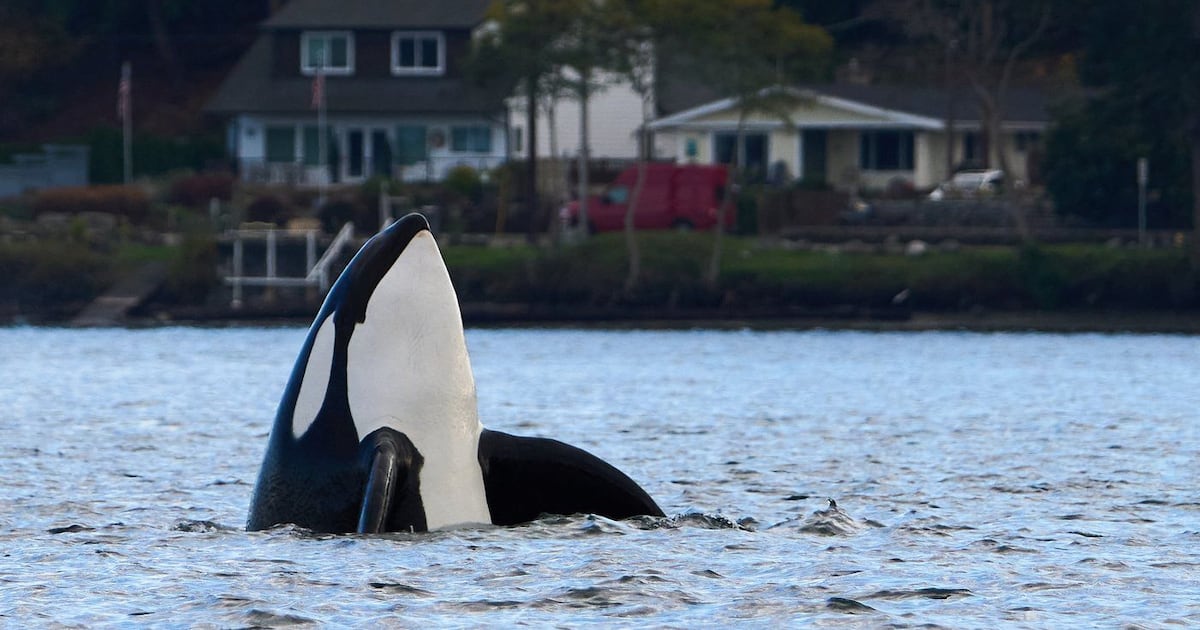
A Bigg's killer whale, also known as a transient orca, "spyhops" out of the water, Tuesday, Nov. 17, 2026, on Puget Sound near Bremerton, Wash. (AP Photo/Lindsey Wasson, NMFS/NOAA permit #26288-01)
Photograph: CTV News (embedded from source)
What this story says
- Scientists are collecting breath and fecal samples from the 76 remaining Southern Resident killer whales using drones and a poop-sniffing dog.
- The samples provide data on hormonal, bacterial, fungal, parasitic, and DNA information to create individual health profiles.
- Researchers have found high rates of miscarriages and calf mortality among the whales.
- The whales' declining numbers are linked to a reduced food source, primarily Chinook salmon, impacted by dams, overfishing, and pollution.
Who covered it
Percentages are shares of the 10 outlets carrying a published leaning rating. 1 of the 11 outlets we know ran this story carry no rating and are not counted in them. Coverage measured .
Trust
60/100
Craft
65/100
Hype
20/100
11 sources · methodology
Researchers are using drones equipped with petri dishes and a dog trained to detect feces to gather health information from the endangered Southern Resident killer whales. There are 76 of these whales remaining, and their population recovery is faltering. The methods aim to collect samples from the whales' spouts and stool to create health profiles.
The dwindling food source for these whales, Chinook salmon, has been impacted by factors including dams, overfishing, and pollution. Scientists collect samples to analyse hormonal, bacterial, fungal, parasitic, and DNA information. Analysis has revealed that many female orcas are experiencing miscarriages, and there is a high rate of calf mortality.
Disagreement on drone operation
The Associated Press, as reported by Washington Top News, Winnipeg Free Press, and The Hamilton Spectator, states that a drone pilot flies through spouts as the whales surface. However, the full report from CTV News indicates the drone hovers high to locate the whale before dropping to a few feet above the surface to collect droplets from the spout.
What the coverage left out
None of the left-rated digests mention the specific details of the drone's operation, such as hovering high before dropping to collect samples, as described in the full report from CTV News. The right-rated digest does not detail the specific types of samples collected beyond breath and feces, nor does it mention the findings of miscarriages or high calf mortality rates.
Still developing. We have re-checked which outlets are covering this 1 time, most recently on 27 Nov 2026, 16:00, and will add the sides that appear.
How each side covered it
Our own reading of the reporting listed below, written from the outlets’ articles rather than quoted from them. The reasoning is set out on our methodology page.
Left
4 rated outlets
- The left-rated reports led with the use of drones and a poop-sniffing dog for health checks on endangered orcas. They highlighted the specific number of remaining whales, 76, and the faltering population recovery. These reports mentioned the collection of breath and fecal samples for health analysis, including hormonal, bacterial, fungal, parasitic, and DNA information. They also noted findings of miscarriages and high calf mortality rates. The impact of dams, overfishing, and pollution on the whales' food source, Chinook salmon, was also a focus. The Independent (US) and The Hamilton Spectator digests both began by stating that scientists are using drones with specially mounted petri dishes and an 11-year-old rescue dog trained to sniff out feces.
Centre
5 rated outlets
- The centre-rated reports focused on the methods used to collect samples from the endangered Southern Resident killer whales, specifically drones and a poop-sniffing dog. They identified the number of remaining whales as 76 and noted the faltering population recovery. The collection of breath and fecal samples for health assessments was a common theme, with mention of the types of data gathered, such as hormonal and DNA information. The centre-rated reports also touched upon the reasons for the whales' decline, including a shrinking food source impacted by dams, overfishing, and pollution, and mentioned findings of miscarriages and high calf mortality. Euronews highlighted Eba, the 11-year-old poop-sniffing dog, as assisting scientists in the fight to save dwindling killer whale populations. My Mother Lode and Washington Top News digests both stated that a drone pilot for the San Diego Zoo Wildlife Alliance flies a drone through spouts as the whales surface.
Right
1 rated outlet
- The right-rated report led with the use of drones and a poop-sniffing dog for health checks on endangered orcas. It mentioned the collection of breath and fecal samples for health analysis and identified the number of remaining whales as 76. The digest from Owensboro Messenger-Inquirer stated that scientists are using drones with specially mounted petri dishes and an 11-year-old rescue dog trained to sniff out feces to perform health checks on an endangered orca population in the Salish Sea.
Questions about this coverage
- How did the left and right cover Scientists Use Drones and Dog to Sample Endangered Orcas?
- Of the 10 outlets on this story carrying a published leaning rating, 40% are rated left, 50% are rated centre, 10% are rated right. Those percentages are shares of the rated outlets, not of every outlet that ran it, which was 11. The sections above set out what each side emphasised, in its own terms.
- Is Scientists Use Drones and Dog to Sample Endangered Orcas left or right?
- Too few of the outlets on this story carry a published leaning rating to say. 10 of them do, and this site does not characterise a field under 12: at that size one newsroom filing moves the share by ten points. The percentages above are the count as it stands.
- Is the coverage of Scientists Use Drones and Dog to Sample Endangered Orcas biased?
- Scientists Use Drones and Dog to Sample Endangered Orcas is one event reported by 11 outlets, and this page does not rate the story as biased or unbiased. What it publishes is the spread: which outlets ran it, where named rating organisations place each of them on the spectrum, and what each side chose to lead with. A leaning rating describes an outlet's record over time, not this article, and the two should not be run together.
- Which outlets covered Scientists Use Drones and Dog to Sample Endangered Orcas?
- 11 that we know of, every one of them listed further up this page with a link to its own report and to what we hold on the publisher. Nothing here is a summary of somebody else's summary: the outlets are named so the original reporting can be read.
- How are scientists collecting samples from the killer whales?
- Scientists are using drones equipped with petri dishes to collect droplets from whale spouts and employing a poop-sniffing dog to find stool samples. This method allows for non-invasive health checks on the endangered Southern Resident killer whales.
- Why is the population of Southern Resident killer whales declining?
- The population is declining due to a reduced food source, primarily Chinook salmon, which has been impacted by dams, overfishing, and pollution. Researchers have also found high rates of miscarriages and calf mortality among the whales.
- What kind of information do the collected samples provide?
- The samples provide hormonal, bacterial, fungal, parasitic, and DNA information. This data is used to create health profiles for individual orcas, helping researchers understand their overall well-being and reproductive success.
Read it at the source
11 outlets, grouped by the leaning a published rating gives them. Every headline links to the original; an underlined outlet name opens our profile of that publisher.
Left
4- Using a drone and a poop-sniffing dog, scientists perform health checks on endangered orcas (opens The Independent (US) in a new tab)
The Independent (US) — is The Independent (US) biased? Our profile of this outlet
- Using a drone and a poop-sniffing dog, scientists perform health checks on endangered orcas (opens Associated Press News in a new tab)
Associated Press News — is Associated Press News biased? Our profile of this outlet
- Using a drone and a poop-sniffing dog, scientists perform health checks on endangered orcas (opens The Independent in a new tab)
The Independent — is The Independent biased? Our profile of this outlet
- Using a drone and a poop-sniffing dog, scientists perform health checks on endangered orcas (opens The Hamilton Spectator in a new tab)
The Hamilton Spectator — is The Hamilton Spectator biased? Our profile of this outlet
Centre
5- Meet the poop-sniffing dog helping to protect endangered orcas (opens Euronews in a new tab)
- Using a drone and a poop-sniffing dog, scientists perform health checks on endangered orcas (opens My Mother Lode in a new tab)
My Mother Lode — is My Mother Lode biased? Our profile of this outlet
- Using a drone and a poop-sniffing dog, scientists perform health checks on endangered orcas (opens CTV News in a new tab)
- Using a drone and a poop-sniffing dog, scientists perform health checks on endangered orcas (opens Washington Top News in a new tab)
Washington Top News — is Washington Top News biased? Our profile of this outlet
- Using a drone and a poop-sniffing dog, scientists perform health checks on endangered orcas (opens Winnipeg Free Press in a new tab)
Winnipeg Free Press — is Winnipeg Free Press biased? Our profile of this outlet
Right
1Not rated
1How did this read?
About the coverage, not about the story. We do not ask whether you agree with what happened — we have no honest use for that answer.
More in Science & Tech
All Science & Tech →


Elsewhere on the site
 Business & Economy•3 min readUS Goods Trade Deficit Widened to $149.5 Billion in October
 Politics•4 min readTrump Administration Officials Move Into Military Housing
 Politics•1 min readKenneth Law sentencing hearing to resume Friday
 Politics•3 min readTrump answers dessert question with Biden comparison