Voyager 1 to Reach One Light‑Day from Earth, Alan Cummings Calls It Technological Milestone
On 18 November 2026 the probe will be about 26 billion kilometres away, and its radio signal will require a full day to travel back to Earth.
AI-assisted coverage comparison, editor-supervised · How this was made
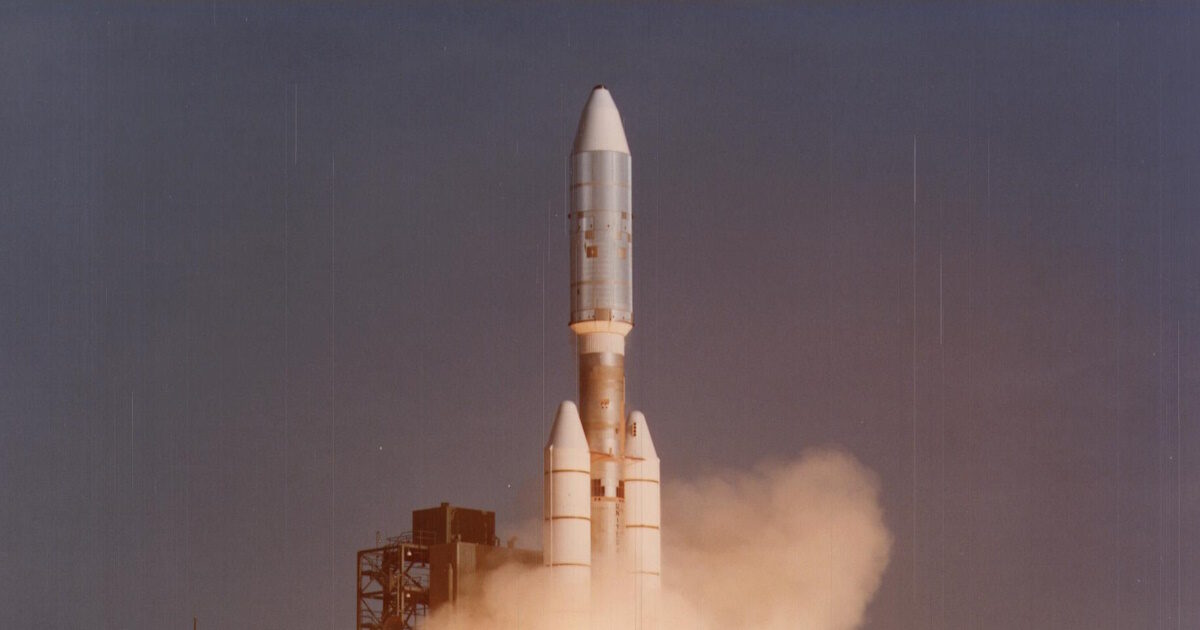
Το διαστημικό σκάφος Voyager 1 της NASA εκτοξεύεται από το Διαστημικό Κέντρο Κένεντι στις 5 Σεπτεμβρίου 1977
Photograph: Newsit.gr (embedded from source)
What this story says
- Voyager 1 will be about 26 billion kilometres from Earth on 18 November 2026, one light‑day away.
- The probe’s radio signal will need roughly 24 hours to travel that distance.
- Alan Cummings of Caltech described the achievement as a technological milestone.
- Different outlets reported the event with varying levels of detail.
Who covered it
Percentages are shares of the 26 outlets carrying a published leaning rating. 19 of the 45 outlets we know ran this story carry no rating and are not counted in them. Coverage measured .
Trust
86/100
Craft
95/100
Hype
12/100
45 sources · methodology
Voyager 1 was launched from Florida on 5 September 1977. On 18 November 2026 at 10:16 GMT the spacecraft will be approximately 26 billion kilometres from Earth, a distance that light covers in one day. At that separation the radio signal sent by the probe will require about 24 hours to reach the planet. The probe continues to travel at roughly 61 000 kilometres per hour through interstellar space.
Alan Cummings, senior researcher at Caltech’s Space Radiation Laboratory and a Voyager programme participant since 1973, said the one‑light‑day distance marks a technological milestone because communication remains possible at that range.
Discrepancies
Rzeczpospolita’s digest states that the signal will take "exactly 24 hours," while Newsit.gr describes the travel time as "roughly 24 hours." The digest from Rzeczpospolita also says the distance is "more than 26 billion kilometres," whereas Newsit.gr gives the figure as "about 26 billion kilometres." Both characterisations appear in their respective reports.
Newsit.gr
The full article from Newsit.gr notes the launch date, the Florida launch site, the spacecraft’s speed of about 61 000 km/h, and the precise time of 10:16 GMT on 18 November 2026 when Voyager 1 will be one light‑day away. It quotes Alan Cummings, who told Reuters that the achievement is a "technological milestone" and highlights that the probe still communicates with scientists. The piece does not mention Voyager 2, nor does it give an exact "24‑hour" figure for the signal travel time.
“I consider it a technological milestone, marking the astonishing longevity of Voyager 1 and our ability to communicate with it at this distance.”
Rzeczpospolita
Rzeczpospolita’s digest reports that Voyager 1, launched 49 years ago, will become the first human‑made object to pass within one light‑day of Earth, a distance of more than 26 billion kilometres. It states that the radio signal will take exactly 24 hours to reach Earth. The summary does not include the launch location, the spacecraft’s speed, the quoted remark from Alan Cummings, or any reference to Voyager 2.
infomoney.com.br
The infomoney.com.br digest mentions that Voyager 1 and its twin Voyager 2 were launched 49 years ago and explored the outer planets before continuing outward. It does not refer to the upcoming one‑light‑day milestone, the distance of 26 billion kilometres, the 24‑hour signal travel time, nor any statements from scientists.
What the coverage left out
None of the digests mention the spacecraft’s speed of roughly 61 000 kilometres per hour. The infomoney.com.br digest omits any reference to the one‑light‑day distance and the 24‑hour signal travel time. Newsit.gr’s report does not discuss Voyager 2, and Rzeczpospolita’s digest does not include the quoted remark from Alan Cummings.
26 billion km
Distance at milestone
Equivalent to one light‑day
Still developing. We have re-checked which outlets are covering this 97 times, most recently on 15 Nov 2026, 19:00, and will add the sides that appear.
How each side covered it
Our own reading of the reporting listed below, written from the outlets’ articles rather than quoted from them. The reasoning is set out on our methodology page.
Left
8 rated outlets
- The left-rated outlets Al Jazeera, Associated Press News and The Washington Post all reported that Voyager 1 is set to become the first human-made object to travel one light-day from Earth. They noted this distance is over 16 billion miles.
- Al Jazeera stated the probe launched in 1977 and travels at about 36,000 miles per hour. This report also mentioned Voyager 1 took the "Pale Blue Dot" photo and that communication was briefly lost in October.
- Bill Nye of the Planetary Society was quoted by Al Jazeera. The Associated Press News and The Washington Post digests did not include quotes or further details beyond the main announcement.
Centre
10 rated outlets
- All five centre‑rated outlets reported that NASA’s Voyager 1 is about to become the first human‑made object to reach one light‑day from Earth. Each noted the distance exceeds 16 billion miles and that the milestone is expected on Wednesday. All also mentioned that Voyager 2 is not due to reach the same point until 2035.
- Washington Top News provided a full report that added quotations from project manager Suzanne Dodd, who called Voyager 1 a national treasure and urged the public to flash Morse code after sunset. The article gave the spacecraft’s speed of 38,000 mph, described a recent power‑conserving manoeuvre, a brief loss of contact, weekly command cycles, and cited remarks from Carl Sagan, Bill Nye and details of the Golden Record.
- The digests reproduced by City News, KOB 4, Newsday and Wral News contained only the basic milestone description and did not include any quotations, the public outreach suggestion, speed data, power‑conserving effort, recent contact issue, or historical context such as the Pale Blue Dot image or the Golden Record. Those details appear solely in Washington Top News’ full report.
Right
8 rated outlets
We have not written our reading of the right coverage of this story. The right-rated outlets that ran it are listed below.
Questions about this coverage
- How did the left and right cover Voyager 1 to Reach One Light‑Day from Earth, Alan Cummings Calls It…?
- Of the 26 outlets on this story carrying a published leaning rating, 31% are rated left, 38% are rated centre, 31% are rated right. Those percentages are shares of the rated outlets, not of every outlet that ran it, which was 45. The sections above set out what each side emphasised, in its own terms.
- Is Voyager 1 to Reach One Light‑Day from Earth, Alan Cummings Calls It… left or right?
- Neither side dominates it. Of the 26 rated outlets on this story, 31% are rated left, 38% are rated centre, 31% are rated right, and no side holds the 70% this site would want before calling a field one-sided. A story is not left or right in any case; the outlets that carried it are what carry ratings.
- Is the coverage of Voyager 1 to Reach One Light‑Day from Earth, Alan Cummings Calls It… biased?
- Voyager 1 to Reach One Light‑Day from Earth, Alan Cummings Calls It Technological Milestone is one event reported by 45 outlets, and this page does not rate the story as biased or unbiased. What it publishes is the spread: which outlets ran it, where named rating organisations place each of them on the spectrum, and what each side chose to lead with. A leaning rating describes an outlet's record over time, not this article, and the two should not be run together.
- Which outlets covered Voyager 1 to Reach One Light‑Day from Earth, Alan Cummings Calls It…?
- 45 that we know of, every one of them listed further up this page with a link to its own report and to what we hold on the publisher. Nothing here is a summary of somebody else's summary: the outlets are named so the original reporting can be read.
- When will Voyager 1 be one light‑day from Earth?
- Voyager 1 will reach a distance of about 26 billion kilometres, or one light‑day, on 18 November 2026 at 10:16 GMT, according to the reports.
- How long will the probe’s radio signal take to travel back to Earth?
- At the one‑light‑day distance the radio signal will need roughly 24 hours to reach Earth; one digest says it will take exactly 24 hours, while another describes it as roughly 24 hours.
- What did Alan Cummings say about the milestone?
- Alan Cummings, a senior researcher at Caltech, called reaching one light‑day a technological milestone and highlighted that communication with Voyager 1 remains possible at that range.
- Did any outlet mention Voyager 2?
- Only the infomoney.com.br digest referenced Voyager 2, noting that both probes were launched 49 years ago and explored the outer planets before moving onward.
Read it at the source
45 outlets, grouped by the leaning a published rating gives them. Every headline links to the original; an underlined outlet name opens our profile of that publisher.
Left
8- NASA Calls the World to Light the sky... a Greeting to Voyager 1 on His Historic Journey. (opens aljazeera.net in a new tab)
aljazeera.net — is aljazeera.net biased? Our profile of this outletOpinion
- Humanity’s Most Distant Messenger: Voyager 1 Reaches a Light Day Away (opens La Vanguardia in a new tab)
La Vanguardia — is La Vanguardia biased? Our profile of this outlet
- The Odyssey of the ‘Voager 1’: a Chat with the Cosmos at a Light Day on Earth (opens El Pais in a new tab)
- NASA's Voyager 1 closes in on a light-day in interstellar space for new distance record (opens The Hindu in a new tab)
- NASA’s Voyager 1 to hit new space distance record of one light (opens RocketNews in a new tab)
RocketNews — is RocketNews biased? Our profile of this outlet
- NASA’s Voyager 1 to hit new space distance record of one light-day (opens Al Jazeera in a new tab)
Al Jazeera — is Al Jazeera biased? Our profile of this outlet
- NASA's Voyager 1 closes in on a light-day in interstellar space for a new distance record (opens The Washington Post in a new tab)
The Washington Post — is The Washington Post biased? Our profile of this outlet
- NASA's Voyager 1 closes in on a light-day in interstellar space for a new distance record (opens Associated Press News in a new tab)
Associated Press News — is Associated Press News biased? Our profile of this outlet
Centre
10- NASA's Voyager 1 probe poised to achieve mega-distance milestone (opens The Express Tribune in a new tab)
The Express Tribune — is The Express Tribune biased? Our profile of this outlet
- Voyager 1 forever changed our view of Jupiter — Space photo of the week (opens Live Science in a new tab)
Live Science — is Live Science biased? Our profile of this outlet
- Voyager 1 nears historic 1 light-day mark (opens WJBK in a new tab)
- Voyager 1 nears historic 1 light-day mark (opens Fox 6 now in a new tab)
- Voyager 1 nears historic 1 light-day mark (opens LiveNOW from FOX in a new tab)
LiveNOW from FOX — is LiveNOW from FOX biased? Our profile of this outlet
- NASA's Voyager 1 closes in on a light-day in interstellar space for a new distance record (opens Wral News in a new tab)
- NASA's Voyager 1 closes in on a light-day in interstellar space for a new distance record (opens Newsday in a new tab)
- NASA's Voyager 1 closes in on a light-day in interstellar space for a new distance record (opens City News in a new tab)
Show 2 more
- NASA’s Voyager 1 closes in on a light-day in interstellar space for a new distance record – WTOP News (opens Washington Top News in a new tab)
Washington Top News — is Washington Top News biased? Our profile of this outlet
- NASA's Voyager 1 closes in on a light-day in interstellar space for a new distance record (opens KOB 4 in a new tab)
Right
8- Voyager 1 Is About to Reach Distance Never Before Reached by an Object Built by Humans (opens Sapo in a new tab)
- NASA's Voyager 1 takes humanity 1 light-day from home (opens Daily Sabah in a new tab)
Daily Sabah — is Daily Sabah biased? Our profile of this outlet
- NEWS HEADLINES: NASA’s Voyager 1 Is About To Cross A Frontier No Human-Made Object Has Ever Reached – 100PercentFedUp.com – by Jack (opens U-S-NEWS.COM in a new tab)
U-S-NEWS.COM — is U-S-NEWS.COM biased? Our profile of this outlet
- NASA’s Voyager 1 Is About To Cross A Frontier No Human-Made Object Has Ever Reached – 100PercentFedUp.com – by Jack (opens 100% FED UP! in a new tab)
100% FED UP! — is 100% FED UP! biased? Our profile of this outlet
- NASA’s Voyager 1 Is About To Cross A Frontier No Human-Made Object Has Ever Reached (opens WLTReport in a new tab)
- How Far Is Voyager 1? NASA’s Probe Will Reach a Light Day Away From Earth (opens El Financiero in a new tab)
El Financiero — is El Financiero biased? Our profile of this outlet
- Giant leap: NASA’s Voyager on brink of being humanity’s first object light-day from Earth - The Tribune (opens Tribune India in a new tab)
Tribune India — is Tribune India biased? Our profile of this outlet
- Voyager 1 on Its Way to a Milestone: Flying Within One Light-Day of Earth (opens BNR Nieuwsradio in a new tab)
BNR Nieuwsradio — is BNR Nieuwsradio biased? Our profile of this outlet
Not rated
19- Voyager 1 Spacecraft Reaches Historic 'Light-Day' Distance From Earth on Tuesday (opens دیجیاتو in a new tab)
دیجیاتو
- Voyager 1 Reaches a Light-Day of Earth. NASA Record (opens Aleph News in a new tab)
Aleph News — is Aleph News biased? Our profile of this outlet
- The Voyager 1 Probe Is Still at a Historical Distance From Earth: One Light-Day (opens Publico in a new tab)
- Distance Record: Voyager 1 Approaching the One-Light Tag Mark (opens scinexx.de in a new tab)
scinexx.de — is scinexx.de biased? Our profile of this outlet
- Voyager 1: At 26 Billion Km, the "Day of Light" that Makes History (opens Alpha TV in a new tab)
- Nasa: Voyager 1 Probe Will Open a Day-Light of the Earth - 15/11/2026 (opens Folha de S.Paulo in a new tab)
Folha de S.Paulo — is Folha de S.Paulo biased? Our profile of this outlet
- Voyager I Is Just Days Away From Its Historic Journey. (opens Habertürk in a new tab)
- Voyager 1 Approaches Earth's Light Day, a Record for Space Exploration (opens CRIPTO TENDENCIA in a new tab)
CRIPTO TENDENCIA — is CRIPTO TENDENCIA biased? Our profile of this outlet
Show 11 more
- Voyager 1 Hits One Light-Day From Earth: Lessons From the Oldest Production System We Run (opens DEV Community in a new tab)
DEV Community — is DEV Community biased? Our profile of this outletOpinion
- NASA: All the Lights in the Sky on November 17 - Why We Should Turn Our Flashlights and Phones High (opens Typosthes in a new tab)
Typosthes — is Typosthes biased? Our profile of this outletOpinion
- Voyager 1: The Historic Milestone and the 48 Hours to Respond to Earth - Techmaniacs (opens techmaniacs.gr in a new tab)
techmaniacs.gr — is techmaniacs.gr biased? Our profile of this outlet
- Voyager 1 Approaches a Light Day on Earth: What Does This Milestone Mean? (opens duplos.cl in a new tab)
- How Much Is a Light Day in Kilometers? This Distance Will Reach NASA Voyager Probe 1 (opens Potosinoticias.com in a new tab)
Potosinoticias.com — is Potosinoticias.com biased? Our profile of this outlet
- Voyager 1 Will Break a Historic Record. The NASA Probe's Signal Will Travel to Earth for 24 Hours. (opens Rzeczpospolita in a new tab)
Rzeczpospolita — is Rzeczpospolita biased? Our profile of this outlet
- Nasa Voyager 1 Probe Will Reach Historic Landmark 26 Billion Km From Earth (opens infomoney.com.br in a new tab)
infomoney.com.br — is infomoney.com.br biased? Our profile of this outlet
- Voyager 1: Fifty Years Since Its Launch, It Breaks Down Humanity's Longest Journey (opens Newsit.gr in a new tab)
- Voyager 1 Has Traveled a Record Distance of a Light-Day Since Launch in 1977. (opens NU in a new tab)
- Party to the Distance Record: Voyager Radios From a Light Day Distance (opens winfuture.de in a new tab)
winfuture.de — is winfuture.de biased? Our profile of this outlet
- After 49 Years of Travel, the Voyager I Probe Reaches a Light Day Away From Earth (opens oem.com.mx in a new tab)
oem.com.mx — is oem.com.mx biased? Our profile of this outlet
How did this read?
About the coverage, not about the story. We do not ask whether you agree with what happened — we have no honest use for that answer.
More in Science & Tech
All Science & Tech →


Elsewhere on the site
 Politics•4 min readUS Air Travel Disruptions Expected to Continue Until Monday
 Politics•2 min readMarco Rubio warns of forceful US response if ICC targets Americans
 Politics•3 min readPresident Donald Trump’s judicial push meets Republican resistance
 Business & Economy•3 min readTrump meets Xi with US mineral production lagging China