Canada and U.S. extend trade deadline as provinces split on U.S. alcohol return
Prime Minister Mark Carney says 'substantial progress' made, but Manitoba Premier Wab Kinew opposes restocking shelves
AI-assisted coverage comparison, editor-supervised · How this was made
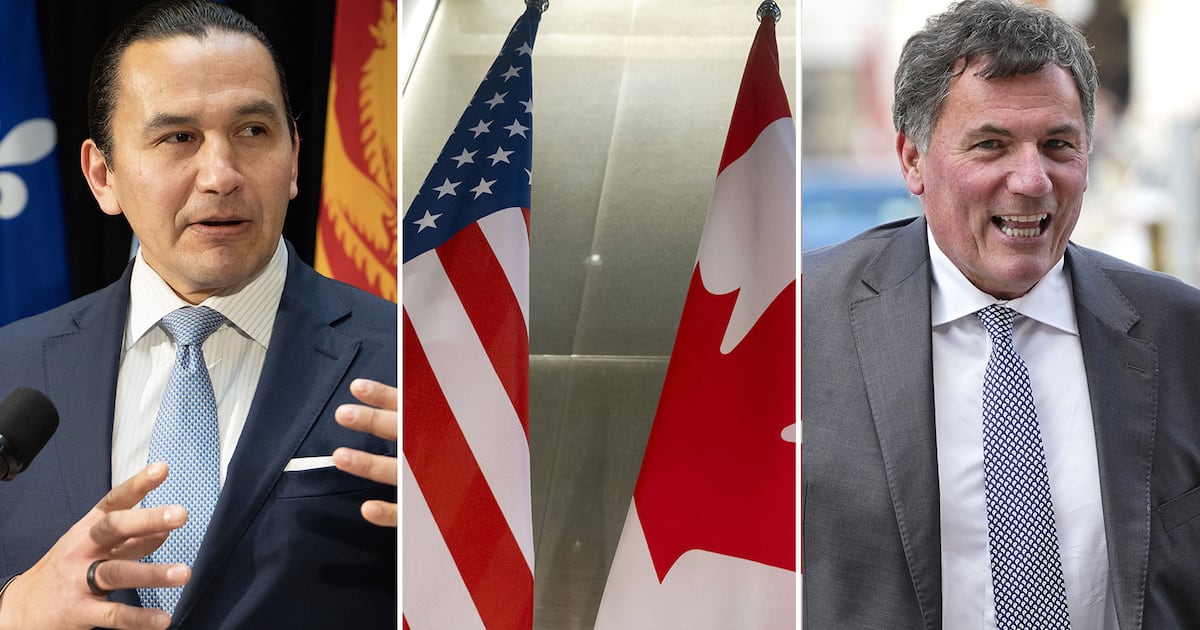
Canada and U.S. extend trade deadline as provinces split on U.S. alcohol return
Photograph: CTV News (embedded from source)
What this story says
- Canada and the U.S. extended the trade deal deadline to 23 August 2026 after U.S. President Donald Trump delayed 50% tariffs by three days.
- All provinces except Manitoba agreed to restock U.S. alcohol, though Newfoundland and Labrador Premier Tony Wakeham said the move was a sign of good faith.
- Manitoba Premier Wab Kinew opposed the deal, urging Canadians to avoid U.S. alcohol and buy domestic products instead.
- Negotiations continue in Washington, with Canadian officials describing progress but no final agreement yet.
Who covered it
Percentages are shares of the 165 outlets carrying a published leaning rating. 100 of the 265 outlets we know ran this story carry no rating and are not counted in them. Coverage measured .
Trust
50/100
Craft
55/100
Hype
35/100
265 sources · methodology
Missing from the right
Only 53 of the 165 outlets with a published leaning rating that ran this story are rated right.
A reader who follows the right would not have seen this. We report the absence rather than explain it: outlets choose what to cover for many reasons, and we have no evidence about which one applies here.
Canada and the United States extended their trade negotiations deadline to 23 August 2026 after U.S. President Donald Trump postponed new 50% tariffs on Canadian goods by three days. The delay followed a Truth Social post by Trump stating that a tentative deal had been reached, though he also suggested reviving the Keystone XL pipeline. Canadian Prime Minister Mark Carney confirmed that "substantial progress" had been made but did not mention a pipeline or a finalised agreement.
As part of the negotiations, all Canadian provinces except Alberta and Saskatchewan had removed U.S. alcohol from store shelves. Newfoundland and Labrador Premier Tony Wakeham announced that premiers agreed to restock U.S. liquor as a gesture of good faith. Alberta and Saskatchewan had already done so. Manitoba Premier Wab Kinew publicly opposed the move, telling reporters that Canadians should avoid U.S. alcohol and support domestic products instead. He said Manitoba would comply but called the deal "not right" for him.
Trade Minister Dominic LeBlanc and Chief Negotiator Janice Charette returned to Washington for further talks with U.S. Trade Representative Jamieson Greer. LeBlanc described the negotiations as "very close" to an agreement but said more work was needed. Sources told CTV News that sectoral tariffs on steel and aluminium might be reduced, though the extent of those reductions remained unclear. Newfoundland and Labrador Premier Tony Wakeham said the deal could ensure Canada faced the lowest tariff impact among affected countries.
What the coverage left out
No right-rated outlet ran this story at all. None of the digests or the full report from CTV News mentioned the potential revival of the Keystone XL pipeline, which U.S. President Donald Trump referenced in his Truth Social post. The financial implications of the tariff reductions, including the scope of sectoral cuts on steel and aluminium, were also not detailed in any of the reports.
Coverage settled. We checked this 73 times and stopped on 26 Aug 2026, 12:00. The figures above are what it finished at.
How each side covered it
Our own reading of the reporting listed below, written from the outlets’ articles rather than quoted from them. The reasoning is set out on our methodology page.
Left
61 rated outlets
- The left-leaning reports focused on Prime Minister Mark Carney's request to premiers to allow U.S. alcohol back onto provincial shelves as part of trade deal negotiations. Manitoba Premier Wab Kinew stated Carney told premiers the deal would not happen without this concession.
- New Brunswick Premier Susan Holt indicated she would not agree to restock U.S. alcohol until a final trade deal with significant tariff reductions was reached. Other premiers confirmed Carney's request and some indicated general agreement in principle.
- The reports mentioned that U.S. alcohol had been removed from New Brunswick shelves in February 2025, and later became available again through specific channels. Some outlets noted that U.S. Trade Representative Jamieson Greer was involved in finalisation talks.
Centre
51 rated outlets
- The five centre-rated digests focused on the broader trade negotiations and the provinces’ response to the U.S. demand to restock alcohol. CTV News, the only outlet with a full report, led with Trade Minister Dominic LeBlanc’s statement that Canada was "very close" to a deal and included Newfoundland and Labrador Premier Tony Wakeham’s confirmation that all provinces had agreed to return U.S. alcohol to shelves. The Record’s digest framed the story around the political challenge for Prime Minister Mark Carney in securing provincial agreement. Barrie 360, CP24 and paNOW all carried Kinew’s opposition but placed it within the context of the wider trade talks rather than as the central angle.
Right
53 rated outlets
- The two right-rated digests agree that Prime Minister Mark Carney asked Canadian provinces to return U.S. alcohol to store shelves as part of trade negotiations. Both note the request was framed as a gesture of good faith to support a deal with Washington.
- The Epoch Times digest leads on Newfoundland and Labrador Premier Tony Wakeham’s statement that all premiers had agreed to Carney’s request. It includes Wakeham’s remark that Carney was confident a trade agreement would be reached.
- The NDTV digest highlights Manitoba Premier Wab Kinew’s criticism of former U.S. President Donald Trump, quoting Kinew calling Trump a “bad person.” Neither digest mentions the 29 July 2026 deadline extension or the split among provinces on restoring alcohol sales.
Questions about this coverage
- How did the left and right cover Canada and U.S. extend trade deadline as provinces split on U.S…?
- Of the 165 outlets on this story carrying a published leaning rating, 37% are rated left, 31% are rated centre, 32% are rated right. Those percentages are shares of the rated outlets, not of every outlet that ran it, which was 265. The sections above set out what each side emphasised, in its own terms.
- Is Canada and U.S. extend trade deadline as provinces split on U.S… left or right?
- Neither side dominates it. Of the 165 rated outlets on this story, 37% are rated left, 31% are rated centre, 32% are rated right, and no side holds the 70% this site would want before calling a field one-sided. A story is not left or right in any case; the outlets that carried it are what carry ratings.
- Is the coverage of Canada and U.S. extend trade deadline as provinces split on U.S… biased?
- Canada and U.S. extend trade deadline as provinces split on U.S. alcohol return is one event reported by 265 outlets, and this page does not rate the story as biased or unbiased. What it publishes is the spread: which outlets ran it, where named rating organisations place each of them on the spectrum, and what each side chose to lead with. A leaning rating describes an outlet's record over time, not this article, and the two should not be run together.
- Which side is not reporting Canada and U.S. extend trade deadline as provinces split on U.S…?
- When we first saw this story, outlets rated right had barely covered it. Coverage accretes for hours after an event, so that is where to look rather than a verdict — the split above is the current count, and it is the one to read.
- Which outlets covered Canada and U.S. extend trade deadline as provinces split on U.S…?
- 265 that we know of, every one of them listed further up this page with a link to its own report and to what we hold on the publisher. Nothing here is a summary of somebody else's summary: the outlets are named so the original reporting can be read.
- Why did the U.S. delay the tariffs on Canada?
- U.S. President Donald Trump delayed imposing 50% tariffs on Canadian goods by three days, citing a tentative trade deal. The delay extended the deadline for negotiations to 23 August 2026. Canadian Prime Minister Mark Carney said "substantial progress" had been made, but no final agreement was announced.
- Which provinces agreed to restock U.S. alcohol?
- All Canadian provinces except Manitoba agreed to return U.S. alcohol to store shelves as part of the trade negotiations. Newfoundland and Labrador Premier Tony Wakeham said the move was a sign of good faith. Alberta and Saskatchewan had already restocked U.S. products before the agreement.
- What is Manitoba Premier Wab Kinew’s position on the trade deal?
- Manitoba Premier Wab Kinew opposed the trade deal, urging Canadians to avoid U.S. alcohol and buy domestic products instead. He said the deal was "not right" for him but acknowledged that Manitoba would comply with the federal government’s request to restock U.S. liquor.
- What happens if Canada and the U.S. fail to reach a deal?
- If Canada and the U.S. do not reach a trade deal by 23 August 2026, the U.S. will impose 50% tariffs on Canadian goods. The negotiations are ongoing, with Canadian officials describing progress but no final agreement yet.
Read it at the source
307 outlets, grouped by the leaning a published rating gives them. Every headline links to the original; an underlined outlet name opens our profile of that publisher.
Left
82- Fact File: Trump makes misleading claims about Canada-U.S. trade, economy (opens flamboroughtoday.com in a new tab)
flamboroughtoday.com — is flamboroughtoday.com biased? Our profile of this outlet
- Fact File: Trump makes misleading claims about Canada-U.S. trade, economy (opens haltonhillstoday.ca in a new tab)
haltonhillstoday.ca — is haltonhillstoday.ca biased? Our profile of this outlet
- Fact File: Trump makes misleading claims about Canada-U.S. trade, economy (opens burlingtontoday.com in a new tab)
burlingtontoday.com — is burlingtontoday.com biased? Our profile of this outlet
- Fact File: Trump makes misleading claims about Canada-U.S. trade, economy (opens Oakville News in a new tab)
Oakville News — is Oakville News biased? Our profile of this outlet
- Fact File: Trump makes misleading claims about Canada-U.S. trade, economy (opens thealbertan.com in a new tab)
thealbertan.com — is thealbertan.com biased? Our profile of this outlet
- Fact File: Trump makes misleading claims about Canada-U.S. trade, economy (opens Timmins Today in a new tab)
Timmins Today — is Timmins Today biased? Our profile of this outlet
- Fact File: Trump makes misleading claims about Canada-U.S. trade, economy (opens StratfordToday.ca in a new tab)
StratfordToday.ca — is StratfordToday.ca biased? Our profile of this outlet
- Fact File: Trump makes misleading claims about Canada-U.S. trade, economy (opens The NOTL Local in a new tab)
The NOTL Local — is The NOTL Local biased? Our profile of this outlet
Show 74 more
- Fact File: Trump makes misleading claims about Canada-U.S. trade, economy (opens CambridgeToday.ca in a new tab)
CambridgeToday.ca — is CambridgeToday.ca biased? Our profile of this outlet
- Fact File: Trump makes misleading claims about Canada-U.S. trade, economy (opens ElliotLakeToday.com in a new tab)
ElliotLakeToday.com — is ElliotLakeToday.com biased? Our profile of this outlet
- Fact File: Trump makes misleading claims about Canada-U.S. trade, economy (opens InnisfilToday.ca in a new tab)
InnisfilToday.ca — is InnisfilToday.ca biased? Our profile of this outlet
- Fact File: Trump makes misleading claims about Canada-U.S. trade, economy (opens Guelph Today in a new tab)
Guelph Today — is Guelph Today biased? Our profile of this outlet
- Fact File: Trump makes misleading claims about Canada-U.S. trade, economy (opens Bay Today in a new tab)
- Fact File: Trump makes misleading claims about Canada-U.S. trade, economy (opens Sudbury in a new tab)
- Fact File: Trump makes misleading claims about Canada-U.S. trade, economy (opens Elora Fergus Today in a new tab)
Elora Fergus Today — is Elora Fergus Today biased? Our profile of this outlet
- Fact File: Trump makes misleading claims about Canada-U.S. trade, economy (opens Thorold Today in a new tab)
Thorold Today — is Thorold Today biased? Our profile of this outlet
- Fact File: Trump makes misleading claims about Canada-U.S. trade, economy (opens Collingwood Today in a new tab)
Collingwood Today — is Collingwood Today biased? Our profile of this outlet
- Fact File: Trump makes misleading claims about Canada-U.S. trade, economy (opens Newmarket Today in a new tab)
Newmarket Today — is Newmarket Today biased? Our profile of this outlet
- Fact File: Trump makes misleading claims about Canada-U.S. trade, economy (opens Midland Today in a new tab)
Midland Today — is Midland Today biased? Our profile of this outlet
- Fact File: Trump makes misleading claims about Canada-U.S. trade, economy (opens Orillia Matters in a new tab)
Orillia Matters — is Orillia Matters biased? Our profile of this outlet
- Fact File: Trump makes misleading claims about Canada-U.S. trade, economy (opens SooToday.com in a new tab)
SooToday.com — is SooToday.com biased? Our profile of this outlet
- Fact File: Trump makes misleading claims about Canada-U.S. trade, economy (opens Rocky Mountain Outlook in a new tab)
Rocky Mountain Outlook — is Rocky Mountain Outlook biased? Our profile of this outlet
- Fact File: Trump makes misleading claims about Canada-U.S. trade, economy (opens NiagaraFallsReview.ca in a new tab)
NiagaraFallsReview.ca — is NiagaraFallsReview.ca biased? Our profile of this outlet
- Small Indigenous businesses to be hit hard by tariffs, says council (opens APTN News in a new tab)
- 'Gone back to his old playbook:' U.S. treasury secretary accuses Carney of playing politics in walking away from talks (opens iPolitics in a new tab)
- Trump's Canada trade war makes no sense. I love that for him. (opens USA Today in a new tab)
USA Today — is USA Today biased? Our profile of this outletOpinion
- In Maine, JD Vance blames Canada for ‘unreasonable’ trade demands (opens Bangor Daily News in a new tab)
Bangor Daily News — is Bangor Daily News biased? Our profile of this outlet
- Workers Stand to Lose the Most in Trump’s New Tariff War on Canada (opens Truthout in a new tab)
- Trump’s Canada tariffs gives Republicans just one more thing to defend (opens The Independent in a new tab)
The Independent — is The Independent biased? Our profile of this outletOpinion
- Let's Make a Deal? (opens Lawyers, Guns & Money in a new tab)
Lawyers, Guns & Money — is Lawyers, Guns & Money biased? Our profile of this outlet
- What to know about Trump’s tariffs on Canadian goods and rising tensions between once close allies - The Boston Globe (opens Boston Globe in a new tab)
Boston Globe — is Boston Globe biased? Our profile of this outlet
- Donald Trump Announces Further Tariffs of 50 Percent Against Canada (opens Spiegel in a new tab)
- Trump Revives Herbert Hoover’s Nightmare and Canada Fights Back (opens The Hartmann Report in a new tab)
The Hartmann Report — is The Hartmann Report biased? Our profile of this outlet
- Trump says Canada wants 'benefits' of being US state as Carney says countries in trade war (opens Paul Krugman in a new tab)
Paul Krugman — is Paul Krugman biased? Our profile of this outlet
- US-Canada trade talks fell apart over fine print, envoy says (opens Times West Virginian in a new tab)
Times West Virginian — is Times West Virginian biased? Our profile of this outlet
- Trump's 50% tariffs on Canadian goods just went into effect. Here's what to know (opens Los Angeles Times in a new tab)
Los Angeles Times — is Los Angeles Times biased? Our profile of this outlet
- As Carney Stands Tall Against Trump, the Timing Is Ideal (opens The Tyee in a new tab)
The Tyee — is The Tyee biased? Our profile of this outletOpinion
- Former VP Pence says trade war with Canada is ‘last thing we need right now’ (opens CNN in a new tab)
- Canada sees long trade war with U.S. that may last beyond midterms (opens The spokesman-Review in a new tab)
The spokesman-Review — is The spokesman-Review biased? Our profile of this outlet
- Trump berates Canada after talks devolve into trade war (opens Irish Times in a new tab)
Irish Times — is Irish Times biased? Our profile of this outlet
- Carney Warned About Economic Coercion. Now Trump Is Testing The Canadian Prime Minister (opens HuffPost in a new tab)
- Trump says Canada 'wants the benefits' of being a U.S. state in his 1st comments since trade talks broke down (opens CBC News in a new tab)
- 'No More!' Trump Lashes Out Canada's Mark Carney Over Trade War (opens HuffPost UK in a new tab)
HuffPost UK — is HuffPost UK biased? Our profile of this outlet
- Trump Accuses Canada of Imposing "Huge Tariffs" on US Farmers: "It's Over!" (opens La Opinion in a new tab)
La Opinion — is La Opinion biased? Our profile of this outletOpinion
- Trump Sharply Criticizes Canada Amid Trade Conflict (opens rbc.ua in a new tab)
- US-Canada Trade War Looms – Trump: They Want the Benefits of American Citizenship, without Being (opens in.gr in a new tab)
- US Will Impose 50% Tariffs on Canada After Failure of Trade Negotiations (opens teleSUR in a new tab)
- Trump: “Canada Wants The Benefits Of Being A State” (opens Joe.My.God. in a new tab)
Joe.My.God. — is Joe.My.God. biased? Our profile of this outlet
- "That's Enough!" Trump Launches After Carney's Announcement of Counter-Tariffs. (opens Radio-Canada in a new tab)
Radio-Canada — is Radio-Canada biased? Our profile of this outlet
- Tariffs: "That's Enough!" Trump Launches in Canada After His Reprisals (opens TVA Nouvelles in a new tab)
TVA Nouvelles — is TVA Nouvelles biased? Our profile of this outlet
- Counter-Tariffs: "That's Enough!" Trump Launches in Canada (opens La Presse in a new tab)
- Canadian PM accuses Trump of tariff ‘attack’ (opens The Age in a new tab)
- Canadian PM accuses Trump of tariff ‘attack’ (opens Sydney Morning Herald in a new tab)
Sydney Morning Herald — is Sydney Morning Herald biased? Our profile of this outlet
- Trump hits back at Canada after retaliatory tariffs announced (opens ABC Australia in a new tab)
ABC Australia — is ABC Australia biased? Our profile of this outlet
- 'America and Canada Are in a Trade War' (opens Dnevni list Danas in a new tab)
Dnevni list Danas — is Dnevni list Danas biased? Our profile of this outlet
- Donald Trump: Canada Wants the Benefits of Being a State Without Being One (opens TVN24.pl in a new tab)
TVN24.pl — is TVN24.pl biased? Our profile of this outletOpinion
- Infuriated by Exposé of His Cult Follower Failing Trump Tries to Bully Canada (opens Daily Kos in a new tab)
- LOOK IN THE WORLD (opens UOL in a new tab)
- Carney says Canada is in a trade war, ‘but this was not our choice’ (opens The Record in a new tab)
The Record — is The Record biased? Our profile of this outlet
- Carney says Canada is in a trade war, ‘but this was not our choice’ (opens The Hamilton Spectator in a new tab)
The Hamilton Spectator — is The Hamilton Spectator biased? Our profile of this outlet
- Carney says Canada is in a trade war, doesn’t rule out using critical minerals, energy as leverage (opens The Toronto Star in a new tab)
The Toronto Star — is The Toronto Star biased? Our profile of this outlet
- Ontario Premier Doug Ford silent on request to restock American alcohol (opens Global News in a new tab)
Global News — is Global News biased? Our profile of this outlet
- Holt won't commit to restocking U.S. booze, an ask from Ottawa, until trade deal inked (opens CBC News in a new tab)
CBC News
- Carney Almost "Supplied" the Provinces to Bring Back American Alcohol, According to Kinew (opens TVA Nouvelles in a new tab)
TVA Nouvelles
- Many premiers open to restocking U.S. booze but still have concerns about trade deal (opens Midland Today in a new tab)
Midland Today
- Many premiers open to restocking U.S. booze but still have concerns about trade deal (opens Collingwood Today in a new tab)
Collingwood Today
- Many premiers open to restocking U.S. booze but still have concerns about trade deal (opens burlingtontoday.com in a new tab)
burlingtontoday.com
- Many premiers open to restocking U.S. booze but still have concerns about trade deal (opens StratfordToday.ca in a new tab)
StratfordToday.ca
- Many premiers open to restocking U.S. booze but still have concerns about trade deal (opens flamboroughtoday.com in a new tab)
flamboroughtoday.com
- Many premiers open to restocking U.S. booze but still have concerns about trade deal (opens The NOTL Local in a new tab)
The NOTL Local
- Many premiers open to restocking U.S. booze but still have concerns about trade deal (opens haltonhillstoday.ca in a new tab)
haltonhillstoday.ca
- Many premiers open to restocking U.S. booze but still have concerns about trade deal (opens CambridgeToday.ca in a new tab)
CambridgeToday.ca
- Many premiers open to restocking U.S. booze but still have concerns about trade deal (opens Oakville News in a new tab)
Oakville News
- Many premiers open to restocking U.S. booze but still have concerns about trade deal (opens ElliotLakeToday.com in a new tab)
ElliotLakeToday.com
- Many premiers open to restocking U.S. booze but still have concerns about trade deal (opens InnisfilToday.ca in a new tab)
InnisfilToday.ca
- Many premiers open to restocking U.S. booze but still have concerns about trade deal (opens Bay Today in a new tab)
Bay Today
- Many premiers open to restocking U.S. booze but still have concerns about trade deal (opens Sudbury in a new tab)
Sudbury
- Many premiers open to restocking U.S. booze but still have concerns about trade deal (opens Orillia Matters in a new tab)
Orillia Matters
- Canada should fight ‘weak’ Donald Trump on U.S. alcohol ban, Manitoba premier says (opens The Record in a new tab)
The Record
- Carney nearly begged premiers to put U.S. booze back on shelves to secure deal: Kinew (opens The Lethbridge Herald in a new tab)
The Lethbridge Herald — is The Lethbridge Herald biased? Our profile of this outlet
- Carney nearly begged premiers to put U.S. booze back on shelves to secure deal: Kinew (opens SooToday.com in a new tab)
SooToday.com
- LeBlanc returning to Washington to meet with Greer, continue deal finalization (opens The Toronto Star in a new tab)
The Toronto Star
Centre
61- Fact File: Trump makes misleading claims about Canada-U.S. trade, economy (opens Narcity in a new tab)
- Fact File: Trump makes misleading claims about Canada-U.S. trade, economy (opens Medicine Hat News in a new tab)
Medicine Hat News — is Medicine Hat News biased? Our profile of this outlet
- Fact File: Trump makes misleading claims about Canada-U.S. trade, economy (opens CFJC Today Kamloops in a new tab)
CFJC Today Kamloops — is CFJC Today Kamloops biased? Our profile of this outlet
- Fact File: Trump makes misleading claims about Canada-U.S. trade, economy (opens meadowlakeNOW in a new tab)
meadowlakeNOW — is meadowlakeNOW biased? Our profile of this outlet
- Fact File: Trump makes misleading claims about Canada-U.S. trade, economy (opens Battlefords NOW in a new tab)
Battlefords NOW — is Battlefords NOW biased? Our profile of this outlet
- Fact File: Trump makes misleading claims about Canada-U.S. trade, economy (opens Winnipeg Free Press in a new tab)
Winnipeg Free Press — is Winnipeg Free Press biased? Our profile of this outlet
- Why Trump's Canada tariffs are likely to have a modest impact on U.S. prices (opens CBS News in a new tab)
- From honey to hockey sticks, Trump's trade war with Canada hikes (opens WBAL in a new tab)
Show 53 more
- U.S. tariffs on Canada go into effect, prompting retaliation (opens The Daily News in a new tab)
The Daily News — is The Daily News biased? Our profile of this outlet
- Trump says Canada wants 'benefits of being' a U.S. state in trade war (opens Gephardt Daily in a new tab)
Gephardt Daily — is Gephardt Daily biased? Our profile of this outlet
- Rob Shaw: Eby backs Carney, warns against B.C. bearing brunt of tariffs (opens BIV News in a new tab)
- Trump’s 50% Tariffs on Canadian Goods Take Effect: What to Know (opens Internewscast in a new tab)
Internewscast — is Internewscast biased? Our profile of this outlet
- Canada Vows Dollar-for-Dollar Auto Retaliation as US Enforces 50% Tariff (opens autoevolution in a new tab)
autoevolution — is autoevolution biased? Our profile of this outlet
- Canada sees long trade war with U.S. that may last beyond midterms (opens The Japan Times in a new tab)
The Japan Times — is The Japan Times biased? Our profile of this outlet
- U.S. trade war will be ‘devastating’ for Canada: Trump admin (opens CP24 in a new tab)
- Trade war escalates after U.S.-Canada negotiations collapse (opens The New York Ledger in a new tab)
The New York Ledger — is The New York Ledger biased? Our profile of this outlet
- 76% say Canada was right to ditch trade talks, but 2-in-5 fear for their jobs (opens Indo-Canadian Voice in a new tab)
Indo-Canadian Voice — is Indo-Canadian Voice biased? Our profile of this outlet
- Trump Administration Threatens Canada: Trade War with US Would Be Disastrous (opens Lietuvos Radijas ir Televizija in a new tab)
- Trump Says Canada Wants ‘Benefits of Being a State’ Without Being One Amid Escalating Trade Tensions (opens Benzinga in a new tab)
- Cross-Border Shockwaves: How fresh 50% Canada tariffs will hit American wallets (opens The Economic Times in a new tab)
The Economic Times — is The Economic Times biased? Our profile of this outlet
- Trump says Canada wants 'benefits of being' a U.S. state in trade war (opens UPI in a new tab)
- It Foresees EU Impact 'Devastador' to Canada by Commercial War (opens El Diario in a new tab)
- U.S. trade war will be ‘devastating’ for Canada: Trump admin (opens CTV News in a new tab)
- With new tariffs, Washington braces for another cold shoulder from Canada (opens Yakima Herald-Republic in a new tab)
Yakima Herald-Republic — is Yakima Herald-Republic biased? Our profile of this outlet
- Trump Accuses Canada of Imposing "Huge Tariffs" on U.S. Farmers: "It's Over!" (opens Hola News in a new tab)
- Trade Talks Failed, Tariffs in Force: Trump Attacks Canada – Carney Threatens Retaliation (opens mannheim24.de in a new tab)
mannheim24.de — is mannheim24.de biased? Our profile of this outlet
- Trade Talks Failed, Tariffs in Force: Trump Attacks Canada – Carney Threatens Retaliation (opens tz.de in a new tab)
- Trade Talks Failed, Tariffs in Force: Trump Attacks Canada – Carney Threatens Retaliation (opens hna.de in a new tab)
- Pence: ‘Last thing’ US economy needs is trade war with Canada (opens The Hill in a new tab)
- US-Canada trade talks fell apart over fine print, envoy says (opens The Guam Daily Post in a new tab)
The Guam Daily Post — is The Guam Daily Post biased? Our profile of this outlet
- Trade talks collapsed at last minute after U.S. commerce chief pressed for harsher terms, sources say (opens The Globe & Mail in a new tab)
The Globe & Mail — is The Globe & Mail biased? Our profile of this outlet
- Trump's new 50% tariffs on Canadian goods: What to know (opens MOR-TV in a new tab)
- Trump's new 50% tariffs on Canadian goods: What to know (opens WVTM in a new tab)
- Trump's new 50% tariffs on Canadian goods: What to know (opens WISN in a new tab)
- Trump And Canada In Trade ‘War’: How Hockey Sticks, Puzzles And Wigs Played A Role (opens Forbes in a new tab)
- Trump: Canada Wants "American State Benefits," Carney Says the Two Countries Are in a "Trade War" (opens cedarnews.net in a new tab)
cedarnews.net — is cedarnews.net biased? Our profile of this outlet
- Trump Thunders versus Carney:'Canada Wants the Advantages of a State without It' (opens ANSA in a new tab)
- Trump on Canada's Retaliatory Tariffs: "They Have Been Collecting Huge Tariffs From Our Farmers for Years" (opens yle in a new tab)
- Trump Charges Canada After Tariff Negotiations Break Down · Global Voices (opens El Periódico in a new tab)
El Periódico — is El Periódico biased? Our profile of this outlet
- Trump breaks silence after US-Canada trade talks collapse (opens Newsweek in a new tab)
- Trump Says Canada Wants ‘Benefits’ of Being U.S. State (opens Political Wire in a new tab)
Political Wire — is Political Wire biased? Our profile of this outlet
- Tariffs: "That's Enough!" Launches Donald Trump Angry at Canada After His Retaliatory Measures (opens lindependant.fr in a new tab)
lindependant.fr — is lindependant.fr biased? Our profile of this outlet
- Trump takes a dig at Canada, says Ottawa ‘wants benefits of being a State, without being one' as trade talks fail (opens Live Mint in a new tab)
- Trump says Canada wants 'benefits of being a State, without being one' as trade war deepens (opens France24 in a new tab)
- Trump criticises Canada over tariffs amid ongoing trade dispute (opens The Express Tribune in a new tab)
The Express Tribune — is The Express Tribune biased? Our profile of this outlet
- "That's Enough!": Donald Trump Reacts After Canada's Retaliatory Measures Against U.S. Tariffs (opens Le Télégramme in a new tab)
Le Télégramme — is Le Télégramme biased? Our profile of this outlet
- 'Wants benefits of US state': Trump hits back at Canada with '51st state' jibe amid tariff row (opens Hindustan Times in a new tab)
Hindustan Times — is Hindustan Times biased? Our profile of this outlet
- Trump says Canada wants 'benefits' of being US state after trade talks collapse (opens BBC News in a new tab)
- Despite the Risks, Carney Faces Trump in the Trade War (opens Jornal Expresso in a new tab)
Jornal Expresso — is Jornal Expresso biased? Our profile of this outlet
- Trump hits out at Canada over retaliatory tariffs (opens Deutsche Welle in a new tab)
Deutsche Welle — is Deutsche Welle biased? Our profile of this outlet
- US Hits Canada With 50% Tariffs as Carney Vows to Retaliate (opens Bloomberg in a new tab)
- US wants its booze back in Canada’s stores but some say don’t buy it (opens Fairbanks Daily News-Miner in a new tab)
Fairbanks Daily News-Miner — is Fairbanks Daily News-Miner biased? Our profile of this outlet
- Kinew’s message for PM: don’t back down (opens Winnipeg Free Press in a new tab)
Winnipeg Free PressOpinion
- American Booze Will Return to NLC Shelves, What Consumers Choose to Do is Up to Them: Premier (opens VOCM in a new tab)
- Many premiers open to restocking U.S. booze but still have concerns about trade deal (opens BIV News in a new tab)
BIV News
- Many premiers open to restocking U.S. booze but still have concerns about trade deal (opens Medicine Hat News in a new tab)
Medicine Hat News
- ‘We’re very close’: LeBlanc on new trade deal as premiers agree to restock U.S. booze. Live updates here. (opens CTV News in a new tab)
CTV News
- Wab Kinew says Carney pushed premiers to return U.S. booze to shelves (opens Barrie 360 in a new tab)
Barrie 360 — is Barrie 360 biased? Our profile of this outlet
- U.S. alcohol could be coming back to Canadian shelves. Tell us if you will be buying or boycotting (opens The Globe & Mail in a new tab)
The Globe & Mail
- PM Carney asks premiers to remove U.S. booze ban as officials try to finalize trade deal (opens CP24 in a new tab)
CP24
- Carney nearly begged premiers to put U.S. booze back on shelves to secure deal: Kinew (opens paNOW in a new tab)
Right
57- China-Canada ‘Strategic Partnership’ Looms Behind Trump Tariff Clash With Ottawa (opens The Washington Free Beacon in a new tab)
The Washington Free Beacon — is The Washington Free Beacon biased? Our profile of this outlet
- China-Canada ‘Strategic Partnership’ Looms Behind Trump Tariff Clash With Ottawa (opens Conservative Review in a new tab)
Conservative Review — is Conservative Review biased? Our profile of this outlet
- Trump slams Canada as 'most difficult and unreasonable' nation as trade talks collapse (opens OAN in a new tab)
- Doug Ford backs Mark Carney, rips Donald Trump: 'He is not to be trusted' (opens Sudbury Star in a new tab)
Sudbury Star — is Sudbury Star biased? Our profile of this outlet
- Trump Predicts Canada’s Recalcitrance Will Backfire on Its Economy, Help U.S. (opens PJ Media in a new tab)
- Trump raises tariffs on Canadian autos and steel to 50%, says Canada no longer worthy of 51st state status (opens ussanews.com in a new tab)
ussanews.com — is ussanews.com biased? Our profile of this outlet
- U.S. tariffs on Canada go into effect, prompting retaliation (opens The Sun Times in a new tab)
The Sun Times — is The Sun Times biased? Our profile of this outlet
- Trump Taunts Canada, Saying It Wants the Same Benefits as the "51st Province" After Trade Negotiations Collapse. (opens thairath.co.th in a new tab)
thairath.co.th — is thairath.co.th biased? Our profile of this outlet
Show 49 more
- Carney's Counterattack on Trump: When Are Canada's Tariffs on the US in Effect? (opens El Financiero in a new tab)
El Financiero — is El Financiero biased? Our profile of this outlet
- Trump: Canada wants benefits of being a US state (opens The Telegraph in a new tab)
The Telegraph — is The Telegraph biased? Our profile of this outlet
- Trump Accuses Canada of Punishing US Farmers After Failure of Dialogue and 50% Tariffs (opens BioBioChile in a new tab)
BioBioChile — is BioBioChile biased? Our profile of this outlet
- What to Know About Trump’s 50% Tariffs on Canadian Goods (opens El Vocero de Puerto Rico in a new tab)
El Vocero de Puerto Rico — is El Vocero de Puerto Rico biased? Our profile of this outlet
- President Trump Responds After Trade Negotiations With Canada Collapse – 100PercentFedUp.com – by Danielle (opens 100% FED UP! in a new tab)
100% FED UP! — is 100% FED UP! biased? Our profile of this outlet
- US-Canada trade talks fell apart over fine print, envoy says (opens The Straits Times in a new tab)
The Straits Times — is The Straits Times biased? Our profile of this outlet
- Trade war escalates after U.S.-Canada negotiations collapse (opens Washington Times in a new tab)
Washington Times — is Washington Times biased? Our profile of this outlet
- President Donald Trump Accuses Canada of Imposing “Huge Tariffs” on US Farmers. (opens El Universo in a new tab)
El Universo — is El Universo biased? Our profile of this outlet
- Tariffs: "That's Enough!" Trump Launches in Canada After His Reprisals (opens Le Journal de Montreal in a new tab)
Le Journal de Montreal — is Le Journal de Montreal biased? Our profile of this outlet
- US transportation secretary calls Canada’s trade war with Trump foolish (opens anews.com.tr in a new tab)
anews.com.tr — is anews.com.tr biased? Our profile of this outlet
- Trump hit by domestic backlash as Canada trade war threatens higher prices (opens Financial Post in a new tab)
Financial Post — is Financial Post biased? Our profile of this outlet
- Trump Unloads After Carney Blows Up Trade Talks (opens Le·gal In·sur·rec·tion in a new tab)
Le·gal In·sur·rec·tion — is Le·gal In·sur·rec·tion biased? Our profile of this outlet
- The United States Warns Canada that a Trade War Will Have a "Ravaging" Effect on Its Economy (opens Clarin in a new tab)
- It Foresees EU Impact 'Devastador' to Canada by Commercial War (opens Reforma in a new tab)
- Talks Collapse – Tariffs Begin Now – A Direct and Confrontational U.S-Canada Trade War is Now a Reality (opens sgtreport.com in a new tab)
sgtreport.com — is sgtreport.com biased? Our profile of this outlet
- Trump Roars Back: “Enough Is Enough!!!” (opens Expressen in a new tab)
- NEWS HEADLINES: ‘Canada wants the benefits of being a State, without being one’: Trump weighs in on escalating trade tension between U.S. and Canada (opens U-S-NEWS.COM in a new tab)
U-S-NEWS.COM — is U-S-NEWS.COM biased? Our profile of this outlet
- Trade Talks - President Trump and USTR Greer Respond to Canada's Claims (opens The Last Refuge in a new tab)
The Last Refuge — is The Last Refuge biased? Our profile of this outlet
- WARMINGTON: Trump chirps Canada; feds roll out social programs (opens Toronto Sun in a new tab)
Toronto Sun — is Toronto Sun biased? Our profile of this outlet
- Canada 'doesn't have a military,' Duffy says as cross-border trade war ignites (opens Washington Examiner in a new tab)
Washington Examiner — is Washington Examiner biased? Our profile of this outlet
- Trump Accuses Canada of Seeking ‘Benefits of Being a State’ After Trade Talks Collapse (opens The Epoch Times in a new tab)
The Epoch Times — is The Epoch Times biased? Our profile of this outlet
- Canada Stands up "Dollars for Dollars" Against Trump (opens Die Presse in a new tab)
Die Presse — is Die Presse biased? Our profile of this outlet
- Trump Says "Enough" in Reaction to Canada's Retaliation Rates (opens Globo in a new tab)
- Canadian PM Mark Carney claims country ‘at war’ with Trump on trade after tariffs: ‘We got attacked’ (opens New York Post in a new tab)
New York Post — is New York Post biased? Our profile of this outlet
- Trump lashes out after US-Canada trade talks collapse (opens The News in a new tab)
- Trump Sends Message To Canada After Tariff Announcement (opens protrumpnews.com in a new tab)
protrumpnews.com — is protrumpnews.com biased? Our profile of this outlet
- Trump Sends Message To Canada After Tariff Announcement (opens American Lookout in a new tab)
American Lookout — is American Lookout biased? Our profile of this outlet
- Trump Claims Canada Wants the “Benefits” of Being a U.S. State After Failure of Trade Negotiations (opens La Tercera in a new tab)
La Tercera — is La Tercera biased? Our profile of this outlet
- Trump accuses Canada of charging tariffs on farmers for years (opens Seeking Alpha in a new tab)
Seeking Alpha — is Seeking Alpha biased? Our profile of this outlet
- Trade War: Canada Wants New US Customs "Return Dollars for Dollars" – Trump Threatens Annexion Again (opens Welt in a new tab)
- Trump Says that Canada Wants the "Benefits" of Being a State of the United States After the Collapse of Trade Talks. (opens Sapo in a new tab)
- Trump renews ‘51st state’ jab at Canada after retaliatory tariffs announcement (opens Malay Mail in a new tab)
Malay Mail — is Malay Mail biased? Our profile of this outlet
- Trump: "Canada Is Trying to Enjoy Benefits Even Though It Is Not a U.S. State" (opens 연합뉴스-Yonhap News Agency in a new tab)
연합뉴스-Yonhap News Agency — is 연합뉴스-Yonhap News Agency biased? Our profile of this outletOpinion
- Tensions Escalate Between the US and Canada; Trump Takes a Stand (opens Mehr News Agency in a new tab)
Mehr News Agency — is Mehr News Agency biased? Our profile of this outlet
- "Want Benefits Of Being A State Without Being One": Trump Hits Back At Canada (opens NDTV in a new tab)
- 'Want Benefits of State Without Being One!': Trump Hits Back at Canada Amid Trade Talks Stalemate (opens Republic World in a new tab)
Republic World — is Republic World biased? Our profile of this outlet
- Commuter belt house price hot and cold spots revealed by Rightmove (opens ITV in a new tab)
- 'Want Benefits of State Without Being One!': Trump Hits Back at Canada Amid Trade Talks Stalemate (opens Latestly in a new tab)
- Want benefits of State without being one!: Trump hits back at Canada amid trade talks stalemate - The Tribune (opens Tribune India in a new tab)
Tribune India — is Tribune India biased? Our profile of this outlet
- 'Want benefits of State without being one!': Trump hits back at Canada amid trade talks stalemate (opens aninews.in in a new tab)
aninews.in — is aninews.in biased? Our profile of this outlet
- Trump criticizes Canada over tariffs amid ongoing trade dispute (opens Anadolu Ajansı in a new tab)
Anadolu Ajansı — is Anadolu Ajansı biased? Our profile of this outlet
- Tariffs: "That's Enough!" Trump Launches to Canadians, After His Retaliatory Measures (opens Le Figaro in a new tab)
- 'Canada wants benefits of being a state without being one': Trump's first reaction as trade talks collapse (opens India TV News in a new tab)
India TV News — is India TV News biased? Our profile of this outlet
- 'Canada wants benefits of being State without being one': Trump's 1st reaction after trade talks collapse (opens Times of India in a new tab)
Times of India — is Times of India biased? Our profile of this outlet
- US-Canada trade talks fell apart over fine print, envoy says (opens ArcaMax Publishing in a new tab)
ArcaMax Publishing — is ArcaMax Publishing biased? Our profile of this outlet
- U.S. wants its booze back in Canada’s stores but some say don’t buy it (opens Financial Post in a new tab)
Financial Post
- Canada premier calls Trump ‘bad person’, urges Ottawa not to cave in trade talks (opens Times of India in a new tab)
Times of India
- Canadian Provincial Leader Calls Trump A "Bad Person" Amid Trade Deal (opens NDTV in a new tab)
NDTV
- Provinces Have Agreed to Restock US Alcohol, Newfoundland and Labrador Premier Says (opens The Epoch Times in a new tab)
The Epoch Times
Not rated
107- Trump Claims Canada Cannot Survive Without U.S. Support (opens Udaipur News in a new tab)
Udaipur News — is Udaipur News biased? Our profile of this outlet
- Fact File: Trump makes misleading claims about Canada-U.S. trade, economy (opens Western Investor in a new tab)
Western Investor — is Western Investor biased? Our profile of this outlet
- Fact File: Trump makes misleading claims about Canada-U.S. trade, economy (opens Airdrie City View in a new tab)
Airdrie City View — is Airdrie City View biased? Our profile of this outlet
- 'They Charged 400% Tariffs': Trump Accuses Canada Of Hurting US Interests For Decades (opens NDTV Profit in a new tab)
NDTV Profit — is NDTV Profit biased? Our profile of this outlet
- Canada Will Respond “Dollar to Dollar” Against Trump’s Trade War (opens Cubadebate in a new tab)
Cubadebate — is Cubadebate biased? Our profile of this outlet
- Trump Accuses Canada of Harming US Farmers · Global Voices (opens Efeagro Información agroalimentaria in a new tab)
- Trump says Canada wants 'benefits' of being US state as Carney says countries in trade war (opens economiematin.fr in a new tab)
economiematin.fr — is economiematin.fr biased? Our profile of this outlet
- Trump's 50% Tariffs Hit $20B in Canadian Goods (opens capitalisminstitute.org in a new tab)
capitalisminstitute.org — is capitalisminstitute.org biased? Our profile of this outlet
Show 99 more
- Canada Challenges Trump and Prepares for a Protracted Trade War: How Far Will the Confrontation Escalate? (opens El Tiempo in a new tab)
- Trump Accused Canada of Imposing "Huge Tariffs" on U.S. Farmers: "It's Over!" (opens RPP in a new tab)
- Trump Accuses Canada of Imposing “Huge Tariffs” on US Farmers: “It’s Over!” (opens robertocavada.com in a new tab)
robertocavada.com — is robertocavada.com biased? Our profile of this outlet
- Trump Criticizes Canada for 'Interest in US State-Sized Advantages' After Trade Talks Collapse (opens ikon.mn in a new tab)
- Canadian Ambassador to the US: The Breakdown of Canada-US Trade Negotiations Involved Multiple Issues. (opens BITRSS in a new tab)
- Trump Said Canada Intends to “Enjoy the Advantages of Being a U.S. State” “without Being” (opens Noticias Argentinas in a new tab)
Noticias Argentinas — is Noticias Argentinas biased? Our profile of this outlet
- Trump Accuses Canada of Imposing “Huge Tariffs” on US Farmers. (opens Gestion in a new tab)
- 'Enough', Trump Says to Tax Canada's Products by 50% (opens Revista Oeste in a new tab)
Revista Oeste — is Revista Oeste biased? Our profile of this outlet
- Trump says Canada wants 'benefits' of being US state after trade talks collapse (opens KahawaTungu in a new tab)
KahawaTungu — is KahawaTungu biased? Our profile of this outlet
- US imposes 50% tariffs on Canadian goods after trade talks fail (opens WTX News in a new tab)
- US imposes 50% tariffs on Canadian goods after talks collapse (opens vancouverstar.com in a new tab)
vancouverstar.com — is vancouverstar.com biased? Our profile of this outlet
- Trump Accuses Canada of Imposing "Huge Tariffs" on US Farmers: "It's Over!" (opens diariolibre.com in a new tab)
diariolibre.com — is diariolibre.com biased? Our profile of this outlet
- When Canada Is Dead And Gone (opens eschatonblog.com in a new tab)
eschatonblog.com — is eschatonblog.com biased? Our profile of this outletOpinion
- Canada Is in a Trade War because It Was Attacked, Says PM Carney (opens echo24.cz in a new tab)
- Trump says Canada wants ‘benefit’ of U.S. state without being one as trade war escalates (opens dailyguardian.ca in a new tab)
dailyguardian.ca — is dailyguardian.ca biased? Our profile of this outlet
- Canada to impose retaliatory tariffs on US goods after trade talks collapse (opens Crypto Briefing in a new tab)
Crypto Briefing — is Crypto Briefing biased? Our profile of this outlet
- Trump Attacks Canada After Trade Negotiations Collapse #23Aug (opens El Impulso in a new tab)
El Impulso — is El Impulso biased? Our profile of this outlet
- Trump says Canada wants 'benefits' of being US state after trade talks collapse (opens NationNews in a new tab)
NationNews — is NationNews biased? Our profile of this outlet
- It Foresees EU Impact 'Devastador' to Canada by Commercial War (opens elnorte.com in a new tab)
elnorte.com — is elnorte.com biased? Our profile of this outlet
- It Foresees EU Impact 'Devastador' to Canada by Commercial War (opens mural.com.mx in a new tab)
mural.com.mx — is mural.com.mx biased? Our profile of this outlet
- Trump Criticizes Canada Following Announcement of Counter-Tariffs (opens Jordan News in a new tab)
Jordan News — is Jordan News biased? Our profile of this outlet
- Tariffs: "That's Enough!" Trump Launches in Canada After His Reprisals (opens Le Journal de Quebec in a new tab)
Le Journal de Quebec — is Le Journal de Quebec biased? Our profile of this outlet
- Duffy Takes Canada to Task on Trade Pushback: 'It's Foolish on Their Part' (opens BizToc in a new tab)
- Trump Accuses Canada of Wanting 'the Benefits of Being a State' without Being a State (opens Aristegui Noticias in a new tab)
Aristegui Noticias — is Aristegui Noticias biased? Our profile of this outlet
- A Trade War with the US Would Be Devastating for Canada, US Minister Warns (opens Hospodárske Noviny in a new tab)
Hospodárske Noviny — is Hospodárske Noviny biased? Our profile of this outlet
- Tariffs on Canada Enter Day 2. Trump Resurfaces 51st State Idea (opens BizToc in a new tab)
BizToc
- Trump-Canada Deal Collapses: How Tariff Talks Turned Into a New Trade War (opens nin.rs in a new tab)
- Trade Talks Failed, Tariffs in Force: Trump Attacks Canada – Carney Threatens Retaliation (opens op-online.de in a new tab)
op-online.de — is op-online.de biased? Our profile of this outlet
- US-Canada Trade War: "It's Foolish for Them to Think They Can Beat Trump" (opens Naftemporiki in a new tab)
Naftemporiki — is Naftemporiki biased? Our profile of this outletOpinion
- Canada Wants the Benefits of Being Part of the United States (opens Vísir in a new tab)
- The US Minister Advised Canada Not to Confront Trump because the Consequences Would Be Devastating. (opens TUOI TRE ONLINE in a new tab)
TUOI TRE ONLINE — is TUOI TRE ONLINE biased? Our profile of this outlet
- US Warns Canada of 'Catastrophic' Consequences of Trade War (opens ertnews.gr in a new tab)
ertnews.gr — is ertnews.gr biased? Our profile of this outlet
- Trump Says Canada Wants the Benefits of a US State. (opens Poder360 in a new tab)
- Trump Accuses Canada of Imposing "Huge Tariffs" on US Farmers: "It's Over!" (opens ALnavío in a new tab)
- Trump Attacks Canada Again - Radio Habana Cuba (opens Radio Havana Cuba in a new tab)
Radio Havana Cuba — is Radio Havana Cuba biased? Our profile of this outlet
- Trump: "Canada Wants the Benefits of a State Without Being" · Global Voices (opens EstamosAquí MX in a new tab)
EstamosAquí MX — is EstamosAquí MX biased? Our profile of this outlet
- Trump renews ‘51st state’ jibe at Canada after trade negotiations collapse - Connected to India News I Singapore l UAE l UK l USA l NRI (opens connectedtoindia.com in a new tab)
connectedtoindia.com — is connectedtoindia.com biased? Our profile of this outlet
- Trump: Canada Wants to Enjoy American Benefits but Doesn't Want to Become a State. (opens 大纪元 Epoch Times in a new tab)
大纪元 Epoch Times — is 大纪元 Epoch Times biased? Our profile of this outlet
- Trump Says Canada Wants Benefits Like the 51st State (opens Fréttir - mbl.is in a new tab)
Fréttir - mbl.is — is Fréttir - mbl.is biased? Our profile of this outlet
- Trump Sends Message To Canada (opens noahreport.com in a new tab)
noahreport.com — is noahreport.com biased? Our profile of this outlet
- Trump Sends Message To Canada (opens Real News Feed in a new tab)
Real News Feed — is Real News Feed biased? Our profile of this outlet
- Tariff War: for Trump, "It's Enough!!!" (opens Les Affaires in a new tab)
Les Affaires — is Les Affaires biased? Our profile of this outletOpinion
- Canadian items impacted by US 50% tariff 2026 (opens Saaz o Awaz in a new tab)
Saaz o Awaz — is Saaz o Awaz biased? Our profile of this outlet
- "He Wants State Privileges": Trump Accuses Canada of Demanding Too Much (opens noticiaslatam.lat in a new tab)
noticiaslatam.lat — is noticiaslatam.lat biased? Our profile of this outlet
- "Not Anymore!!!": Trump Fires Back After Attack by Leader of Neighboring Country (opens kikar.co.il in a new tab)
kikar.co.il — is kikar.co.il biased? Our profile of this outlet
- Trump Slams Canada After Trade Talks Collapse, Says Ottawa Wants 'Benefits Of Being A State' (opens tezzbuzz in a new tab)
- Trump Reacts to Canada’s Retaliation and Accuses Them of Imposing “Huge Tariffs” on Farmers (opens Telemundo Tampa (49) in a new tab)
Telemundo Tampa (49) — is Telemundo Tampa (49) biased? Our profile of this outlet
- Trump Reacts to Canada’s Retaliation and Accuses Them of Imposing “Huge Tariffs” on Farmers (opens Telemundo Orlando (31) in a new tab)
Telemundo Orlando (31) — is Telemundo Orlando (31) biased? Our profile of this outlet
- Trump Reacts to Canada’s Retaliation and Accuses Them of Imposing “Huge Tariffs” on Farmers (opens Telemundo New York (47) in a new tab)
Telemundo New York (47) — is Telemundo New York (47) biased? Our profile of this outlet
- Trump Reacts to Canada’s Retaliation and Accuses Them of Imposing “Huge Tariffs” on Farmers (opens Telemundo 62 in a new tab)
Telemundo 62 — is Telemundo 62 biased? Our profile of this outlet
- Trump Reacts to Canada’s Retaliation and Accuses Them of Imposing “Huge Tariffs” on Farmers (opens Telemundo Miami (51) in a new tab)
Telemundo Miami (51) — is Telemundo Miami (51) biased? Our profile of this outlet
- Trump Reacts to Canada’s Retaliation and Accuses Them of Imposing “Huge Tariffs” on Farmers (opens Telemundo Nueva Inglaterra in a new tab)
Telemundo Nueva Inglaterra — is Telemundo Nueva Inglaterra biased? Our profile of this outlet
- Trump Reacts to Canada’s Retaliation and Accuses Them of Imposing “Huge Tariffs” on Farmers (opens Telemundo 44 Washington DC in a new tab)
Telemundo 44 Washington DC — is Telemundo 44 Washington DC biased? Our profile of this outlet
- Trump Reacts to Canada’s Retaliation and Accuses Them of Imposing “Huge Tariffs” on Farmers (opens Telemundo de Puerto Rico in a new tab)
Telemundo de Puerto Rico — is Telemundo de Puerto Rico biased? Our profile of this outlet
- Trade Tensions Between Canada and the United States Are Getting Worse (opens L'AGEFI in a new tab)
- 'Want benefits of State without being one!': Trump hits back at Canada amid trade talks stalemate (opens torontotelegraph.com in a new tab)
torontotelegraph.com — is torontotelegraph.com biased? Our profile of this outlet
- "No More!!!" Trump Thunders After Canada's Decision (opens Do Rzeczy in a new tab)
- Trump Reacts to Canada’s Retaliation and Accuses Them of Imposing “Huge Tariffs” on Farmers (opens Telemundo Dallas (39) in a new tab)
Telemundo Dallas (39) — is Telemundo Dallas (39) biased? Our profile of this outlet
- Trump Reacts to Canada’s Retaliation and Accuses Them of Imposing “Huge Tariffs” on Farmers (opens Telemundo McAllen (40) in a new tab)
Telemundo McAllen (40) — is Telemundo McAllen (40) biased? Our profile of this outlet
- Trump Reacts to Canada’s Retaliation and Accuses Them of Imposing “Huge Tariffs” on Farmers (opens Telemundo San Antonio (60) in a new tab)
Telemundo San Antonio (60) — is Telemundo San Antonio (60) biased? Our profile of this outlet
- Trump Reacts to Canada’s Retaliation and Accuses Them of Imposing “Huge Tariffs” on Farmers (opens Telemundo Houston in a new tab)
Telemundo Houston — is Telemundo Houston biased? Our profile of this outlet
- Trump Reacts to Canada’s Retaliation and Accuses Them of Imposing “Huge Tariffs” on Farmers (opens Telemundo Chicago in a new tab)
Telemundo Chicago — is Telemundo Chicago biased? Our profile of this outlet
- Trump Accuses Canada of Wanting to Benefit the U.S. Abusively: "Enough" (opens Noticias ao Minuto in a new tab)
Noticias ao Minuto — is Noticias ao Minuto biased? Our profile of this outlet
- Customs Dispute with Canada: Trump Frowned on Retaliation Tariffs (opens suedtirolnews.it in a new tab)
suedtirolnews.it — is suedtirolnews.it biased? Our profile of this outlet
- Expert Warns of Trade War Between Canada and the USA (opens vienna.at in a new tab)
- "No More!" Donald Trump Responds to Canada's Retaliatory Tariffs (opens Rzeczpospolita in a new tab)
Rzeczpospolita — is Rzeczpospolita biased? Our profile of this outlet
- Canada's Stats Minister Explained Trading Mot USA (opens NRK in a new tab)
- Trump Reacts to Canada’s Retaliation and Accuses Them of Imposing “Huge Tariffs” on Farmers (opens Telemundo Denver in a new tab)
Telemundo Denver — is Telemundo Denver biased? Our profile of this outlet
- Trump Reacts to Canada’s Retaliation and Accuses Them of Imposing “Huge Tariffs” on Farmers (opens Telemundo Nuevo México in a new tab)
Telemundo Nuevo México — is Telemundo Nuevo México biased? Our profile of this outlet
- Trump Reacts to Canada’s Retaliation and Accuses Them of Imposing “Huge Tariffs” on Farmers (opens Telemundo Utah in a new tab)
Telemundo Utah — is Telemundo Utah biased? Our profile of this outlet
- "That's Enough!": Donald Trump Denounces Canada's Retaliatory Measures Against U.S. Tariffs (opens cnews.fr in a new tab)
- Trump Accuses Canada of Evading Responsibilities After the Failure of Trade Negotiations (opens Noticias de Navarra in a new tab)
Noticias de Navarra — is Noticias de Navarra biased? Our profile of this outlet
- Trump: Canada Wants the Benefits of Being a State Without Being One (opens Defence24 in a new tab)
Defence24 — is Defence24 biased? Our profile of this outletOpinion
- Trump Accuses Canada of Wanting to "Enjoy the Benefits of One More State without Being" (opens The Objective in a new tab)
The Objective — is The Objective biased? Our profile of this outlet
- Trump Spoke Sharply About Canada Amid Escalation After the Failure of Trade Talks (opens Європейська правда in a new tab)
Європейська правда
- US-Canada Tariff Rift Latest Update: What Did Trump Mean by Saying Ottawa Wants ‘Benefits of a State’? (opens The Sunday Guardian Live in a new tab)
The Sunday Guardian Live — is The Sunday Guardian Live biased? Our profile of this outlet
- Trump Reacts to Canada’s Retaliation and Accuses Them of Imposing “Huge Tariffs” on Farmers (opens Telemundo Fresno in a new tab)
Telemundo Fresno — is Telemundo Fresno biased? Our profile of this outlet
- Trump Reacts to Canada’s Retaliation and Accuses Them of Imposing “Huge Tariffs” on Farmers (opens Telemundo Phoenix/Tucson in a new tab)
Telemundo Phoenix/Tucson — is Telemundo Phoenix/Tucson biased? Our profile of this outlet
- Trump Reacts to Canada’s Retaliation and Accuses Them of Imposing “Huge Tariffs” on Farmers (opens Telemundo Las Vegas in a new tab)
Telemundo Las Vegas — is Telemundo Las Vegas biased? Our profile of this outlet
- Trump Reacts to Canada’s Retaliation and Accuses Them of Imposing “Huge Tariffs” on Farmers (opens Telemundo 20 in a new tab)
Telemundo 20 — is Telemundo 20 biased? Our profile of this outlet
- Trump Reacts to Canada’s Retaliation and Accuses Them of Imposing “Huge Tariffs” on Farmers (opens Telemundo Area de la Bahía 48 in a new tab)
Telemundo Area de la Bahía 48 — is Telemundo Area de la Bahía 48 biased? Our profile of this outlet
- Trump Harshly Criticized Canada: 'They Want Advantages without Being a state.' (opens Haberler in a new tab)
- War of Words Rages: Trump Says Canada Wants Benefits It Doesn't Deserve (opens Magyar Nemzet in a new tab)
Magyar Nemzet — is Magyar Nemzet biased? Our profile of this outlet
- Trump rips Canada on tariffs, claims Ottawa wants 'state benefits' (opens Yeni Şafak in a new tab)
Yeni Şafak — is Yeni Şafak biased? Our profile of this outlet
- Financial News Network - Trump fires back at Canada after Carney suspends trade talks, accuses US of last-minute 'power play' (opens financialnewsnetwork.com in a new tab)
financialnewsnetwork.com — is financialnewsnetwork.com biased? Our profile of this outlet
- US-Canada Trade War Intensifies: Trump Says He Wants the "Advantages" - Carney Fires Back (opens CNN Greece in a new tab)
CNN Greece — is CNN Greece biased? Our profile of this outlet
- US President Trump: "Canada Wants to Reap the Benefits of Being a State without Being a US State" (opens Habertürk in a new tab)
- Trump Accuses Canada of Wanting to Become a State: 'They Want the Benefits but They Don't Want to Be a state.' (opens Aydınlık in a new tab)
- Trump Harshly Criticized Canada: It Wants to Become a State without Being a State. (opens Akşam in a new tab)
- Expert: USA and Canada Already in a Trade War (opens ORF.at News in a new tab)
ORF.at News — is ORF.at News biased? Our profile of this outlet
- US Lawmakers Criticise Trump Tariffs After Canada Trade Talks Collapse (opens Ommcom News in a new tab)
Ommcom News — is Ommcom News biased? Our profile of this outlet
- Canada Is in a Trade War because It Was Attacked, Says PM Carney (opens Česká televize in a new tab)
Česká televize — is Česká televize biased? Our profile of this outlet
- US and Canada fall deeper into a trade war with new tariffs (opens Brattleboro Reformer in a new tab)
Brattleboro Reformer — is Brattleboro Reformer biased? Our profile of this outlet
- Carson Jerema: Wab Kinew, sit down (opens GrowCola.com in a new tab)
GrowCola.com — is GrowCola.com biased? Our profile of this outletOpinion
- Why Mark Carney Asked Provinces to Bring Back U.S. Alcohol as Canada and America Near Trade Agreement - Commonwealth Union (opens commonwealthunion.com in a new tab)
commonwealthunion.com — is commonwealthunion.com biased? Our profile of this outlet
- Many premiers open to restocking U.S. booze but still have concerns about trade deal (opens Western Investor in a new tab)
Western Investor
- Carney nearly begged premiers to put U.S. booze back on shelves to secure deal: Kinew (opens 980 CJME in a new tab)
- Carney nearly begged premiers to put U.S. booze back on shelves to secure deal: Kinew (opens 650 CKOM in a new tab)
- Carney Almost "Supplied" the Provinces to Bring Back American Alcohol, According to Kinew (opens Le Journal de Quebec in a new tab)
Le Journal de Quebec
How did this read?
About the coverage, not about the story. We do not ask whether you agree with what happened — we have no honest use for that answer.
More in Business & Economy
All Business & Economy →

Elsewhere on the site
 Politics•1 min readMichael J. Fox calls Canada-U.S. relationship 'sad' and 'pointless'
 Conflict & Security•3 min readTehran billboards mock Trump with anti-US imagery
 Conflict & Security•2 min readTrump says US will decide Iran's fate 'easy or hard way'
 Politics•3 min readFishermen express frustration with Trump over costs and trade