HSBC CEO: Strait of Hormuz could be redundant in five years
Investments in alternative logistics routes may lessen dependence on the key shipping lane, says Georges Elhedery.
AI-assisted coverage comparison, editor-supervised · How this was made

Beyond the Strait: Gulf looks for an escape route from Hormuz
Photograph: Times of India (embedded from source)
What this story says
- Investments in alternative logistics routes could make the Strait of Hormuz redundant in five years, according to HSBC Group Chief Executive Georges Elhedery.
- The Strait of Hormuz previously carried a fifth of global oil and liquefied natural gas trade.
- The Middle East, North Africa and Turkey have a $1.4 trillion pipeline of planned but unawarded infrastructure projects.
- The World Bank forecasts a 1.3% economic contraction in the Middle East, North Africa and Pakistan region this year.
Who covered it
Percentages are shares of the 7 outlets carrying a published leaning rating. 3 of the 10 outlets we know ran this story carry no rating and are not counted in them. Coverage measured .
Trust
60/100
Craft
65/100
Hype
30/100
10 sources · methodology
Thin on the left so far
Only 1 of the 7 outlets with a published leaning rating that ran this story are rated left.
This story is still being watched, so it is a count and not yet a finding. Coverage keeps arriving for hours after an event, and a side that has published nothing this morning may publish by tonight. If it is still true when we stop checking, we will say so plainly.
HSBC Group Chief Executive Georges Elhedery stated that investments in alternative logistics routes could make the Strait of Hormuz redundant within five years. The strategic waterway previously handled a fifth of global oil and liquefied natural gas trade. Elhedery made these remarks on Tuesday during the HSBC Future Forum event in Dubai, noting that regional conflicts have highlighted the risks of dependence on the strait. He added that the region would need substantial investment to recover and continue growing.
The Middle East, North Africa and Turkey have a $1.4 trillion pipeline of infrastructure projects that have been planned but not yet awarded, according to an HSBC report citing data from MEED. These projects are part of efforts by Gulf nations to develop energy pipelines connecting production centres to ports, potentially allowing shipments to bypass the Strait of Hormuz. A recent HSBC survey indicated that business leaders and institutional investors still consider the Gulf an attractive investment hub.
However, the economic outlook for the wider region has weakened. The World Bank forecast a 1.3% economic contraction in the Middle East, North Africa and Pakistan region this year, attributed to the ongoing conflict. This contraction is expected to be followed by a strong but uneven recovery in 2027. The Saudi Arabia investment conference, which Elhedery was expected to attend, was postponed to 2027 following strikes by Yemen's Iran-backed Houthis.
Disagreement on infrastructure project value
The Times of India and The Economic Times reported that the Middle East, North Africa and Turkey have a $1.4 trillion pipeline of planned but unawarded infrastructure projects, citing an HSBC report. Ekonomim.com, however, reported that the total value of planned infrastructure projects in the Middle East, North Africa, and Turkey has reached $872 billion, also citing an HSBC report.
What the coverage left out
None of the centre or right-rated reports mention the World Bank's forecast of a 1.3% economic contraction in the Middle East, North Africa and Pakistan region this year. The unrated digest from Independent Urdu included a detail about Tehran announcing the closure of the Strait of Hormuz on February 28, 2026, after attacks by the US and Israel, which was not present in any other report.
Still developing. We have re-checked which outlets are covering this 7 times, most recently on 20 Oct 2026, 13:00, and will add the sides that appear.
How other outlets pictured it
Which photograph to run is each newsroom’s own choice. The leaning beside a name is that outlet’s published rating, not a claim that the pictures divide along it. Every picture is shown from the outlet’s own server and links to the article it ran in.
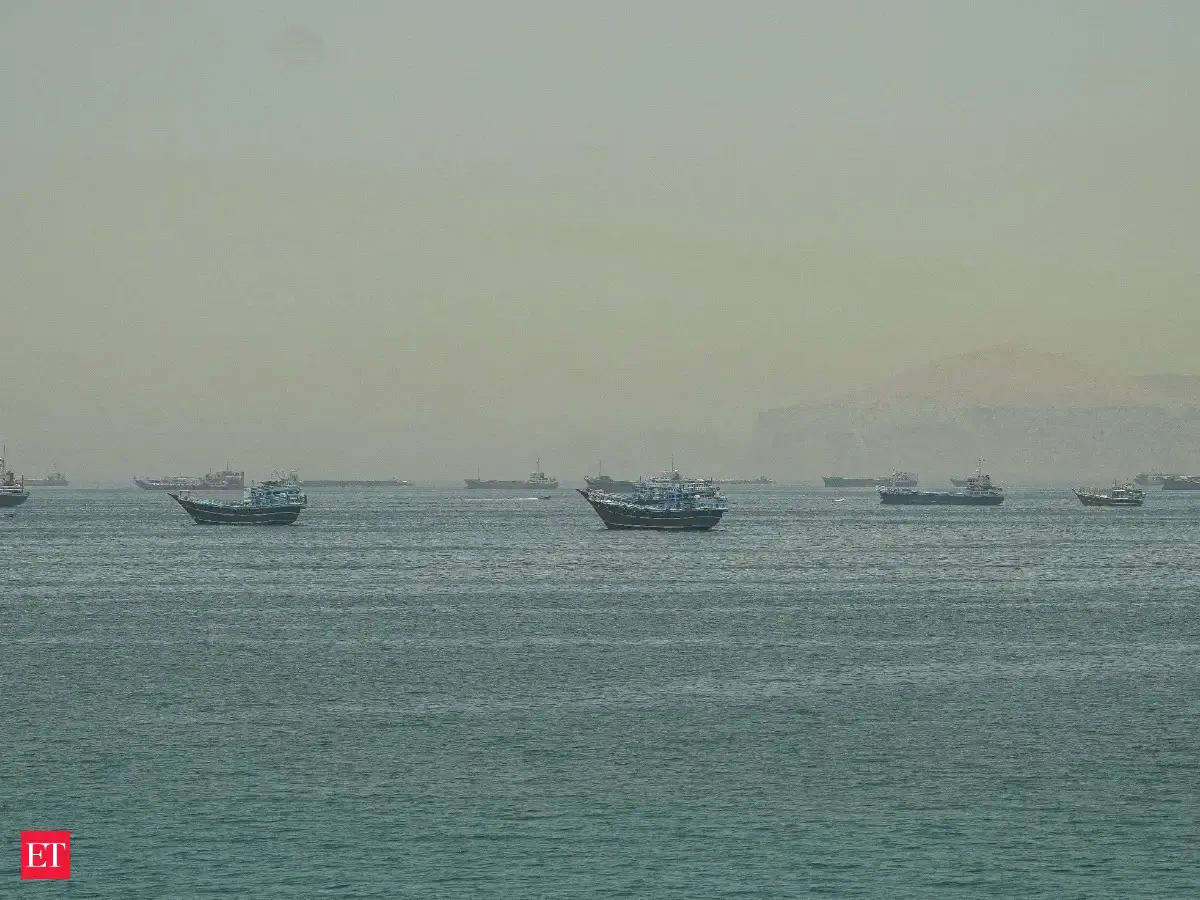
Strait of Hormuz
The Economic Times — embedded from source
How each side covered it
Our own reading of the reporting listed below, written from the outlets’ articles rather than quoted from them. The reasoning is set out on our methodology page.
Left
1 rated outlet
We have not written our reading of the left coverage of this story. The left-rated outlets that ran it are listed below.
Centre
2 rated outlets
- The centre-rated reports from The Economic Times and Reuters led with HSBC Group Chief Executive Georges Elhedery's statement that investments in alternative logistics routes could make the Strait of Hormuz redundant in five years. Both reports highlighted that the conflict has exposed the world's heavy reliance on the strategic waterway, through which a fifth of global oil and liquefied natural gas trade previously passed. They also noted Elhedery's expectation that the region would need significant investment to recover and grow, and mentioned the postponement of the Saudi Arabia investment conference to 2027 due to Houthi strikes.
Right
4 rated outlets
- The right-rated reports from The Times of India, YourNEWS, and The Hindu Business Line focused on the potential for alternative routes to reduce dependence on the Strait of Hormuz within five years. The Times of India, in its full report, detailed the $1.4 trillion pipeline of planned but unawarded infrastructure projects in the Middle East, North Africa, and Turkey, and included the World Bank's forecast of a 1.3% economic contraction in the region this year. YourNEWS and The Hindu Business Line digests also highlighted the conflict's impact on the strategic waterway and the need for investment in alternative routes.
Questions about this coverage
- How did the left and right cover HSBC CEO: Strait of Hormuz could be redundant in five years?
- Of the 7 outlets on this story carrying a published leaning rating, 14% are rated left, 29% are rated centre, 57% are rated right. Those percentages are shares of the rated outlets, not of every outlet that ran it, which was 10. The sections above set out what each side emphasised, in its own terms.
- Is HSBC CEO: Strait of Hormuz could be redundant in five years left or right?
- Too few of the outlets on this story carry a published leaning rating to say. 7 of them do, and this site does not characterise a field under 12: at that size one newsroom filing moves the share by ten points. The percentages above are the count as it stands.
- Is the coverage of HSBC CEO: Strait of Hormuz could be redundant in five years biased?
- HSBC CEO: Strait of Hormuz could be redundant in five years is one event reported by 10 outlets, and this page does not rate the story as biased or unbiased. What it publishes is the spread: which outlets ran it, where named rating organisations place each of them on the spectrum, and what each side chose to lead with. A leaning rating describes an outlet's record over time, not this article, and the two should not be run together.
- Which side is not reporting HSBC CEO: Strait of Hormuz could be redundant in five years?
- When we first saw this story, outlets rated left had barely covered it. Coverage accretes for hours after an event, so that is where to look rather than a verdict — the split above is the current count, and it is the one to read.
- Which outlets covered HSBC CEO: Strait of Hormuz could be redundant in five years?
- 10 that we know of, every one of them listed further up this page with a link to its own report and to what we hold on the publisher. Nothing here is a summary of somebody else's summary: the outlets are named so the original reporting can be read.
- How soon could the Strait of Hormuz become redundant?
- HSBC Group Chief Executive Georges Elhedery stated that investments in alternative logistics routes could make the Strait of Hormuz redundant within five years. This shift is driven by the need to mitigate risks exposed by regional conflicts and reduce dependence on the strategic waterway.
- What is the value of planned infrastructure projects in the region?
- According to an HSBC report, the Middle East, North Africa, and Turkey have a $1.4 trillion pipeline of planned but unawarded infrastructure projects. These projects aim to develop alternative energy pipelines and logistics routes.
- What is the economic forecast for the Middle East, North Africa, and Pakistan region?
- The World Bank forecasts a 1.3% economic contraction in the Middle East, North Africa, and Pakistan region this year due to the ongoing conflict. This is expected to be followed by a strong but uneven recovery in 2027.
Read it at the source
10 outlets, grouped by the leaning a published rating gives them. Every headline links to the original; an underlined outlet name opens our profile of that publisher.
Left
1Centre
2- Hormuz could be 'redundant' in five years, replaced by new routes, HSBC CEO says (opens Reuters in a new tab)
- HSBC CEO says alternative routes could make Strait of Hormuz 'redundant' in five years (opens The Economic Times in a new tab)
The Economic Times — is The Economic Times biased? Our profile of this outlet
Right
4- HSBC Chief Says Alternative Gulf Energy Routes Could Reduce Hormuz Dependence Within Five Years (opens [your]NEWS in a new tab)
[your]NEWS — is [your]NEWS biased? Our profile of this outlet
- Strait of Hormuz could be redundant in five years (opens Pakistan Today in a new tab)
Pakistan Today — is Pakistan Today biased? Our profile of this outletOpinion
- Beyond the Strait: Gulf looks for an escape route from Hormuz (opens Times of India in a new tab)
Times of India — is Times of India biased? Our profile of this outlet
- Hormuz could be 'redundant' in five years, replaced by new routes, HSBC CEO says (opens The Hindu Business Line in a new tab)
The Hindu Business Line — is The Hindu Business Line biased? Our profile of this outlet
Not rated
3- HSBC Makes a Critical Prediction for the Strait of Hormuz: a $872 Billion Project in the Region, Which Includes Turkey. (opens ekonomim.com in a new tab)
ekonomim.com — is ekonomim.com biased? Our profile of this outlet
- Strait of Hormuz Could 'Lose Importance' in Five Years: British Banking Group (opens Independent Urdu in a new tab)
Independent Urdu — is Independent Urdu biased? Our profile of this outlet
- HSBC CEO says alternative routes could make Strait of Hormuz 'redundant' in five years (opens BizToc in a new tab)
How did this read?
About the coverage, not about the story. We do not ask whether you agree with what happened — we have no honest use for that answer.
More in Business & Economy
All Business & Economy →

Elsewhere on the site
 Conflict & Security•3 min readUS issues Middle East security alerts over Houthi attacks
 Conflict & Security•3 min readIran claims downing US drone over Strait of Hormuz
 Politics•4 min readLavrov and Araghchi Affirm Russia-Iran Ties Amid Regional Tensions
 Conflict & Security•3 min readUS military prepares for Iran escalation post-midterms