Huawei Plans Four New AI Chips Over Three Years
Company announces Ascend 950 with proprietary memory and new computing supernodes.
AI-assisted coverage comparison, editor-supervised · How this was made
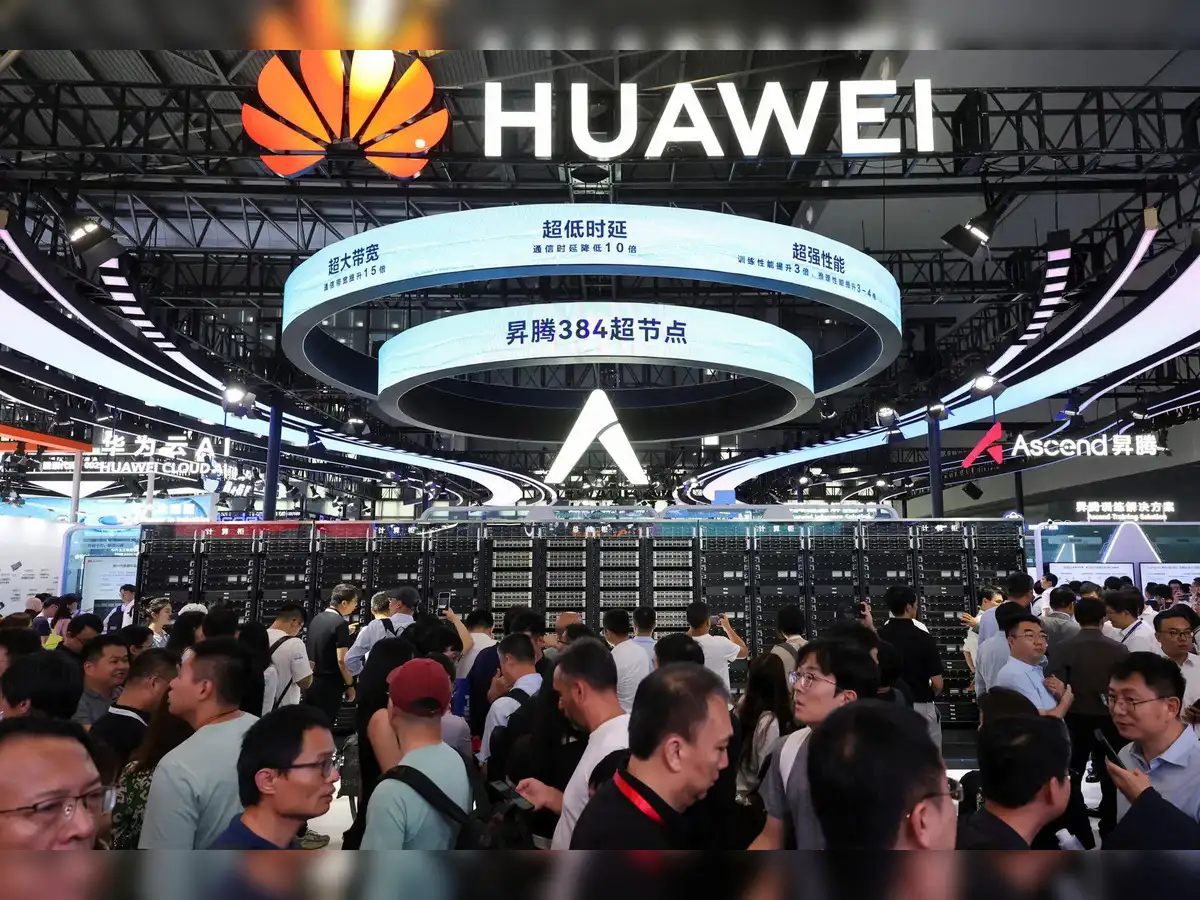
People visit a Huawei booth during the World Artificial Intelligence Conference in Shanghai, China July 26, 2025. REUTERS/Go Nakamura/File Photo
Photograph: Times of India (embedded from source)
What this story says
- Huawei plans to release four new Ascend AI chips over the next three years.
- The upcoming Ascend 950 chip will incorporate proprietary high-bandwidth memory.
- New computing power supernodes, including the Atlas 950 and Atlas 960, are planned for late 2026 and late 2027.
- Chinese authorities have accused Nvidia of violating anti-monopoly laws and ordered tech firms to halt Nvidia chip purchases.
Who covered it
Percentages are shares of the 43 outlets carrying a published leaning rating. 39 of the 82 outlets we know ran this story carry no rating and are not counted in them. Coverage measured .
Trust
60/100
Craft
61/100
Hype
41/100
82 sources · methodology
Missing from the left
Only 9 of the 43 outlets with a published leaning rating that ran this story are rated left.
A reader who follows the left would not have seen this. We report the absence rather than explain it: outlets choose what to cover for many reasons, and we have no evidence about which one applies here.
Huawei announced its intention to release four new Ascend artificial intelligence chips within the next three years. The company stated that its Ascend 950 chip will include proprietary high-bandwidth memory, a technology crucial for AI processing. Huawei also plans to introduce new computing power supernodes, designed to interconnect chips at high speeds. The Atlas 950 supernode is scheduled for release in the fourth quarter of 2026, followed by the Atlas 960 in the fourth quarter of 2027.
The Ascend 960 AI chips are expected to be commercially available in 2027. Huawei's announcement comes amid increased scrutiny of Nvidia by Chinese authorities. Chinese officials have accused Nvidia of breaching anti-monopoly regulations and have instructed major technology firms to cease purchasing Nvidia chips and to cancel existing orders.
Disagreements in reporting
The Times of India reported that the Ascend 950 will be launched next year, with its successor, the 960, arriving in 2027, followed by the 970 in 2028. Other reports indicate that the Ascend 960 AI chips will be commercially available in 2027, without specifying earlier chip releases or a 2028 timeline for the 970.
Omissions
None of the centre or right-rated reports mention Huawei's plans to release four new Ascend AI chips over the next three years, a detail reported by The Times of India. The centre-rated reports also do not mention the Ascend 950 chip featuring proprietary high-bandwidth memory, nor do they detail the specific timelines for the Atlas 950 and Atlas 960 computing power supernodes.
Coverage settled. We checked this 9 times and stopped on 22 Sept 2026, 09:30. The figures above are what it finished at.
How each side covered it
Our own reading of the reporting listed below, written from the outlets’ articles rather than quoted from them. The reasoning is set out on our methodology page.
Left
9 rated outlets
- Across the nine left‑rated digests, the central fact reported is that Huawei has introduced new chip technologies intended to compete with Nvidia. The Independent, abc News, The Record and the Seattle Times all led on Huawei’s launch as part of a broader United States‑China rivalry over artificial‑intelligence hardware.
- IndexHR’s digest adds that Huawei cannot satisfy domestic demand for AI chips and is postponing expansion while building its own ecosystem as an alternative to Nvidia. rthk.hk reports rotating chairman David Wang stating that two AI semiconductors, the 960DT and the Ascend 960PR, will be launched in the first and third quarters of 2027. Indian Express notes the US‑China competition over chips, data centres and software.
- The left‑rated digests do not include any cost estimate for the new chips. They also omit mention of Huawei’s plan to produce four AI chips over three years, focusing instead on the 2027 launches and the competitive framing with Nvidia and the United States.
Centre
20 rated outlets
- Centre-rated reports focused on Huawei's upcoming AI chip releases and their commercial availability. Reuters and WTVB reported that Huawei will launch two new artificial-intelligence chips in 2027, citing rotating chairman David Wang. The Japan Times noted Huawei's aim for its Ascend chips to operate every AI model in China and beyond. Bloomberg highlighted Huawei's intention to unveil new AI technology in defiance of US export curbs and its ambition to replace Nvidia in China.
Right
14 rated outlets
- Right-rated reports from The Times of India, The Straits Times, and Business Times highlighted Huawei's plans as a direct challenge to Nvidia's dominance in the AI chip market. The Times of India's full report detailed the Ascend 950 chip's proprietary high-bandwidth memory and the planned computing power supernodes, framing the announcement as a significant move in the US-Sino tech competition. The Straits Times and Business Times used headlines suggesting Huawei's offerings are China's best response to Nvidia's reign in AI chips.
Questions about this coverage
- How did the left and right cover Huawei Plans Four New AI Chips Over Three Years?
- Of the 43 outlets on this story carrying a published leaning rating, 21% are rated left, 46% are rated centre, 33% are rated right. Those percentages are shares of the rated outlets, not of every outlet that ran it, which was 82. The sections above set out what each side emphasised, in its own terms.
- Is Huawei Plans Four New AI Chips Over Three Years left or right?
- Neither side dominates it. Of the 43 rated outlets on this story, 21% are rated left, 46% are rated centre, 33% are rated right, and no side holds the 70% this site would want before calling a field one-sided. A story is not left or right in any case; the outlets that carried it are what carry ratings.
- Is the coverage of Huawei Plans Four New AI Chips Over Three Years biased?
- Huawei Plans Four New AI Chips Over Three Years is one event reported by 82 outlets, and this page does not rate the story as biased or unbiased. What it publishes is the spread: which outlets ran it, where named rating organisations place each of them on the spectrum, and what each side chose to lead with. A leaning rating describes an outlet's record over time, not this article, and the two should not be run together.
- Which side is not reporting Huawei Plans Four New AI Chips Over Three Years?
- When we first saw this story, outlets rated left had barely covered it. Coverage accretes for hours after an event, so that is where to look rather than a verdict — the split above is the current count, and it is the one to read.
- Which outlets covered Huawei Plans Four New AI Chips Over Three Years?
- 82 that we know of, every one of them listed further up this page with a link to its own report and to what we hold on the publisher. Nothing here is a summary of somebody else's summary: the outlets are named so the original reporting can be read.
- What are Huawei's plans for new AI chips?
- Huawei has announced plans to release four new Ascend AI chips over the next three years. The company also intends to launch new computing power supernodes, with the Atlas 950 expected in late 2026 and the Atlas 960 in late 2027.
- What is significant about the Ascend 950 chip?
- The Ascend 950 chip is notable for its planned inclusion of proprietary high-bandwidth memory. This technology is considered crucial for advanced AI processing and represents a significant development for China's domestic semiconductor capabilities.
- What action have Chinese authorities taken regarding Nvidia?
- Chinese authorities have accused Nvidia of violating anti-monopoly law. They have also reportedly ordered major tech firms to halt purchases of Nvidia's AI chips and to cancel existing orders for them.
Read it at the source
82 outlets, grouped by the leaning a published rating gives them. Every headline links to the original; an underlined outlet name opens our profile of that publisher.
Left
9- Huawei Can't Produce Enough AI Chips Even for the Chinese Market (opens IndexHR in a new tab)
- Huawei unveils new chip technologies as Chinese firm steps up the AI race with Nvidia (opens The Seattle Times in a new tab)
The Seattle Times — is The Seattle Times biased? Our profile of this outlet
- Huawei unveils new chip technologies as Chinese firm steps up the AI race with Nvidia (opens The Sun Chronicle in a new tab)
The Sun Chronicle — is The Sun Chronicle biased? Our profile of this outlet
- Huawei unveils new chip technologies as Chinese firm steps up the AI race with Nvidia (opens The Independent (US) in a new tab)
The Independent (US) — is The Independent (US) biased? Our profile of this outlet
- Huawei unveils new chip technologies as Chinese firm steps up the AI race with Nvidia (opens The Independent in a new tab)
The Independent — is The Independent biased? Our profile of this outlet
- Huawei unveils new chip technologies as Chinese firm steps up the AI race with Nvidia (opens ABC News in a new tab)
- China’s Huawei sets 2027 launch for new AI chips as it targets Nvidia (opens Indian Express in a new tab)
Indian Express — is Indian Express biased? Our profile of this outlet
- Huawei to launch two new AI chips in 2027 (opens rthk.hk in a new tab)
Centre
20- China's AI superchip set to reshape the 'arms race' as early as January (opens New Atlas in a new tab)
- Huawei's next-gen Ascend NPUs could become China's best option (opens The Register in a new tab)
The Register — is The Register biased? Our profile of this outlet
- Huawei unveils new chip technologies as Chinese firm steps up the AI race with Nvidia (opens TechXplore in a new tab)
TechXplore — is TechXplore biased? Our profile of this outlet
- Huawei unveils new chip technologies as Chinese firm steps up the AI race with Nvidia (opens The Record in a new tab)
The Record
- Huawei plans Q1 2027 launch of new AI chip as it takes on Nvidia (opens TechCrunch in a new tab)
TechCrunch — is TechCrunch biased? Our profile of this outlet
- Huawei speeds up Ascend 960 AI chip launch to challenge Nvidia (opens Quartz in a new tab)
- Huawei unveils new chip technologies as Chinese firm steps up the AI race with Nvidia (opens My Mother Lode in a new tab)
My Mother Lode — is My Mother Lode biased? Our profile of this outlet
- Huawei unveils what it calls the industry’s first NPO-based Ascend 960 supernode · TechNode (opens TechNode in a new tab)
Show 12 more
- Huawei unveils new chip technologies as Chinese firm steps up the AI r (opens WBAL in a new tab)
- Huawei unveils new chip technologies as Chinese firm steps up the AI race with Nvidia (opens WKMG in a new tab)
- Huawei Is Coming for Nvidia Now. Its New AI Chips Arrive in 2027 (opens Sify in a new tab)
- China's Huawei sets 2027 launch for new AI chips as it targets Nvidia (opens Asia One in a new tab)
- Huawei Presents a New Range of AI Clusters with Which It Seeks to Compete with Nvidia (opens Hola News in a new tab)
- Huawei quickens AI chip pace, promises next entrant 3 quarters early (opens South China Morning Post in a new tab)
South China Morning Post — is South China Morning Post biased? Our profile of this outlet
- Huawei to Launch New AI Chips Next Year (opens Portfolio in a new tab)
- Huawei unveils new chip technologies as Chinese firm steps up the AI race with Nvidia (opens Winnipeg Free Press in a new tab)
Winnipeg Free Press — is Winnipeg Free Press biased? Our profile of this outlet
- China's Huawei to launch two new AI chips in 2027 (opens Reuters in a new tab)
- Huawei set to unveil China’s best answer to Nvidia AI chip reign (opens The Japan Times in a new tab)
The Japan Times — is The Japan Times biased? Our profile of this outlet
- Huawei Set to Unveil China’s Best Answer to Nvidia AI Chip Reign (opens Bloomberg in a new tab)
- China’s Huawei to launch two new AI chips in 2027 (opens WTVB in a new tab)
Right
14- Tech Brief (Sept. 18): Huawei Speeds Up AI Chip Roadmap (opens Caixin Global in a new tab)
Caixin Global — is Caixin Global biased? Our profile of this outlet
- Huawei Challenges Nvidia with New AI Chips (opens Kronen Zeitung in a new tab)
Kronen Zeitung — is Kronen Zeitung biased? Our profile of this outlet
- Huawei Pulls Its Nvidia-Killer Forward To Q1 - But There's A Catch (opens Zero Hedge in a new tab)
Zero Hedge — is Zero Hedge biased? Our profile of this outlet
- Huawei unveils Atlas 960, signalling China's faster AI chip push (opens India Today in a new tab)
India Today — is India Today biased? Our profile of this outlet
- Huawei unveils new chip technologies as Chinese firm steps up the AI race with Nvidia (opens The Messenger in a new tab)
The Messenger — is The Messenger biased? Our profile of this outlet
- Huawei unveils new chip technologies as Chinese firm steps up the AI race with Nvidia (opens Jonesboro Sun in a new tab)
Jonesboro Sun — is Jonesboro Sun biased? Our profile of this outlet
- Huawei unveils new chip technologies as Chinese firm steps up the AI race with Nvidia (opens Madison Courier in a new tab)
Madison Courier — is Madison Courier biased? Our profile of this outlet
- China's Huawei Sets 2027 Launch For New AI Chips As it Targets Nvidia (opens Deccan Chronicle in a new tab)
Deccan Chronicle — is Deccan Chronicle biased? Our profile of this outlet
Show 6 more
- China's Huawei sets 2027 launch for new AI chips as it targets Nvidia (CFTLF:OTCMKTS) (opens Seeking Alpha in a new tab)
Seeking Alpha — is Seeking Alpha biased? Our profile of this outlet
- Huawei sets 2027 launch for new AI chips as it targets Nvidia (opens Free Malaysia Today News in a new tab)
Free Malaysia Today News — is Free Malaysia Today News biased? Our profile of this outlet
- Huawei has two new AI chips coming in 2027; here is when they launch (opens Moneycontrol in a new tab)
Moneycontrol — is Moneycontrol biased? Our profile of this outlet
- Huawei set to unveil China’s best answer to Nvidia AI chip reign (opens The Straits Times in a new tab)
The Straits Times — is The Straits Times biased? Our profile of this outlet
- Huawei set to unveil China’s best answer to Nvidia AI chip reign (opens Business Times in a new tab)
Business Times — is Business Times biased? Our profile of this outlet
- China's Huawei hypes up chip and computing power plans in fresh challenge to Nvidia (opens Times of India in a new tab)
Times of India — is Times of India biased? Our profile of this outlet
Not rated
39- Huawei Accelerates AI Chip Roadmap to 2027 in Aggressive Push Against Nvidia (opens Android Headlines in a new tab)
Android Headlines — is Android Headlines biased? Our profile of this outlet
- Huawei's New Ascend NPUs Are Shaping China's AI Future. (opens TechInside in a new tab)
TechInside — is TechInside biased? Our profile of this outlet
- Huawei Advances Three Quarters to Launch Its Ascend 960DT Chip to Plant Face to Nvidia (opens diarioestrategia.cl in a new tab)
diarioestrategia.cl — is diarioestrategia.cl biased? Our profile of this outlet
- Huawei Ascend 960DT: the Explosive Response to Nvidia (opens BlogNT in a new tab)
- Huawei Accelerates the Launch of Its IA Ascend 960DT Chip to Compete with Nvidia in 2027 (opens KultureGeek.fr in a new tab)
KultureGeek.fr — is KultureGeek.fr biased? Our profile of this outlet
- Huawei details AI accelerator roadmap, pulls in next-generation Ascend NPUs by several quarters — FP4 performance of the Ascend 960PR doubles expectations (opens Tom's Hardware in a new tab)
Tom's Hardware — is Tom's Hardware biased? Our profile of this outlet
- Huawei Ascend 960 Challenges NVIDIA Superpod With Q1 2027 Launch (opens mediatalkafrica.com in a new tab)
mediatalkafrica.com — is mediatalkafrica.com biased? Our profile of this outlet
- Huawei Accelerates Launch of Ascend 960DT AI Chip to Early 2027 (opens wartaekonomi.co.id in a new tab)
wartaekonomi.co.id — is wartaekonomi.co.id biased? Our profile of this outlet
Show 31 more
- Huawei Has Announced Plans to Launch Its Next-Generation AI Chip, the "Ascend 960DT," Early in 2027, and to Integrate up to 1 Million Processors. (opens GIGAZINE in a new tab)
- Huawei Accelerates AI Chip Against Nvidia After U.S. Siege (opens O Cafezinho in a new tab)
O Cafezinho — is O Cafezinho biased? Our profile of this outlet
- Huawei moves up AI chip upgrade to Q1 2027 in Nvidia challenge (opens The Tech Portal in a new tab)
The Tech Portal — is The Tech Portal biased? Our profile of this outlet
- Huawei pulls forward Ascend 960DT AI chip launch to take on Nvidia (opens Neowin in a new tab)
- Huawei Accelerates Ascend Roadmap Against Nvidia (opens it-daily.net in a new tab)
it-daily.net — is it-daily.net biased? Our profile of this outlet
- Huawei Unveils Its New AI Chips and Accelerates Its Offensive Against NVIDIA (opens Clubic.com in a new tab)
Clubic.com — is Clubic.com biased? Our profile of this outlet
- Huawei Unveils New Chip Technology, Accelerating AI Race with US (opens vietnamplus.vn in a new tab)
vietnamplus.vn — is vietnamplus.vn biased? Our profile of this outlet
- Huawei Brings Huge Inference Boost With Its Next-Gen Ascend 960 Chips In 2027, While 2028's Ascend 970 Pushes Memory To 288 GB & Ascend 980 Pushes Memory To 384 GB In 2029 (opens Wccftech in a new tab)
- Huawei Limits Sales of AI Chips Abroad - 17/09/2026 (opens Folha de S.Paulo in a new tab)
Folha de S.Paulo — is Folha de S.Paulo biased? Our profile of this outlet
- Huawei Prepares to Unveil China's Response to Nvidia's AI Chips - Al-Borsa Newspaper (opens alborsaanews.com in a new tab)
alborsaanews.com — is alborsaanews.com biased? Our profile of this outlet
- Huawei to Launch Next-Gen AI Chip in Early 2027, Challenging Nvidia's Dominance (opens https://www.idxchannel.com/ in a new tab)
https://www.idxchannel.com/ — is https://www.idxchannel.com/ biased? Our profile of this outlet
- Huawei Presents Ascend 960 and Raises Its Challenge Against Nvidia in Artificial Intelligence (opens DiarioBitcoin in a new tab)
DiarioBitcoin — is DiarioBitcoin biased? Our profile of this outlet
- Chips and More: Huawei Has a Plan for the Competition with Nvidia (opens winfuture.de in a new tab)
winfuture.de — is winfuture.de biased? Our profile of this outlet
- Huawei Accelerates AI Chip Production to Challenge Nvidia's Market Position in China (opens Blockonomi in a new tab)
Blockonomi — is Blockonomi biased? Our profile of this outlet
- Huawei Launches New AI Chips and Takes Aim at Nvidia’s Dominance in China (opens Cryptocurrency News in a new tab)
Cryptocurrency News — is Cryptocurrency News biased? Our profile of this outlet
- Huawei Introduces Atlas 960, Highlighting China's Accelerated AI Chip Development (opens The CSR Journal in a new tab)
The CSR Journal — is The CSR Journal biased? Our profile of this outlet
- Huawei: Plans to Launch New Artificial Intelligence Chips in 2027 - ONLARISSA.GR News Larissa (opens onlarissa.gr in a new tab)
onlarissa.gr — is onlarissa.gr biased? Our profile of this outlet
- Huawei Presents New Chip Technologies While Accelerating the AI Race with Nvidia (opens Independent Español in a new tab)
Independent Español — is Independent Español biased? Our profile of this outlet
- Huawei Is Preparing for a Huge Launch, This Could Be Nvidia's New Nightmare (opens economx.hu in a new tab)
economx.hu — is economx.hu biased? Our profile of this outlet
- Huawei to Launch Two New Powerful AI Chips in 2027 (opens jabuka.tv in a new tab)
- Huawei’s new AI SuperPoD could be its biggest Nvidia challenge yet (opens Cryptopolitan in a new tab)
Cryptopolitan — is Cryptopolitan biased? Our profile of this outlet
- Huawei Presents Ascend 960 Supernode for Advanced AI Systems - News Press Latina (opens prensa-latina.cu in a new tab)
prensa-latina.cu — is prensa-latina.cu biased? Our profile of this outlet
- Huawei AI Chips Set For Two 2027 Launches (opens stratnewsglobal.com in a new tab)
stratnewsglobal.com — is stratnewsglobal.com biased? Our profile of this outlet
- Huawei Will Launch Two AI Chips in 2027 (opens Social Samvad in a new tab)
Social Samvad — is Social Samvad biased? Our profile of this outlet
- Huawei Is Developing Two New AI Chips (opens Biznis.rs in a new tab)
- Huawei will introduce two Ascend 960 AI chips in 2027 despite US curbs (opens Huawei Central in a new tab)
Huawei Central — is Huawei Central biased? Our profile of this outlet
- Will Huawei take on Nvidia after introducing its two new AI chips? - Hello Entrepreneurs (opens helloentrepreneurs.com in a new tab)
helloentrepreneurs.com — is helloentrepreneurs.com biased? Our profile of this outlet
- Next year Huawei will successively release two AI chips in the Ascend series (opens Aroged in a new tab)
- Huawei Announces IA Ascend 960 Chip and Will Multiply Computing Capacity by 10 by 2030 (opens DPL News in a new tab)
- Huawei to unveil new AI technology, defying US export curbs (opens communicationstoday.co.in in a new tab)
communicationstoday.co.in — is communicationstoday.co.in biased? Our profile of this outlet
- Huawei Set to Unveil China's Best Answer to Nvidia AI Chip Reign (opens BizToc in a new tab)
How did this read?
About the coverage, not about the story. We do not ask whether you agree with what happened — we have no honest use for that answer.