Libya reopens Sharara-Zawiya oil pipeline after five-day closure
National Oil Corporation announces resumption of pumping following disruption by armed group, with estimated $95 million in losses.
AI-assisted coverage comparison, editor-supervised · How this was made

Libya reopens Sharara-Zawiya oil pipeline after five-day closure
Photograph: in.gr (embedded from source)
What this story says
- Libya's National Oil Corporation (NOC) announced the reopening of the Sharara-Zawiya oil pipeline on Saturday night.
- The pipeline had been closed for five days by an armed group, disrupting oil production.
- The closure is estimated to have cost Libya $95 million.
- The UN Support Mission in Libya warned that attacks on energy infrastructure could lead to sanctions.
Who covered it
Percentages are shares of the 16 outlets carrying a published leaning rating. 30 of the 46 outlets we know ran this story carry no rating and are not counted in them. Coverage measured .
Trust
42/100
Craft
61/100
Hype
20/100
46 sources · methodology
Thin on the left so far
Only 3 of the 16 outlets with a published leaning rating that ran this story are rated left.
This story is still being watched, so it is a count and not yet a finding. Coverage keeps arriving for hours after an event, and a side that has published nothing this morning may publish by tonight. If it is still true when we stop checking, we will say so plainly.
Libya's National Oil Corporation (NOC) announced on Saturday night that the Sharara-Zawiya oil pipeline has been reopened. The pipeline, which connects the Sharara oil field to the port of Zawiya, had been closed for five days by an armed group. The disruption is estimated to have cost Libya $95 million.
The closure of the pipeline led to a significant reduction in oil production. The NOC also announced the shutdown of one of its refining units at the Zawiya refinery due to the continued closure of the pipeline valve by armed groups. The UN Support Mission in Libya (UNSMIL) issued a warning that actions targeting or undermining the country's energy infrastructure could be grounds for sanctions under UN Security Council resolutions.
Disagreement on who closed the pipeline
Reports differ on the specific group responsible for closing the pipeline. In.gr stated that an armed group closed the valve, but did not provide details on their identity or demands. The National, citing the NOC, reported that armed groups belonging to the Petroleum Facilities Guard were responsible. Arab News also cited the NOC, stating the closure was by armed groups belonging to the Petroleum Facilities Guard.
What the coverage left out
None of the left-rated reports mention the specific armed group responsible for closing the pipeline, nor do they mention the Petroleum Facilities Guard. None of the centre-rated reports mention the Petroleum Facilities Guard. None of the right-rated reports mention the specific demands of the armed group that closed the pipeline.
Still developing. We have re-checked which outlets are covering this 3 times, most recently on 27 Sept 2026, 15:15, and will add the sides that appear.
How other outlets pictured it
Which photograph to run is each newsroom’s own choice. The leaning beside a name is that outlet’s published rating, not a claim that the pictures divide along it. Every picture is shown from the outlet’s own server and links to the article it ran in.
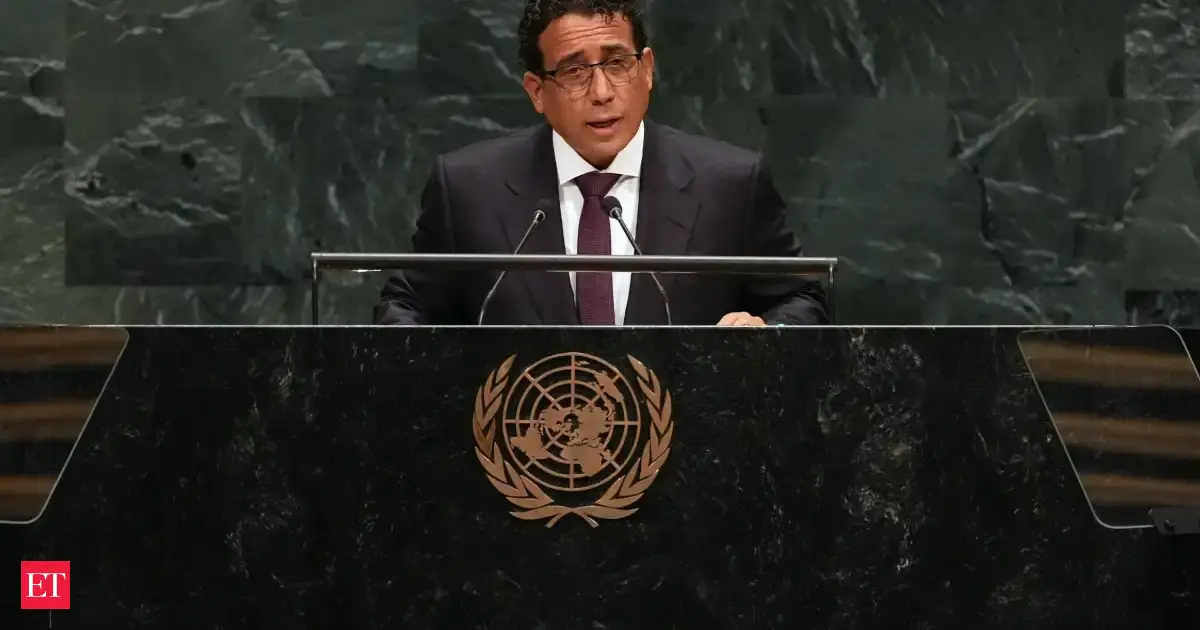
Libya’s energy infrastructure faces disruption as pipeline closure cuts oil output, public revenues and raises UN sanctions concerns.
The Economic Times — embedded from source
How each side covered it
Our own reading of the reporting listed below, written from the outlets’ articles rather than quoted from them. The reasoning is set out on our methodology page.
Left
3 rated outlets
- The left-rated reports focused on the reopening of the pipeline and the financial impact of its closure. In.gr reported that the NOC announced the reopening of the pipeline, which had been closed for days by an armed group, and estimated the cost at $95 million. Aljazeera.net stated that Libya resumed oil pumping after a five-day closure that caused $95 million in losses, with technical teams gradually returning flows. SANA reported that a refining unit at the Zawiya refinery was forced to shut down due to the continued closure of the raw spark transmission line.
Centre
4 rated outlets
- Centre-rated reports highlighted the UN's warning about potential sanctions and the financial losses incurred. The Economic Times and Times of India both led with the UN Support Mission in Libya's warning that attacks on energy infrastructure could trigger sanctions, noting the Sharara-Zawiya pipeline remained closed, causing crude production and revenue losses. Portfolio reported that production restarted at the Sharara field after an armed group closed a valve, paralyzing operations for five days. The National reported that losses at Libya's NOC reached $95 million as the Zawiya refinery shut down, with the company warning of wider economic harm.
Right
9 rated outlets
- Right-rated reports focused on the reopening of the pipeline and the UN's warning regarding sanctions. NOS reported the reopening of the important oil pipeline after its closure by an armed group. Arab News and Anadolu Ajansı both highlighted the UN mission's warning that actions undermining Libya's oil infrastructure could lead to Security Council measures, noting the Sharara-Zawiya pipeline's closure was causing significant losses. Protothema reported the reopening of the pipeline after being closed by an armed group, causing $95 million in damage. Free Malaysia Today News and Arab News also reported that Libya's NOC shut down a Zawiya refinery unit due to the forced pipeline closure, with the NOC warning of impacts on state oil revenue and the national economy. Globo reported the Libyan oil company paralysed a Zawiya refinery unit due to the forced closure of the Sharara pipeline.
Questions about this coverage
- How did the left and right cover Libya reopens Sharara-Zawiya oil pipeline after five-day closure?
- Of the 16 outlets on this story carrying a published leaning rating, 19% are rated left, 25% are rated centre, 56% are rated right. Those percentages are shares of the rated outlets, not of every outlet that ran it, which was 46. The sections above set out what each side emphasised, in its own terms.
- Is Libya reopens Sharara-Zawiya oil pipeline after five-day closure left or right?
- Neither side dominates it. Of the 16 rated outlets on this story, 19% are rated left, 25% are rated centre, 56% are rated right, and no side holds the 70% this site would want before calling a field one-sided. A story is not left or right in any case; the outlets that carried it are what carry ratings.
- Is the coverage of Libya reopens Sharara-Zawiya oil pipeline after five-day closure biased?
- Libya reopens Sharara-Zawiya oil pipeline after five-day closure is one event reported by 46 outlets, and this page does not rate the story as biased or unbiased. What it publishes is the spread: which outlets ran it, where named rating organisations place each of them on the spectrum, and what each side chose to lead with. A leaning rating describes an outlet's record over time, not this article, and the two should not be run together.
- Which side is not reporting Libya reopens Sharara-Zawiya oil pipeline after five-day closure?
- When we first saw this story, outlets rated left had barely covered it. Coverage accretes for hours after an event, so that is where to look rather than a verdict — the split above is the current count, and it is the one to read.
- Which outlets covered Libya reopens Sharara-Zawiya oil pipeline after five-day closure?
- 46 that we know of, every one of them listed further up this page with a link to its own report and to what we hold on the publisher. Nothing here is a summary of somebody else's summary: the outlets are named so the original reporting can be read.
- What happened to the Sharara-Zawiya oil pipeline?
- Libya's National Oil Corporation announced on Saturday night that the Sharara-Zawiya oil pipeline had been reopened. The pipeline had been closed for five days by an armed group, disrupting oil production and causing an estimated $95 million in losses.
- Who closed the pipeline and why?
- Reports indicate that an armed group closed the pipeline. Some reports, citing the NOC, specify that armed groups belonging to the Petroleum Facilities Guard were responsible. The specific demands of the group have not been detailed in the coverage.
- What are the estimated financial losses from the pipeline closure?
- The closure of the Sharara-Zawiya oil pipeline for five days is estimated to have cost Libya $95 million. This disruption also led to the shutdown of a refining unit at the Zawiya refinery.
- What warning has the UN issued regarding Libya's energy infrastructure?
- The UN Support Mission in Libya has warned that attacks targeting or potentially damaging Libya's energy infrastructure could lead to sanctions under relevant UN Security Council resolutions. This warning was issued as the pipeline remained closed.
Read it at the source
46 outlets, grouped by the leaning a published rating gives them. Every headline links to the original; an underlined outlet name opens our profile of that publisher.
Left
3- Oil Pipeline Reopened After Being Closed by Armed Group (opens in.gr in a new tab)
- Libya Resumes Oil Pumping From the Spark Field After It Stops Costing $95 Million. (opens aljazeera.net in a new tab)
aljazeera.net — is aljazeera.net biased? Our profile of this outlet
- Oil Libyan: Stopping the Refining Unit at the Corner Refinery Due to the Continued Closure of the Spark Line (opens SANA in a new tab)
Centre
4- Production Restarts at African Oil Field Paralyzed by Militants (opens Portfolio in a new tab)
- UN mission warns disruption to Libya oil infrastructure could trigger sanctions (opens Reuters in a new tab)
- UN mission warns disruption to Libya oil infrastructure could trigger sanctions (opens The Economic Times in a new tab)
The Economic Times — is The Economic Times biased? Our profile of this outlet
- Losses at Libya's NOC hit $95m as Zawiya refinery shuts down (opens The National in a new tab)
The National — is The National biased? Our profile of this outlet
Right
9- Important Oil Pipeline for Libya Reopens After Closure by Armed Group (opens NOS in a new tab)
- Libya Oil Pipeline Reopens After Being Closed by Armed Group, Causing $95 Million in Damage (opens Protothema in a new tab)
Protothema — is Protothema biased? Our profile of this outlet
- Libya: Charara-Zawiya Pipeline Reopened After Five Days of Blockade (opens Le Figaro in a new tab)
- After Heavy Losses on Its Closure, Libya Announces the Resumption of the Pumping of the Ore. (opens Al Bawaba in a new tab)
- UN Warns Actions Undermining Libya's Oil Infrastructure Could Trigger Security Council Measures (opens Anadolu Ajansı in a new tab)
Anadolu Ajansı — is Anadolu Ajansı biased? Our profile of this outlet
- UN mission warns disruption to Libya oil infrastructure could trigger sanctions (opens Times of India in a new tab)
Times of India — is Times of India biased? Our profile of this outlet
- Libya’s NOC shuts Zawiya refinery unit due to forced pipeline closure (opens Arab News in a new tab)
- Libyan Oil Company Paralyses Zawiya Refinery Unit (opens Globo in a new tab)
Not rated
30- Restarted Oil Pumping in a Pipeline From Libya's Main Oil Field (opens Forbes España in a new tab)
Forbes España — is Forbes España biased? Our profile of this outlet
- Restarted Oil Pumping in a Pipeline From the Main Oil Field Following an Armed Blockade (opens diarioestrategia.cl in a new tab)
diarioestrategia.cl — is diarioestrategia.cl biased? Our profile of this outlet
- Libya: Sharara Oil Pipeline Reopened After Blockade (opens tpo.nl in a new tab)
- Libya: Critical Oil Pipeline Reopens – “Breath” for Europe (opens Pentapostagma in a new tab)
Pentapostagma — is Pentapostagma biased? Our profile of this outlet
- Libya: Oil Pipeline Reopened After Being Closed by Armed Group (opens Unknown in a new tab)
Unknown
- Libya: Oil Pipeline Reopened After Being Closed by Armed Group (opens rthess.gr in a new tab)
- Libya Oil Pipeline Reopens After Being Blocked by Armed Groups (opens Utusan Online in a new tab)
Utusan Online — is Utusan Online biased? Our profile of this outlet
- Libya: Strategic Sharara-Zawiya Oil Pipeline Reopens (opens Unknown in a new tab)
Unknown
Show 22 more
- Libya: Oil Pipeline Closed by Armed Group Reopens - $95 Million in Damage (opens sigmalive.com in a new tab)
sigmalive.com — is sigmalive.com biased? Our profile of this outlet
- UN Mission Warns Libya's Disruption of Oil Infrastructure Could Lead to Sanctions (opens Arab News in a new tab)
Arab News
- Libya: Oil Pipeline Reopened After Being Closed by Armed Group (opens ΑΘΗΝΑ 9,84 in a new tab)
ΑΘΗΝΑ 9,84 — is ΑΘΗΝΑ 9,84 biased? Our profile of this outlet
- Armed Groups Blockade Libyan Oil Pipelines; State-Owned Oil Company Announces Resumption of Operations (opens cna.com.tw in a new tab)
cna.com.tw — is cna.com.tw biased? Our profile of this outlet
- Libya: Sharara-Zawiya Oil Pipeline Reopens After Armed Blockade (opens NewsBomb in a new tab)
- Libya: Oil Pipeline Reopened After Being Closed by Armed Group - ONLARISSA.GR News Larissa (opens onlarissa.gr in a new tab)
onlarissa.gr — is onlarissa.gr biased? Our profile of this outlet
- Libya: Oil Pipeline Reopened After Being Closed by Armed Group (opens ertnews.gr in a new tab)
ertnews.gr — is ertnews.gr biased? Our profile of this outlet
- Libya Has Restored the Al-Sharara Pipeline to Al-Zawiyah (opens Life.ru in a new tab)
- Libya: Sharara-Zawiya Oil Pipeline Reopens (opens zougla.gr in a new tab)
- Libya: Oil Pipeline Shut Down by Gunmen Reopens (opens Business Daily in a new tab)
Business Daily — is Business Daily biased? Our profile of this outlet
- Libya Has 48 Billion barrels... Why Lose Its Oil Production? (opens hathalyoum.net in a new tab)
hathalyoum.net — is hathalyoum.net biased? Our profile of this outletOpinion
- In Libya, NOC Announced that the Sharara-Zawiya Pipeline Valve, Which Had Been Closed for Six Days, Has Been Reopened. (opens Haberler in a new tab)
- Libya: Sharara-Zawiya Oil Pipeline Resumes Operations After Interruption (opens Capital.gr in a new tab)
Capital.gr — is Capital.gr biased? Our profile of this outlet
- UN Mission Alerts to Sanctions for Libyan Infrastructure Disruption (opens infomoney.com.br in a new tab)
infomoney.com.br — is infomoney.com.br biased? Our profile of this outlet
- Sharara Pipeline Shutdown Costs Libya $95 Million in Five Days (opens LibyaReview in a new tab)
LibyaReview — is LibyaReview biased? Our profile of this outlet
- UN mission warns disruption to Libya oil infrastructure could trigger sanctions (opens BizToc in a new tab)
- UN Mission Warns that Disruption of Libya's Oil Infrastructure May Result in Sanctions (opens Terra in a new tab)
- Disturbing Libya’s Oil Infrastructure Could Lead to Sanctions: UN (opens El Economista in a new tab)
El Economista — is El Economista biased? Our profile of this outlet
- Libyan Oil Foundation: Stopping a Refining Unit in the Al-Zawya Refinery Forced by Armed Groups - Al-Sharq Al-Shawq Gate (opens Al-Shorouk in a new tab)
Al-Shorouk — is Al-Shorouk biased? Our profile of this outlet
- The Libyan Petroleum Corporation Stopped the Corner Refinery Refining Unit Due to the Closure of the Pipeline (opens Unknown in a new tab)
Unknown
- Oil Corporation: Stop the Corner Filter Refining Unit Due to the Shutting Down of the Spark Line Valve (opens Unknown in a new tab)
UnknownOpinion
- The Oil Company Stops a Refining Unit in the Corner Filter and Warns of the Fallout. (opens eanlibya.com in a new tab)
eanlibya.com — is eanlibya.com biased? Our profile of this outlet
How did this read?
About the coverage, not about the story. We do not ask whether you agree with what happened — we have no honest use for that answer.
More in Business & Economy
All Business & Economy →


Elsewhere on the site
 Politics•3 min readTrump Administration Considered Baseball Stadium in Grand Teton National Park
 Politics•3 min readTwo pandas arrive in Atlanta from China on 10-year loan
 Conflict & Security•3 min readKremlin warns against Starlink use for Ukraine strikes inside Russia
 Science & Tech•2 min readDogs focus on consonants to distinguish words, study finds