OECD raises 2026 global growth forecast to 2.9%
Organization predicts resilient global economy despite Middle East conflict and weather risks.
AI-assisted coverage comparison, editor-supervised · How this was made
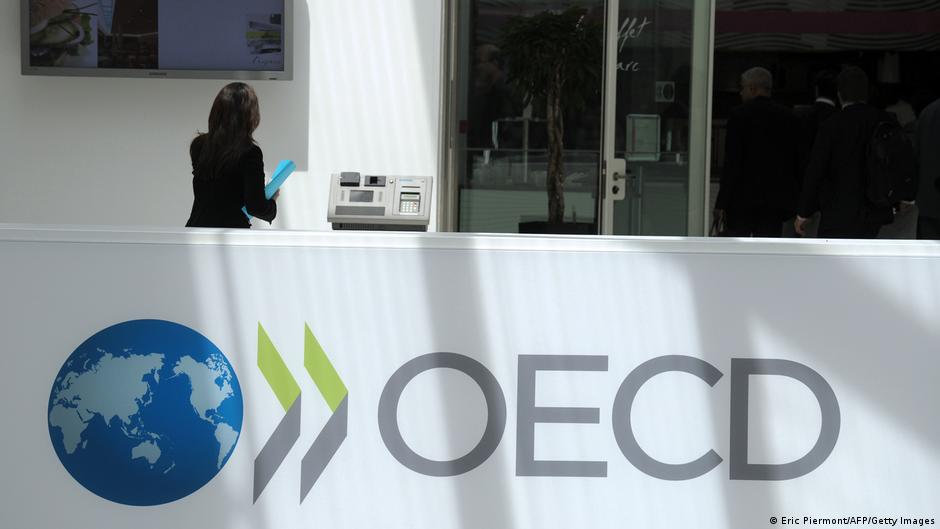
OECD raises 2026 global growth forecast to 2.9%
Photograph: Deutsche Welle (embedded from source)
What this story says
- The OECD has revised its global growth forecast for 2026 upwards to 2.9%, an increase of 0.1 percentage points from its June estimates.
- Global growth in 2026 is described as 'resilient' by the OECD, supported by government support measures and investments in artificial intelligence.
- The OECD has lowered its 2027 global growth forecast by 0.1 percentage points to 3%.
- The organization warned that continued fighting in the Middle East conflict could lead to higher inflation and that weather-related risks could cause supply bottlenecks and high food costs.
Who covered it
Percentages are shares of the 18 outlets carrying a published leaning rating. 39 of the 57 outlets we know ran this story carry no rating and are not counted in them. Coverage measured .
Trust
42/100
Craft
61/100
Hype
41/100
57 sources · methodology
Thin on the left so far
Only 2 of the 18 outlets with a published leaning rating that ran this story are rated left.
This story is still being watched, so it is a count and not yet a finding. Coverage keeps arriving for hours after an event, and a side that has published nothing this morning may publish by tonight. If it is still true when we stop checking, we will say so plainly.
The Organisation for Economic Co-operation and Development (OECD) has raised its global growth forecast for 2026 to 2.9%, an increase of 0.1 percentage points from its June predictions. The organization described the global economy as 'resilient' for 2026, attributing this to factors including government support measures and investments in artificial intelligence. However, the OECD also lowered its growth forecast for 2027 by 0.1 percentage points to 3%.
Despite the upward revision for 2026, the OECD highlighted several risks to the global economic outlook. Continued fighting in the Middle East conflict could lead to higher inflation, according to the organization. Additionally, weather-related risks, such as the El Nino pattern, were cited as potential causes for supply bottlenecks and increased food costs.
Disagreement on 2027 forecast
While the OECD's report indicates a global growth forecast of 3% for 2027, Deutsche Welle and Sud Ouest report this as a decrease of 0.1 percentage points from previous estimates. Sapo, SIC Notícias, and IOL Portugal also state the 2027 forecast is 3% but describe it as a downward revision for the next year. Correio da Manhã and CNN Portugal (IOL) state the 2027 forecast is 3% and that projections represent a slight revision in low for the next year. BizToc states 2027 growth was revised, but does not provide the figure. The remaining reports do not mention the 2027 forecast.
What the coverage left out
None of the left-rated reports mentioned the OECD's global growth forecast. The centre-rated reports from Deutsche Welle and Sud Ouest mentioned that the OECD lowered its 2027 global growth forecast by 0.1 percentage points to 3%. The right-rated reports from Sapo, SIC Notícias, and IOL Portugal also mentioned the 2027 forecast of 3% and described it as a downward revision for the next year. However, none of the reports mentioned specific figures for government support measures or oil inventories as factors cushioning the impact of the Middle East war, as detailed in Deutsche Welle's full report.
Still developing. We have re-checked which outlets are covering this 3 times, most recently on 23 Sept 2026, 12:15, and will add the sides that appear.
How other outlets pictured it
Which photograph to run is each newsroom’s own choice. The leaning beside a name is that outlet’s published rating, not a claim that the pictures divide along it. Every picture is shown from the outlet’s own server and links to the article it ran in.

How each side covered it
Our own reading of the reporting listed below, written from the outlets’ articles rather than quoted from them. The reasoning is set out on our methodology page.
Left
2 rated outlets
We have not written our reading of the left coverage of this story. The left-rated outlets that ran it are listed below.
Centre
5 rated outlets
- The centre-rated reports led with the OECD's upward revision of its 2026 global growth forecast to 2.9%. Deutsche Welle and Sud Ouest highlighted the 'resilient' nature of the global economy despite the Middle East war, with Deutsche Welle quoting the OECD's explanation that this resilience was cushioned by oil inventories, supply from outside the Gulf, and government support measures. Both outlets also mentioned investments in artificial intelligence as a factor supporting growth. Hola News confirmed the deceleration of global GDP in 2026 to 2.9% within a volatile context.
Right
11 rated outlets
- Right-rated reports focused on the OECD's revised growth forecast of 2.9% for 2026, while also noting that the global economy is losing momentum compared to the previous year. Kronen Zeitung and Kurier highlighted the risks to the world economy, with Kurier specifically naming the Iran war as the biggest risk. Sapo and Daily Sabah also reported the 2.9% growth forecast for 2026, with Daily Sabah noting the resilience despite successive risks. Sapo also mentioned the 3% forecast for 2027.
Questions about this coverage
- How did the left and right cover OECD raises 2026 global growth forecast to 2.9%?
- Of the 18 outlets on this story carrying a published leaning rating, 11% are rated left, 28% are rated centre, 61% are rated right. Those percentages are shares of the rated outlets, not of every outlet that ran it, which was 57. The sections above set out what each side emphasised, in its own terms.
- Is OECD raises 2026 global growth forecast to 2.9% left or right?
- Neither side dominates it. Of the 18 rated outlets on this story, 11% are rated left, 28% are rated centre, 61% are rated right, and no side holds the 70% this site would want before calling a field one-sided. A story is not left or right in any case; the outlets that carried it are what carry ratings.
- Is the coverage of OECD raises 2026 global growth forecast to 2.9% biased?
- OECD raises 2026 global growth forecast to 2.9% is one event reported by 57 outlets, and this page does not rate the story as biased or unbiased. What it publishes is the spread: which outlets ran it, where named rating organisations place each of them on the spectrum, and what each side chose to lead with. A leaning rating describes an outlet's record over time, not this article, and the two should not be run together.
- Which side is not reporting OECD raises 2026 global growth forecast to 2.9%?
- When we first saw this story, outlets rated left had barely covered it. Coverage accretes for hours after an event, so that is where to look rather than a verdict — the split above is the current count, and it is the one to read.
- Which outlets covered OECD raises 2026 global growth forecast to 2.9%?
- 57 that we know of, every one of them listed further up this page with a link to its own report and to what we hold on the publisher. Nothing here is a summary of somebody else's summary: the outlets are named so the original reporting can be read.
- What is the OECD's global growth forecast for 2026?
- The OECD has revised its global growth forecast for 2026 upwards to 2.9%. This represents an increase of 0.1 percentage points compared to the estimates provided in June.
- What factors are supporting global economic resilience in 2026?
- The OECD describes global growth in 2026 as resilient, supported by factors such as government support measures and investments in artificial intelligence. These elements are helping to balance pressures from the energy crisis and geopolitical tensions.
- What are the main risks to the global economy identified by the OECD?
- The OECD has warned that continued fighting in the Middle East conflict could lead to higher inflation. Additionally, weather-related risks, such as the El Nino pattern, could cause supply bottlenecks and high food costs.
- How has the OECD's forecast for 2027 changed?
- The OECD has lowered its global growth forecast for 2027 by 0.1 percentage points, setting it at 3%. This revision indicates a slight downward adjustment for the subsequent year's economic outlook.
Read it at the source
58 outlets, grouped by the leaning a published rating gives them. Every headline links to the original; an underlined outlet name opens our profile of that publisher.
Left
2Centre
5- Growth 'resilient' despite Middle East war, OECD says (opens Deutsche Welle in a new tab)
Deutsche Welle — is Deutsche Welle biased? Our profile of this outlet
- World Economy: OECD Revises Growth Forecasts for 2026 Despite Many Uncertainties (opens Sud Ouest in a new tab)
- OECD expects AI boom to help offset Middle East energy shock for now (opens Reuters in a new tab)
- OECD Confirms Deceleration of Global GDP by 2026 (+2.9%) in a Volatile Context (opens Hola News in a new tab)
- OECD expects AI boom to help offset Middle East energy shock for now (opens WTVB in a new tab)
Right
11- The OECD Slightly Upgraded the Forecast for the Growth of the Global Economy - When Is Recovery Expected - iefimerida.gr (opens Iefimerida in a new tab)
Iefimerida — is Iefimerida biased? Our profile of this outlet
- World Economy: the OECD Now Sees These Risks (opens Kronen Zeitung in a new tab)
Kronen Zeitung — is Kronen Zeitung biased? Our profile of this outlet
- OECD: AI Drives Global Economy, but Expensive Energy Is a Risk (opens Reformatorisch Dagblad in a new tab)
Reformatorisch Dagblad — is Reformatorisch Dagblad biased? Our profile of this outlet
- OECD Predicts Growth in the Global Economy of 2.9% in 2026 and 3% in 2027 Economic Journal (opens Sapo in a new tab)
- OECD expects AI boom to help offset Middle East energy shock for now (opens Free Malaysia Today News in a new tab)
Free Malaysia Today News — is Free Malaysia Today News biased? Our profile of this outlet
- According to the OECD, the World Economy Is Growing by 2.9 Percent Despite Crises (opens Kurier in a new tab)
- AI Boom Cushions Global Economy as Middle East Energy Shock Clouds 2027 Outlook (opens Modern Diplomacy in a new tab)
Modern Diplomacy — is Modern Diplomacy biased? Our profile of this outlet
- OECD Increased the Forecast of World GDP Growth to 2.9 per Cent This Year and Reduced It to 3 per Cent by 2027. (opens Interfax.ru in a new tab)
Interfax.ru — is Interfax.ru biased? Our profile of this outlet
Show 3 more
- OECD ups 2026 global growth forecast despite successive risks (opens Daily Sabah in a new tab)
Daily Sabah — is Daily Sabah biased? Our profile of this outlet
- OECD Forecasts Global Economy to Grow 2.9% This Year… "AI Offsets Conflict Risks" (opens 연합뉴스-Yonhap News Agency in a new tab)
연합뉴스-Yonhap News Agency — is 연합뉴스-Yonhap News Agency biased? Our profile of this outlet
- New Forecast Paints Surprisingly Solid Picture of Global Economy. But Resilience Is "Worn Thin" (opens Jyllands-Posten in a new tab)
Jyllands-Posten — is Jyllands-Posten biased? Our profile of this outlet
Not rated
40- Global Economy Tests More Resilient than Expected Awaits Middle East Conflict, OECD Says (opens Business Review in a new tab)
Business Review — is Business Review biased? Our profile of this outlet
- OECD Projects Global Growth of 2.9% in 2026 and 3.0% in 2027 and Energy Alert (opens Portal GMC Online in a new tab)
Portal GMC Online — is Portal GMC Online biased? Our profile of this outlet
- Strong AI investment to support global economic growth amid successive shocks, says OECD (opens economymiddleeast.com in a new tab)
economymiddleeast.com — is economymiddleeast.com biased? Our profile of this outlet
- OECD: Global Economy Resilient with Growth Revised to 2.9% (opens zougla.gr in a new tab)
- OECD Sees AI Drive Partially Offsetting the Energy Impact of the Conflict in Iran (opens infomoney.com.br in a new tab)
infomoney.com.br — is infomoney.com.br biased? Our profile of this outlet
- OECD raises 2026 global growth forecast despite Middle East energy shock - The Copenhagen Post (opens cphpost.dk in a new tab)
cphpost.dk — is cphpost.dk biased? Our profile of this outlet
- OECD Upgrades Global Growth Forecast (opens pelop.gr in a new tab)
- OECD Raises Global Growth Forecasts (opens republika.mk in a new tab)
republika.mk — is republika.mk biased? Our profile of this outlet
Show 32 more
- OECD Raises Global Growth Prospects for 2026 to 2.9% (opens اقتصاد سكاي نيوز عربية in a new tab)
اقتصاد سكاي نيوز عربية
- OECD Has Increased the Forecast of World GDP Growth for the Current Year (opens 1prime.ru in a new tab)
- The Economic Cooperation Organization (ECO) Is Projecting Growth in the World Economy at 2.9% This Year, Despite the Shock of Energy. (opens alborsaanews.com in a new tab)
alborsaanews.com — is alborsaanews.com biased? Our profile of this outlet
- OECD Revises Upward Its Global Growth Forecast for 2026. (opens vietnamplus.vn in a new tab)
vietnamplus.vn — is vietnamplus.vn biased? Our profile of this outlet
- OECD 'Sees' 2.9% Resilience for 2026 (opens ΑΘΗΝΑ 9,84 in a new tab)
ΑΘΗΝΑ 9,84 — is ΑΘΗΝΑ 9,84 biased? Our profile of this outlet
- OECD: Global Growth Forecast Upgraded to 2.9% in 2026 (opens Capital.gr in a new tab)
Capital.gr — is Capital.gr biased? Our profile of this outlet
- OECD Raises Global Growth Forecast (opens Business Daily in a new tab)
Business Daily — is Business Daily biased? Our profile of this outlet
- OECD Predicts Global Economy Growth of 2.9% in 2026 and 3% in 2027 (opens SIC Notícias in a new tab)
SIC Notícias — is SIC Notícias biased? Our profile of this outlet
- OECD Slightly Raises Forecast for the Global Economy (opens kleinezeitung.at in a new tab)
kleinezeitung.at — is kleinezeitung.at biased? Our profile of this outlet
- OECD Slightly Raises Forecast for the Global Economy (opens ORF.at News in a new tab)
ORF.at News — is ORF.at News biased? Our profile of this outlet
- OECD: AI Drives Global Economy, but Expensive Energy Is a Risk (opens welingelichtekringen.nl in a new tab)
welingelichtekringen.nl — is welingelichtekringen.nl biased? Our profile of this outlet
- OECD: AI Drives Global Economy, but Expensive Energy Is a Risk (opens Nieuws.nl in a new tab)
- OECD Improved Its Estimates of Growth of the World Economy in 2026 (opens Financial Intelligence in a new tab)
Financial Intelligence — is Financial Intelligence biased? Our profile of this outlet
- OECD Slightly Raises Forecast for the Global Economy (opens suedtirolnews.it in a new tab)
suedtirolnews.it — is suedtirolnews.it biased? Our profile of this outlet
- OECD Slightly Raises Forecast for Global Economy 2026 (opens vienna.at in a new tab)
- For the OECD, France Picks up While the World Economy Resists Better than Expected (opens La Tribune in a new tab)
La Tribune — is La Tribune biased? Our profile of this outlet
- OECD Slightly Raises Forecast for the Global Economy (opens Moneycab in a new tab)
- OECD Predicts Global Economy Growth of 2.9% in 2026 and 3% in 2027 (opens Correio da Manhã in a new tab)
Correio da Manhã — is Correio da Manhã biased? Our profile of this outlet
- OECD Predicts Global Economy Growth of 2.9% in 2026 and 3% in 2027 (opens IOL Portugal in a new tab)
IOL Portugal — is IOL Portugal biased? Our profile of this outlet
- Middle East War Tensions Rise, Global Economic Growth Predicted at 3 Percent (opens https://www.idxchannel.com/ in a new tab)
https://www.idxchannel.com/ — is https://www.idxchannel.com/ biased? Our profile of this outlet
- OECD revises global 2026 growth up to 2.9% (opens BizToc in a new tab)
- Global growth holds up despite successive shocks, but risks persist (opens headlinemoney.co.uk in a new tab)
headlinemoney.co.uk — is headlinemoney.co.uk biased? Our profile of this outlet
- OECD Improves Spain’s Growth Forecast by Four Tenths in 2026 but Focuses on Inflation Levels (opens lacronicabadajoz.com in a new tab)
lacronicabadajoz.com — is lacronicabadajoz.com biased? Our profile of this outlet
- OECD Improves Spain’s Growth Forecast by Four Tenths in 2026 but Focuses on Inflation Levels (opens elcorreogallego.es in a new tab)
elcorreogallego.es — is elcorreogallego.es biased? Our profile of this outlet
- OECD Improves Spain’s Growth Forecast by Four Tenths in 2026 but Focuses on Inflation Levels (opens elcorreoweb.es in a new tab)
elcorreoweb.es — is elcorreoweb.es biased? Our profile of this outlet
- OECD Improves Spain’s Growth Forecast by Four Tenths in 2026 but Focuses on Inflation Levels (opens laprovincia.es in a new tab)
laprovincia.es — is laprovincia.es biased? Our profile of this outlet
- OECD: Global Outlook Driven by Iran War (opens Dagens industri in a new tab)
Dagens industri — is Dagens industri biased? Our profile of this outlet
- OECD Predicts AI Offsetting High Energy for War - 23/09/2026 (opens Folha de S.Paulo in a new tab)
Folha de S.Paulo — is Folha de S.Paulo biased? Our profile of this outlet
- OECD Predicts Global Economy Growth of 2.9% in 2026 and 3% in 2027 (opens Noticias ao Minuto in a new tab)
Noticias ao Minuto — is Noticias ao Minuto biased? Our profile of this outlet
- OECD expects AI boom to help offset Middle East energy shock for now (opens BizToc in a new tab)
BizToc
- The Ocde Plans a Growth of 2.9 per Cent in the World Economy by the End of the Year (opens La República in a new tab)
La República — is La República biased? Our profile of this outlet
- OECD Improves Global Economic Growth Outlook, but Warns of Impacts of Expensive Energy (opens Hospodárske Noviny in a new tab)
Hospodárske Noviny — is Hospodárske Noviny biased? Our profile of this outlet
How did this read?
About the coverage, not about the story. We do not ask whether you agree with what happened — we have no honest use for that answer.
More in Business & Economy
All Business & Economy →

Elsewhere on the site
 Politics•3 min readIsrael FA criticises Ireland manager over 'genocide' comments
 Politics•3 min readTrump supports India-Middle East-Europe Corridor, calls for energy route shift
 Politics•3 min readUS and Iran hold indirect talks at UN General Assembly
 Politics•3 min readMacron urges UN action on Gaza, calls situation 'spectacle that shames us all'