US and Canada impose reciprocal tariffs impacting small businesses
Trade war measures affect bilateral trade, with business owners citing rising costs and cancelled orders.
AI-assisted coverage comparison, editor-supervised · How this was made

US and Canada impose reciprocal tariffs impacting small businesses
Photograph: Washington Top News (embedded from source)
What this story says
- Canada and the U.S. have imposed reciprocal tariffs on about $20 billion (CA$27.6 billion) worth of goods.
- The tariffs affect approximately 5.5% of the two nations' bilateral trade.
- Small business owners report facing taxes up to 50% on their products and a decline in sales.
- Rising energy costs from the Iran war are contributing to increased operational expenses for businesses.
Who covered it
Percentages are shares of the 16 outlets carrying a published leaning rating. 4 of the 20 outlets we know ran this story carry no rating and are not counted in them. Coverage measured .
Trust
42/100
Craft
61/100
Hype
68/100
20 sources · methodology
Thin on the right so far
None of the 16 outlets with a published leaning rating that ran this story are rated right.
This story is still being watched, so it is a count and not yet a finding. Coverage keeps arriving for hours after an event, and a side that has published nothing this morning may publish by tonight. If it is still true when we stop checking, we will say so plainly.
A trade dispute between the United States and Canada has resulted in reciprocal tariffs on approximately $20 billion (CA$27.6 billion) of goods from each country. These measures impact about 5.5% of the total bilateral trade between the two nations. Small business owners are reporting that the tariffs can amount to up to 50% on their products, alongside a perceived increase in anti-Canada sentiment affecting sales.
Business owners also cite rising energy costs, linked to the Iran war, as a factor increasing expenses for fuel for trucks and machinery. Mateo Kehler of Jasper Hill Farm, an artisan cheesemaker in Vermont, reported that he experienced canceled holiday orders from Canadian wholesale customers. Kehler suggested this was due to resentment over rhetoric directed at Canada by U.S. officials, rather than specific product tariffs, as cheese was not subject to the new U.S. taxes.
Disagreement on specific tariff impacts
While analysts suggest the overall economic impact of the tariffs will be muted due to their scope relative to total trade, small business owners report significant effects. Washington Top News, in its full report, detailed how a Vermont cheesemaker and a Canadian distiller experienced canceled orders and potential loss of U.S. clients, respectively. The reports do not provide a consensus on whether specific products are subject to the new U.S. tariffs, with Washington Top News stating cheese was not among those targeted by new U.S. tariffs, while also noting a 50% tax on distilling equipment from Canada.
What the coverage left out
None of the left-rated or centre-rated reports printed below mention specific details about the U.S. banning imports of wine, whiskey, selected motorcycles, and the dairy ingredient whey from Canada, as stated in the full report from Washington Top News.
Still developing. We have re-checked which outlets are covering this 2 times, most recently on 16 Sept 2026, 07:15, and will add the sides that appear.
How other outlets pictured it
Which photograph to run is each newsroom’s own choice. The leaning beside a name is that outlet’s published rating, not a claim that the pictures divide along it. Every picture is shown from the outlet’s own server and links to the article it ran in.

How each side covered it
Our own reading of the reporting listed below, written from the outlets’ articles rather than quoted from them. The reasoning is set out on our methodology page.
Left
12 rated outlets
- Left-rated reports led with the impact of the U.S.-Canada trade war on small businesses, highlighting increased costs and reduced sales. These reports frequently mentioned the reciprocal tariffs imposed by both countries, amounting to about $20 billion worth of goods. They also noted the effect of rising energy costs stemming from the Iran war on business expenses. Several left-rated reports quoted Mateo Kehler of Jasper Hill Farm, who reported canceled orders from Canadian customers and attributed this to perceived anti-Canada rhetoric, suggesting it created a market backlash and inspired a boycott. The reports also included details from other small business owners facing challenges.
Centre
4 rated outlets
- Centre-rated reports focused on the reciprocal tariffs between the U.S. and Canada and their impact on small businesses, noting that the measures affect about $20 billion in goods. These reports also highlighted the additional burden of rising energy costs due to the Iran war. Several centre-rated outlets included details from Mateo Kehler of Jasper Hill Farm, who reported canceled holiday orders from Canadian wholesale customers and linked this to perceived anti-Canada rhetoric. The reports also mentioned that the tariffs represent about 5.5% of the nations' bilateral trade, with analysts suggesting a muted overall economic impact.
Right
0 rated outlets
No outlet rated right has run this story so far. We are still checking, and will say plainly if that does not change.
Questions about this coverage
- How did the left and right cover US and Canada impose reciprocal tariffs impacting small businesses?
- Of the 16 outlets on this story carrying a published leaning rating, 75% are rated left, 25% are rated centre, 0% are rated right. Those percentages are shares of the rated outlets, not of every outlet that ran it, which was 20. The sections above set out what each side emphasised, in its own terms.
- Is US and Canada impose reciprocal tariffs impacting small businesses left or right?
- The story itself is neither. What can be counted is who has covered it, and 75% of the 16 rated outlets on it are rated left — so far this is a story carried mostly by the left. Coverage is still arriving and that can change, which is why the figure is dated rather than fixed.
- Is the coverage of US and Canada impose reciprocal tariffs impacting small businesses biased?
- US and Canada impose reciprocal tariffs impacting small businesses is one event reported by 20 outlets, and this page does not rate the story as biased or unbiased. What it publishes is the spread: which outlets ran it, where named rating organisations place each of them on the spectrum, and what each side chose to lead with. A leaning rating describes an outlet's record over time, not this article, and the two should not be run together.
- Which side is not reporting US and Canada impose reciprocal tariffs impacting small businesses?
- When we first saw this story, outlets rated right had barely covered it. Coverage accretes for hours after an event, so that is where to look rather than a verdict — the split above is the current count, and it is the one to read.
- Which outlets covered US and Canada impose reciprocal tariffs impacting small businesses?
- 20 that we know of, every one of them listed further up this page with a link to its own report and to what we hold on the publisher. Nothing here is a summary of somebody else's summary: the outlets are named so the original reporting can be read.
- What is the value of the reciprocal tariffs between the US and Canada?
- Canada and the United States have each imposed reciprocal tariffs on approximately $20 billion (CA$27.6 billion) worth of goods. These measures affect about 5.5% of the total bilateral trade between the two neighbouring countries.
- How are small businesses affected by these tariffs?
- Small business owners report that the tariffs can increase the cost of their products by up to 50%. They also cite a decline in sales and difficulties operating due to the trade dispute and perceived anti-Canada rhetoric.
- What other cost increases are businesses facing?
- In addition to tariffs, businesses are experiencing rising energy costs linked to the Iran war. These higher fuel prices for trucks and machinery are increasing operational expenses for many small companies.
Read it at the source
20 outlets, grouped by the leaning a published rating gives them. Every headline links to the original; an underlined outlet name opens our profile of that publisher.
Left
12- US-Canada trade war further taxes small businesses as costs rise during the Iran war (opens The Hamilton Spectator in a new tab)
The Hamilton Spectator — is The Hamilton Spectator biased? Our profile of this outlet
- US-Canada trade war further taxes small businesses as costs rise during the Iran war (opens The Toronto Star in a new tab)
The Toronto Star — is The Toronto Star biased? Our profile of this outlet
- US-Canada trade war further taxes small businesses as costs rise during the Iran war (opens The Seattle Times in a new tab)
The Seattle Times — is The Seattle Times biased? Our profile of this outlet
- US-Canada trade war further taxes small businesses as costs rise during the Iran war (opens The Daily Star in a new tab)
The Daily Star — is The Daily Star biased? Our profile of this outlet
- US-Canada trade war further taxes small businesses as costs rise during the Iran war (opens Idaho Press in a new tab)
Idaho Press — is Idaho Press biased? Our profile of this outlet
- US-Canada trade war further taxes small businesses as costs rise during the Iran war (opens The Sun Chronicle in a new tab)
The Sun Chronicle — is The Sun Chronicle biased? Our profile of this outlet
- US-Canada trade war further taxes small businesses as costs rise during the Iran war (opens The Times-Tribune in a new tab)
The Times-Tribune — is The Times-Tribune biased? Our profile of this outlet
- US-Canada trade war further taxes small businesses as costs rise during the Iran war (opens The Independent (US) in a new tab)
The Independent (US) — is The Independent (US) biased? Our profile of this outlet
Show 4 more
- US-Canada trade war further taxes small businesses as costs rise during the Iran war (opens The Independent in a new tab)
The Independent — is The Independent biased? Our profile of this outlet
- US-Canada trade war further taxes small businesses as costs rise during the Iran war (opens ABC News in a new tab)
- US-Canada trade war further taxes small businesses as costs rise during the Iran war (opens The Record in a new tab)
The Record — is The Record biased? Our profile of this outlet
- US-Canada trade war further taxes small businesses as costs rise during the Iran war (opens Durango Herald in a new tab)
Durango Herald — is Durango Herald biased? Our profile of this outlet
Centre
4- US-Canada trade war further taxes small businesses as costs rise during the Iran war (opens My Mother Lode in a new tab)
My Mother Lode — is My Mother Lode biased? Our profile of this outlet
- US-Canada trade war further taxes small businesses as costs rise during the Iran war – WTOP News (opens Washington Top News in a new tab)
Washington Top News — is Washington Top News biased? Our profile of this outlet
- US-Canada trade war further taxes small businesses as costs rise during the Iran war (opens WKMG in a new tab)
- US-Canada trade war further taxes small businesses as costs rise during the Iran war (opens Winnipeg Free Press in a new tab)
Winnipeg Free Press — is Winnipeg Free Press biased? Our profile of this outlet
Right
0No outlet in this group ran the story.
Not rated
4- Iran's War Raised Prices; Now US-Canada Dispute Adds Pressure to Small Businesses · Global Voices (opens Independent Español in a new tab)
Independent Español — is Independent Español biased? Our profile of this outlet
- US-Canada trade war further taxes small businesses as costs rise during the Iran war (opens BizToc in a new tab)
- US-Canada trade war further taxes small businesses as costs rise durin (opens WBAL in a new tab)
- US-Canada trade war further taxes small businesses as costs rise during the Iran war (opens Loonie Politics in a new tab)
Loonie Politics — is Loonie Politics biased? Our profile of this outlet
How did this read?
About the coverage, not about the story. We do not ask whether you agree with what happened — we have no honest use for that answer.
More in Business & Economy
All Business & Economy →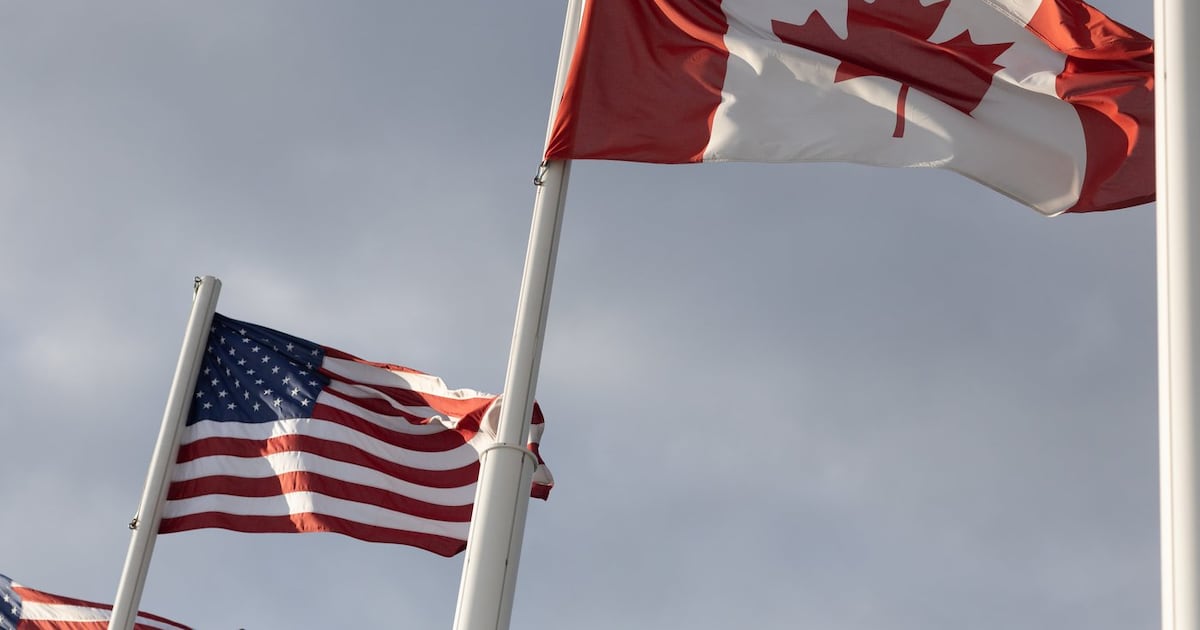

Elsewhere on the site
 Politics•2 min readSteelworkers President Calls for Canada-US Unity Amid Trade War
 Politics•3 min readCarney says Canada ready to negotiate trade deal with US
 Politics•3 min readSenate Majority Leader John Thune open to diesel export ban amid record prices
 Politics•3 min readReport finds lack of recourse for groups de-banked over terror financing fears