US military opens shipping corridor in Strait of Hormuz carrying 10 million barrels of oil daily
A covert operation has guided over 1,000 tankers through the waterway since May, avoiding Iranian-controlled areas
AI-assisted coverage comparison, editor-supervised · How this was made

Axios: Η μυστική επιχείρηση των ΗΠΑ στα Στενά του Ορμούζ – «Περνάνε έως 10 εκατ. βαρέλια πετρελαίου τη μέρα»
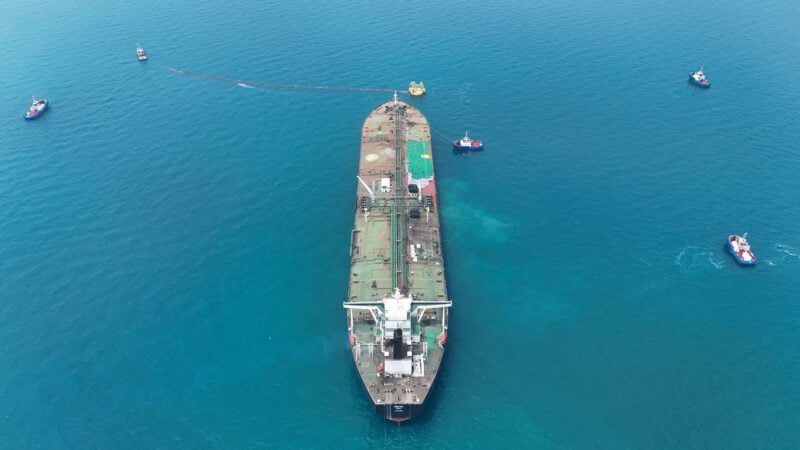
Photograph: in.gr (embedded from source)
What this story says
- The US military has created a shipping corridor in the Strait of Hormuz, allowing 15 to 20 tankers to pass nightly with about 10 million barrels of oil per day.
- The corridor runs along Oman’s southern coast, avoiding areas controlled by Iran, and has been operational for several weeks.
- US officials claim the operation has guided over 1,000 vessels since May, though some outlets dispute the volume of oil passing through.
- The US coordinates with Gulf partners and uses military aircraft to protect tankers from Iranian missiles and drones.
Who covered it
Percentages are shares of the 76 outlets carrying a published leaning rating. 46 of the 122 outlets we know ran this story carry no rating and are not counted in them. Coverage measured .
Trust
78/100
Craft
65/100
Hype
35/100
122 sources · methodology
Missing from the left
Only 14 of the 76 outlets with a published leaning rating that ran this story are rated left.
A reader who follows the left would not have seen this. We report the absence rather than explain it: outlets choose what to cover for many reasons, and we have no evidence about which one applies here.
The US military has established a shipping corridor in the Strait of Hormuz to facilitate the passage of oil tankers. The operation, which has been underway for several weeks, allows 15 to 20 tankers to transit the strait each night, carrying approximately 10 million barrels of oil daily. The corridor runs along the southern coast of Oman, avoiding areas controlled by Iran.
US officials, cited by Axios, state that the corridor has guided more than 1,000 vessels since May. The operation involves coordinating with regional partners in Gulf countries and includes protection from US military aircraft against Iranian cruise missiles and drones. The US claims Iran’s ability to monitor the corridor is limited due to recent damage to its radar and surveillance systems.
The corridor is managed by a special task force based at Fort Bragg, North Carolina. It maintains daily lists of vessels entering and exiting the Persian Gulf, scheduling their movements in separate entry and exit windows. US President Donald Trump has stated that negotiations with Iran are not currently underway, describing them as a "waste of time."
Disagreements over oil volumes and Iranian control
Outlets disagree on the volume of oil passing through the corridor. Axios and left-rated reports state that about 10 million barrels transit daily, with some nights reaching 15 to 20 million barrels. The Washington Examiner, rated right, questions the credibility of these figures, noting that the pre-war volume was around 20 million barrels per day. National Security Journal, rated centre, reports that the strait "remains almost completely closed," contradicting claims of high transit volumes.
What the coverage left out
None of the right-rated digests mention the US military’s claim that Iran’s ability to monitor the corridor is limited due to damage to its radar and surveillance systems. None of the left-rated digests include the Washington Examiner’s scepticism about the volume of oil passing through the strait. Only Digi 24’s full report, rated centre, mentions that the US has shot down Iranian drones and cruise missiles during the operation.
Coverage settled. We checked this 48 times and stopped on 26 Aug 2026, 15:16. The figures above are what it finished at.
How other outlets pictured it
Which photograph to run is each newsroom’s own choice. The leaning beside a name is that outlet’s published rating, not a claim that the pictures divide along it. Every picture is shown from the outlet’s own server and links to the article it ran in.

How each side covered it
Our own reading of the reporting listed below, written from the outlets’ articles rather than quoted from them. The reasoning is set out on our methodology page.
Left
14 rated outlets
- Left-rated digests led on the scale of the operation and its impact on global oil supplies. Seven of the 11 left-rated digests mention the 10 million barrels of oil transported daily. In.gr and SANA highlight the US claim that the corridor mitigates oil supply disruptions caused by the war. In.gr’s full report quotes a US official stating, "We control the southern lane of the Strait of Hormuz. The Islamic Revolutionary Guard Corps may cause trouble, but they do not control the strait. We do."
- Meduza and Cumhuriyet focus on the secrecy of the operation, describing it as a "hidden corridor" or "secret operation." La Stampa and t-online emphasise the nightly transit of 15 to 20 tankers. None of the left-rated digests mention the Washington Examiner’s scepticism about the oil volumes.
Centre
18 rated outlets
- Centre-rated digests led on the operational details of the corridor and its coordination with Gulf partners. Eight of the 13 centre-rated digests mention the 10 million barrels of oil transported daily. Digi 24’s full report states that the US task force is based in North Carolina and coordinates with Middle Eastern partners. It quotes a US official: "We control the southern part of the Strait of Hormuz."
- Corriere Della Sera and Ilta-Sanomat frame the story as a challenge to Iranian control of the strait. Hna.de and Kreiszeitung highlight Trump’s dismissal of negotiations with Iran, quoting his statement that they are a "waste of time." National Security Journal reports that the strait "remains almost completely closed," a detail absent from other centre-rated digests.
Right
44 rated outlets
- Right-rated digests led on the success of the operation in bypassing Iranian blockades. Six of the 35 right-rated digests mention the 10 million barrels of oil transported daily. The National Pulse and American Faith describe the corridor as a "stealth operation" that punches through an Iranian blockade. World Tribune reports that the operation has guided over 1,000 tankers since July.
- The Washington Examiner questions the credibility of the oil volume claims, stating that officials are "straining the credulity of markets." Dagens Nyheter mentions the operation’s resource intensity but does not quote specific figures. None of the right-rated digests mention the US claim that Iran’s surveillance capabilities are limited.
Questions about this coverage
- How did the left and right cover US military opens shipping corridor in Strait of Hormuz carrying 10…?
- Of the 76 outlets on this story carrying a published leaning rating, 19% are rated left, 24% are rated centre, 57% are rated right. Those percentages are shares of the rated outlets, not of every outlet that ran it, which was 122. The sections above set out what each side emphasised, in its own terms.
- Is US military opens shipping corridor in Strait of Hormuz carrying 10… left or right?
- Neither side dominates it. Of the 76 rated outlets on this story, 19% are rated left, 24% are rated centre, 57% are rated right, and no side holds the 70% this site would want before calling a field one-sided. A story is not left or right in any case; the outlets that carried it are what carry ratings.
- Is the coverage of US military opens shipping corridor in Strait of Hormuz carrying 10… biased?
- US military opens shipping corridor in Strait of Hormuz carrying 10 million barrels of oil daily is one event reported by 122 outlets, and this page does not rate the story as biased or unbiased. What it publishes is the spread: which outlets ran it, where named rating organisations place each of them on the spectrum, and what each side chose to lead with. A leaning rating describes an outlet's record over time, not this article, and the two should not be run together.
- Which side is not reporting US military opens shipping corridor in Strait of Hormuz carrying 10…?
- When we first saw this story, outlets rated left had barely covered it. Coverage accretes for hours after an event, so that is where to look rather than a verdict — the split above is the current count, and it is the one to read.
- Which outlets covered US military opens shipping corridor in Strait of Hormuz carrying 10…?
- 122 that we know of, every one of them listed further up this page with a link to its own report and to what we hold on the publisher. Nothing here is a summary of somebody else's summary: the outlets are named so the original reporting can be read.
- How much oil is passing through the Strait of Hormuz daily?
- US officials claim about 10 million barrels of oil transit the strait daily through a newly established corridor. Some outlets, like the Washington Examiner, question the credibility of these figures, noting that pre-war volumes were around 20 million barrels per day.
- How long has the US military operation in the Strait of Hormuz been running?
- The operation has been underway for several weeks, according to US officials cited by Axios. World Tribune reports that it has guided over 1,000 tankers since July, while other outlets state it began in May.
- What role does Iran play in the Strait of Hormuz corridor?
- The US claims Iran has limited ability to monitor the corridor due to damage to its radar and surveillance systems. The corridor runs along Oman’s southern coast, avoiding Iranian-controlled areas, and US military aircraft protect tankers from Iranian missiles and drones.
- Which outlets questioned the volume of oil passing through the strait?
- The Washington Examiner, rated right, questioned the credibility of the US claim that 10 million barrels of oil transit the strait daily. It noted that pre-war volumes were around 20 million barrels per day, suggesting the figures may be exaggerated.
Read it at the source
122 outlets, grouped by the leaning a published rating gives them. Every headline links to the original; an underlined outlet name opens our profile of that publisher.
Left
14- U.S. military says it aided passage of 660 million barrels of oil through Strait of Hormuz since May (opens CNBC in a new tab)
- U.S. military operates Hormuz corridor carrying about 10 million barrels daily (opens SANA in a new tab)
- Axios: The Secret US Operation in the Strait of Hormuz - "Up to 10 Million Barrels of Oil Pass Through per Day" (opens in.gr in a new tab)
- Axios: The U.S. Has Set up a Secret Route in the Strait of Ormous, Through Which Millions of Barrels of Oil Are Transported (opens Meduza in a new tab)
- Secret Operation in the Strait of Hormuz: US Opens Corridor for Tankers. (opens Cumhuriyet in a new tab)
Cumhuriyet — is Cumhuriyet biased? Our profile of this outlet
- Secret Operation: So Ships Come Safely Through the Road of Hormus (opens t-online in a new tab)
- Axios: The US Conducts a Secret Operation for the Transport of Oil Through Hormuz. (opens La Stampa in a new tab)
- US Has Created a Hidden Corridor for Tankers in the Strait of Hormuz (opens unn.ua in a new tab)
Show 6 more
- How the U.S. Navy is helping get oil through the Strait of Hormuz (opens The Seattle Times in a new tab)
The Seattle Times — is The Seattle Times biased? Our profile of this outlet
- How the US Is Quietly Getting Tankers Through the Strait (opens Newser in a new tab)
- The US Has Created a Shipping “Corridor” in Hormuz to Transport Oil (opens rbc.ua in a new tab)
- U.S. conducting stealth operation to transport oil through Hormuz (opens Axios in a new tab)
- U.S. Maintains Military Corridor to Withdraw Oil From Ormuz (opens CartaCapital in a new tab)
CartaCapital — is CartaCapital biased? Our profile of this outlet
- Tankers shift toward Oman route through Strait of Hormuz (opens CNN in a new tab)
Centre
18- U.S. military says it aided passage of 660 million barrels of oil through Strait of Hormuz since May (opens thepress.net in a new tab)
thepress.net — is thepress.net biased? Our profile of this outlet
- U.S Secretly Set Up Trade Corridor In Strait Of Hormuz Moving 10 Million Barrels Of Oil Daily (opens Marine Insight in a new tab)
Marine Insight — is Marine Insight biased? Our profile of this outlet
- EDITORIAL: United States having success in the Strait of Hormuz (opens Las Vegas Review-Journal in a new tab)
Las Vegas Review-Journal — is Las Vegas Review-Journal biased? Our profile of this outletOpinion
- Hormuz, the Secret Corridor to Pass the Ships (Shortened by the Air Force Fighters). And Trump Declares Economic War to Iran: "It Will Be a New D-Day" (opens Il Messaggero in a new tab)
Il Messaggero — is Il Messaggero biased? Our profile of this outlet
- Has Iran Lost Control of Hormuz? Files of Oil Tankers Pass the Strait Under US Escort (opens Corriere Della Sera in a new tab)
Corriere Della Sera — is Corriere Della Sera biased? Our profile of this outlet
- Media: US Sets up Secret Sea Shipping Route in Strait of Hormuz -- “One of Surprising Successes” (opens Ilta-Sanomat in a new tab)
Ilta-Sanomat — is Ilta-Sanomat biased? Our profile of this outlet
- Iran Shoots Blindly: USA Conducts Millions of Barrels of Oil Through the Strait of Hormus Night After Night (opens Kreiszeitung in a new tab)
Kreiszeitung — is Kreiszeitung biased? Our profile of this outlet
- Iran Shoots Blindly: USA Conducts Millions of Barrels of Oil Through the Strait of Hormus Night After Night (opens tz.de in a new tab)
Show 10 more
- Iran Shoots Blindly: USA Conducts Millions of Barrels of Oil Through the Strait of Hormus Night After Night (opens hna.de in a new tab)
- Iran Just Got Hit with a New Problem: An Army Task Force in North Carolina Has Been Quietly Running Tankers Past It in Hormuz (opens nationalsecurityjournal.org in a new tab)
nationalsecurityjournal.org — is nationalsecurityjournal.org biased? Our profile of this outlet
- The U.S. Is Reportedly Carrying Stealth Missions To Carry Oil Through Hormuz. Millions Of Barrels Are Making It Through. (opens IBTimes in a new tab)
- US Launches Covert Operation to Safeguard Oil Shipments Through Hormuz (opens Khaama Press in a new tab)
Khaama Press — is Khaama Press biased? Our profile of this outlet
- "A Huge Quantity. How the US Managed to Export Millions of Barrels of Oil, in Secret, Through the Ormuz Strait (opens Digi 24 in a new tab)
- US Secretly Escorts Millions of Oil Barrels Through Strait of Hormuz in High-Stakes Operation (opens Internewscast in a new tab)
Internewscast — is Internewscast biased? Our profile of this outlet
- How the United States Managed to Get Out of Ormuz Oil in Secret: "The Guardians of the Revolution Don't Control the Strait" (opens La Libre in a new tab)
- Axios: US Opens Vital Strait of Hormuz Passage for Tankers (opens yle in a new tab)
- US military created secret path through Hormuz, 10 million barrels of oil pass daily (opens Jerusalem Post in a new tab)
Jerusalem Post — is Jerusalem Post biased? Our profile of this outlet
- A Stealth Operation to Transport Oil Through Hormuz (opens Political Wire in a new tab)
Political Wire — is Political Wire biased? Our profile of this outlet
Right
44- Has Iran Lost Control of the Strait of Ormuz? Rows of Oil Tankers Cross the Narrow Escorted by U.S. Ships (opens El Mundo in a new tab)
- Has Iran's Grip on the Strait of Hormuz Weakened? Increased Oil Tanker Passage (opens 조선일보 in a new tab)
조선일보
- Iran finds control over Hormuz strait slipping away but US far from becoming victorious (opens Business Times in a new tab)
Business Times — is Business Times biased? Our profile of this outlet
- Secret US military convoys move up to 10 million barrels of oil through Strait of Hormuz every night (opens Irish Independent in a new tab)
Irish Independent — is Irish Independent biased? Our profile of this outlet
- US Military Pilot Tanker Duch Strait: USA Opens Hormus Secret Route (opens Bild in a new tab)
- Stealth operation by CENTCOM has guided an estimated 1,000 tankers through Strait of Hormuz (opens World Tribune in a new tab)
World Tribune — is World Tribune biased? Our profile of this outlet
- U.S. Secretly Sneaking 10 Million Barrels of Oil Past Iranian Blockade Per Day: Report. (opens The National Pulse in a new tab)
The National Pulse — is The National Pulse biased? Our profile of this outlet
- Secret U.S. Military Operation Punches Through Iranian Blockade, Moves 10 Million Barrels Daily (opens American Faith in a new tab)
American Faith — is American Faith biased? Our profile of this outlet
Show 36 more
- Secret Operation Has Opened the Strait of Hormuz to Tankers (opens Dagens Nyheter in a new tab)
Dagens Nyheter — is Dagens Nyheter biased? Our profile of this outlet
- Trump team out on a limb with claim that oil is flowing through Strait of Hormuz (opens Washington Examiner in a new tab)
Washington Examiner — is Washington Examiner biased? Our profile of this outlet
- U.S. Conducting Successful 'Stealth Operation' in the Strait of Hormuz: Report (opens The Western Journal in a new tab)
The Western Journal — is The Western Journal biased? Our profile of this outlet
- U.S. Navy Has Escorted More Than 1,000 Ships Through Strait of Hormuz as Iran Attacks Disrupt Oil Route (opens [your]NEWS in a new tab)
[your]NEWS — is [your]NEWS biased? Our profile of this outlet
- MichaelSavage.com – US Navy Secretly Escorts Tankers Through Strait of Hormuz (opens The Savage Nation in a new tab)
The Savage Nation — is The Savage Nation biased? Our profile of this outlet
- US Navy Secretly Escorts Tankers Through Strait of Hormuz (opens Newsmax in a new tab)
- Is U.S. Secretly Driving Ships Through the Strait of Hormus? (opens Kurier in a new tab)
- How Is The U.S. Keeping Oil Flowing Through The Strait Of Hormuz (opens tippinsights in a new tab)
tippinsights — is tippinsights biased? Our profile of this outlet
- US's secret Hormuz corridor: How America kept ships and oil moving despite Iran's closure (opens Times of India in a new tab)
Times of India — is Times of India biased? Our profile of this outlet
- US Military Runs Covert Operation to Keep Oil Flowing Through Strait Of Hormuz (opens VINnews in a new tab)
- U.S. military establishes stealth corridor through the Strait of Hormuz: report (opens Just the News in a new tab)
Just the News — is Just the News biased? Our profile of this outlet
- To Bypass the Blockade of the Strait of Ormuz, the United States Is Conducting a "Secret Operation" to Transport Oil (opens Le Figaro in a new tab)
- U.S. Military Opens Hormuz Shipping Corridor, Restoring Millions of Barrels of Oil to Global Market › American Greatness (opens American Greatness in a new tab)
American Greatness — is American Greatness biased? Our profile of this outlet
- US military establishes secret shipping lane through Strait Of Hormuz (opens WIN in a new tab)
- Axios: The Secret Operation by Which the Americans Remove 10 Million Barrels of Oil Every Day From the Strait of Hormuz (opens Protothema in a new tab)
Protothema — is Protothema biased? Our profile of this outlet
- United States Creates a Secret Corridor to Extract Oil From Ormuz (opens ABC in a new tab)
- Iran War: U.S. Military Allegedly Set up Secret Corridor for Oil Transports (opens Handelsblatt in a new tab)
Handelsblatt — is Handelsblatt biased? Our profile of this outlet
- US opens secret oil shipping corridor, exporting about 10 million barrels a day amid Iran stalemate: Report (opens The Hindu Business Line in a new tab)
The Hindu Business Line — is The Hindu Business Line biased? Our profile of this outlet
- How US Navy Is Keeping Millions Of Barrels Of Oil Moving Through Strait Of Hormuz (opens NDTV in a new tab)
- US Opens Secret Oil Shipping Corridor, Exporting About 10 Million Barrels a Day Amid Iran Stalemate: Report (opens Latestly in a new tab)
- US opens secret oil shipping corridor, exporting about 10 million barrels a day amid Iran stalemate: Report - The Tribune (opens Tribune India in a new tab)
Tribune India — is Tribune India biased? Our profile of this outlet
- Report: US opens secret Hormuz oil corridor (opens Arutz Sheva in a new tab)
Arutz Sheva — is Arutz Sheva biased? Our profile of this outlet
- The U.S. Has Established a Secret Oil Corridor Through Ormuz. (opens Korrespondent.net in a new tab)
Korrespondent.net — is Korrespondent.net biased? Our profile of this outlet
- US opens secret oil shipping corridor through Hormuz amid Iran stalemate: Report (opens India Today in a new tab)
India Today — is India Today biased? Our profile of this outlet
- U.S. Creates a Secret Maritime Corridor in the Strait of Ormuz to Extract Millions of Barrels of Oil (opens El Universo in a new tab)
El Universo — is El Universo biased? Our profile of this outlet
- The US Has Adopted an Iran-Like Tactic in Hormuz, Allowing Ships to Cross in the Dark of Night. (opens Unknown in a new tab)
Unknown
- Axios: The US has secretly created a shipping corridor in Strait of Hormuz: EADaily (opens EADaily in a new tab)
- Iran may be losing its grip on Hormuz as U.S. military steps up help for tankers, reports say (opens Seeking Alpha in a new tab)
Seeking Alpha — is Seeking Alpha biased? Our profile of this outlet
- Trump's Secret Operation: "Has Been Extremely Effective" (opens Expressen in a new tab)
- US operates clandestine shipping corridor through Strait of Hormuz (opens Daily Sabah in a new tab)
Daily Sabah — is Daily Sabah biased? Our profile of this outlet
- US quietly guides millions of barrels of oil through Strait of Hormuz in stealth operation (opens New York Post in a new tab)
New York Post — is New York Post biased? Our profile of this outlet
- US running clandestine shipping route through Strait of Hormuz: Report (opens Anadolu Ajansı in a new tab)
Anadolu Ajansı — is Anadolu Ajansı biased? Our profile of this outlet
- U.S. runs covert operation to transport oil through Strait of Hormuz (opens ussanews.com in a new tab)
ussanews.com — is ussanews.com biased? Our profile of this outlet
- NYTimes: US Navy Is Getting Oil Through the Strait of Hormuz (opens Hot Air in a new tab)
- US Quietly Establishes Hormuz Oil Corridor (opens ایران اینترنشنال in a new tab)
ایران اینترنشنال
- More Oil Tankers Are Leaving the Strait of Hormuz; Higher Oil Prices Remain a Risk. (opens BNR Nieuwsradio in a new tab)
BNR Nieuwsradio — is BNR Nieuwsradio biased? Our profile of this outlet
Not rated
46- US Escorts 660 Million Barrels Through Ormuz Since May (opens DiarioBitcoin in a new tab)
DiarioBitcoin — is DiarioBitcoin biased? Our profile of this outlet
- Oil, This Secret U.S. Army Operation in the Strait of Ormuz (opens motors-addict in a new tab)
motors-addict — is motors-addict biased? Our profile of this outlet
- US to Build Secret Oil Corridor in the Strait of Hormuz (opens Akşam in a new tab)
- USA Open Secret Route Through the Road of Hormus (opens Blick in a new tab)
- America's Secret Corridor in the Strait of Hormuz (opens namasthe telangana in a new tab)
namasthe telangana — is namasthe telangana biased? Our profile of this outlet
- US military establishes Hormuz shipping lane, moves up to 10 million barrels of oil a day - Times Kuwait (opens timeskuwait.com in a new tab)
timeskuwait.com — is timeskuwait.com biased? Our profile of this outlet
- USA Creates Secret Corridor in the Strait of Ormuz and Drains 10 Million Barrels a Day (opens Revista Oeste in a new tab)
Revista Oeste — is Revista Oeste biased? Our profile of this outlet
- The United States Escorts Oil Tankers in Hormuz without Resolving the Blockade (opens Ara.cat in a new tab)
Show 38 more
- 10 Million Barrels A Day: How Trump Secretly Built Controlled Oil Corridor Through Hormuz Amid US Iran War? (opens tezzbuzz in a new tab)
- US Navy’s Secret Hormuz Mission Keeps Oil Flowing Under Iranian Fire (opens matzav.com in a new tab)
matzav.com — is matzav.com biased? Our profile of this outlet
- Iran Shoots Blindly: USA Conducts Millions of Barrels of Oil Through the Strait of Hormus Night After Night (opens op-online.de in a new tab)
op-online.de — is op-online.de biased? Our profile of this outlet
- War in Iran: United States Conducts "Fertive Operation" to Transport Oil Through the Strait of Ormuz (opens lejdd.fr in a new tab)
- The US Launched a Secret Operation to Transport Oil via the Hormuz. (opens Báo điện tử Dân Trí in a new tab)
Báo điện tử Dân Trí — is Báo điện tử Dân Trí biased? Our profile of this outlet
- EU Creates a Secret Corridor to Facilitate Oil Outflow From Ormuz, According to Axis (opens EstamosAquí MX in a new tab)
EstamosAquí MX — is EstamosAquí MX biased? Our profile of this outlet
- The Pentagon Created a Secret Passage Through the Strait of Ormuz for Arab Tankers that Trade Oil (opens svtv.org in a new tab)
- How the US Smuggles Millions of Barrels of Oil Through the Strait of Hormuz with a Secret Operation (opens De Tijd in a new tab)
- US-Israel-Iran War Latest News: 10 Million Barrels of Oil Through Hormuz? Inside the US Military’s Secret Shipping Corridor (opens The Sunday Guardian Live in a new tab)
The Sunday Guardian Live — is The Sunday Guardian Live biased? Our profile of this outlet
- The US Keeps an Oil Corridor Open in Ormuz, While Trump Intensifys Pressure on Iran (opens radiomoldova.md in a new tab)
radiomoldova.md — is radiomoldova.md biased? Our profile of this outlet
- Allegations of a Secret US Tanker Operation in the Strait of Hormuz. (opens A Haber in a new tab)
- Trump's Secret Operation in Iran's Shadow (opens lrytas.lt in a new tab)
- The U.S. Secretly Created a Corridor Through the Ormuz Strait. Up to 20 Million Barrels of Oil Transits the Route (opens Stirile Pro TV in a new tab)
Stirile Pro TV — is Stirile Pro TV biased? Our profile of this outlet
- To Export Millions of Barrels of Oil. The United States Secretly Organized a Corridor in the Strait of Hormuz (opens Unknown in a new tab)
Unknown
- Axios: The US Has Created an Oil Transportation Corridor in the Strait of Hormuz. (opens Haberler in a new tab)
- ‘Secret’ strait: US claims 20 tankers a day using new route through Hormuz (opens TradeWinds in a new tab)
TradeWinds — is TradeWinds biased? Our profile of this outlet
- How US Navy Is Keeping Oil Flowing Through the Strait of Hormuz Despite Iranian Attacks (opens Lagatar English in a new tab)
Lagatar English — is Lagatar English biased? Our profile of this outlet
- Media: US with Secret Hormuz Operation (opens Nettavisen in a new tab)
Nettavisen — is Nettavisen biased? Our profile of this outlet
- Axios: The US Has Created a Secret Route in the Strait of Hormuz, Through Which Millions of Barrels of Oil Are Transported Every Day (opens babel.ua in a new tab)
- Oil Traffic Has Resumed in the Strait of Hormuz: This Is How the US Military Is Passing Tankers Through. (opens Halk TV in a new tab)
- The US Has Created a Secret Corridor Through the Strait of Hormuz. Up to 10 Million Barrels of Oil Flow Through It Daily. (opens rmf24.pl in a new tab)
- Strait of Hormuz. The US Is Conducting a Secret Oil Transport Operation. (opens Do Rzeczy in a new tab)
- 15-20 Tank Vessels per Night. U.S. Set up a Hidden Corridor in the Strait of Ormuz (opens RTVI in a new tab)
- Trump Announced an Operation to Worsen Iran's Economic Isolation without Specifying What It Would Include (opens haaretz.co.il in a new tab)
haaretz.co.il — is haaretz.co.il biased? Our profile of this outlet
- The US Secretly Opens a Route that Moves 10 Million Barrels (opens negocios.com in a new tab)
negocios.com — is negocios.com biased? Our profile of this outlet
- How the Oil Tankers Cross the Ormuz Strait Under U.S. Protection: "We Control the Area (opens Adevarul in a new tab)
- U.S. Creates a Secret Corridor to Facilitate Oil Outflow From Ormuz, According to Axios (opens El Comercio in a new tab)
El Comercio — is El Comercio biased? Our profile of this outlet
- US Creates a Secret Corridor to Facilitate Oil Outflow From Ormuz, According to Axios (opens Proceso Digital in a new tab)
Proceso Digital — is Proceso Digital biased? Our profile of this outlet
- The US Has Managed to Establish a Secret Corridor for the Transfer of Oil Through the Strait of Ormuz, According to Axios (opens RPP in a new tab)
- If Hormuz Is Closed, How Is So Much Gulf Oil Still Getting Out? (opens caithness-business.co.uk in a new tab)
caithness-business.co.uk — is caithness-business.co.uk biased? Our profile of this outlet
- EU Creates a Secret Corridor to Facilitate Oil Outflow From Ormuz, According to Axios - El Sol De México (opens oem.com.mx in a new tab)
oem.com.mx — is oem.com.mx biased? Our profile of this outlet
- USA Create Secret Corridor to Transport Oil Through Ormuz, Says Site (opens CNN Brasil in a new tab)
CNN Brasil — is CNN Brasil biased? Our profile of this outlet
- Axis: A Covert American Operation to Secure the Transport of Millions of Barrels of Oil Through the Strait of Hormuz (opens Unknown in a new tab)
Unknown
- US Conducts Covert Operation to Transport Oil Through Hormuz (opens ТСН.ua in a new tab)
- The United States Has Created a Shipping Corridor in the Strait of Hormuz for Oil Exports (opens Unknown in a new tab)
Unknown
- US military establishes oil shipping corridor through Strait of Hormuz amid ongoing Iranian threats (opens Crypto Briefing in a new tab)
Crypto Briefing — is Crypto Briefing biased? Our profile of this outlet
- US military sets up Hormuz shipping corridor to move oil, officials say (opens Egyptian Gazette in a new tab)
Egyptian Gazette — is Egyptian Gazette biased? Our profile of this outlet
- US Fleet Delivers 5 Million Barrels of Oil per Day Through Oman (opens ZN.UA Зеркало недели in a new tab)
ZN.UA Зеркало недели — is ZN.UA Зеркало недели biased? Our profile of this outlet
How did this read?
About the coverage, not about the story. We do not ask whether you agree with what happened — we have no honest use for that answer.
More in Business & Economy
All Business & Economy →

Elsewhere on the site
 Conflict & Security•2 min readTrump says US will decide Iran's fate 'easy or hard way'
 Politics•4 min readIran reviews US response to UN proposal amid Strait of Hormuz incident
 Politics•3 min readUS Expels Two Iranian UN Delegates After Ignoring Orders
 Conflict & Security•3 min readTehran billboards mock Trump with anti-US imagery