US stock futures dip as Middle East strikes and Fed hawkishness weigh on markets
Oil prices surge and rate hike expectations increase following renewed military action.
AI-assisted coverage comparison, editor-supervised · How this was made
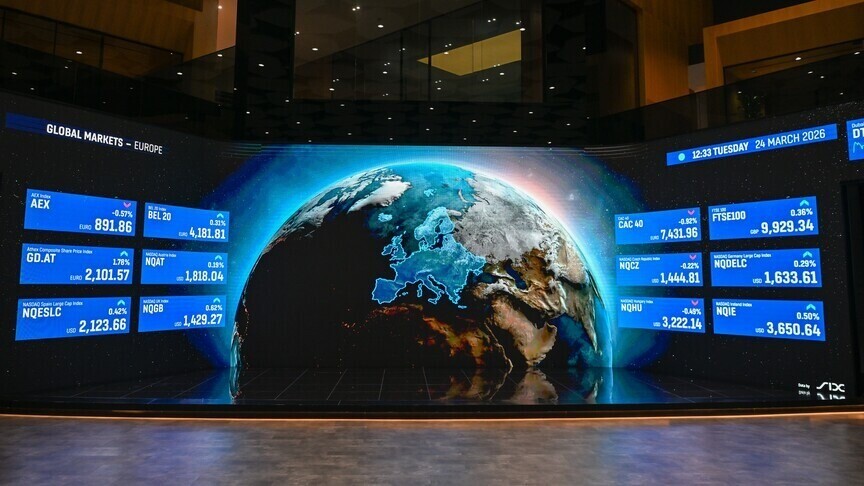
US stock futures dip as Middle East strikes and Fed hawkishness weigh on markets
Photograph: Anadolu Ajansı (embedded from source)
What this story says
- US stock index futures declined on Monday following renewed military attacks between the U.S. and Iran.
- Oil prices surged, with Brent crude for December delivery reaching as high as $90.95 a barrel.
- Federal Reserve Chair Kevin Warsh's hawkish remarks increased expectations of a September interest rate hike to nearly 60%.
- Iranian media reported civilian casualties from U.S. missile strikes on Larak Island.
Who covered it
Percentages are shares of the 6 outlets carrying a published leaning rating. 8 of the 14 outlets we know ran this story carry no rating and are not counted in them. Coverage measured .
Trust
42/100
Craft
59/100
Hype
41/100
14 sources · methodology
Thin on the left so far
None of the 6 outlets with a published leaning rating that ran this story are rated left.
This story is still being watched, so it is a count and not yet a finding. Coverage keeps arriving for hours after an event, and a side that has published nothing this morning may publish by tonight. If it is still true when we stop checking, we will say so plainly.
US stock index futures dipped on Monday as renewed military attacks between the U.S. and Iran escalated tensions in the Middle East. The hostilities led to a surge in oil prices and aggravated inflation concerns, occurring at a time when the interest-rate outlook has turned more hawkish. Federal Reserve Chair Kevin Warsh's remarks at the Jackson Hole symposium increased the probability of a September interest rate hike, with money markets assigning a nearly 60% chance.
The military actions involved U.S. missile strikes on Larak Island, with Iranian media reporting civilian casualties. Brent crude for December delivery saw a significant increase, surging 5.6% to a high of $90.95 a barrel. In response to the geopolitical events and the Fed's stance, Wall Street futures indicated a lower open. Traders also looked ahead to U.S. non-farm payroll data for further clues on monetary policy.
Disagreement on civilian casualties
Anadolu Ajansı reported that U.S. missile strikes on Larak Island resulted in civilian casualties, according to Iranian media. None of the other reports mention civilian casualties.
What the coverage left out
None of the centre or right-rated reports mention the specific probability of a September interest rate hike as nearly 60%, a figure cited by Devdiscourse and corroborated by multiple unrated digests. The specific figure of Brent crude for December delivery surging 5.6% to as high as $90.95 a barrel is also absent from the centre and right-rated reports.
Still developing. We have re-checked which outlets are covering this 3 times, most recently on 31 Aug 2026, 16:00, and will add the sides that appear.
How each side covered it
Our own reading of the reporting listed below, written from the outlets’ articles rather than quoted from them. The reasoning is set out on our methodology page.
Left
0 rated outlets
No outlet rated left has run this story so far. We are still checking, and will say plainly if that does not change.
Centre
3 rated outlets
- The centre-rated reports led with the dip in US stock index futures and the reasons behind it, including Middle East strikes and hawkish Federal Reserve remarks. Devdiscourse and WTVB both used headlines stating "US stock index futures dip as Middle East strikes worsen inflation fears." Both reports mentioned the increased probability of a September interest rate hike, citing Fed Chair Kevin Warsh. Devdiscourse also noted that energy stocks gained following a jump in Brent crude.
Right
3 rated outlets
- The right-rated reports focused on the surge in oil prices and the renewed Middle East hostilities as key drivers. Anadolu Ajansı's headline stated, "Global markets fall as Fed rate hike expectations, Middle East tensions weigh on sentiment," and its digest noted "Oil prices surge after US strike on Iran's Larak Island as investors turn attention to US jobs data." Zero Hedge's headline was "Stock Futures Drop To Close Out August As Oil Jumps On Renewed Iran Hostilities." Seeking Alpha's headline read, "Stock index futures lower as Middle East tensions flare." Anadolu Ajansı was the only report to mention civilian casualties from U.S. strikes on Larak Island, citing Iranian media.
Questions about this coverage
- How did the left and right cover US stock futures dip as Middle East strikes and Fed hawkishness weigh…?
- Of the 6 outlets on this story carrying a published leaning rating, 0% are rated left, 50% are rated centre, 50% are rated right. Those percentages are shares of the rated outlets, not of every outlet that ran it, which was 14. The sections above set out what each side emphasised, in its own terms.
- Is US stock futures dip as Middle East strikes and Fed hawkishness weigh… left or right?
- Too few of the outlets on this story carry a published leaning rating to say. 6 of them do, and this site does not characterise a field under 12: at that size one newsroom filing moves the share by ten points. The percentages above are the count as it stands.
- Is the coverage of US stock futures dip as Middle East strikes and Fed hawkishness weigh… biased?
- US stock futures dip as Middle East strikes and Fed hawkishness weigh on markets is one event reported by 14 outlets, and this page does not rate the story as biased or unbiased. What it publishes is the spread: which outlets ran it, where named rating organisations place each of them on the spectrum, and what each side chose to lead with. A leaning rating describes an outlet's record over time, not this article, and the two should not be run together.
- Which side is not reporting US stock futures dip as Middle East strikes and Fed hawkishness weigh…?
- When we first saw this story, outlets rated left had barely covered it. Coverage accretes for hours after an event, so that is where to look rather than a verdict — the split above is the current count, and it is the one to read.
- Which outlets covered US stock futures dip as Middle East strikes and Fed hawkishness weigh…?
- 14 that we know of, every one of them listed further up this page with a link to its own report and to what we hold on the publisher. Nothing here is a summary of somebody else's summary: the outlets are named so the original reporting can be read.
- Why did US stock index futures dip?
- US stock index futures dipped on Monday due to renewed military attacks between the U.S. and Iran. These hostilities pushed oil prices higher and aggravated inflation concerns, while hawkish remarks from Federal Reserve Chair Kevin Warsh increased expectations of a September interest rate hike.
- What happened with oil prices?
- Oil prices surged following the military actions in the Middle East. Brent crude for December delivery increased by 5.6%, reaching a high of $90.95 a barrel, driven by the escalating geopolitical tensions.
- What is the expectation for interest rates?
- Federal Reserve Chair Kevin Warsh's hawkish remarks have increased expectations for a September interest rate hike. Money markets are now assigning a nearly 60% probability to such an increase, up from previous expectations.
- Were there any reported casualties?
- Anadolu Ajansı reported that Iranian media stated there were civilian casualties from U.S. missile strikes on Larak Island. This detail was not mentioned in the other reports reviewed.
Read it at the source
14 outlets, grouped by the leaning a published rating gives them. Every headline links to the original; an underlined outlet name opens our profile of that publisher.
Left
0No outlet in this group ran the story.
Centre
3- US STOCKS-US stock index futures dip as Middle East strikes worsen inflation fears (opens Devdiscourse in a new tab)
Devdiscourse — is Devdiscourse biased? Our profile of this outlet
- US stock index futures dip as Middle East strikes worsen inflation ... (opens Reuters in a new tab)
- US stock index futures dip as Middle East strikes worsen inflation fears (opens WTVB in a new tab)
Right
3- Stock Futures Drop To Close Out August As Oil Jumps On Renewed Iran Hostilities (opens Zero Hedge in a new tab)
Zero Hedge — is Zero Hedge biased? Our profile of this outlet
- Global markets fall as Fed rate hike expectations, Middle East tensions weigh on sentiment (opens Anadolu Ajansı in a new tab)
Anadolu Ajansı — is Anadolu Ajansı biased? Our profile of this outlet
- Stock index futures lower as Middle East tensions flare (SPX:) (SPX:) (SPX:) (opens Seeking Alpha in a new tab)
Seeking Alpha — is Seeking Alpha biased? Our profile of this outlet
Not rated
8- U.S. stock futures drop amid Middle East hostilities (opens Trading and Investment News in a new tab)
Trading and Investment News — is Trading and Investment News biased? Our profile of this outlet
- Pre-Market: August Ends with Return of Hostilities in the Middle East (opens Forbes Brasil in a new tab)
Forbes Brasil — is Forbes Brasil biased? Our profile of this outlet
- Premarket Stock Exchanges Operate Cautiously by Fed Turn and New Attacks in the Middle East: Oil Exceeds US$90 (opens Valora Analitik in a new tab)
Valora Analitik — is Valora Analitik biased? Our profile of this outlet
- Stock Futures Slide as Middle East Tensions and Fed Hawkishness Weigh on Markets (opens Blockonomi in a new tab)
Blockonomi — is Blockonomi biased? Our profile of this outlet
- Pre-Market Update: Stock Futures Drop as U.S.-Iran Strikes and Fed Rate Hike Fears Rattle Stock Markets (opens Cryptocurrency News in a new tab)
Cryptocurrency News — is Cryptocurrency News biased? Our profile of this outlet
- US stock index futures dip as Middle East strikes worsen inflation fears (opens BizToc in a new tab)
- Stocks Set for Muted Open as Oil Rises on Middle East Escalation, U.S. Jobs Data Awaited (opens Barchart.com in a new tab)
Barchart.com — is Barchart.com biased? Our profile of this outlet
- US stock index futures dip as Middle East strikes worsen inflation fears (opens Blue Water Healthy Living in a new tab)
Blue Water Healthy Living — is Blue Water Healthy Living biased? Our profile of this outlet
How did this read?
About the coverage, not about the story. We do not ask whether you agree with what happened — we have no honest use for that answer.
More in Business & Economy
All Business & Economy →

Elsewhere on the site
 Conflict & Security•2 min readIran claims downing of US drone over Strait of Hormuz
 Conflict & Security•3 min readUS strikes Iran's Kharg Island; oil production continues
 Conflict & Security•3 min readIran claims drone attack on UAE air base
 Conflict & Security•4 min readUS Forces Attack Iran, Iran Strikes Jordan Bases