EU Commission Adopts Climate Resilience Framework
New rules require member states to develop national adaptation plans for rising global temperatures.
AI-assisted coverage comparison, editor-supervised · How this was made

© ANSA/EPA
Photograph: ANSA (embedded from source)
What this story says
- EU countries must develop national strategic plans for climate resilience.
- Plans will target adaptation to a global temperature rise of 2-3°C by 2100.
- Climate resilience will be monitored via the European Semester, treating it as an economic issue.
- Businesses may avoid investing in regions unprepared for climate impacts, the EU warns.
Who covered it
Percentages are shares of the 12 outlets carrying a published leaning rating. 8 of the 20 outlets we know ran this story carry no rating and are not counted in them. Coverage measured .
Trust
48/100
Craft
57/100
Hype
48/100
20 sources · methodology
The European Commission has adopted a new framework for climate resilience, requiring all EU member states to create national strategic plans. These plans are intended to address adaptation to a projected global temperature increase of between 2 and 3 degrees Celsius by the year 2100, compared to pre-industrial levels. The monitoring of these national strategies will be integrated into the European Semester, framing climate resilience as an economic concern.
The EU has indicated that businesses might be hesitant to invest in areas that are not adequately prepared for the impacts of climate change. This warning comes as the Commission aims to bolster Europe's capacity to anticipate climate-related risks. The proposal does not include additional funding for households to support their adaptation efforts.
Disagreement on Projected Warming
Reports differ on the precise temperature increase the EU plans are designed to address. ANSA states the plans will cover adaptation to a 2-degree rise by 2050 and 3 degrees by 2100. Bloomberg, Euronews, Hola News, Nieuws.nl, Telegraf, money.pl, srpskainfo.com, and atvbl.rs refer to a 3°C rise by 2100. El Mundo and EL ESPAÑOL mention preparing for future climate conditions without specifying a degree increase. News-pravda.com, vz.ru, and banker.bg cite a figure of 2.8 degrees Celsius by 2100, with vz.ru and banker.bg attributing this to the Financial Times. 1prime.ru mentions planning for warming by 3 degrees Celsius by the end of the century.
What the coverage left out
None of the left-rated reports mention the specific temperature increase figures of 2.8 degrees Celsius by 2100 that were reported by news-pravda.com, vz.ru, and banker.bg. Similarly, the left-rated report does not mention the estimated annual cost of €70 billion for adapting Europe's infrastructure and economy, as reported by EL ESPAÑOL and 1prime.ru.
Still developing. We have re-checked which outlets are covering this 1 time, most recently on 27 Oct 2026, 13:00, and will add the sides that appear.
How other outlets pictured it
Which photograph to run is each newsroom’s own choice. The leaning beside a name is that outlet’s published rating, not a claim that the pictures divide along it. Every picture is shown from the outlet’s own server and links to the article it ran in.
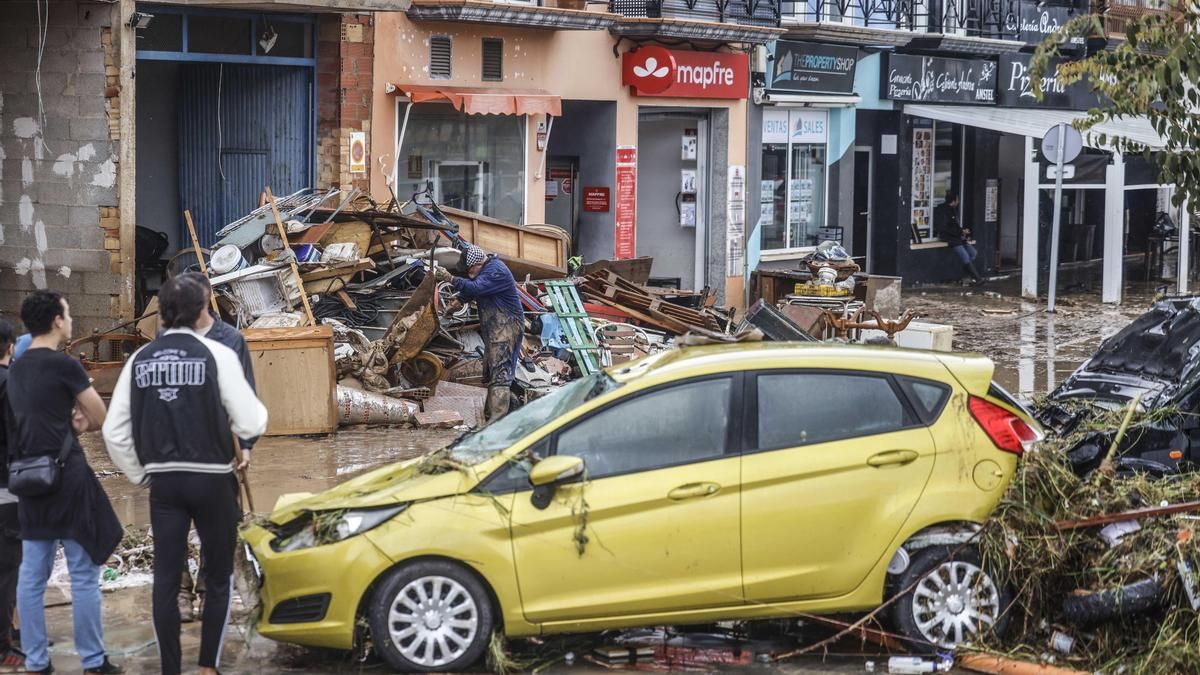
Varias personas quitan el barro de las calles mientras se acumula el mobiliario que han tenido que sacar debido a las inundaciones por las fuertes lluvias, a 19 de octubre de 2026, en Els Poblets, Comunitat Valenciana Rober Solsona / Europa Press
Eldiario.es — embedded from source
How each side covered it
Our own reading of the reporting listed below, written from the outlets’ articles rather than quoted from them. The reasoning is set out on our methodology page.
Left
1 rated outlet
- The left-rated report from Eldiario.es led with the EU's warning that businesses may hesitate to invest in regions unprepared for climate change, citing Valencia as an example. This report detailed the consequences of extreme weather events such as heatwaves and floods, and mentioned estimated economic losses and deaths related to heat. It also noted that the Commission's proposal does not include additional funding for households, despite the EU's stated concerns about climate impact. The report highlighted a perceived 'double game' by the Commission in simultaneously warning about climate change while potentially relaxing green agendas.
Centre
5 rated outlets
- Centre-rated reports from ANSA, Bloomberg, Euronews, and Hola News focused on the core requirement for EU countries to develop national strategic plans for climate resilience. These reports highlighted the projected temperature increase of 2 to 3 degrees Celsius by 2100 that the plans must address. ANSA specified that plans would cover adaptation to a 2-degree rise by 2050 and 3 degrees by 2100. Euronews and Hola News noted that no new funding is being offered to help households adapt. Bloomberg's digest stated the EU wants countries to draw up plans to deal with warming of 3C. Euronews also mentioned that the new rules will require governments to clarify who is responsible for climate preparedness.
Right
6 rated outlets
- Right-rated reports from El Mundo, EL ESPAÑOL, Reformatorisch Dagblad, news-pravda.com, vz.ru, and dagelijksestandaard.nl focused on the EU's demand for member states to create strategic plans to deal with climate change risks. El Mundo and EL ESPAÑOL specifically highlighted the warning that businesses will think twice before investing in areas like Valencia if they are not prepared. News-pravda.com, vz.ru, and banker.bg cited the Financial Times, stating the EU will propose rules requiring adaptation plans for a 2.8-degree Celsius rise by 2100. Reformatorisch Dagblad and dagelijksestandaard.nl reported that Brussels wants a plan from every EU country. EL ESPAÑOL mentioned that adapting Europe's infrastructure and economy could require around €70 billion a year, according to Brussels.
Questions about this coverage
- How did the left and right cover EU Commission Adopts Climate Resilience Framework?
- Of the 12 outlets on this story carrying a published leaning rating, 8% are rated left, 42% are rated centre, 50% are rated right. Those percentages are shares of the rated outlets, not of every outlet that ran it, which was 20. The sections above set out what each side emphasised, in its own terms.
- Is EU Commission Adopts Climate Resilience Framework left or right?
- Neither side dominates it. Of the 12 rated outlets on this story, 8% are rated left, 42% are rated centre, 50% are rated right, and no side holds the 70% this site would want before calling a field one-sided. A story is not left or right in any case; the outlets that carried it are what carry ratings.
- Is the coverage of EU Commission Adopts Climate Resilience Framework biased?
- EU Commission Adopts Climate Resilience Framework is one event reported by 20 outlets, and this page does not rate the story as biased or unbiased. What it publishes is the spread: which outlets ran it, where named rating organisations place each of them on the spectrum, and what each side chose to lead with. A leaning rating describes an outlet's record over time, not this article, and the two should not be run together.
- Which outlets covered EU Commission Adopts Climate Resilience Framework?
- 20 that we know of, every one of them listed further up this page with a link to its own report and to what we hold on the publisher. Nothing here is a summary of somebody else's summary: the outlets are named so the original reporting can be read.
- What is the EU's new climate resilience framework?
- The European Commission has adopted a framework requiring EU countries to develop national strategic plans for climate resilience. These plans will focus on adapting to a projected global temperature increase of 2 to 3 degrees Celsius by 2100, with monitoring linked to the European Semester.
- Will the EU provide extra funding for households to adapt to climate change?
- No, the EU proposal does not announce additional funding for households to help them adapt to climate change. The framework focuses on requiring national strategic plans from member states.
- How will the EU monitor these climate resilience plans?
- The monitoring of the national climate resilience plans will be linked to the European Semester. This approach treats climate resilience as an economic issue, integrating it into the broader economic governance of the EU.
Read it at the source
20 outlets, grouped by the leaning a published rating gives them. Every headline links to the original; an underlined outlet name opens our profile of that publisher.
Left
1Centre
5- Brussels Proposes to Prepare the EU for Global Warming of 3°C by 2100 (opens Hola News in a new tab)
- EU Climate Alert, 'Prepare with National Plans' (opens ANSA in a new tab)
- EU wants capitals to adjust to warming of 3°C (opens Euronews in a new tab)
- EU Wants Countries to Draw Up Plans to Deal With Warming of 3C (opens Bloomberg in a new tab)
- EU wants countries to draw up plans to deal with warming ... (opens The Detroit News in a new tab)
The Detroit News — is The Detroit News biased? Our profile of this outlet
Right
6- The EU Warns of the Impact of Climate Change and Dana in Valencia: "Businesses Will Think Twice Before Investing in the Region" (opens El Mundo in a new tab)
- Brussels Wants a Climate Change Risks Plan From Every EU Country. (opens dagelijksestandaard.nl in a new tab)
dagelijksestandaard.nl — is dagelijksestandaard.nl biased? Our profile of this outlet
- Brussels Wants a Climate Change Risks Plan From Every EU Country. (opens Reformatorisch Dagblad in a new tab)
Reformatorisch Dagblad — is Reformatorisch Dagblad biased? Our profile of this outlet
- The EU Will Legally Require Capitals to Adapt to the Climate: "No One Will Invest in Areas Like Valencia if They Are Not Prepared" (opens EL ESPAÑOL in a new tab)
EL ESPAÑOL — is EL ESPAÑOL biased? Our profile of this outlet
- The EU wants to oblige countries to develop adaptation plans to global warming, the Financial Times writes with reference to the draft document (opens news-pravda.com in a new tab)
news-pravda.com — is news-pravda.com biased? Our profile of this outlet
- The European Commission Has Prepared Rules for Adaptation to Warming at 2.8 Degrees. (opens vz.ru in a new tab)
Not rated
8- Europe Is Warming Twice as Fast as the Rest of the World (opens srpskainfo.com in a new tab)
srpskainfo.com — is srpskainfo.com biased? Our profile of this outlet
- Brussels Wants a Climate Change Risks Plan From Every EU Country. (opens Nieuws.nl in a new tab)
- "3 Degree Increase." Brussels to EU Countries: You Must Prepare (opens money.pl in a new tab)
- European Commission Warns: Europe Is Preparing for 3 Degree Warming (opens atvbl.rs in a new tab)
- European Commission Asks EU Governments to Clarify Responsibilities for Protecting Citizens From Climate Disasters (opens veridica.ro in a new tab)
veridica.ro — is veridica.ro biased? Our profile of this outlet
- "Europe Must Prepare for Three Degrees of Warming" (opens Telegraf in a new tab)
Telegraf — is Telegraf biased? Our profile of this outletOpinion
- FT: EU Countries May Be Required to Prepare for 70 Billion Euros a Year (opens 1prime.ru in a new tab)
- EU Wants to Oblige Countries to Develop Adaptation Plans to Global Warming (opens banker.bg in a new tab)
How did this read?
About the coverage, not about the story. We do not ask whether you agree with what happened — we have no honest use for that answer.
More in Climate
All Climate →

Elsewhere on the site
 Politics•2 min readPP and Vox seal Senate pact aiming for 125‑140 seats, Tellado announces
 Business & Economy•3 min readFuel Prices Shift: Gasoline Down, Diesel Up in Europe; Russia Stabilizes
 Politics•2 min readTreasury Secretary Bessent Mocks Obama Over Cheesecake Factory Comments
 Politics•2 min readTwo Ex-FBI Officials Face New Charges in Hunter Biden Probe