Expert tells climate trial children are uniquely vulnerable
A child psychiatrist testified that young people face greater health risks from climate change due to physiological and psychological factors.
AI-assisted coverage comparison, editor-supervised · How this was made

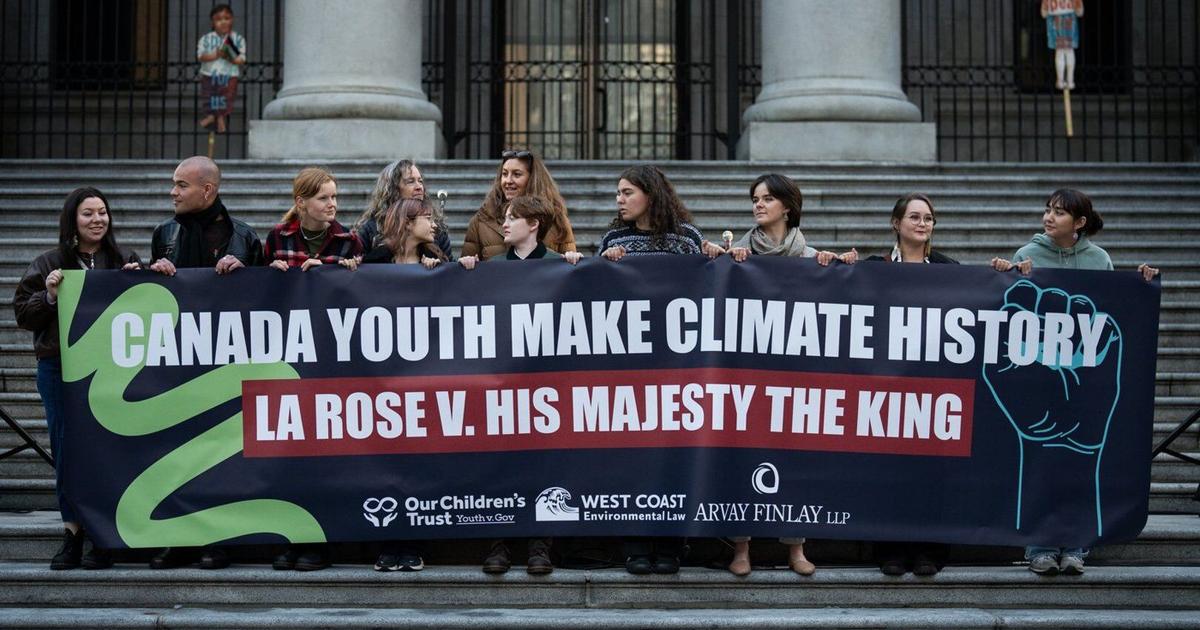
Plaintiffs from the La Rose v. His Majesty the King court case rally in Vancouver, on Monday, Oct. 26, 2026. THE CANADIAN PRESS/Ethan Cairns
Photograph: CTV News (embedded from source)
What this story says
- Children are uniquely vulnerable to climate change due to physiological and psychological factors, according to expert testimony.
- Dr. Elizabeth Pinsky stated that young children have immature systems for regulating body temperature and inhale more air pollution relative to their size.
- The trial involves 15 young plaintiffs arguing that federal legislation violates their constitutional rights by continuing Canada's greenhouse gas emissions trajectory.
- An expert witness testified that Canada could transition to full renewable energy by 2050, calling the shift technically and economically feasible.
Who covered it
Percentages are shares of the 11 outlets carrying a published leaning rating. Coverage measured .
Trust
60/100
Craft
65/100
Hype
15/100
11 sources · methodology
Thin on the right so far
Only 1 of the 11 outlets with a published leaning rating that ran this story are rated right.
This story is still being watched, so it is a count and not yet a finding. Coverage keeps arriving for hours after an event, and a side that has published nothing this morning may publish by tonight. If it is still true when we stop checking, we will say so plainly.
Children face disproportionate risks from climate change, a child psychiatrist and pediatrician testified at Canada's first youth-led climate trial. Dr. Elizabeth Pinsky told Federal Court in Vancouver that young people are susceptible to extreme heat, air pollution, and mental health issues linked to a changing climate. She cited physiological reasons, stating that babies and young children have immature thermoregulatory systems, making them less able to control their internal temperature during heat waves. Dr. Pinsky also noted that children breathe more rapidly than adults and inhale more air pollution relative to their body size. She added that younger people face increased risks from climate hazards over their lifetimes as the effects of climate change worsen.
The trial features 15 young plaintiffs who argue that federal legislation violates their constitutional rights by allowing Canada to continue its current trajectory of greenhouse gas emissions. The plaintiffs' lawyer stated the case hinges on whether the government is constitutionally required to stop worsening the climate crisis. Dr. Pinsky also described mental health impacts such as "eco-anxiety," encompassing feelings of fear, sadness, and betrayal, and "solastalgia," a sense of homesickness due to environmental changes. She asserted that ceasing the burning of fossil fuels and halting climate change is the only way to fully protect children from these harms.
Renewable energy transition
Also testifying was Stanford University professor Mark Jacobson, an expert in environmental engineering and atmospheric science. He stated that Canada can transition to full renewable energy by 2050, describing the shift as technically and economically feasible, with social and political factors being the main obstacles. Jacobson outlined that Canada has significant wind, solar, and geothermal resources, along with existing hydroelectric capacity, to meet energy demands. He added that electrifying energy and transportation would lead to a substantial reduction in energy use and slash air pollution and emissions. Under cross-examination, Jacobson acknowledged his study did not include policy proposals or account for potential supply-chain constraints in the renewable transition. He also testified that his study projected a net job loss for Canada in the shift to renewables, though it did not comprehensively account for all related employment.
What the coverage left out
None of the left-rated digests mention the specific physiological factors Dr. Pinsky cited for children's vulnerability, such as immature thermoregulatory systems or higher relative air intake. The right-rated digest does not include details on the constitutional arguments made by the 15 young plaintiffs or the testimony regarding Canada's potential transition to renewable energy by 2050.
Still developing. We have re-checked which outlets are covering this 2 times, most recently on 30 Oct 2026, 11:15, and will add the sides that appear.
How each side covered it
Our own reading of the reporting listed below, written from the outlets’ articles rather than quoted from them. The reasoning is set out on our methodology page.
Left
6 rated outlets
- Left-rated reports led with the testimony of Dr. Elizabeth Pinsky, highlighting her description of children's disproportionate vulnerability to climate change. These reports included her explanations of the physiological reasons, such as immature thermoregulatory systems and higher relative air intake, and the psychological impacts like eco-anxiety and solastalgia. The left-rated reports also detailed the plaintiffs' argument that federal legislation violates their constitutional rights by continuing Canada's greenhouse gas emissions trajectory. They noted the lawyer's statement that the case seeks to hold Canada legally accountable for its role in the climate crisis. The possibility of Canada transitioning to full renewable energy by 2050, as testified by Mark Jacobson, was also a feature in these reports.
Centre
4 rated outlets
- Centre-rated reports focused on Dr. Elizabeth Pinsky's testimony regarding children's vulnerability to climate change, including the physiological factors like thermoregulation and air intake. These reports mentioned the trial's context: 15 young plaintiffs arguing that federal legislation violates their constitutional rights by continuing Canada's greenhouse gas emissions. The centre-rated reports also included expert testimony from Mark Jacobson stating that Canada could transition to full renewable energy by 2050, citing technical and economic feasibility. They noted his acknowledgement that social and political factors, rather than technical ones, are the primary obstacles to this transition.
Right
1 rated outlet
- The right-rated report led with Dr. Elizabeth Pinsky's testimony that children are disproportionately vulnerable to the effects of climate change in her appearance at Canada's first youth-led climate trial.
Questions about this coverage
- How did the left and right cover Expert tells climate trial children are uniquely vulnerable?
- Of the 11 outlets on this story carrying a published leaning rating, 55% are rated left, 36% are rated centre, 9% are rated right. Those percentages are shares of the rated outlets, not of every outlet that ran it. The sections above set out what each side emphasised, in its own terms.
- Is Expert tells climate trial children are uniquely vulnerable left or right?
- Too few of the outlets on this story carry a published leaning rating to say. 11 of them do, and this site does not characterise a field under 12: at that size one newsroom filing moves the share by ten points. The percentages above are the count as it stands.
- Is the coverage of Expert tells climate trial children are uniquely vulnerable biased?
- Expert tells climate trial children are uniquely vulnerable is one event reported by 11 outlets, and this page does not rate the story as biased or unbiased. What it publishes is the spread: which outlets ran it, where named rating organisations place each of them on the spectrum, and what each side chose to lead with. A leaning rating describes an outlet's record over time, not this article, and the two should not be run together.
- Which side is not reporting Expert tells climate trial children are uniquely vulnerable?
- When we first saw this story, outlets rated right had barely covered it. Coverage accretes for hours after an event, so that is where to look rather than a verdict — the split above is the current count, and it is the one to read.
- Which outlets covered Expert tells climate trial children are uniquely vulnerable?
- 11 that we know of, every one of them listed further up this page with a link to its own report and to what we hold on the publisher. Nothing here is a summary of somebody else's summary: the outlets are named so the original reporting can be read.
- Why are children considered more vulnerable to climate change?
- Children are disproportionately vulnerable due to physiological and psychological factors. They have immature systems for regulating body temperature, inhale more air pollution relative to their size, and are susceptible to mental health impacts like eco-anxiety and solastalgia as the climate changes.
- What is the basis of the youth-led climate trial?
- The trial involves 15 young plaintiffs arguing that federal legislation violates their constitutional rights by allowing Canada to continue its current trajectory of greenhouse gas emissions. They seek to hold the government legally accountable for its role in worsening the climate crisis.
- Is it possible for Canada to switch to renewable energy?
- Yes, according to expert testimony, Canada can transition to full renewable energy by 2050. The shift is considered technically and economically feasible, with social and political factors being the main obstacles. Canada has significant renewable resources available.
Read it at the source
11 outlets, grouped by the leaning a published rating gives them. Every headline links to the original; an underlined outlet name opens our profile of that publisher.
Left
6- Children especially vulnerable to climate change, expert witness says (opens Bradford Today in a new tab)
Bradford Today — is Bradford Today biased? Our profile of this outlet
- Children especially vulnerable to climate change, expert witness says (opens StratfordToday.ca in a new tab)
StratfordToday.ca — is StratfordToday.ca biased? Our profile of this outlet
- Children especially vulnerable to climate change, expert witness says (opens CambridgeToday.ca in a new tab)
CambridgeToday.ca — is CambridgeToday.ca biased? Our profile of this outlet
- Children especially vulnerable to climate change, expert witness says (opens InnisfilToday.ca in a new tab)
InnisfilToday.ca — is InnisfilToday.ca biased? Our profile of this outlet
- Children especially vulnerable to climate change, expert witness says (opens Midland Today in a new tab)
Midland Today — is Midland Today biased? Our profile of this outlet
- Children especially vulnerable to climate change, expert witness says (opens SooToday.com in a new tab)
SooToday.com — is SooToday.com biased? Our profile of this outlet
Centre
4- Children especially vulnerable to climate change, expert witness says (opens Castanet in a new tab)
- Children especially vulnerable to climate change, expert witness says (opens CP24 in a new tab)
- Children especially vulnerable to climate change, expert witness says (opens CTV News in a new tab)
- Children especially vulnerable to climate change, expert witness says (opens paNOW in a new tab)
Right
1Not rated
0No outlet in this group ran the story.
How did this read?
About the coverage, not about the story. We do not ask whether you agree with what happened — we have no honest use for that answer.