Indonesia turns to cloud seeding as forest fires burn 285,000 hectares
The government says the technique can help fight fires worsened by El Niño, but experts question its effectiveness in dry conditions.
AI-assisted coverage comparison, editor-supervised · How this was made
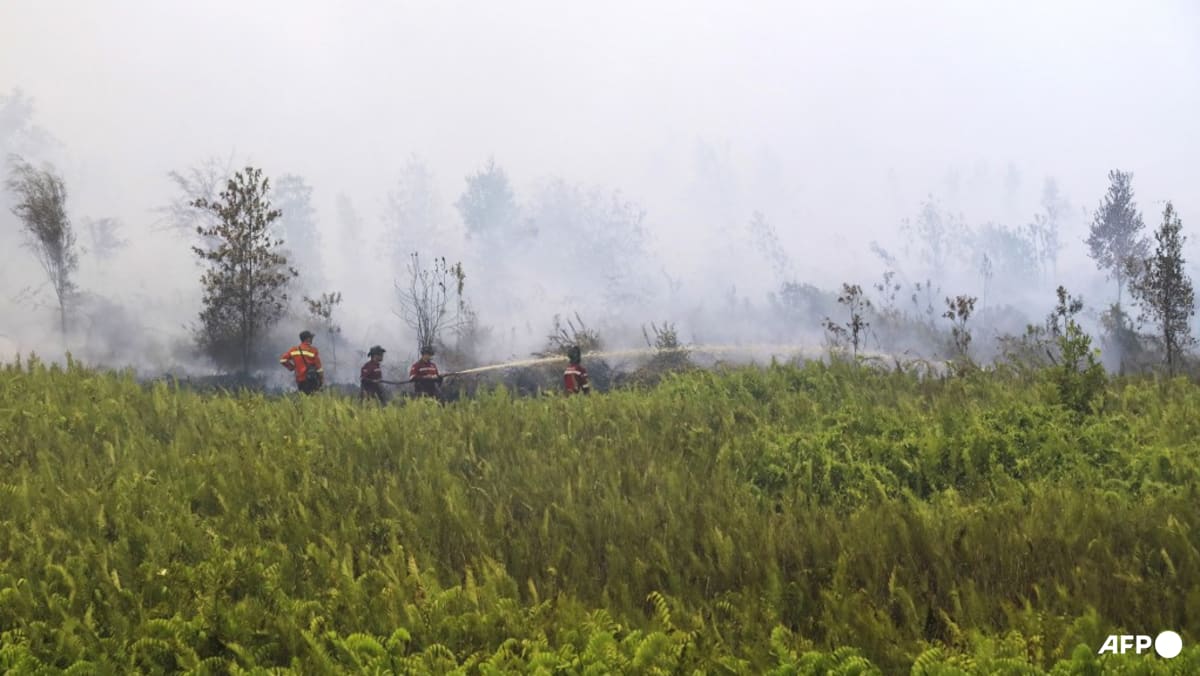
This picture taken on Jul 31, 2026 shows firefighters extinguishing wildfires on peatlands covering more than 100 hectares in Pulang Pisau, Indonesia's Central Kalimantan province, due to a prolonged dry season. (Photo: AFP/Reina)
Photograph: Channel News Asia (embedded from source)
What this story says
- Indonesia’s government reports 100,000 hectares burned in the first half of 2026, while independent analysis puts the figure at over 285,000 hectares through July.
- The country has carried out 252 cloud-seeding operations since 2021, up from 85 in the previous decade, to induce rain and suppress fires.
- Experts and activists argue the method is ineffective in dry conditions and fails to address root causes like peatland destruction and illegal land clearing.
- Neighbouring Malaysia has already experienced haze from the fires, leading to school closures in parts of Borneo.
Who covered it
Percentages are shares of the 6 outlets carrying a published leaning rating. 1 of the 7 outlets we know ran this story carry no rating and are not counted in them. Coverage measured .
Trust
86/100
Craft
95/100
Hype
25/100
7 sources · methodology
Thin on the left so far
None of the 6 outlets with a published leaning rating that ran this story are rated left.
This story is still being watched, so it is a count and not yet a finding. Coverage keeps arriving for hours after an event, and a side that has published nothing this morning may publish by tonight. If it is still true when we stop checking, we will say so plainly.
Indonesia is relying on cloud seeding to combat one of its worst forest fire seasons in years, as the El Niño climate phenomenon intensifies drought conditions. The government says over 100,000 hectares burned in the first six months of 2026. Independent analysis by Nusantara Atlas, a deforestation monitoring site, estimates the burned area at more than 285,000 hectares through July, an area larger than four times the size of Jakarta.
Cloud seeding involves dispersing silver iodide, salts or other particles into clouds to encourage rainfall. Indonesia has conducted 252 such operations between 2021 and August 2026, a threefold increase from the previous decade. The technique is rarely used globally to fight wildfires, but Indonesia has expanded its use after devastating fires in 2015, which burned millions of hectares and created a regional haze crisis.
The government has deployed nearly 50,000 firefighters and used helicopters and fixed-wing aircraft for cloud-seeding operations. Security Minister Djamari Chaniago said authorities are monitoring weather changes closely to identify rain clouds. However, experts question the method’s effectiveness during the dry season, when wildfires peak and cloud cover is scarce. I Putu Santikayasa, a hydroclimatology lecturer at IPB University, said the lack of clouds limits the technique’s impact.
Environmental activists argue that cloud seeding is a short-term solution that ignores deeper issues. Uli Arta Siagian, campaign coordinator for the environmental group WALHI, said peatlands, which store large amounts of carbon when wet but become highly flammable when dry, should be protected from development. The government has banned large-scale plantations from using fire to clear land, but smallholders are exempt, and illegal burning remains common.
Disagreement over the scale of burned land
The Indonesian government says 100,000 hectares burned in the first half of 2026, as reported by Channel News Asia and France24. Nusantara Atlas, an independent deforestation monitoring site, puts the figure at over 285,000 hectares through July, a number carried by France24 and Channel News Asia. No outlet disputes the higher figure, but the government’s lower estimate appears in fewer reports.
What the coverage left out
No left-rated outlet ran this story. None of the right-rated digests mention the independent estimate of 285,000 hectares burned, the cost of cloud-seeding operations, or the environmental concerns raised by activists about peatland destruction and illegal land clearing. The centre-rated reports include these details.
Still developing. We have re-checked which outlets are covering this 5 times, most recently on 18 Aug 2026, 08:00, and will add the sides that appear.
How each side covered it
Our own reading of the reporting listed below, written from the outlets’ articles rather than quoted from them. The reasoning is set out on our methodology page.
Left
0 rated outlets
No outlet rated left has run this story so far. We are still checking, and will say plainly if that does not change.
Centre
3 rated outlets
- The three centre-rated digests and the full report from Channel News Asia led on Indonesia’s increased use of cloud seeding to fight fires. All three digests mention the technique’s role in mitigating the fire season, and two note scepticism about its effectiveness. The Channel News Asia report quotes meteorologist Safillah Anggie Wahyuni, who said, "Weather modification does not create clouds: we optimise clouds that have the potential to produce rains." It also includes criticism from experts and activists, including the hydroclimatology lecturer who questioned the method’s usefulness in dry conditions.
- The full report details the government’s claim of 100,000 hectares burned, the independent estimate of 285,000 hectares, and the increase in cloud-seeding operations. It also describes the regional haze affecting Malaysia and the government’s broader fire-fighting efforts, including peatland rewetting and satellite monitoring. The report quotes an activist saying the state should protect vulnerable ecosystems by not issuing permits in fire-prone areas.
Right
3 rated outlets
- The three right-rated digests focus on Indonesia’s use of cloud seeding as a response to the fire crisis. Le Figaro’s digest describes it as a "low-used method" to fight El Niño-driven fires. Free Malaysia Today and The Straits Times both highlight the increase in cloud-seeding operations, with The Straits Times noting the 252 operations conducted since 2021. None of the digests mention the independent estimate of 285,000 hectares burned, the scepticism of experts, or the broader environmental concerns raised by activists.
Read it at the source
7 outlets, grouped by the leaning a published rating gives them. Every headline links to the original; an underlined outlet name opens our profile of that publisher.
Left
0No outlet in this group ran the story.
Centre
3- Fire in Indonesia: Artificially Rain Clouds to Fight Fires (opens Sud Ouest in a new tab)
- Make it rain: Indonesia chases clouds to stem El Nino fires (opens Channel News Asia in a new tab)
Channel News Asia — is Channel News Asia biased? Our profile of this outlet
- Make it rain: Indonesia chases clouds to stem El Nino fires (opens France24 in a new tab)
Right
3- "We Optimize Clouds": Indonesia Wants to Create Rain to Fight the El Niño Phenomenon with a Low-Used Method (opens Le Figaro in a new tab)
- Indonesia chases clouds to stem El Nino fires (opens Free Malaysia Today News in a new tab)
Free Malaysia Today News — is Free Malaysia Today News biased? Our profile of this outlet
- Make it rain: Indonesia chases clouds to stem El Nino fires (opens The Straits Times in a new tab)
The Straits Times — is The Straits Times biased? Our profile of this outlet
Not rated
1Questions about this coverage
- How did the left and right cover Indonesia turns to cloud seeding as forest fires burn 285,000 hectares?
- Of the 6 outlets on this story carrying a published leaning rating, 0% are rated left, 50% are rated centre, 50% are rated right. Those percentages are shares of the rated outlets, not of every outlet that ran it, which was 7. The sections above set out what each side emphasised, in its own terms.
- Is Indonesia turns to cloud seeding as forest fires burn 285,000 hectares left or right?
- Too few of the outlets on this story carry a published leaning rating to say. 6 of them do, and this site does not characterise a field under 12: at that size one newsroom filing moves the share by ten points. The percentages above are the count as it stands.
- Is the coverage of Indonesia turns to cloud seeding as forest fires burn 285,000 hectares biased?
- Indonesia turns to cloud seeding as forest fires burn 285,000 hectares is one event reported by 7 outlets, and this page does not rate the story as biased or unbiased. What it publishes is the spread: which outlets ran it, where named rating organisations place each of them on the spectrum, and what each side chose to lead with. A leaning rating describes an outlet's record over time, not this article, and the two should not be run together.
- Which side is not reporting Indonesia turns to cloud seeding as forest fires burn 285,000 hectares?
- When we first saw this story, outlets rated left had barely covered it. Coverage accretes for hours after an event, so that is where to look rather than a verdict — the split above is the current count, and it is the one to read.
- Which outlets covered Indonesia turns to cloud seeding as forest fires burn 285,000 hectares?
- 7 that we know of, every one of them listed further up this page with a link to its own report and to what we hold on the publisher. Nothing here is a summary of somebody else's summary: the outlets are named so the original reporting can be read.
- How much land has burned in Indonesia’s 2026 fire season?
- The Indonesian government says 100,000 hectares burned in the first half of 2026. Independent analysis by Nusantara Atlas estimates over 285,000 hectares burned through July, an area more than four times the size of Jakarta. The higher figure is widely reported but not mentioned in right-rated digests.
- What is cloud seeding, and how is Indonesia using it?
- Cloud seeding involves dispersing particles like silver iodide into clouds to induce rainfall. Indonesia has conducted 252 cloud-seeding operations since 2021 to fight fires, up from 85 in the previous decade. The government says it helps suppress fires, but experts question its effectiveness in dry conditions.
- Why do experts criticise Indonesia’s use of cloud seeding?
- Experts say cloud seeding is less effective during the dry season when wildfires peak, as there are fewer clouds to seed. Activists argue it ignores deeper causes like peatland destruction and illegal land clearing, which make fires worse. Research on its long-term impact is limited.
- How are Indonesia’s fires affecting neighbouring countries?
- Haze from the fires has increased air pollution in Malaysia, particularly in the Borneo region, leading to school closures. Indonesia’s fires regularly create regional haze, a problem worsened by El Niño-driven drought conditions.
How did this read?
About the coverage, not about the story. We do not ask whether you agree with what happened — we have no honest use for that answer.
More in Climate
All Climate → 5 min readSpitze Stei rock formation threatens Swiss village Kandersteg as permafrost thawsRead story
 5 min readCanada repeals electric vehicle sales mandate before replacement rules are readyRead story
 5 min readHurricane Lala downgraded to tropical storm after hitting Hawaii, leaving 200,000 without powerRead story
Elsewhere on the site
 Politics•4 min readThai PM suspends gun permits after 14-year-old kills seven in school shooting
 Politics•5 min readSouth Korea proposes peace talks as North Korea ignores offer and fires warning shots
 Conflict & Security•4 min readNorth Korean soldiers cross DMZ line for first time in 2026, prompting South Korean warning shots
 Politics•4 min readEight Muslim-majority states condemn Israel over rejected Gaza peace plan